Skip to content
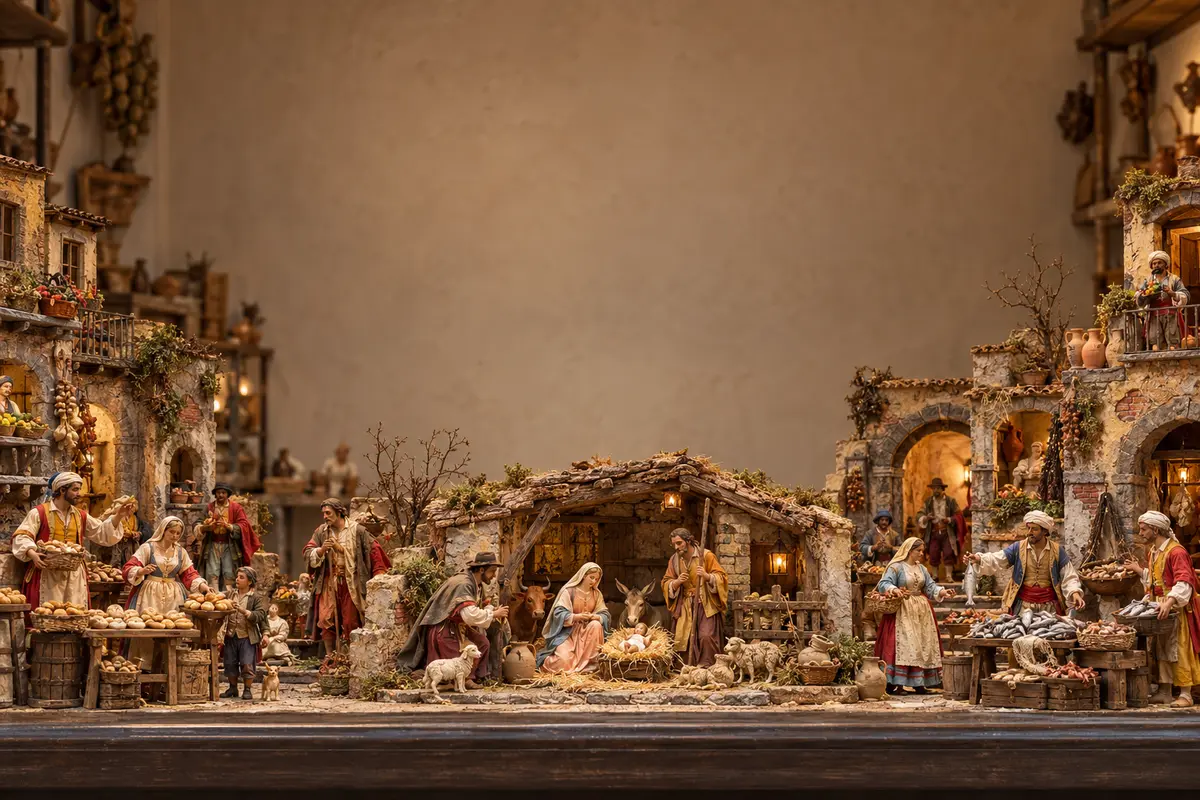
Neapolitan nativity scene with terracotta and cloth figures, a low stable and miniature village food stalls

Culture in Italy

The art, buildings, music and traditions that make Italy worth the trip, and how to see them well.

Read: Italian Christmas Traditions, from the Presepe to the Befana

Choose a thread to follow

You do not need to fit every museum, church and concert into one trip. Pick something you are curious about and give it time. In Cremona, violin making connects specialist training, workshop skills and conversations with musicians. That is a different way into a city from ticking off its monuments. Use the places and stories below to choose your own thread: an artist, a building, a sound or a local tradition. Start with one visit, then leave room for what catches your attention.1

Culture is something people do

A tradition is more interesting when you notice the people keeping it alive. Cremonese violin makers pass on their knowledge through teaching and workshop practice; Italian opera singing brings musical and literary skills together in a shared performance. Neither is simply a souvenir of the past. If a workshop offers visits, check how to arrange one before arriving. Ask before taking photographs, respect working time and look for the small decisions behind the finished object. Curiosity works best as a conversation.1,2

A theatre visit or a night at the opera?

Decide which experience you want before buying a ticket. At Venice’s La Fenice, visits to the building have their own booking information and timetable, separate from the performance programme. A tour is a chance to look at the theatre; an opera ticket is for a particular production and date. For a first opera, read a short plot summary, check the running time and whether translated surtitles are available. Choose a seat for the view and comfort you need, rather than assuming every ticket offers the same experience.3,4

Leave time around the experience

Build the day around the visit that has a fixed start. Check the exact venue, entry instructions and journey home, then fit lunch or a walk around it. La Fenice recommends arriving at least half an hour before a performance, especially when collecting tickets. That is useful planning time, not another attraction to squeeze in. For a local festival or concert elsewhere, check the organiser’s current programme before travelling. Afterwards, sit down together and compare the moment you each remember; it may be different from the one you expected.4

People

  1. Giorgio Armani in a dark jacket and white open-collar shirt against a warm neutral background.Giorgio Armani
  2. Guccio Gucci seated in a dark period suit against a warm neutral background.Guccio Gucci
  3. Gio Ponti seated in a light gray jacket against an abstract architectural backdrop.Gio Ponti
  4. The Arco floor lamp, designed by Achille and Pier Giacomo Castiglioni in 1962.Achille Castiglioni
  5. Ettore Sottsass with long dark hair and a mustache against abstract colored planes.Ettore Sottsass
  6. Carlo Scarpa seated in profile beside architectural tracing paper and stone samples.Carlo Scarpa
  7. A red Ferrari F40 parked on pale gravel beside a stone building and olive trees.Enzo Ferrari
  8. A yellow-green Lamborghini Miura P400S parked on pale gravel beside an olive tree.Ferruccio Lamborghini
  9. The Venini Fazzoletto vase, catalogued by MoMA as a 1949 work by Fulvio Bianconi.Fulvio BianconiAn illustrator and designer whose work moved between patterned Murano glass and industrial graphics.
  10. A petrol-teal Maralunga sofa with three seats and one raised headrest in a softly lit interior.Vico MagistrettiVico Magistretti (1920–2006) moved between Milan architecture and industrial design. Buildings, the Carimate chair, Eclisse, Maralunga and Atollo show how his practice connected rooms and objects with the work of manufacturers.
  11. A low Fjord table with a white rounded triangular top and a pale grey upholstered base in a sunlit interior.Patricia UrquiolaPatricia Urquiola is a Spanish architect and designer whose career links Madrid and Milan with an independent practice based in the Italian city. Her work ranges from Moroso’s Fjord designs to the Lake Como hotel Il Sereno.
  12. Marcello Gandini
  13. Lorenzo VilloresiA Florence-based perfumer whose work connects aromatic materials, custom fragrances and a museum devoted to scent.
  14. Lino TagliapietraFrom Murano furnaces to Pilchuck, a glass artist whose career connects making, design and teaching.
  15. Bruno MunariBruno Munari (1907–1998), an Italian artist and designer, brought visual experimentation into moving forms, books, playful objects and children’s learning. Art and design met throughout his work.
  16. Gae AulentiGae Aulenti (1927–2012), Italian architect and designer, worked across buildings, museum spaces, interiors, objects and theatre. Her work includes the Musée d’Orsay interiors, Pipistrello and stage work with Luca Ronconi.
  17. Paola NavonePaola Navone is an Italian architect and designer whose work spans architecture, interiors and objects. Her career includes Alchimia, a long design relationship with Gervasoni, and InOut 91–92–93 at the Quirinale’s Castelporziano estate.
  18. Piero LissoniPiero Lissoni (born 1956) is an Italian architect and designer. His Milan studio’s work spans architecture, interiors and products, from Boffi to the Camparino and Amsterdam’s Conservatorium Hotel.
  19. Brunello CucinelliFrom a small cashmere-dyeing venture to the company headquarters in Solomeo, Brunello Cucinelli’s story is rooted in Umbria.
  20. Ottavio MissoniFrom the track to knitwear, Ottavio Missoni’s path ran through the Italian team, a Trieste workshop and the work he began with Rosita in Gallarate.
  21. Elsa PerettiBorn in Florence, Elsa Peretti studied in Rome and Switzerland before building a career that crossed Milan, Barcelona and New York.
  22. Horacio PaganiFrom design studies in Argentina to Modena Design and Pagani Automobili, Horacio Pagani built a career around design and composite materials.

Every person, craft, place and work we cover

A letter from Italy, once a month.

The places, tables and makers we found worth your time. One email, no noise.

One letter a month. Unsubscribe at any time. We never share your address.
