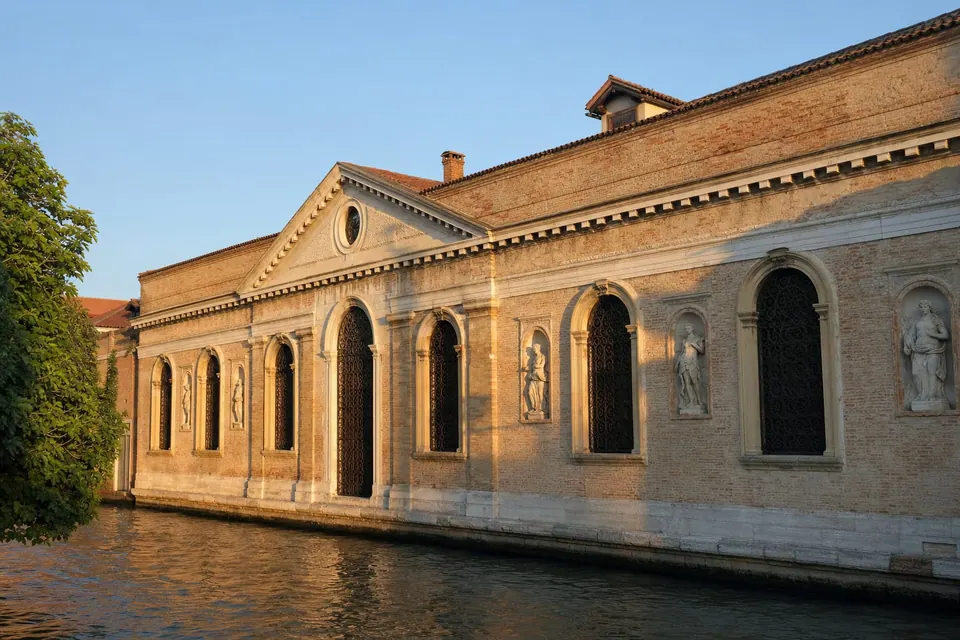
Venice exiled its furnaces to Murano in 1291, ostensibly to protect the wooden city from fire, and the island has blown glass ever since. Its museum occupies the Palazzo Giustinian, once home to the bishops of Torcello, and lines up seven centuries of the craft: Roman shards recovered from local digs, medieval beads, and the Barovier Wedding Cup of about 1470, an enameled blue glass piece so fine that it is usually named as the single greatest survivor of Renaissance Murano.
Later rooms trace the island's slow reinvention through the 18th-century mirror trade and the modern designers, from Venini to Barovier & Toso, who turned old furnace skills into twentieth-century art. It's the clearest place in Venice to understand why this small island still matters.