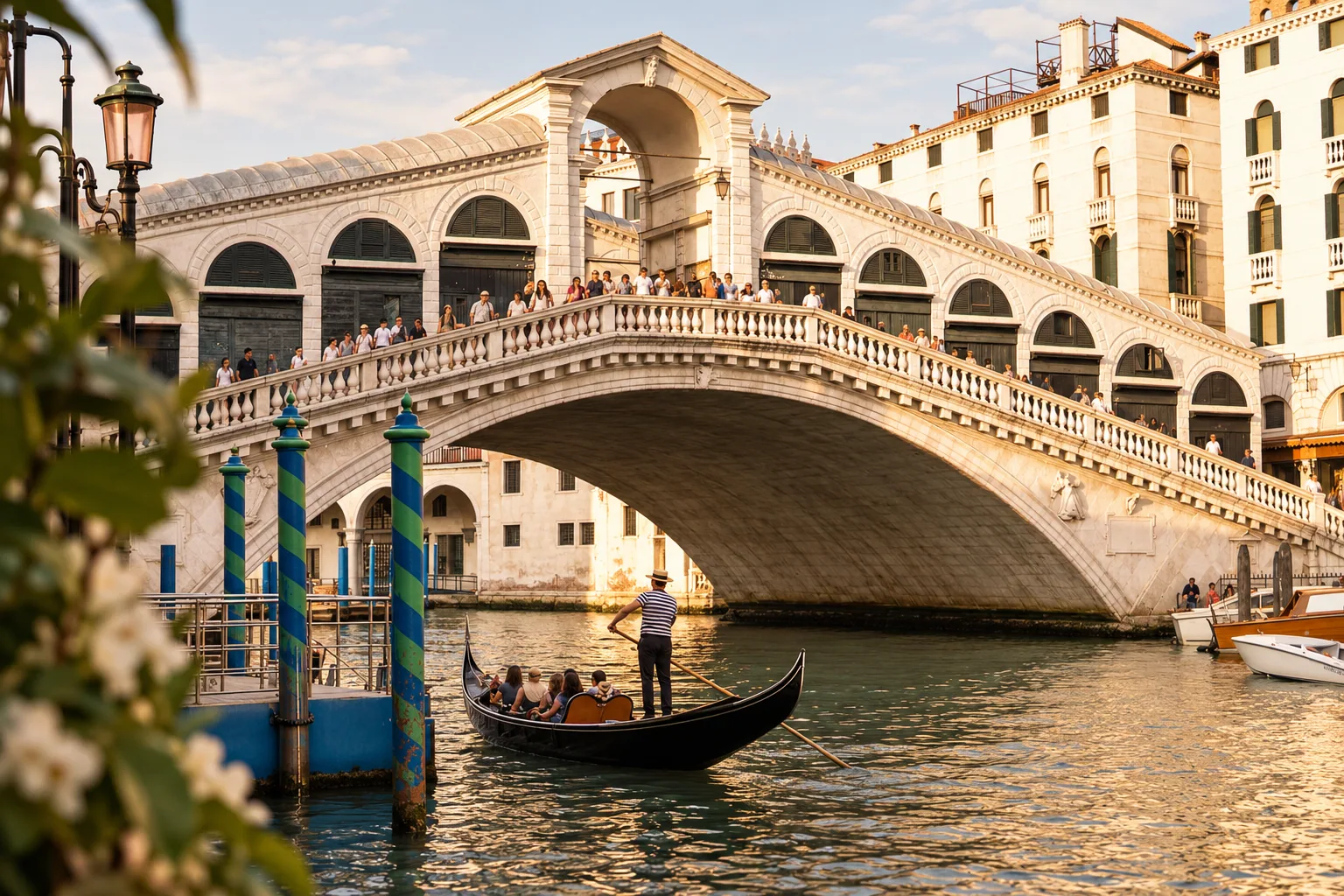
A pontoon crossing built in 1181 was the first bridge at this narrow point of the Grand Canal, near Venice's main marketplace; it was rebuilt in wood, fitted with a drawbridge section, burned once in a 1310 conspiracy and collapsed twice more under crowds before the Republic finally commissioned a stone replacement.
Antonio da Ponte won the commission over Palladio, Sansovino and Michelangelo's own former pupil Vignola, and his single-arch design, considered so daring at the time that architect Vincenzo Scamozzi predicted it would collapse, was built between 1588 and 1591 and has stood ever since. Two ramps rise to a central portico lined with shops on both sides, a commercial function the bridge has kept since it opened, and it remained the only fixed crossing of the Grand Canal until the nineteenth century. Shakespeare even has Shylock name it in The Merchant of Venice, written within a few years of its completion.