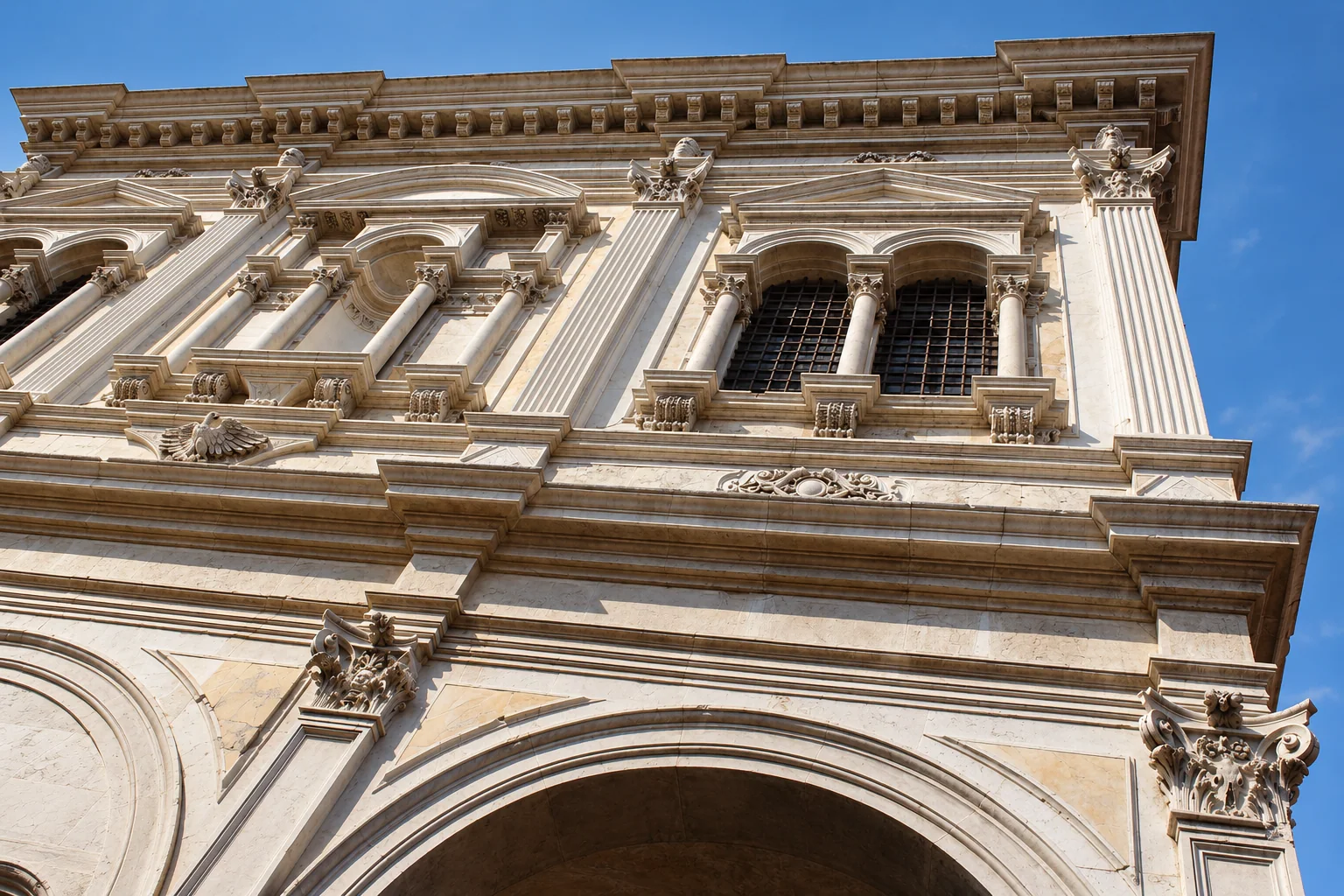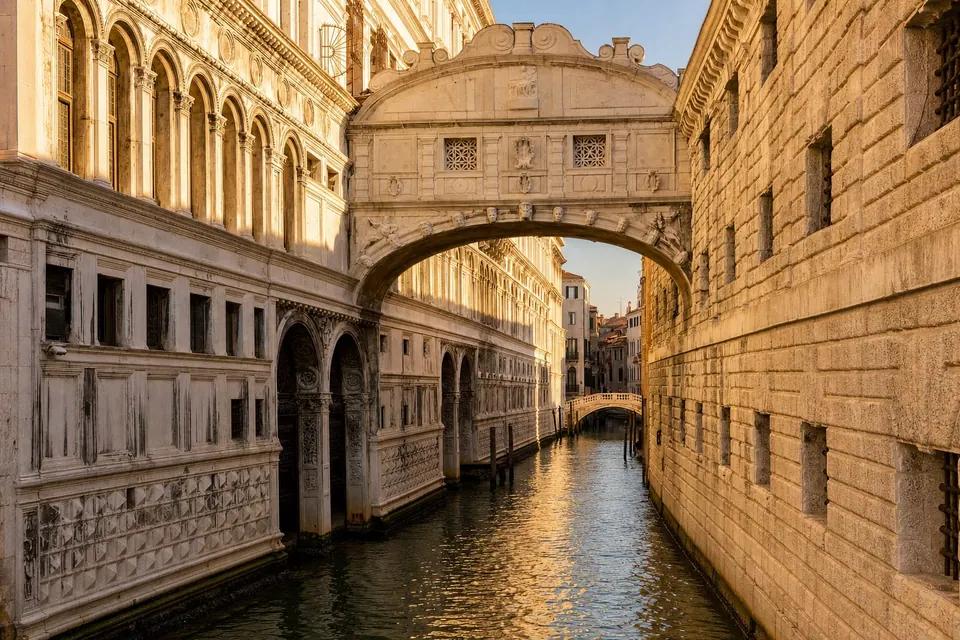
Venice built this enclosed limestone crossing around 1600 to solve an overcrowding problem: the Doge's Palace dungeons, the pozzi, could no longer hold everyone awaiting trial, so architect Antonio Contin (nephew of Antonio da Ponte, who had built the Rialto) designed a covered bridge linking the interrogation rooms to a new prison across the Rio di Palazzo.
Two separate corridors run inside, divided by a wall so prisoners walking each direction could never meet, lit only by small stone-grilled windows. Its wistful English name is a nineteenth-century invention, popularized by Lord Byron, who imagined condemned prisoners sighing at their last glimpse of the lagoon through the grille; Venetians of the time gave it no such name. Visitors can view it from the Ponte della Paglia or from a gondola on the canal below, or walk through its interior with a ticket to the Doge's Palace.