Skip to content

Temple of Antas

A Carthaginian-Roman temple rebuilt under Augustus in a remote valley near Fluminimaggiore, beside a Nuragic village and necropolis.

  • Fluminimaggiore
  • Archaeological site
Where
Fluminimaggiore
Best for
Punic-Roman temple
Allow
1 hour

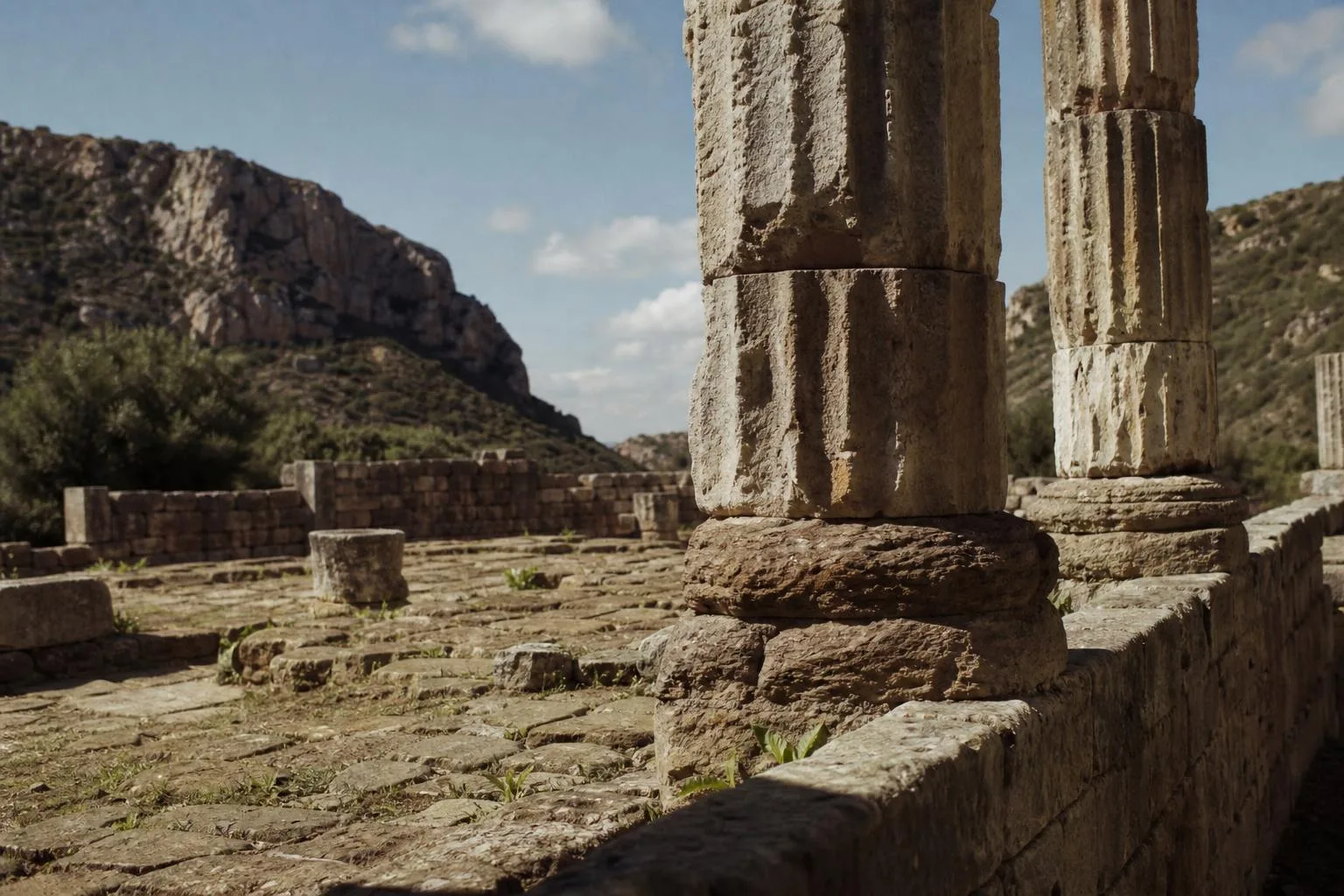
Six Ionic columns, each roughly eight meters tall, rise alone in a limestone valley south of Fluminimaggiore, the closest thing Sardinia has to a Greek ruin. The Carthaginians raised the first shrine here around 500 BC to Sardus Pater Babai, a god they called Sid Addir, choosing the site for a spring the Nuragic islanders had already revered for centuries.

Rome rebuilt the temple under Augustus around 38 BC and restored it again two centuries later under Caracalla. Buried and forgotten, it was rediscovered in 1836 by General Alberto La Marmora, though the columns standing today were reconstructed only in 1967. A Nuragic village and necropolis, excavated in 1984, spread across the same valley floor, and the show cave of Su Mannau lies a short drive away.
Four things worth finding

If you see nothing else, see these.

  1. The six Ionic columnsRoman, Augustan rebuild c. 38 BC, restored under Caracalla

    Four columns across the front and two on the sides, each about eight meters tall, were reassembled in 1967. A Latin inscription on the architrave records the restoration under Caracalla.On the temple podium, at the center of the valley

  2. The Punic shrine beneath the stepsCarthaginian, c. 500 BC, rebuilt c. 300 BC

    The first shrine to Sid Addir grew around a sacred limestone outcrop that served as the altar. Bronze coins, amulets and gold objects turned up around it.Under the front staircase of the Roman temple

  3. The cella floor and purification basinsRoman

    A patch of the original mosaic survives in the floor. Two square basins about a meter deep held the water for purification rites.Inside the cella

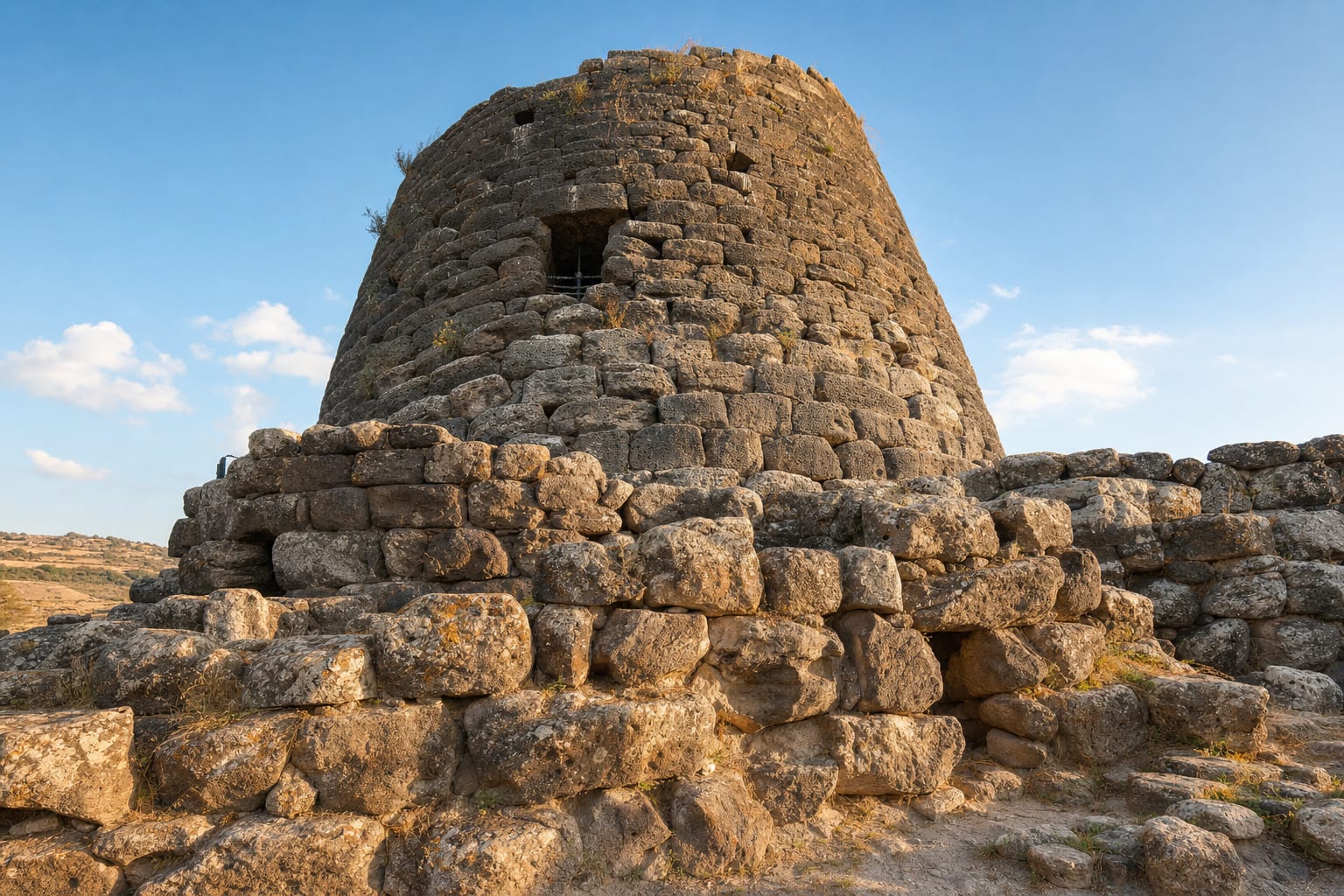
  4. The Nuragic village and Roman quarriesNuragic, c. 1200 to 900 BC; Roman quarrying

    Hut foundations show the valley was inhabited and sacred long before the Carthaginians. The quarries are where the limestone for the temple was cut, which is why it looks rooted in the place.Valley floor around the temple

Plan your visit

Everything you need before you go.

Booking
No booking needed
Time needed
1 hour
Best time
Weekday mornings, before the valley heats up in summer
Getting there
About 10 km south of Fluminimaggiore on a signed side road off the SS126; no public transport serves the site, so a car is essential.

Pair the temple with the Su Mannau cave nearby: both sit in the same valley and make an easy half-day outing away from the coast.

Get directionsGoogle MapsApple Maps

Good to know

How long should you spend at the Temple of Antas?

Allow about an hour. The temple, the Punic remains under the steps and the Nuragic village sit close together on the valley floor. Add time if you want to picnic or walk the old path toward the cave.

Is the Temple of Antas worth the drive?

Yes, if you want the one Sardinian site that feels like a Greek ruin. Six columns stand alone in a limestone valley with no crowds, and the setting is half the appeal. You need a car, because a side road off the SS126 is the only way in.

Can you see the Temple of Antas and Su Mannau cave in one day?

Yes. The Su Mannau show cave is a short drive from the temple, so the two pair naturally into a half day. Do the temple first in the cooler morning, then go underground when the valley heats up.

A letter from Italy, once a month.

The places, tables and makers we found worth your time. One email, no noise.

One letter a month. Unsubscribe at any time. We never share your address.

Help us get it right

What is it about?