Skip to content

Juliet's House

A medieval tower-house documented as an inn by 1351, later adopted as Juliet’s literary home and refashioned in 1939–1940; its famous balcony combines reused fourteenth-century stone with twentieth-century staging.

  • Verona
  • Museum
Where
Verona
Best for
The medieval tower-house and Cappello inn sign
Allow
1 hour
Tickets
From €12
Checked October 2026

At Via Cappello 23, a medieval tower-house appears in documents by 1351 as an inn called Cappello; the city museum says the inn’s hat sign is still carved into the key of the courtyard arch. The building’s identification as Juliet’s House came much later, when travelers at the end of the eighteenth and start of the nineteenth century began making a romantic pilgrimage to sites linked with Shakespeare’s tragedy. That literary association is not evidence that a historical Juliet lived here.

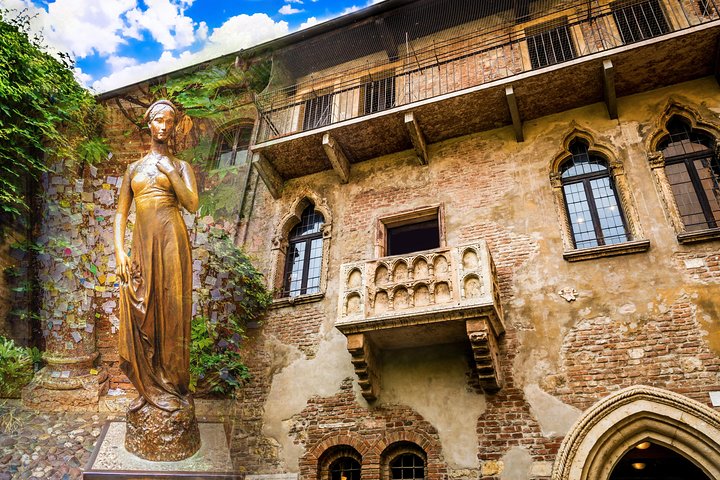
Verona bought the house in 1905. Between 1939 and 1940, civic-museum director Antonio Avena recast its courtyard facade and interiors in a neo-medieval style, deliberately turning the house into theatrical scenery for the story; the balcony was added in that campaign. Its material history is more layered than the familiar image suggests: the balcony’s central slab is fourteenth-century Avesa stone reused from the Della Scala palaces, while the assembled balcony and its shaped brackets belong to the later staging. Licisco Magagnato completed the museum arrangement in the early 1970s, and the house opened to visitors on 1 June 1973.

The courtyard bronze is also a copy: Nereo Costantini’s original, modeled in 1968 and cast in 1969, is kept in the Sala del Balcone; a new cast replaced the worn courtyard statue in 2014. Today the visit begins in Teatro Nuovo, continues through its foyer and the courtyard, and reaches the house only on the €12 full route. From the Via Cappello exit, continue through Verona’s historic centre to our Piazza delle Erbe guide.
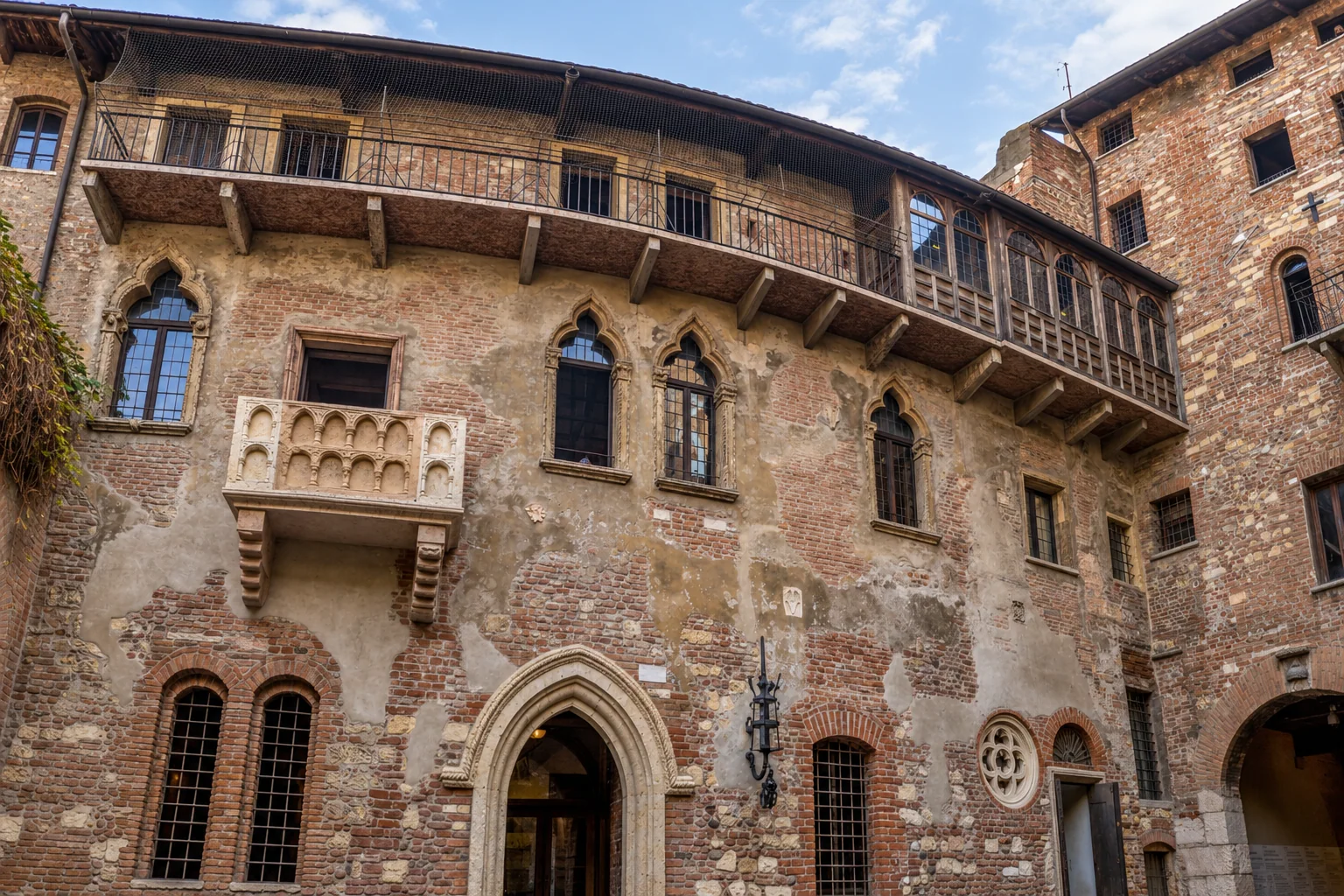
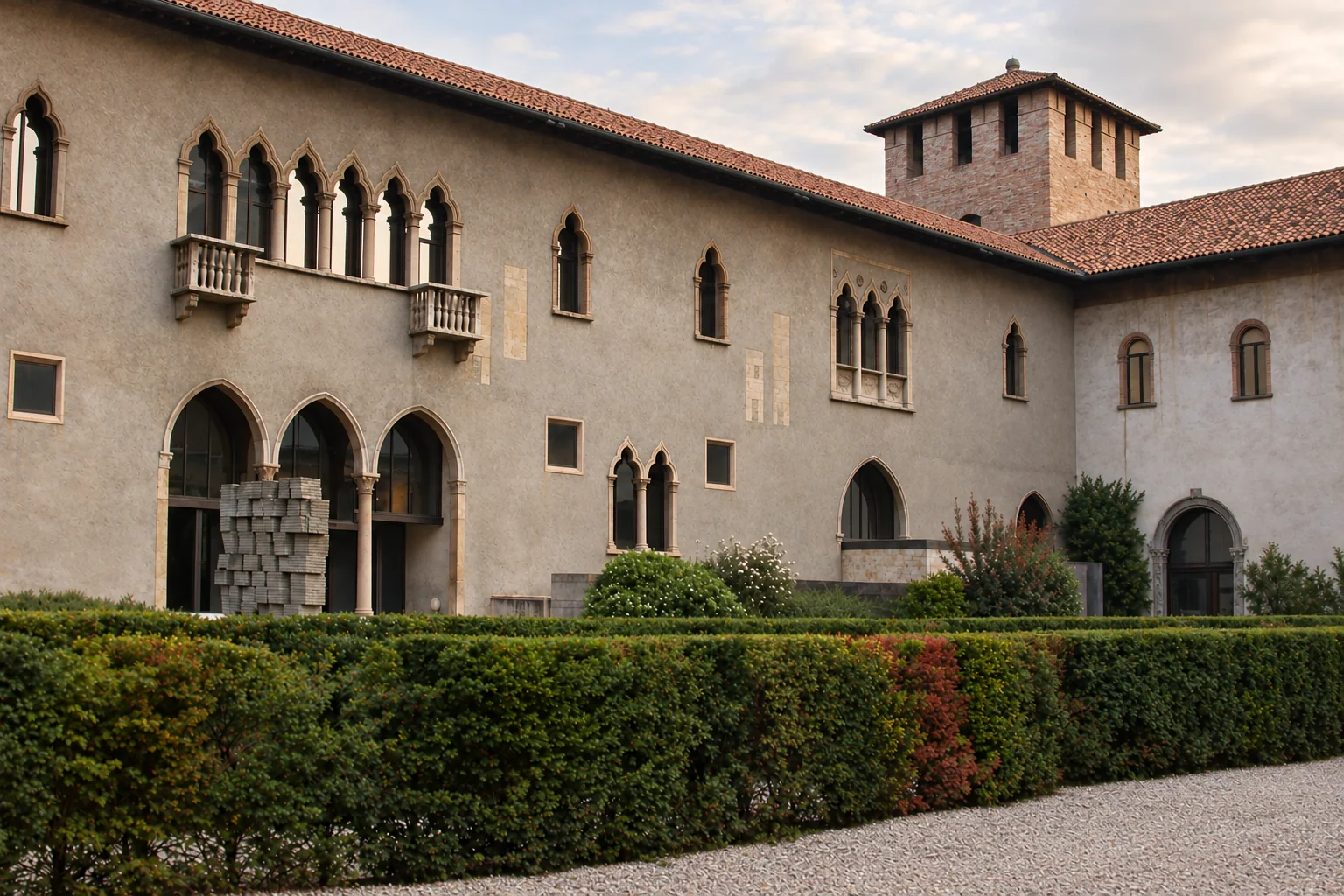
Courtyard façade with a projecting stone balcony, pointed windows, upper wooden gallery and large pointed doorway.
The stone balcony, pointed openings and timber gallery on the courtyard-facing elevation.
Sources and citations (11)
  1. Comune di Verona, Musei CiviciJuliet’s Courtyard and House: new access procedures — Musei Civici di Verona / Comune di VeronaRoute: Teatro Nuovo entrance at Piazzetta Navona; monumental hall and foyer; one-way exit through Via Cappello 23; Tickets: €5 theatre-and-courtyard route; €12 theatre, courtyard and house; online-only purchase, required booking including free admiss […]Read source
  2. Comune di Verona, Musei CiviciCortile e Casa di Giulietta: accesso dal Teatro Nuovo in piazzetta Navona — Musei Civici di VeronaPercorso: ingresso Teatro Nuovo da piazzetta Navona; hall e foyer; uscita a senso unico sotto il volto al civico 23 di via Cappello; Biglietti: €5 Teatro Nuovo e cortile; €12 Teatro Nuovo, cortile e casa; acquisto online esclusivo, prenotazione obbli […]Read source
  3. CoopCulture — official Musei Civici di Verona ticket operatorBIGLIETTO DI INGRESSO CASA DI GIULIETTA CON CORTILE E TEATRO NUOVO | Coopculture VeronaPREZZI: €12 Casa di Giulietta + cortile + Teatro Nuovo; AVVISO: nominative tickets; ULTERIORI INFORMAZIONI: no on-site ticket office, exclusively online or call centre; DOVE: Teatro Nuovo, Piazzetta Navona; INFO E PRENOTAZIONI: +39 045 4856788Read source
  4. CoopCulture — official Musei Civici di Verona ticket operatorBIGLIETTO DI INGRESSO AL CORTILE DELLA CASA DI GIULIETTA E TEATRO NUOVO (NO CASA DI GIULIETTA) | Coopculture VeronaPREZZI: €5 cortile + Teatro Nuovo, excludes house; AVVISO: nominative tickets; ULTERIORI INFORMAZIONI: no on-site ticket office, exclusively online or call centre; DOVE: Teatro Nuovo, Piazzetta Navona; INFO E PRENOTAZIONI: +39 045 4856788Read source
  5. Comune di Verona, Musei CiviciSculptures — Musei Civici di VeronaNereo Costantini’s 1969 Juliet statue; original moved indoors in 2014 for conservation; located in the Sala del BalconeRead source
  6. Comune di Verona, Cultura e TurismoStatua di Giulietta — Comune di Verona / Musei CiviciInscription and account: courtyard statue placed in 2014 is a copy; original model by Nereo Costantini in 1968, first cast 1969; Original donated in 1972 and moved inside; 2014 replacement cast followed wear from visitor contactRead source
  7. Comune di Verona, Musei CiviciThe facade and balcony — Musei Civici di VeronaCurrent house-museum form follows Antonio Avena’s early-1940s medievalizing arrangement; Reuse of late-medieval/early-Renaissance decorative pieces alongside made-to-order neo-medieval elements modeled on 14th/15th c. examples; Balcony’s central slab […]Read source
  8. Comune di Verona, Musei CiviciJuliet’s House from the 14th to the 19th century — Musei Civici di VeronaTower-house at Via Cappello 23 documented from 1351; inn called Cappello, owned by heirs of Antonio Cappello; Hat-shaped inn sign remains on the arch key facing the inner courtyard; Late 18th/early 19th-century identification as Juliet’s House and ro […]Read source
  9. Comune di Verona, Musei CiviciJuliet’s House from Inn to House-Museum — Musei Civici di Verona1905 municipal purchase; 1939–1940 Antonio Avena restoration and furnishing; courtyard facade changed, balcony added, interior redesigned with painted medieval-style motifs; Licisco Magagnato arrangement in early 1970s; 1972 statue placement; museum […]Read source
  10. Comune di Verona, Musei CiviciDidattica — Casa di Giulietta, Musei Civici di VeronaOrigin of Romeo and Juliet story in Luigi da Porto’s novella, published 1531; Shakespeare’s later dramatic retelling; Eighteenth-century Grand Tour interest in Juliet’s tomb and search for a house connected to the story; twentieth-century neo-medieva […]Read source
  11. Comune di Verona, Musei CiviciGiulietta e Romeo di Cosroe Dusi: un capolavoro per la Casa di Giulietta — Musei Civici di VeronaCosroe Dusi, Romeo and Juliet, 1838, oil on canvas, 218 × 164 cm; Museum article places the canvas on the second floor in the Sala da Ballo and describes the balcony scene with rope ladderRead source
Look closer

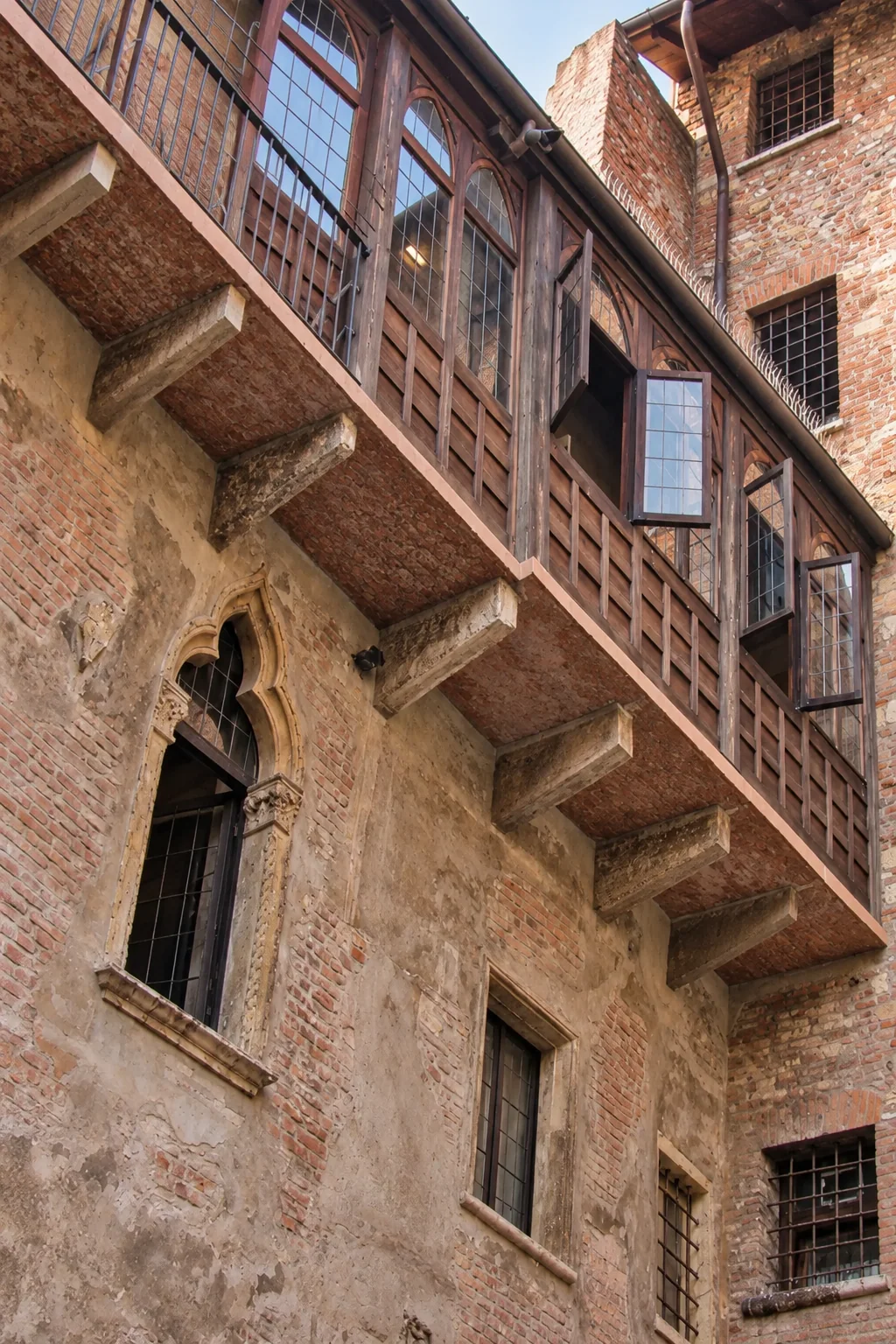
Upward view of the courtyard’s timber-framed gallery, glazed panels, projecting stone supports and trefoil-shaped window below.
The timber galleryGlazed timber framing and stone supports above a trefoil-shaped opening, in a view grounded in a 2006 photograph.
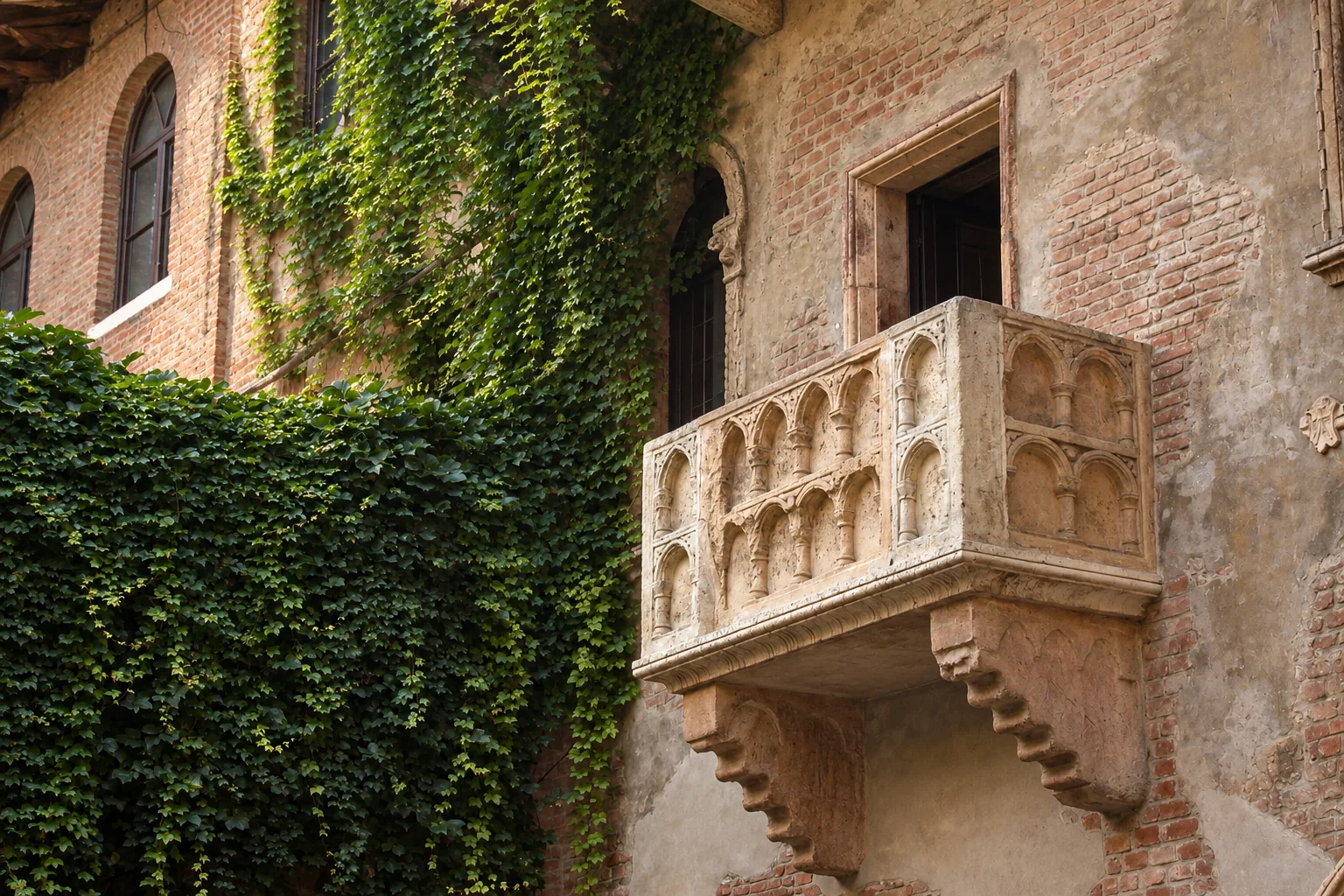
Pale stone balcony with two rows of Gothic arcades, a side return and two stepped supports against a brick wall.
Juliet’s balconyThe projecting stone balcony and its stepped supports, in an architectural view grounded in a 2006 photograph.
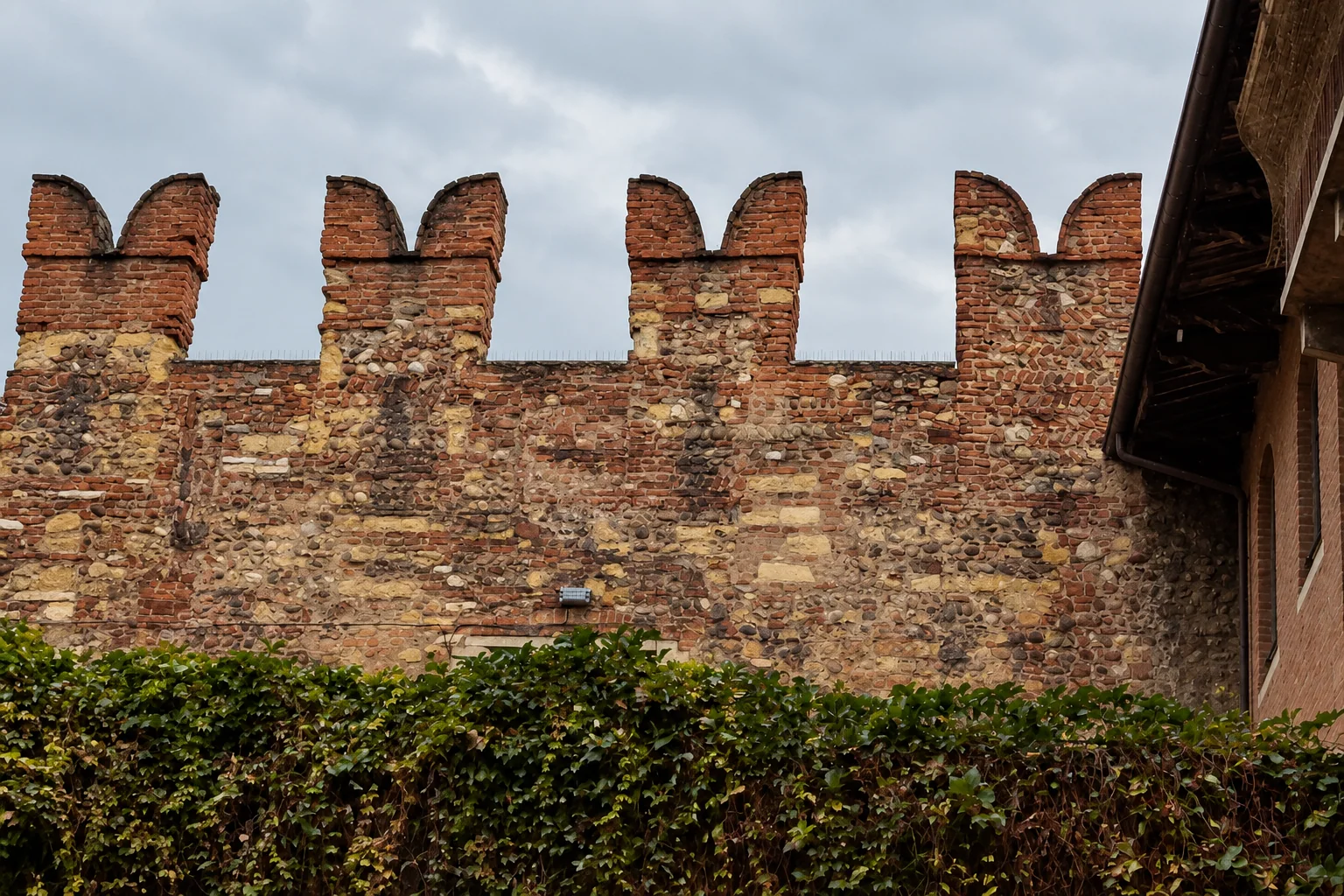
Four swallowtail brick merlons topping a rough stone courtyard wall, with ivy below and a roof edge at right.
Above the courtyardFour swallowtail merlons over mixed stone and brick, in a view grounded in a September 2022 photograph.

Five works worth finding

If you see nothing else, see these.

  1. The Cappello inn sign

    The medieval tower-house is documented by 1351 as an inn called Cappello. Its hat sign survives above the courtyard arch; official city history distinguishes the Cappello family from the Cappelletti in Dante.Key of the arch facing the courtyard

  2. A balcony made of old and newAntonio Avena

    The balcony was added during Avena’s neo-medieval refit. Its central slab is fourteenth-century Avesa stone reused from the Della Scala palaces; the shaped brackets and balcony arrangement belong to the later staging.Courtyard-facing facade

  3. Avena’s neo-medieval facadeAntonio Avena

    Late-medieval and early-Renaissance reused pieces sit alongside newly made elements inspired by fourteenth- and fifteenth-century models. Painted ornamental motifs were designed to evoke medieval domestic interiors as part of a deliberate literary setting.Courtyard facade and house interiors

  4. Juliet by Nereo CostantiniNereo Costantini

    The courtyard statue is a replacement cast installed in 2014 after the original had worn from repeated touching. The original is kept indoors in the Sala del Balcone; neither sculpture is a documented portrait of a historical Juliet.Original in the Sala del Balcone; 2014 cast in the courtyard

  5. Cosroe Dusi’s Romeo and JulietCosroe Dusi

    Cosroe Dusi’s 1838 canvas interprets the literary balcony scene, with Romeo reaching Juliet by a rope ladder. The museum’s collection article connects it to the house’s literary subject.House-museum collection

Plan your visit

Everything you need before you go.

Tickets
From €12
Booking
Book ahead
Time needed
1 hour
Best time
Choose a timed reservation that gives you room for the theatre introduction, courtyard and, with the full ticket, the house. Plan about an hour as an Italia Magnifica estimate for that full route.
Getting there
Enter through Teatro Nuovo on Piazzetta Navona. The one-way route passes through the theatre’s monumental hall and foyer, then the courtyard; the full ticket continues into the house. The route exits through the archway at Via Cappello 23, in Verona’s historic centre.
Accessibility
The city says wheelchair users and visitors with reduced mobility may choose to enter the courtyard from the Teatro Nuovo foyer or remain in the foyer; an exit toward Piazzetta Navona is available without crossing the courtyard. The courtyard has strongly uneven stone paving. A restroom for visitors with reduced mobility is available in Teatro Nuovo. Entry to the house is limited to the balcony floor and is possible only for visitors with disabilities who have sufficient independent mobility and are accompanied. Confirm with the museum whether the chosen route meets your mobility needs before booking.

The €12 full route includes Teatro Nuovo’s monumental hall and foyer, the courtyard, and Juliet’s House. A separate €5 ticket covers Teatro Nuovo and the courtyard without entering the house. Advance booking is required for both routes, including free-entry visits. Book online; the operator also offers telephone booking on +39 045 4856788. Tickets are issued in the visitor’s name. Tickets and VeronaCards are not sold at the site. Free-entry categories include children under 5, guides on professional or training duty, people with a Disability Card and one companion, and VeronaCard holders; bring the required proof. Last updated October 2026. Prices change, so check the official site before you go.

Allow about an hour as an Italia Magnifica planning estimate for the full route. Look from the arch to the balcony: the hat sign belongs to the documented Cappello inn, while the balcony was added in the twentieth-century staging and incorporates a reused fourteenth-century stone slab. The original bronze Juliet is inside; the courtyard statue is a later cast.

Get directionsGoogle MapsApple Maps

Tours worth booking

A few we would book ourselves, to get more from your visit.

Booking through these links may earn Italia Magnifica a commission, at no cost to you.

    • Viator
    • 2h 30m
    • 5.0★ · 17 reviews
    • Viator
    • 2h
    • 5.0★ · 15 reviews
    • Viator
    • 2h
    • 5.0★ · 11 reviews
    • Viator
    • 2h 30m
    • 5.0★ · 7 reviews
    • Viator
    • 3h
    • 5.0★ · 7 reviews
    • Viator
    • 2h 30m
    • 5.0★ · 5 reviews

Before you book

Did Shakespeare’s Juliet live in this house?

No historical Juliet is documented here. The municipal history records a medieval tower-house used as an inn and says the building was identified as Juliet’s House only centuries later, during a romantic and Shakespearean pilgrimage.

What does the €12 ticket include?

The full route includes Teatro Nuovo’s monumental hall and foyer, Juliet’s Courtyard, and the house. The separate €5 route includes Teatro Nuovo and the courtyard but not the house. Both routes require advance booking, including eligible free visits. Book online; the operator also offers telephone booking. Tickets are issued in the visitor’s name and are not sold on site.

Is the balcony medieval?

The balcony was added during the 1939–1940 refit. Its central slab is a reused fourteenth-century piece from the Della Scala palaces, while the balcony arrangement and shaped brackets were made for the later neo-medieval setting.

Where is Costantini’s original bronze Juliet?

The original sculpture is kept in the Sala del Balcone. A replacement cast was installed in the courtyard in 2014 after the original was removed for conservation.

Can wheelchair users visit the courtyard and house?

The city says visitors with reduced mobility may choose to enter the courtyard from the Teatro Nuovo foyer or remain in the foyer; the courtyard paving is very uneven, and an exit toward Piazzetta Navona is available. The house visit is limited to the balcony floor and requires sufficient independent mobility plus a companion. A restroom for visitors with reduced mobility is available in the theatre.

How long should I allow for a visit?

Allow about 60 minutes as an Italia Magnifica planning estimate for the theatre introduction, courtyard, and house route. The museum does not publish a recommended visit duration; allow extra time if you plan to explore the surrounding historic centre.

A letter from Italy, once a month.

The places, tables and makers we found worth your time. One email, no noise.

One letter a month. Unsubscribe at any time. We never share your address.

Help us get it right

What is it about?