Skip to content

Castelvecchio

A Scaliger fortress on the Adige, where Carlo Scarpa made the castle’s layered history part of the museum route.

  • Verona
  • Castle
Where
Verona
Best for
Scaliger castle
Allow
1 hr 30 min
Tickets
From €9
Checked October 2026

Cangrande II della Scala had Castelvecchio built between 1354 and 1356 after the conspiracy led by his half-brother Fregnano, creating a fortified point to control the city’s northern access on the Adige. The complex has two distinct parts: the eastern court of arms is enclosed by high crenellated walls and seven towers, including the 42-metre Mastio, whose completion in 1376 is recorded by an inscription; the Scaliger residence, the Reggia, occupies the west. Three arches carry the fortified bridge to the left bank, with its longest arch spanning 48 metres. The remains of the earlier church of San Martino in Aquaro are visible in the court of arms, a reminder that the castle absorbed older layers as it grew.

After Verona came under Venetian rule, the castle served as barracks and armoury; it later housed a military academy. In 1923 its use passed to the city, and restoration work from 1924 to 1926 prepared it as a museum, inaugurated on 25 April 1926. The bridge was destroyed during the Second World War and rebuilt from 1949 to 1951. From 1958, Carlo Scarpa worked with museum director Licisco Magagnato on a reordering that continued in phases through 1975. Scarpa made the building’s history visible through floor openings and cross-sections to reveal its stratigraphy, and joined medieval stone and timber to exposed or bush-hammered concrete. The route moves between galleries and short outdoor passages, with works placed in visual conversation; it reaches a striking point at the equestrian statue of Cangrande I, set on a tall concrete support opposite the older Porta del Morbio.

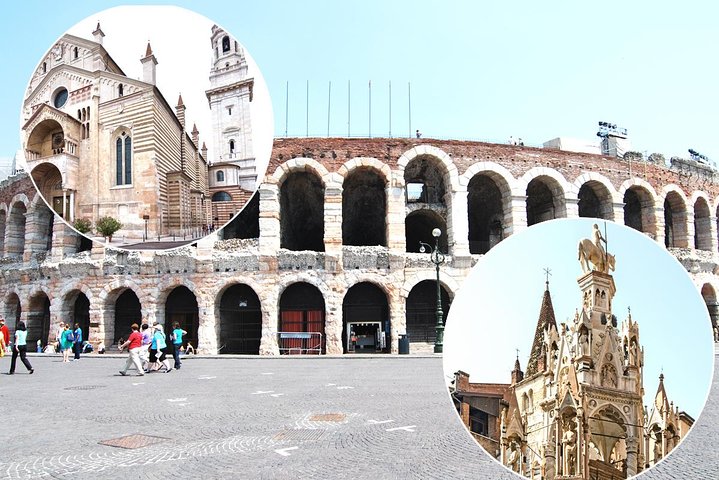
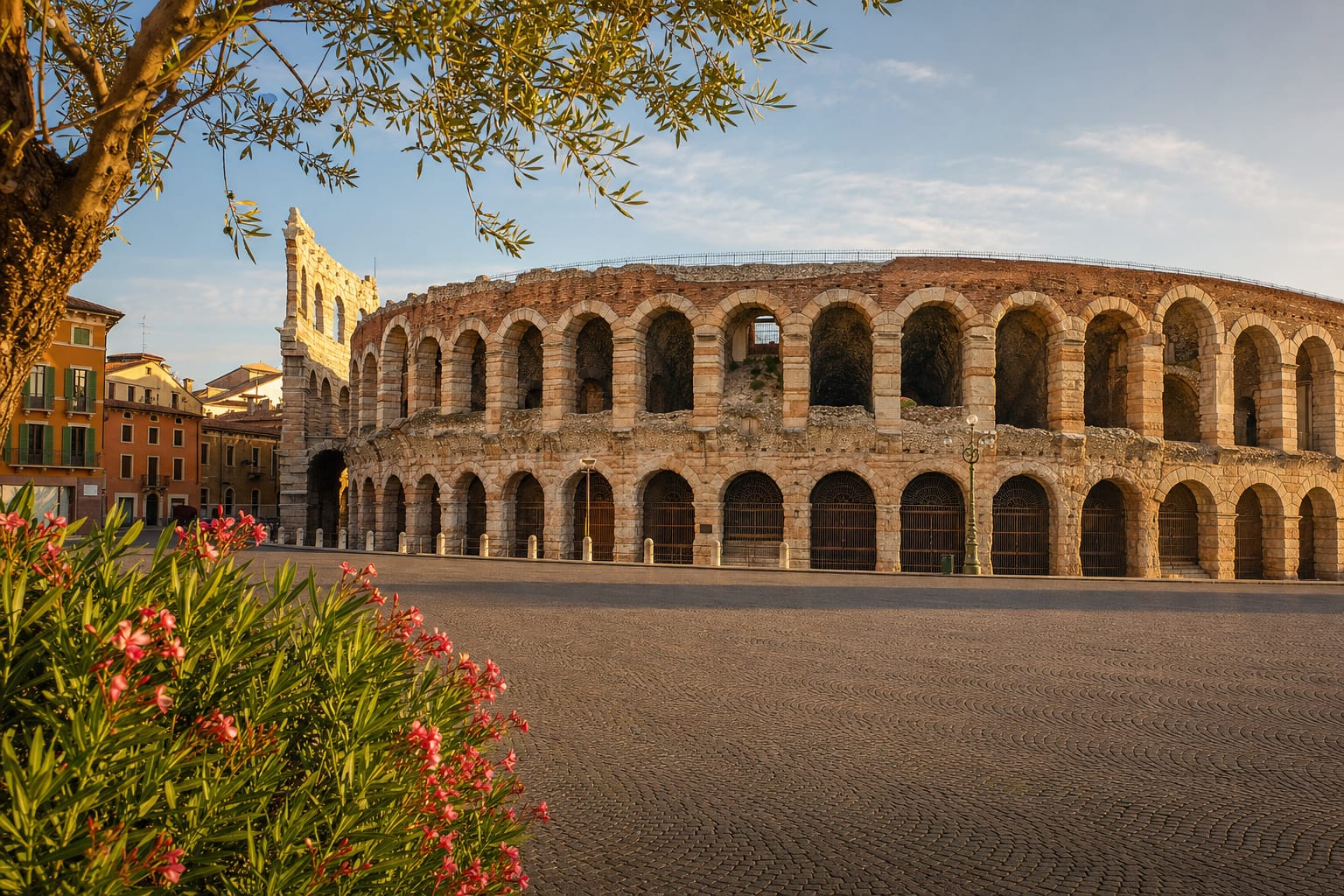
The museum’s five connected sculpture rooms present medieval Veronese works from the tenth to fourteenth centuries, while its painting galleries hold more than three hundred works dating from the fourteenth century to the late eighteenth. The building and collection tell one story: a fortified crossing repeatedly adapted, first for military use and later for a civic museum. To continue through the same city, see the Arena di Verona.
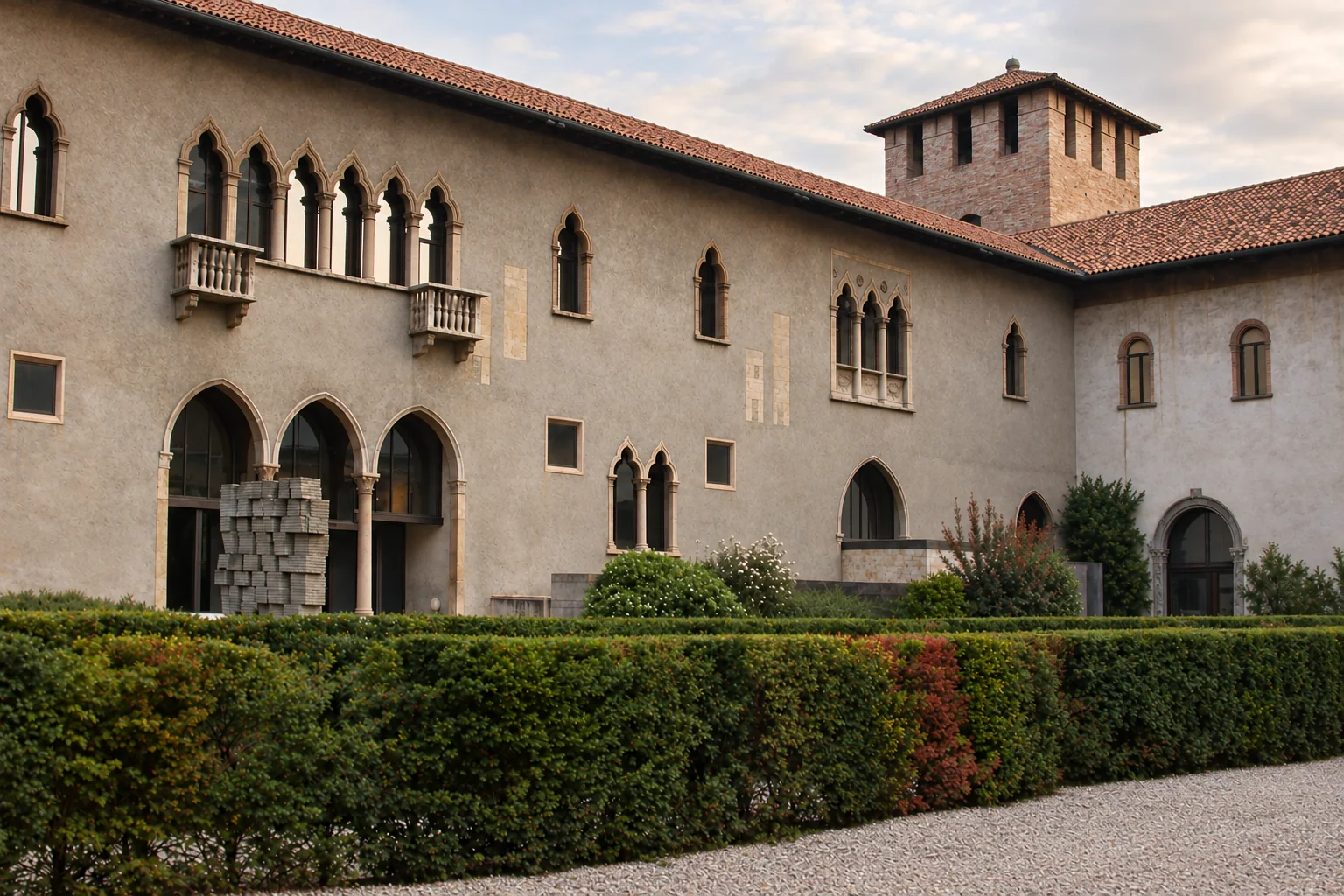
Interior courtyard at Castelvecchio, with pointed Gothic openings, an upper brick tower and a clipped hedge beside a gravel path.
A courtyard view at Castelvecchio brings the palace’s Gothic openings, brick tower and enclosed garden edge into one frame.
Sources and citations (17)
  1. Museo di Castelvecchio — Comune di VeronaDipinti — Museo di Castelvecchio, Comune di VeronaOpening paragraph: collection size, dates and named paintersRead source
  2. Museo di Castelvecchio — Comune di VeronaDa castello a museo — Museo di Castelvecchio, Comune di VeronaBody paragraphs on 1923 city handover, 1924–1926 restoration, 1926 museum, WWII damage and bridge reconstruction 1949–1951Read source
  3. Museo di Castelvecchio — Comune di VeronaIl Mastio e la reggia scaligera — Museo di Castelvecchio, Comune di VeronaOpening paragraph on Reggia/Mastio and 1376 completion; display-system paragraph identifies Madonna della Quaglia in room 9Read source
  4. Museo di Castelvecchio — Comune di VeronaThe castle — Museo di Castelvecchio, Comune di Verona‘The castle’ body paragraphs on construction, pre-existing remains, east/west division, towers, bridge and later usesRead source
  5. Museo di Castelvecchio — Comune di VeronaCarlo Scarpa and Castelvecchio — Museo di Castelvecchio, Comune di VeronaBody paragraphs 27–31: exposed layers, itinerary, materials and phasesRead source
  6. Museo di Castelvecchio — Comune di VeronaCentenario di Castelvecchio: Un museo, una statua — Museo di Castelvecchio, Comune di VeronaHistorical narrative states the museum's inauguration was 25 April 1926 and restoration works ran 1924–1926. No temporary event dates/status are used in evergreen copy.Read source
  7. Museo di Castelvecchio — Comune di VeronaAccessibilità — Museo di Castelvecchio, Comune di VeronaFull accessibility section: partial mobility access, lift measurements/scope, wheelchair, blind visitor route and free admissionRead source
  8. CoopCultureCastelvecchio Museum | Admission Ticket — CoopCulturePrices €9/6/2; €1 November–March first Sunday available at ticket office; personal ticket/identity-document rules; purchase online or call centre. Root direct operator page retrieved 8 October 2026. No ordinary reservation mandate inferred.Read source
  9. Verona Tourist Office — IAT VeronaCastelvecchio Museum — Visit VeronaAccessibility FAQ: partial mobility access; 120x120cm lift, 80cm door; Paintings Gallery only; wheelchair on request and visually impaired route. Root direct primary tourism-office page retrieved 8 October 2026.Read source
  10. Museo di Castelvecchio — Comune di VeronaVisiting the museum — Museo di Castelvecchio, Comune di VeronaLines 19–21: ticketing-service management and online purchase/booking procedure changed from 1 October 2026. Lines 30–45: €9 full, €6 reduced, €2 eligible ages 18–25, free categories, €1 first Sunday November–March. Lines 62–71: information/booking c […]Read source
  11. Museo di Castelvecchio — Comune di VeronaCome raggiungerci — Museo di Castelvecchio, Comune di VeronaParagraph 17 address; paragraphs 27–44 railway station, ATV buses and nearest stopRead source
  12. Museo di Castelvecchio — Comune di VeronaCangrande — Museo di Castelvecchio, Comune di VeronaOpening three body paragraphs: iron-panel gate, approach, Porta del Morbio, road to bridge and museum/city route meeting point; later statue-support/canopy passageRead source
  13. Museo di Castelvecchio — Comune di VeronaLa galleria dei dipinti — Museo di Castelvecchio, Comune di VeronaBody paragraphs on corridor, 45-degree partitions, Adige slit windows, flooring and room colorsRead source
  14. Museo di Castelvecchio — Comune di VeronaLe immagini delle opere — Museo di Castelvecchio, Comune di VeronaWork label for Madonna col Bambino detta Madonna della Quaglia; image-rights notice reviewed separatelyRead source
  15. Museo di Castelvecchio — Comune di VeronaLa galleria delle sculture — Museo di Castelvecchio, Comune di VeronaBody paragraphs on five-room sequence, dates, Gothic bifora light and named sculpture groupsRead source
  16. Museo di Castelvecchio — Comune di VeronaMy IMUV Card — Musei Civici di Verona / Comune di VeronaPage paragraphs 34–38: eligibility limited to Verona City residents age 18+; free-entry list at 47–56 includes Castelvecchio.Read source
  17. Museo di Castelvecchio — Comune di VeronaMusei Civici di Verona: novità per biglietterie e bookshop — Comune di Verona / Musei CiviciOfficial update paragraphs 19–38: change in ticketing-service management and online purchase/booking procedures; link to CoopCulture; call centre for information and bookings.Read source
Look closer

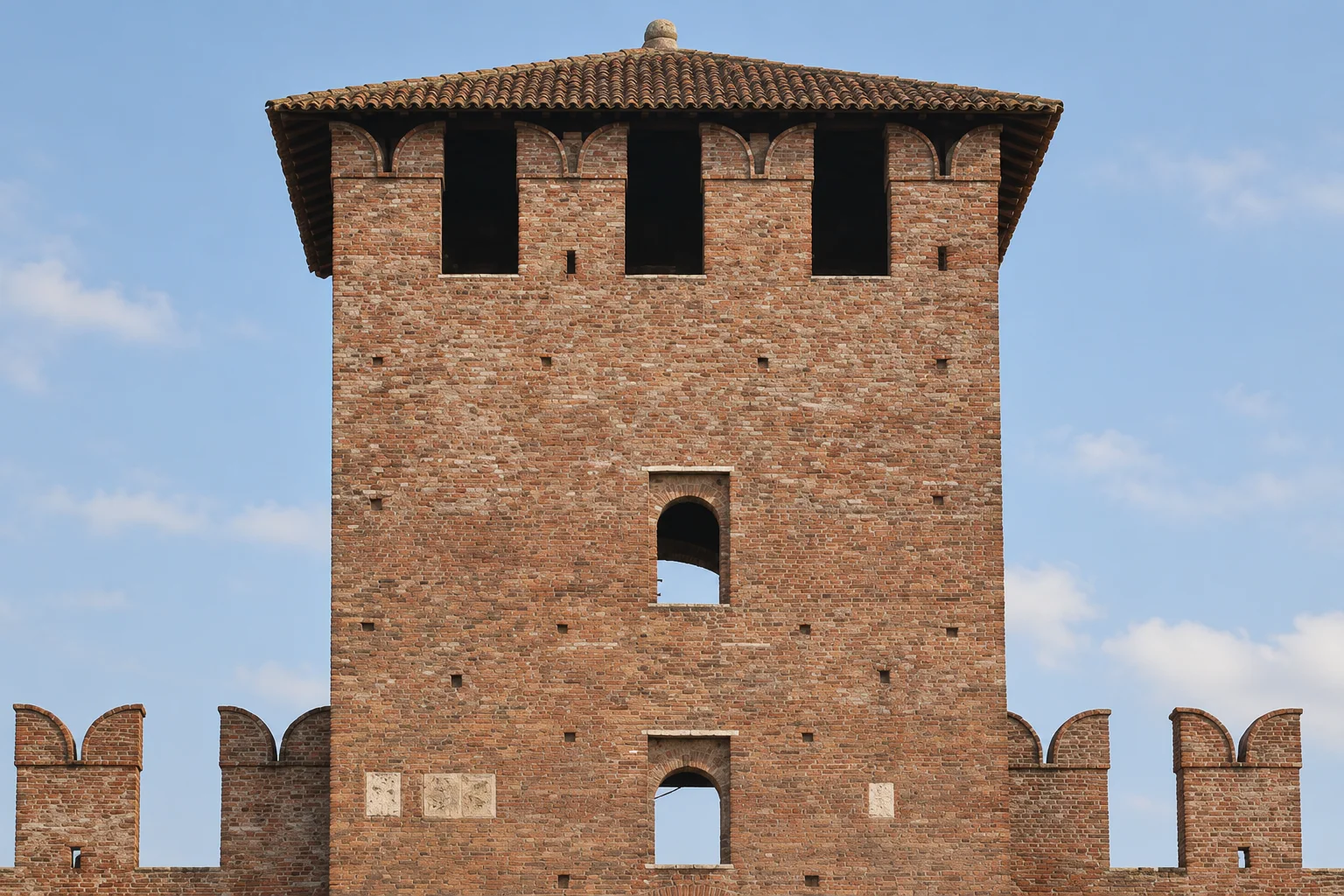
Upper part of Castelvecchio’s brick entrance tower, with three rectangular openings beneath a tiled roof and two small arched windows below.
The brickwork of Castelvecchio’s entrance towerA closer view of the entrance tower shows its tiled roof, dark upper openings and brickwork above the adjoining battlements.
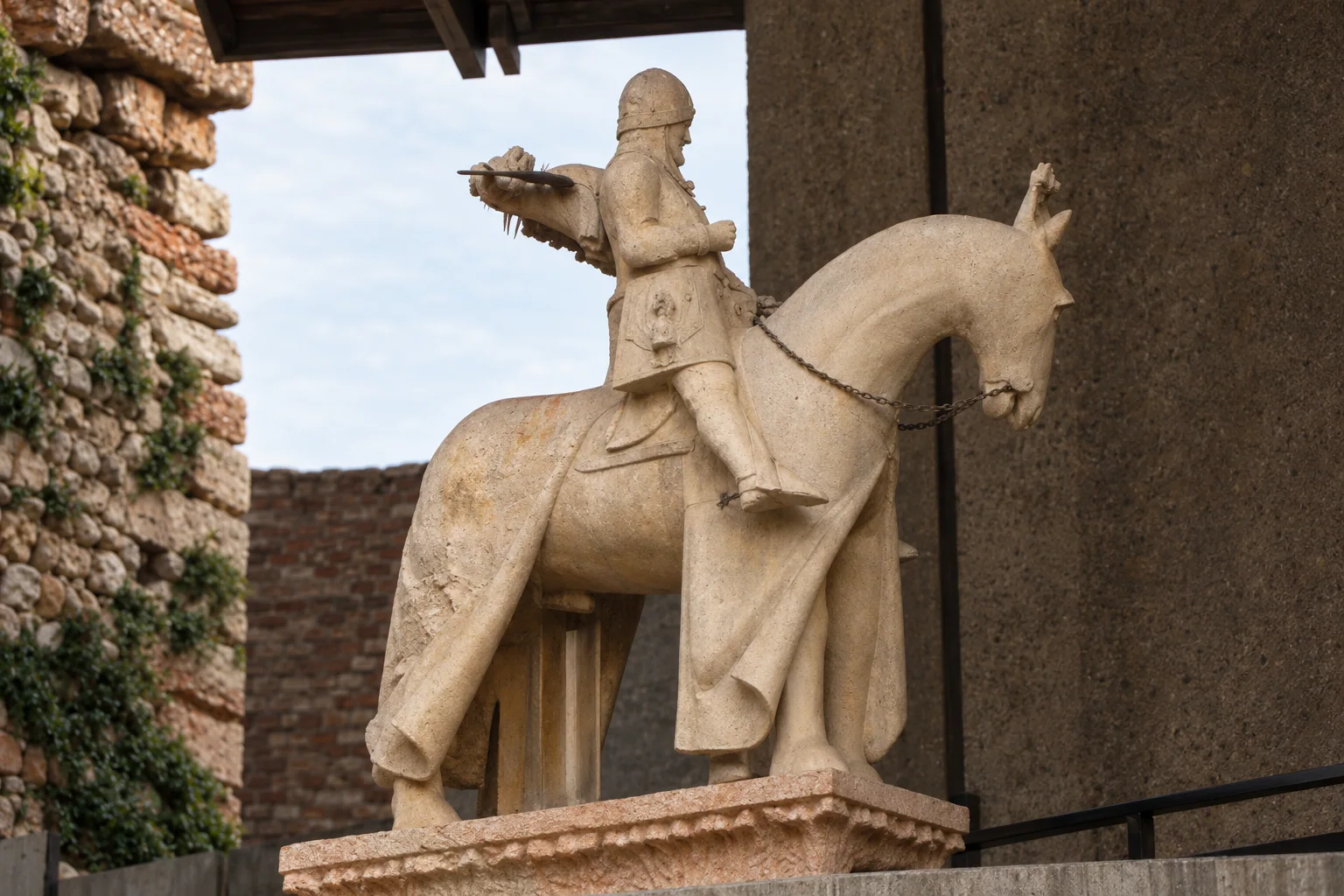
Pale stone horse and armoured rider, with horse facing right and the rider’s extended arm pointing left, on a plinth above a concrete support.
Cangrande above the museum routeThe equestrian statue of Cangrande is displayed beneath a canopy on a concrete support, with the castle’s masonry around it.
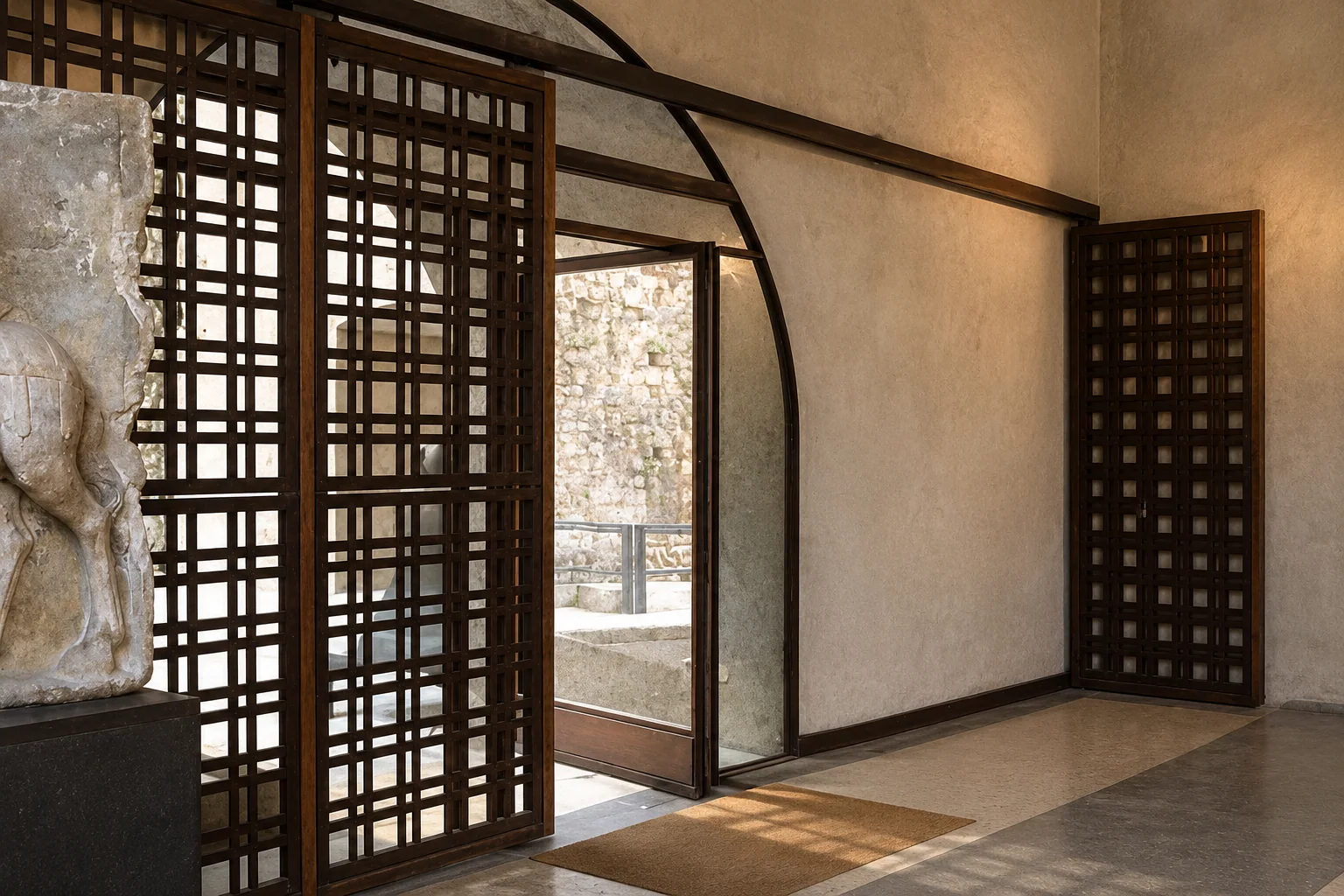
Dark square-lattice panels around an open glass doorway inside Castelvecchio, with pale walls and courtyard masonry beyond.
A lattice doorway at CastelvecchioSquare lattice panels frame an open doorway and a glimpse of the castle’s courtyard masonry.

Five things worth finding

If you see nothing else, see these.

  1. The fortress and its bridge

    The east court of arms and west Reggia form two distinct parts of the castle. Its three-arched bridge connects it to the left bank; the longest arch spans 48 metres.East court of arms and across the Adige

  2. Cangrande at the city threshold

    An arched opening and modular iron-panel gate lead from the last painting-gallery room to the equestrian statue. Opposite, the older city gate and a glimpse of the bridge road make this a meeting point of museum and urban routes.Exhibition area opposite Porta del Morbio

  3. Scarpa’s visible layersCarlo Scarpa; 1958, 1961–64, 1966–68, 1975

    Floor openings and cross-sections reveal earlier building layers. The route combines older stone and wood with exposed or bush-hammered concrete, linking conservation and contemporary display.Across the museum route

  4. The medieval sculpture gallery

    Five vaulted-linked rooms present Veronese medieval sculpture from the 10th to 14th centuries. Natural light enters through Gothic bifora windows. The museum notes the figure of Santa Cecilia with nearby Santa Marta, Saint Bartholomew and Saint Catherine, and separately the Tomb Crucifixion group; these works are attributed to the Master of Sant’Anastasia.Five connected sculpture rooms

  5. The angled passage in the painting galleryCarlo Scarpa

    Offset partition ends cut at 45 degrees shape a narrow side corridor. Slit windows in the thick outer wall offer glimpses of the Adige; Impruneta terracotta paving is edged with pale stone.Painting gallery side corridor

Plan your visit

Everything you need before you go.

Tickets
From €9
Ticket arrangements
Check current operator guidance
Time needed
1 hr 30 min
Best time
Allow time for the indoor galleries and the short outdoor passages. Choose weather that suits both parts of the route, and check the museum’s current visitor notices before setting out.
Getting there
The museum is in Verona’s historic centre at Corso Castelvecchio 2. The official directions page says Verona Porta Nuova is the main railway station and that ATV buses reach the museum; the nearest public-transport stop is Castelvecchio. Check the operator’s linked transit service for current routes.
Accessibility
The museum describes mobility access as partial. Its lift has a 120 × 120 cm interior and an 80 cm-wide entrance; it serves only the Paintings Gallery, which the accessibility page associates with works from the 16th to 18th centuries. The lift does not serve the whole castle, and the source does not define access to every room or every painting. A wheelchair is available at the ticket office on request; the museum also identifies a route for blind visitors. Contact the museum to confirm whether your intended rooms and route are accessible. The museum’s page says admission is free for a disabled visitor and one companion.

Full admission is €9, with a €6 standard reduced rate and €2 for eligible EU visitors aged 18–25 and reciprocal non-EU categories. The museum lists free entry for under-18s (under-14s accompanied), visitors with disabilities and one companion, VeronaCard holders, and My IMUV Card holders resident in the Municipality of Verona. The €1 first-Sunday offer applies November–March. Use the current official CoopCulture service for online purchases or call-centre bookings, and bring the identity document required for personal tickets. The published guidance does not establish a general advance-reservation requirement; check with the operator for your visit. Prices checked 8 October 2026. Last updated October 2026. Prices change, so check the official site before you go.

As you pass through the arched opening toward Cangrande, notice the modular gate made of interwoven flat iron strips: the museum says its pattern recalls medieval grilles. Opposite are the remains of Porta del Morbio, with the road toward the bridge visible above it.

Get directionsGoogle MapsApple Maps

Tours worth booking

A few we would book ourselves, to get more from your visit.

Booking through these links may earn Italia Magnifica a commission, at no cost to you.

    • Viator
    • 2h
    • 5.0★ · 11 reviews
    • Viator
    • 2h
    • 5.0★ · 8 reviews
    • Viator
    • 3h
    • 5.0★ · 6 reviews
    • Viator
    • 1h 30m
    • 5.0★ · 1 reviews
    • Viator
    • 2h
    • 5.0★ · 1 reviews
    • Viator
    • 2h 30m
    • 4.9★ · 32 reviews

Good to know

How much time should I allow for Castelvecchio?

Allow about 90 minutes as an editorial planning estimate. Add time to study the galleries or walk across the fortified bridge.

Does the lift reach the whole castle?

No. The museum says access for visitors with mobility impairments is partial: the lift serves only the painting gallery. A wheelchair is available on request, and the museum identifies a route for blind visitors; contact the operator to confirm the route you need.

Do I need to reserve a ticket before visiting?

The museum’s current visitor page links to the official CoopCulture ticket service and gives a contact for information and bookings. Its pages reviewed do not say whether ordinary museum admission requires a reservation. Check the current official ticket flow or contact the operator before your visit.

A letter from Italy, once a month.

The places, tables and makers we found worth your time. One email, no noise.

One letter a month. Unsubscribe at any time. We never share your address.

Help us get it right

What is it about?