The Doge’s Palace was a machine of government as well as a residence. Councils met, magistrates heard cases and officials worked within the same complex. Its decorated rooms present Venice’s preferred image of itself, while the adjoining prison route reveals another part of the Republic’s exercise of power.
Gothic outside, Renaissance within
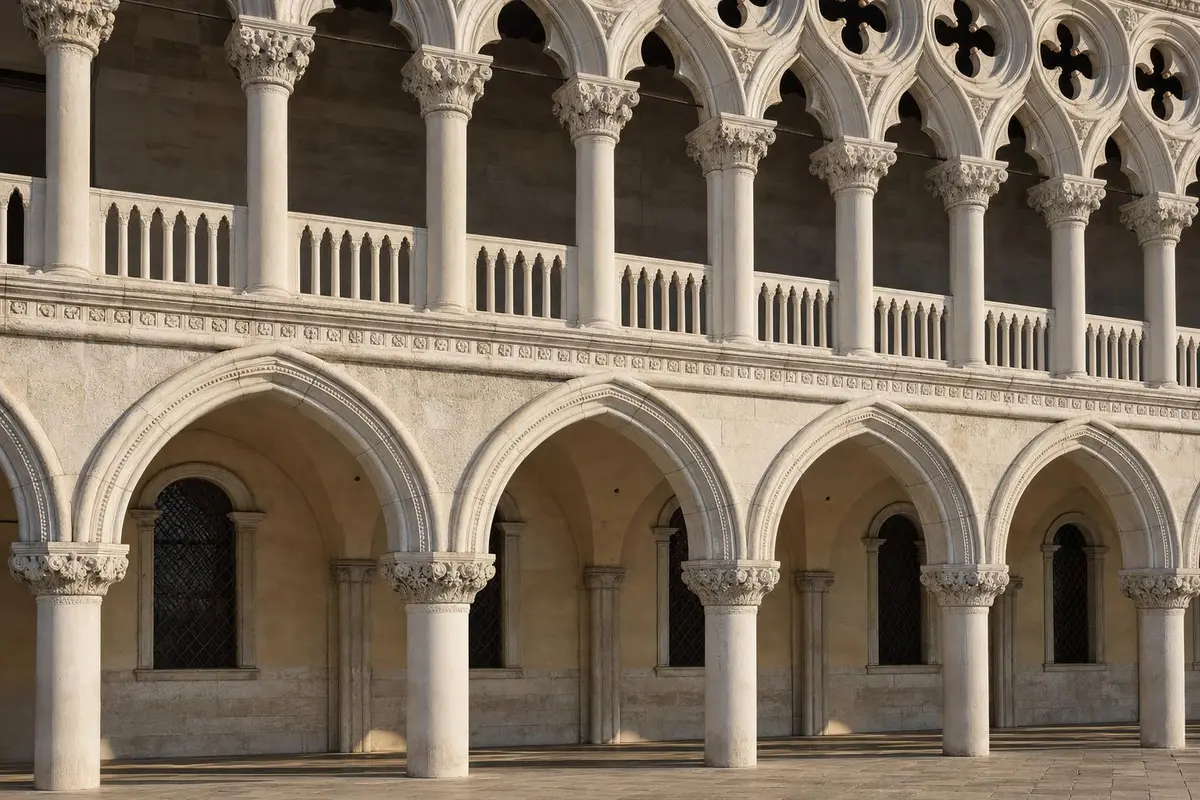
The palace grew through successive campaigns rather than one complete design. The basin-facing wing took shape from the fourteenth century; the Renaissance canal wing followed later. In the courtyard, the Giants’ Staircase brings these layers into view, with Sansovino’s Mars and Neptune above it.1,2
Look at the rooms as institutions
The Great Council, Senate and Collegio occupied different chambers. Their decoration celebrated the Republic and the authority of the bodies that met there. The Museo dell’Opera offers a closer view of original capitals removed from the exterior during restoration, making a useful counterpoint to the state rooms.2
The bridge belongs to a prison route
The Bridge of Sighs connects the palace with the New Prisons across the canal. It is part of the story of justice and confinement, rather than a ceremonial approach. Special itineraries enter other rooms under separate arrangements, so choose them deliberately instead of assuming every palace space is included.2