

Skip to content

Castelvetrano

Selinunte

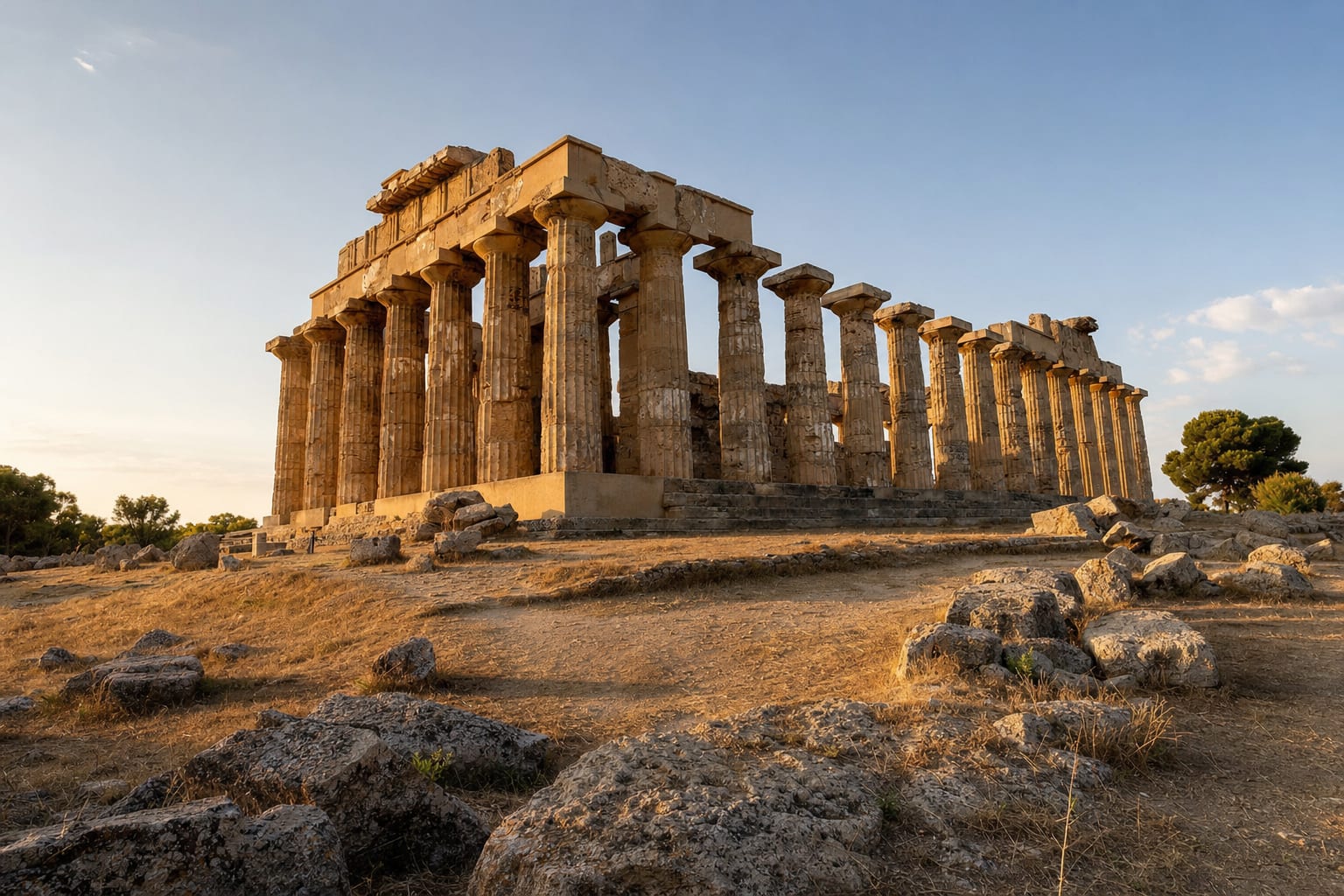
Vast Greek temple ruins, Temple E by the sea, acropolis over the dunes, one of Europe's largest archaeological parks.

Photograph · Selinunte

At a glance

Selinunte facts that matter

Names, makers, dates, and context before the story opens up.

What it isArchaeological site
WhereCastelvetrano, Sicily
Known forVast Greek temple ruins, Temple E by the sea, acropolis over the dunes, one of Europe's largest archaeological parks

The story

What you're looking at

The Greek colony of Selinus flourished for two centuries before Carthage erased it in 409 BC, leaving temple columns scattered like felled trees above the shore. Its 270 hectares form one of the largest archaeological parks in Europe, with Temple E standing re-erected against the sea wind.

Verified details

Each statement below is linked to the record or institution that supports it.

Selinunte is an ancient city expressed through multiple archaeological districts: the acropolis, agora, eastern hill sanctuary, Gaggera sanctuaries, Manuzza housing area and necropolis. It is not a single temple field. The park also records a recently identified craft district with kilns.1

The acropolis occupies the southern promontory, with an urban sanctuary and housing organised in blocks 100 Doric feet wide, defined by principal plateiai and secondary stenopoi. The official record identifies its fortifications as Hellenistic-Punic. This is planning evidence, not a claim that all surviving fabric belongs to one date or community.1

The eastern hill has the monumental temples E, F and G. The Gaggera includes the sanctuary of Demetra Malophoros, Zeus Meilichios, the Hera Matronale temple and Temple M. These are separate ritual and archaeological contexts; letter labels are archaeological conventions, not safe substitutes for named dedications without component-specific evidence.1

Some archaeological finds are held in the park and displayed in Baglio Florio; the official record also places remains of Temple Y there. Cave di Cusa, about 11 km north-west, supplied calcarenite for temple construction and is a separate park site. Neither relationship makes Baglio Florio or Cave di Cusa interchangeable with ancient Selinunte.1

Selinunte belongs to the regional Parco archeologico di Selinunte, Cave di Cusa e Pantelleria, which also includes separate archaeological and museum sites. The official site shows ongoing research and changing event/access notices. Management scope is not a promise of a single route, ticket, opening state or accessibility condition.2

Sources and citations (2)
  1. Parco archeologico di Selinunte, Cave di Cusa e PantelleriaArea archeologica di SelinunteArchaeological areas and craft districtRead source
  2. Parco archeologico di Selinunte, Cave di Cusa e PantelleriaParco archeologico di SelinuntePark scope and current noticesRead source

Plan your visit

Before you go

Booking
Walk-up friendly

Find it

Where to find Selinunte

Get directionsGoogle MapsApple Maps