

Start with the room Palladio drew
Enter from Piazza Matteotti and give the auditorium a moment before looking at the scenery. Andrea Palladio designed the theatre in 1580 for the Accademia Olimpica. He died before it was complete. His son Silla oversaw the works, and Vincenzo Scamozzi made the scenery for the first performance. The rows curve around the stage, while the statues and columns above the seats bring the language of ancient theatre into an enclosed room.
How seven streets fit behind the stage
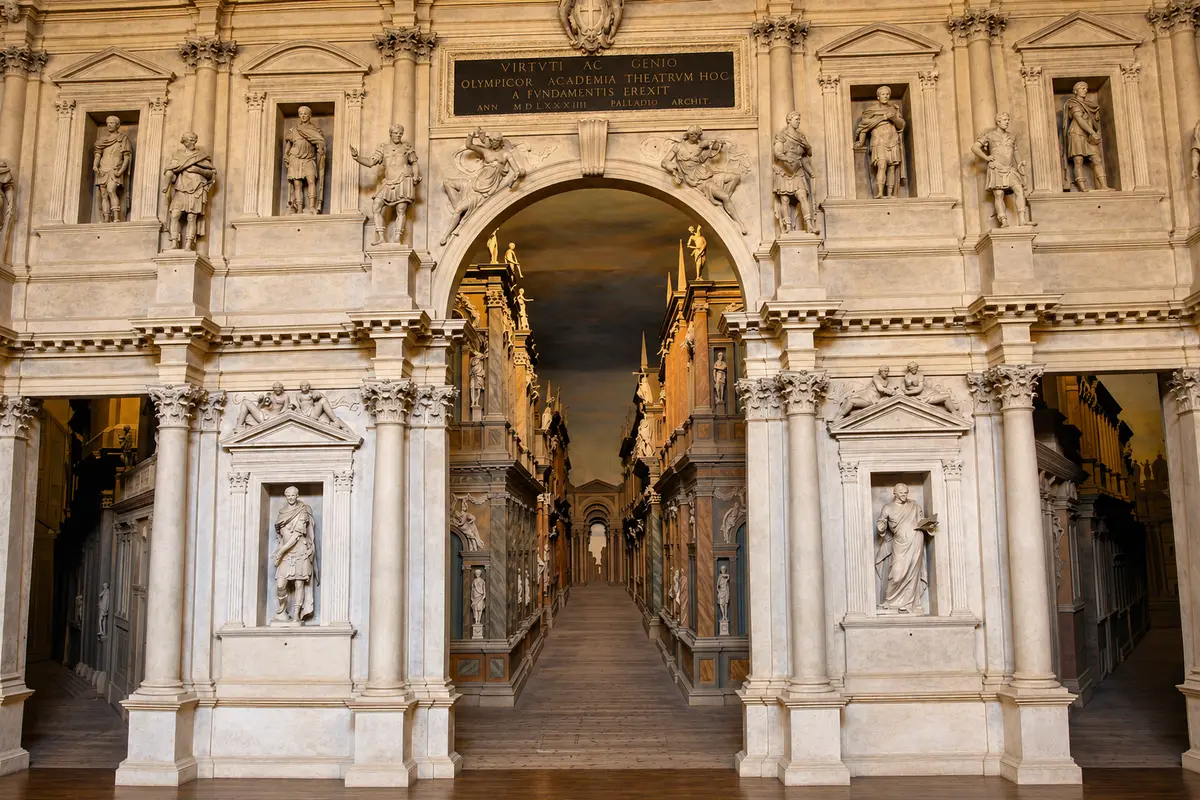
Scamozzi’s streets of Thebes were built for Sophocles’ Oedipus the King, performed in 1585. They remain behind the five openings of the stage front. Buildings get smaller as the street seems to recede, so a short run of scenery reads as a long city view. Look straight through a central opening, then move to one side where permitted. Different streets come into view, and the illusion becomes easier to understand when you change your point of view.
Before leaving, turn back towards the cavea. The stage makes sense as part of a whole room built around the act of looking. The ticket office is across the square at Palazzo Chiericati, a useful second stop for seeing how Palladio used classical forms on the scale of a city palace.


