Begin in the old circle
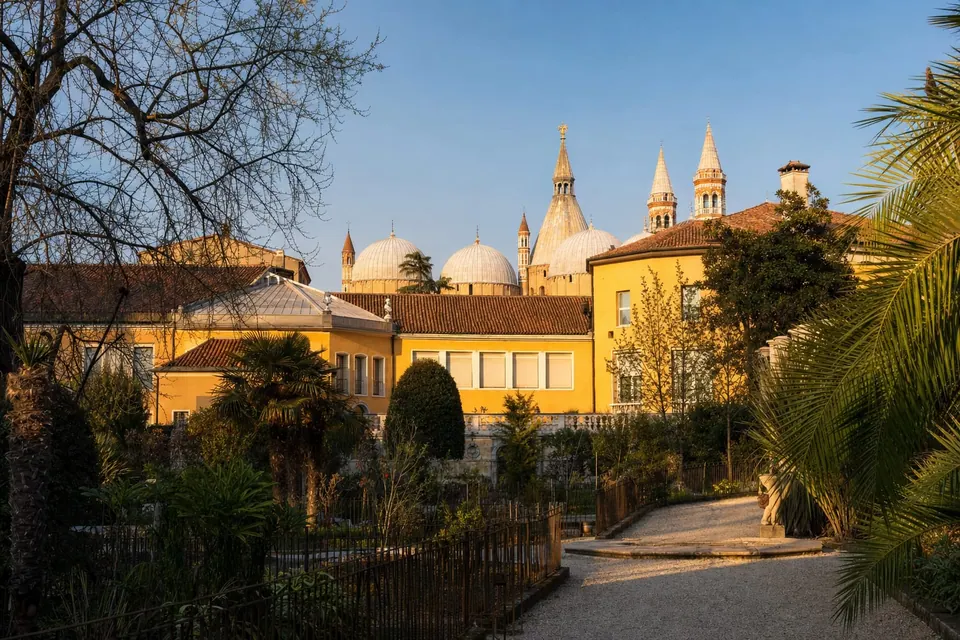
The University of Padua founded the garden in 1545 so students could learn to recognise medicinal plants. Begin in the old enclosure and look at the way its paths divide the beds. A circle contains an ordered plan of paths and compartments. The layout makes comparison possible on foot. Read a few labels and then look at the leaves and stems. That habit, of matching a name to the living plant, is what gives the old teaching garden its continuing point.
Find the palm and change climates
Near the north gate, the octagonal greenhouse holds the palm planted in 1585 that Goethe saw on his visit to Padua. It is a dwarf palm by species, so its name tells you less about the size of this old specimen than about its kind. Step back far enough to see the shape of its protection as well as the plant. Then continue to the modern Biodiversity Garden, where the greenhouses present plants in different climates.
The garden works well as a short route from one system to the other. In the historic beds, compare plants grouped for study. In the newer spaces, look for changes in how plants use water or cope with heat. Add the Botanical Museum if you want to follow the university’s collecting and research beyond the living beds.