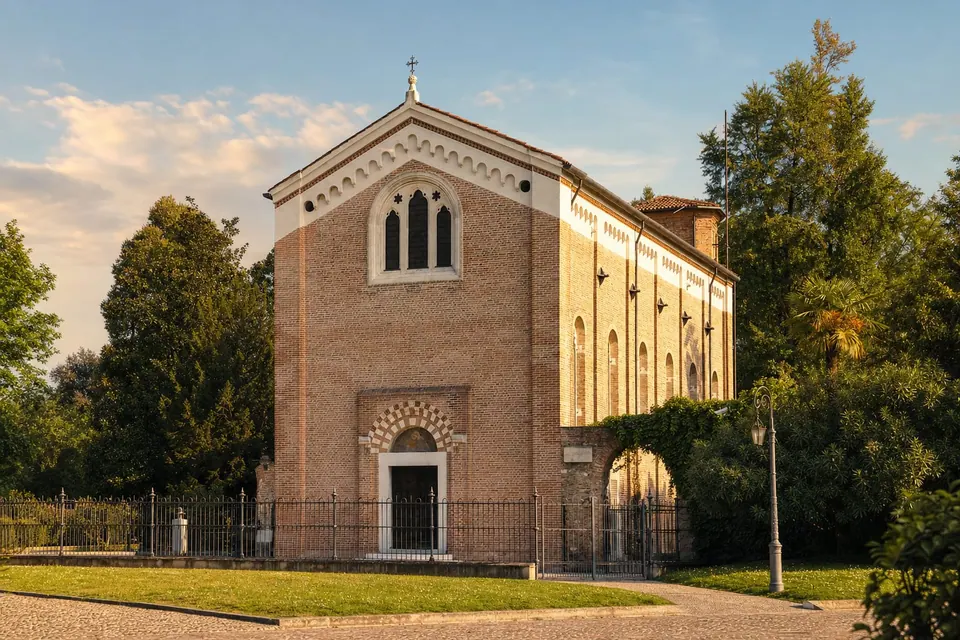
Enrico Scrovegni built this chapel partly to atone for his father's usury (Dante later placed Reginaldo Scrovegni among the damned in the Inferno), and between 1303 and 1305 he hired Giotto to paint it floor to ceiling.
The result changed European painting: Giotto gave his figures weight and grief instead of Byzantine flatness, and the Judas kiss and the mourning angels over Christ's body still read as real human moments eight centuries later. The west wall's Last Judgment shows Enrico himself, kneeling, handing a model of the chapel to the Virgin. Conservation rules are strict: visitors wait in a climate-controlled anteroom before a timed visit beneath the lapis blue, star-filled vault. UNESCO listed the chapel among Padua's fresco cycles in 2021.