Skip to content

Abbey of Santa Giustina

Padua’s vast Benedictine basilica, with Veronese’s altarpiece and the relics of Saint Luke and Saint Matthias.

  • Padua
  • Church
Where
Padua
Best for
Veronese altarpiece
Allow
1 hour
Tickets
Free

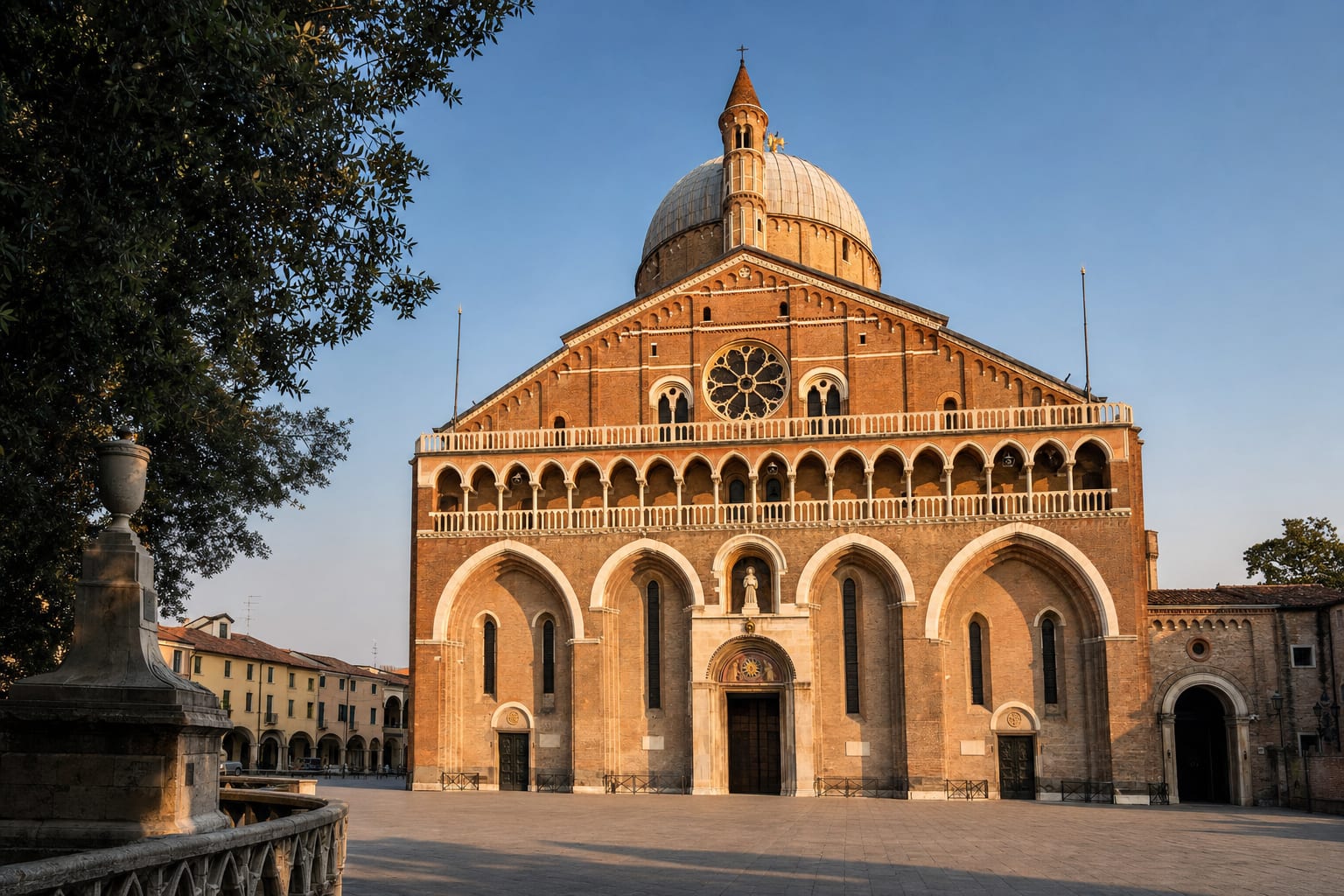
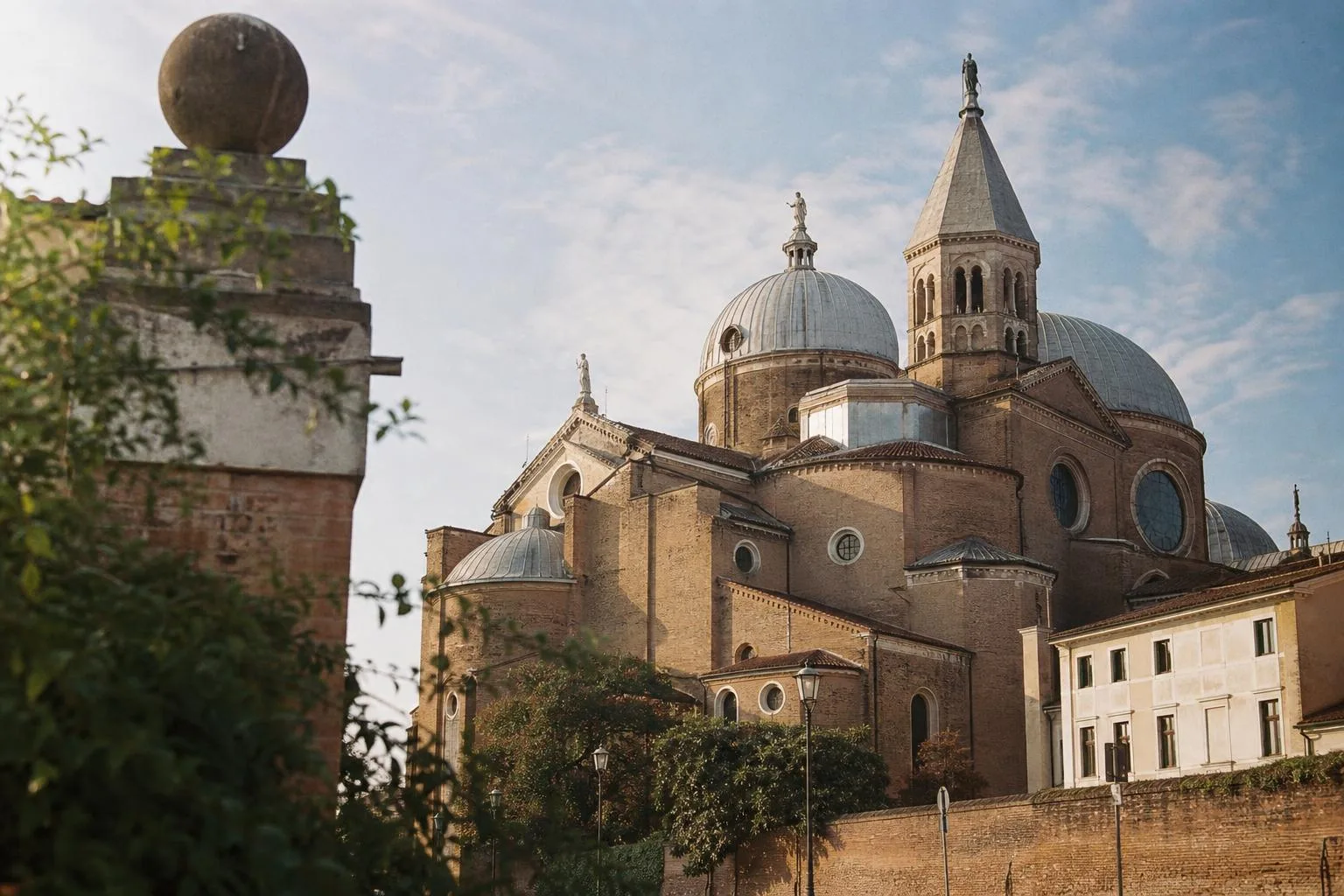
Santa Giustina is one of the largest churches in Italy, a Benedictine basilica on the south side of Prato della Valle in Padua. A church for the martyr Justina stood here by the 520s, and the monks have lived on the site since 971.

The present building was rebuilt from the 1500s and measures some 118 meters long, with a great central dome. Inside, Paolo Veronese’s altarpiece of the Martyrdom of Saint Justina (1576) dominates the apse. The basilica also keeps the relics of Saint Luke the Evangelist and Saint Matthias, and the Sanctuary of Prosdocimus, a rare sixth-century survivor. Napoleon’s forces suppressed the community in 1797; monks returned in 1917. Cloisters and the Martyrs’ Corridor are part of the visit.
Five things worth finding

If you see nothing else, see these.

  1. Martyrdom of Saint JustinaPaolo Veronese

    A huge altarpiece that dominates the church from the far end; look for the saint’s calm face at the center of the drama.High altar, apse

  2. The tombs of Saint Luke and Saint MatthiasGothic and Renaissance marble, 14th and 16th century

    The basilica keeps the relics of an Evangelist and of the apostle who replaced Judas, each in a carved marble ark.Left and right transepts

  3. Sacello of San ProsdocimoEarly medieval, 6th century

    A small Greek-cross chapel with its original marble screen, one of the rare pieces to survive from the church’s earliest days.Inside the basilica, near the Martyrs’ Corridor

  4. The Martyrs’ Corridor and Well16th century

    A passage with an octagonal well said to hold the remains of early martyrs, a quiet, dark corner far from the grand nave.Passage beside the basilica

  5. The carved wooden choirRichard Taurigny, from 1555

    Eighty-eight stalls carved in Flemish style; it is a fine piece of woodwork that most visitors walk past on the way out.Behind the high altar

Plan your visit

Everything you need before you go.

Tickets
Free
Booking
No booking needed
Time needed
1 hour
Best time
Morning, outside Mass, with the light through the dome
Getting there
The basilica is on the southeast edge of Prato della Valle, an easy walk from Piazza delle Erbe and the Basilica of Saint Anthony. From Padua station, walk or take a tram or bus into the center; Padua is about 40 km from Venice by fast train.

Free entry. Modest dress required (covered shoulders and knees). Lay volunteers give short guided visits at set times without booking; monks lead groups by reservation.

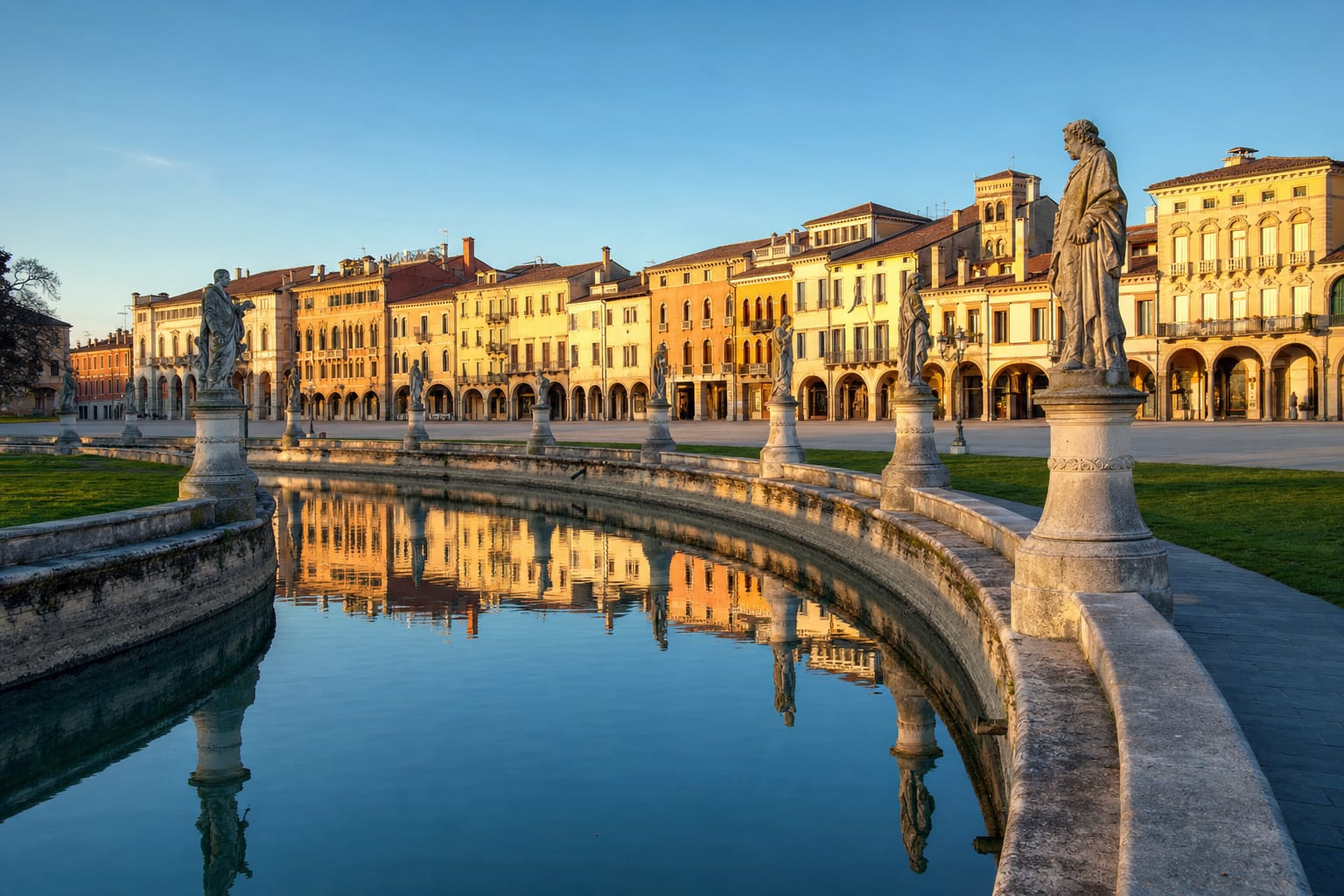
Join the volunteer-led visit, which takes you past the Martyrs’ Corridor and the old choir, spaces you rarely see on your own. Finish with a walk around the oval of Prato della Valle.

Get directionsGoogle MapsApple Maps

Good to know

How long should you spend at the Basilica of Santa Giustina?

Allow about an hour. That is enough for the nave, the transept tombs, the Veronese altarpiece and a look at the cloisters and Martyrs’ Corridor if they are open to you.

Is Santa Giustina worth visiting after the Basilica of Saint Anthony?

Yes, and it feels very different: emptier, more monastic and far quieter than Saint Anthony’s, with a Veronese altarpiece and a huge nave. It is also on the edge of Prato della Valle, so it is easy to add to any walk through Padua.

Do you need to book the Basilica of Santa Giustina?

Not to enter the church, which is open to worshippers and visitors between services. The cloisters and other areas are offered on guided visits, so check the abbey’s site and book ahead if you want to see them.

A letter from Italy, once a month.

The places, tables and makers we found worth your time. One email, no noise.

One letter a month. Unsubscribe at any time. We never share your address.

Help us get it right

What is it about?