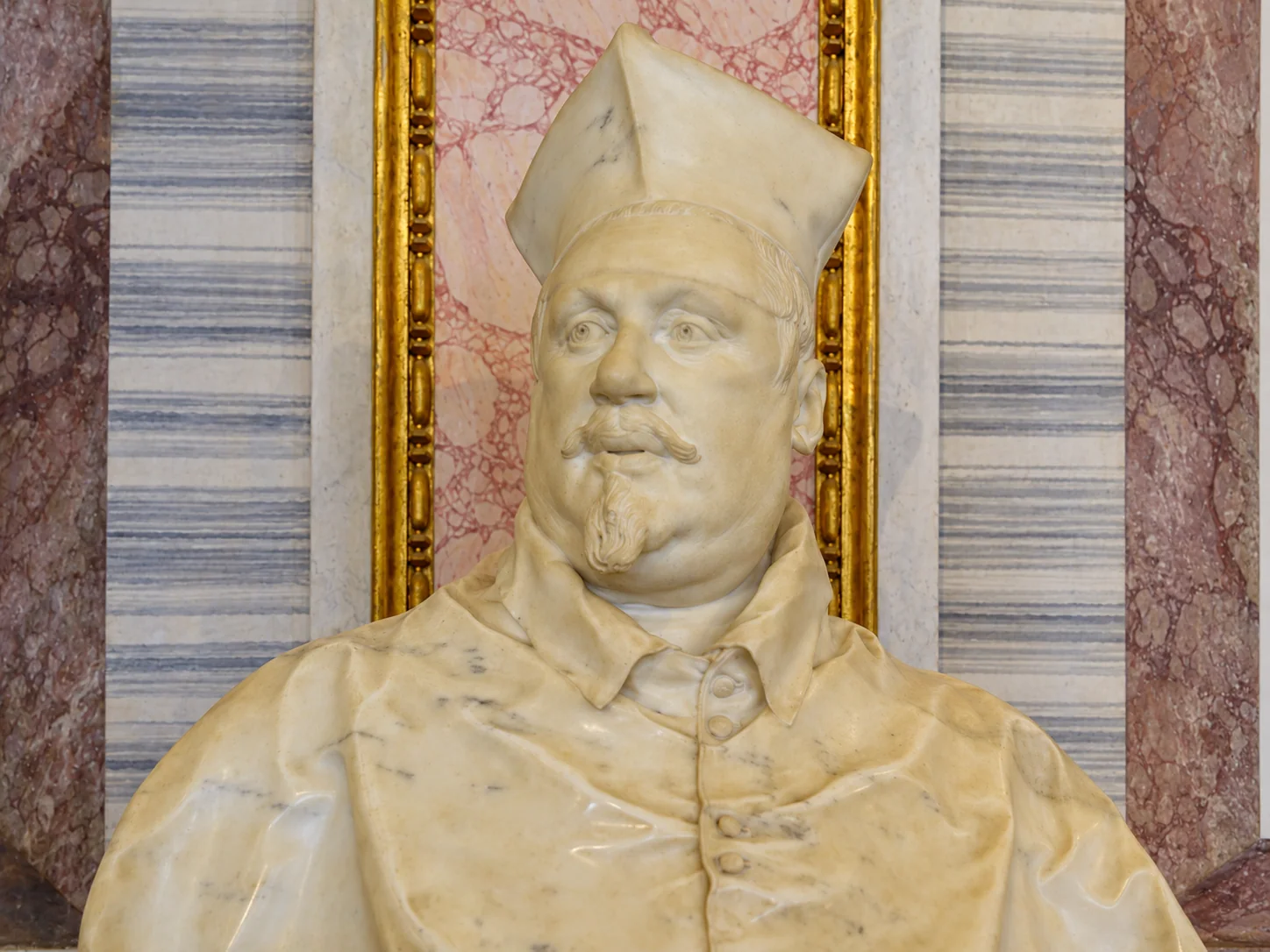
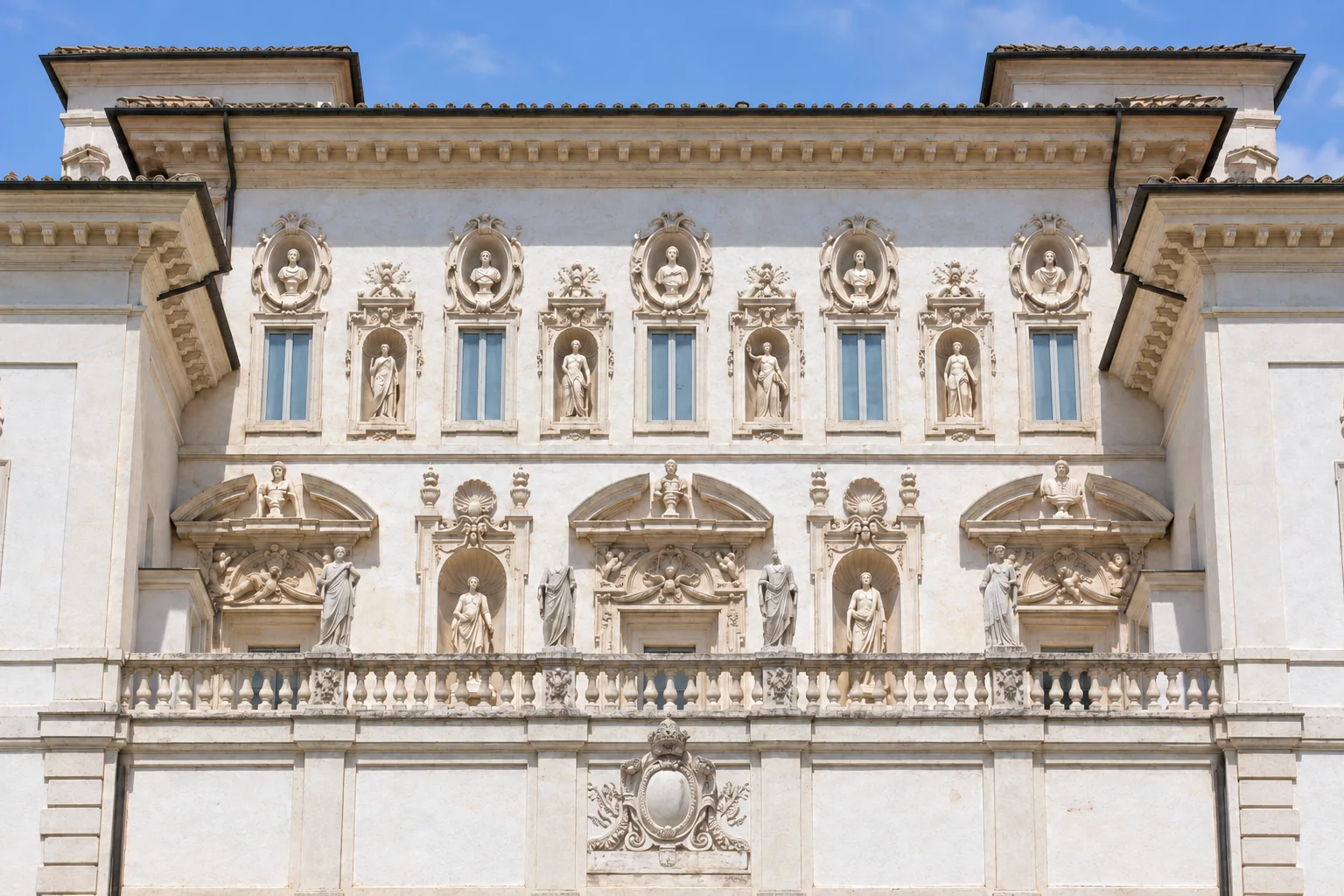
Cardinal Scipione Borghese commissioned a villa outside Porta Pinciana to house his collection. Construction began in 1607 under Flaminio Ponzio and was completed by Giovanni Vasanzio. The rooms remain part of the encounter with the art: painted ceilings, coloured marbles and sculpture turn the route into a succession of elaborate settings.
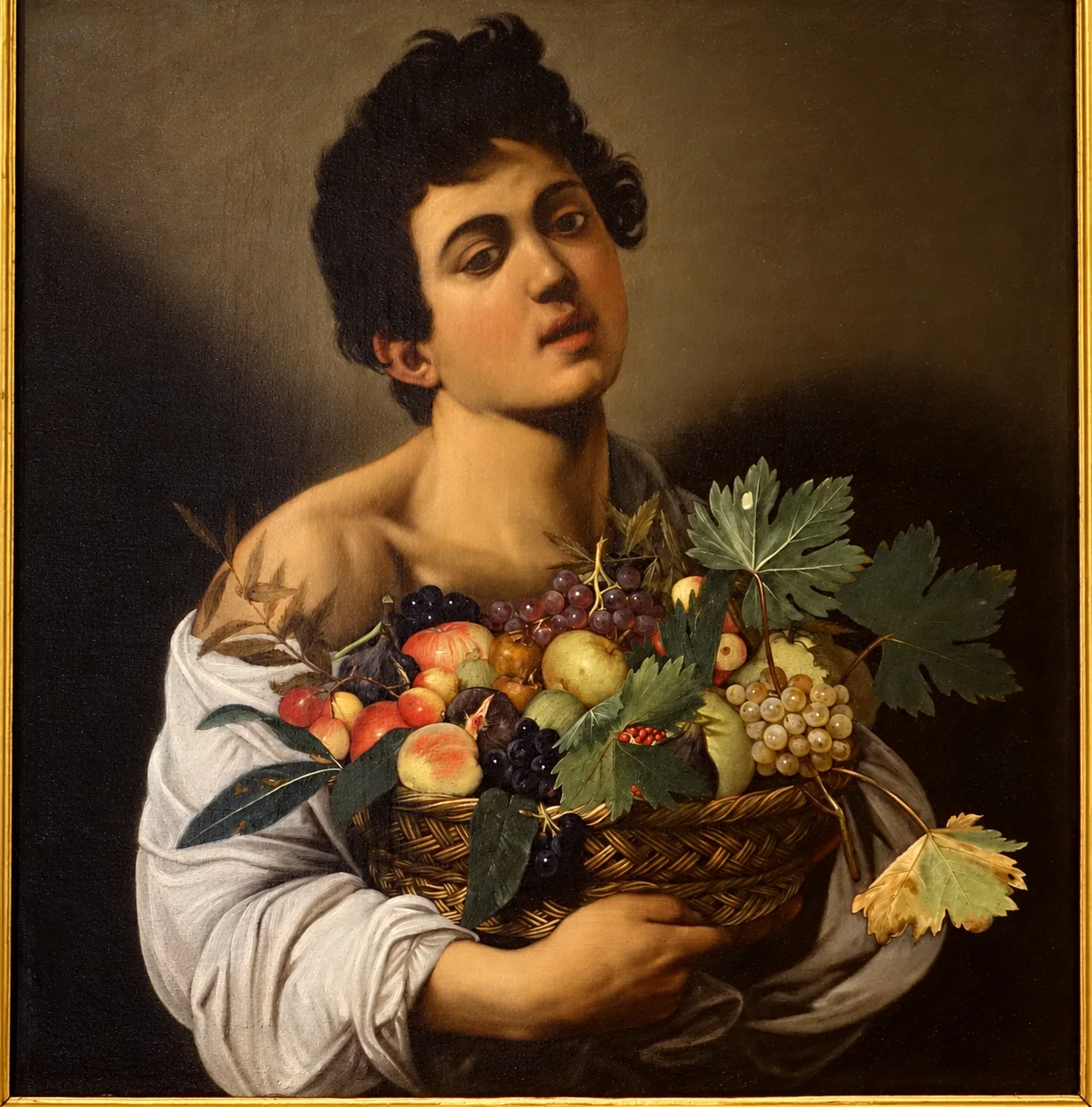
The collection also tells a story of patronage and papal power. In 1607, Pope Paul V ordered paintings seized from the Cavalier d’Arpino and gave them to his nephew Scipione. Room VIII now brings together six Caravaggios, including Boy with a Basket of Fruit, Sick Bacchus and David with the Head of Goliath. Their concentration makes it worth allowing time to look at the paintings together.
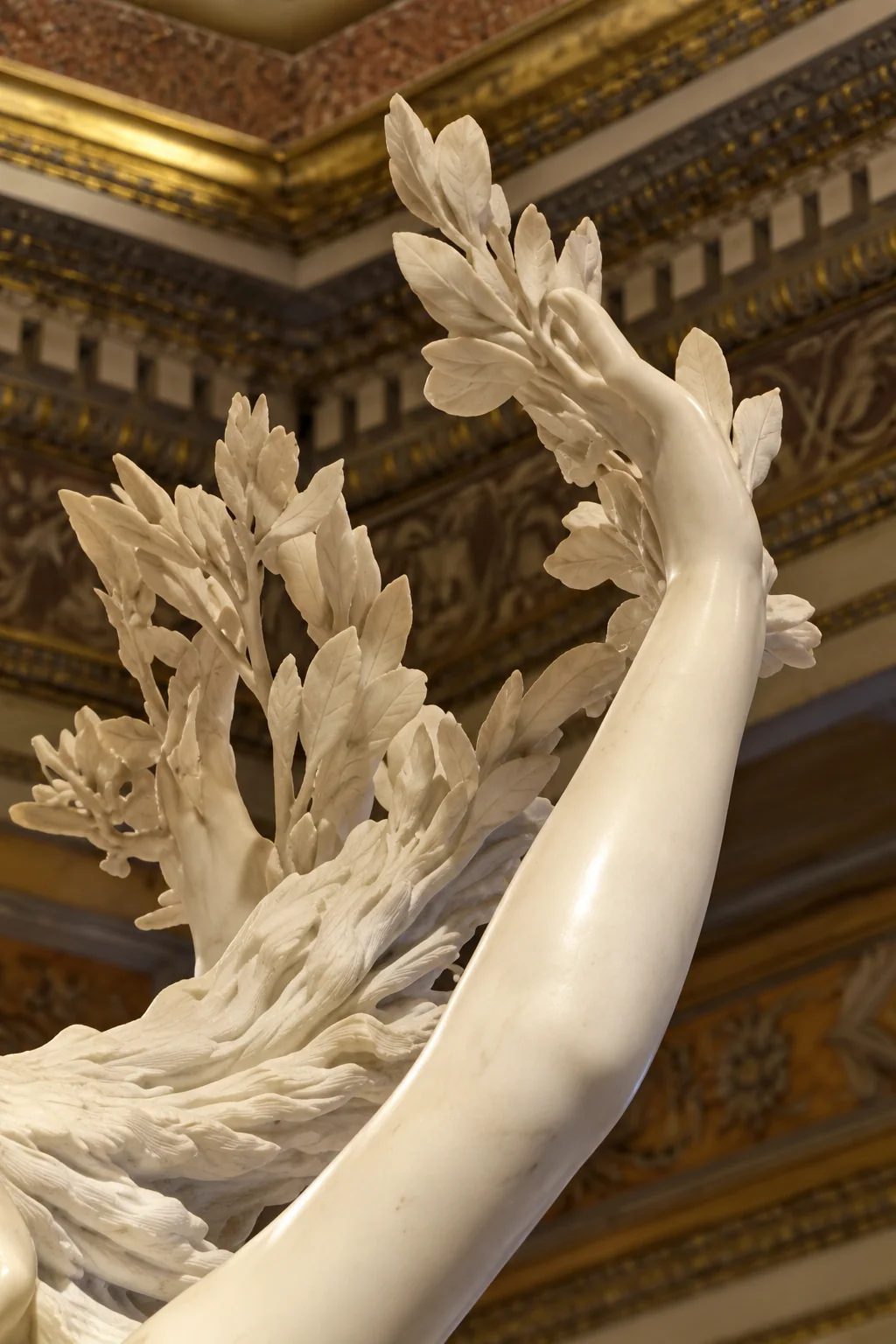
Bernini’s Apollo and Daphne occupies the centre of Room III. Follow the carved change from feet becoming roots to hands and hair becoming laurel; the museum’s object record describes Bernini’s original viewing sequence along the group’s right side, where Apollo’s expression shifts to astonishment. In Room IV, The Rape of Proserpina stands amid mosaics, coloured marbles and imperial busts. Canova’s reclining Pauline Borghese as Venus Victorious in Room I holds the apple awarded in the Judgment of Paris. Upstairs, Titian’s Sacred and Profane Love is in Room XX, the Psyche Room; its marriage-allegory interpretation remains debated.
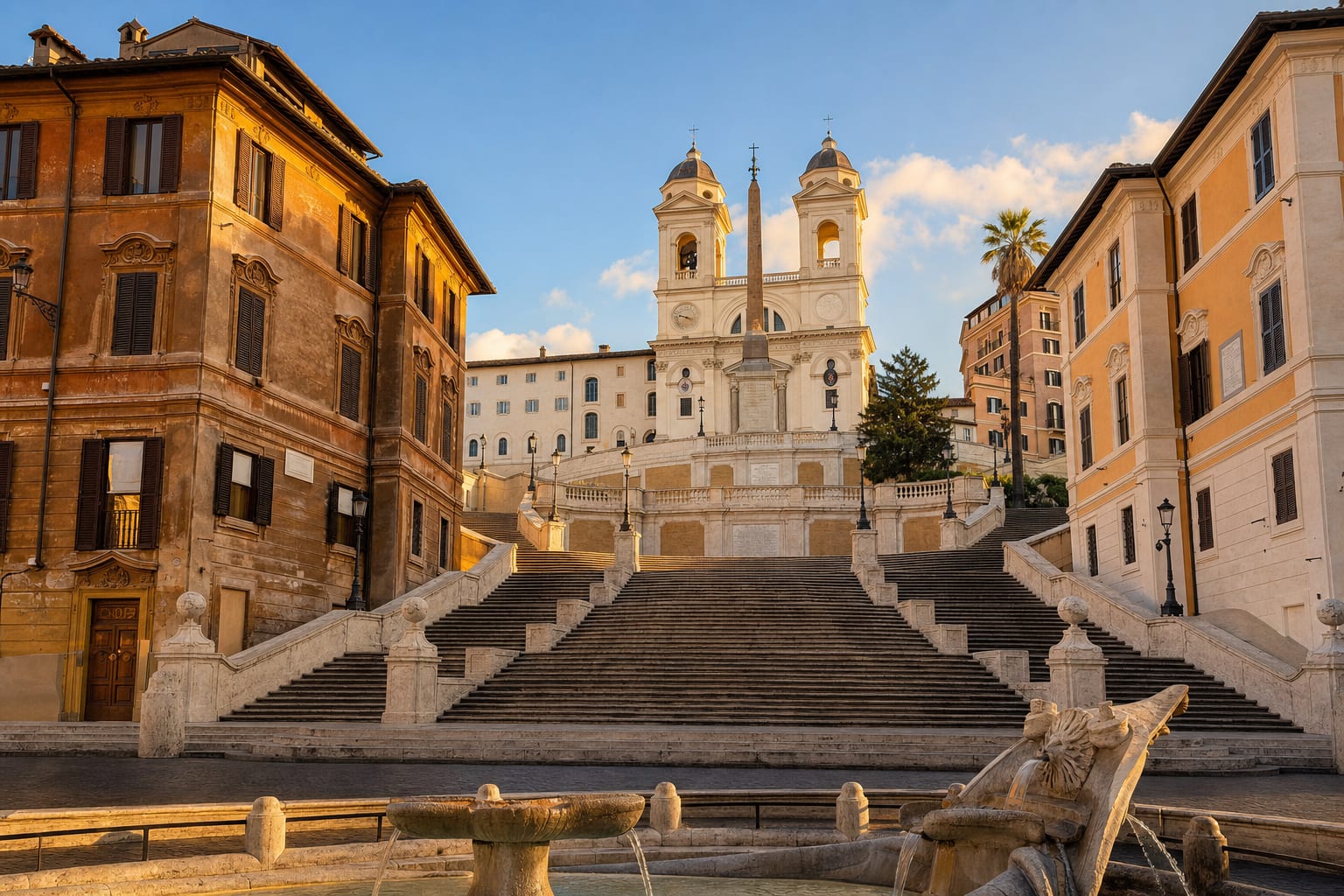
A standard visit has a two-hour limit. Choose a few works to study closely, then leave time for the rooms around them. To connect the gallery with the wider city, continue with our Rome travel guide.
Sources and citations (14)
- Galleria Borghese — Italian Ministry of CultureAccessibilityAccessibility page paragraphs on front stair lift, rear entrance, sculpture floor, second-floor lift and wheelchair transfer; contact details; companion admission.Read source
- Galleria Borghese — Italian Ministry of CultureTicketsTickets lines/sections: price table; booking-fee paragraph and exemptions; Gallery Visits paragraph.Read source
- Galleria Borghese — Italian Ministry of CultureThe MuseumOpening collection paragraph; public rooms and admission-turn paragraph.Read source
- Galleria Borghese — Italian Ministry of CultureInfo & FAQFAQ on visit duration; FAQ headed ‘I checked the website… no tickets available… can I come to the ticket office?’; directions/address section.Read source
- Galleria Borghese — Italian Ministry of CultureApollo and DafneArtwork record: title/artist/year metadata; first narrative paragraph on bodily details; long narrative paragraph on Bernini’s placement and viewing path.Read source
- Galleria Borghese — Italian Ministry of CultureRoom 3 – Apollo and Daphne RoomApollo and Daphne Room; sculpture chronology/current placement; ceiling and wall-decoration description.Read source
- Galleria Borghese — Italian Ministry of CultureRoom 4 – Room of the EmperorsRoom IV; installation and final artwork paragraph.Read source
- Galleria Borghese — Italian Ministry of CultureRoom 8 – Silenus RoomSilenus Room; paragraph on Caravaggio collection and six-item masterpiece list.Read source
- Galleria Borghese — Italian Ministry of CultureSacred and Profane LoveObject heading/metadata and interpretation paragraph.Read source
- Galleria Borghese — Italian Ministry of CultureSala 20 – Sala di PsicheSala 20 description; closing paragraph naming four Titian canvases and the Sala’s masterpieces list.Read source
- Galleria Borghese — Italian Ministry of CulturePauline Borghese as Venus VictoriousObject record; year, commission, apple and rotating base.Read source
- Galleria Borghese — Italian Ministry of CultureVisitHow to get here by public transportation; Termini, Flaminio, Barberini and Spagna entries.Read source
- Galleria Borghese — Italian Ministry of CultureThe Origins of Still Life in Italy: Caravaggio and the Master of HartfordHistorical paragraph beginning ‘All six of them were among the 105 paintings confiscated…’; the following sentence identifies Pope Paul V’s order and the gift to Scipione.Read source
- Galleria Borghese — Italian Ministry of CultureThe VillaThe Villa; construction history and Rooms index; the page states construction began in 1607 under Flaminio Ponzio and was completed by Giovanni Vasanzio; Scipione was Paul V’s nephew.Read source