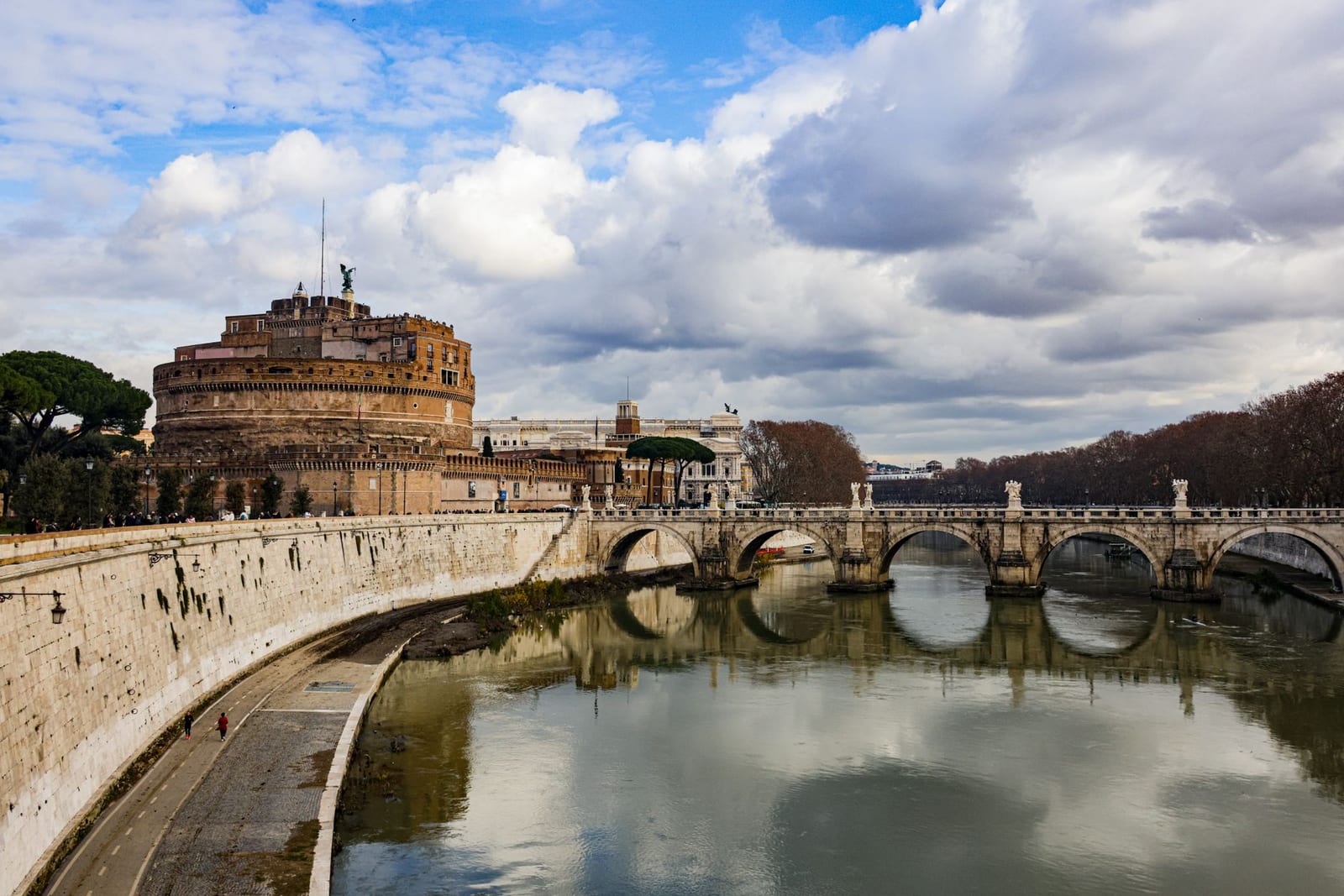
Castel Sant'Angelo is at once a monument, archaeological area and museum. It was built in the second century CE as the imperial funerary monument known as the Mole Adriana.1
The story
What you're looking at
Castel Sant'Angelo began as Hadrian's monumental mausoleum, known as the Mole Adriana, begun in 135 CE and completed in 139. Incorporated into Rome's defences, it later became a fortress and a papal residence, particularly transformed under Paul III Farnese. From the seventeenth century it increasingly served as a political prison; after entering Italian state property in 1870, it became the National Museum in 1925. The angel associated with its name belongs to a medieval plague legend rather than documented event history. Castel Sant'Angelo lies within the UNESCO World Heritage property Historic Centre of Rome, not as a separately inscribed site.