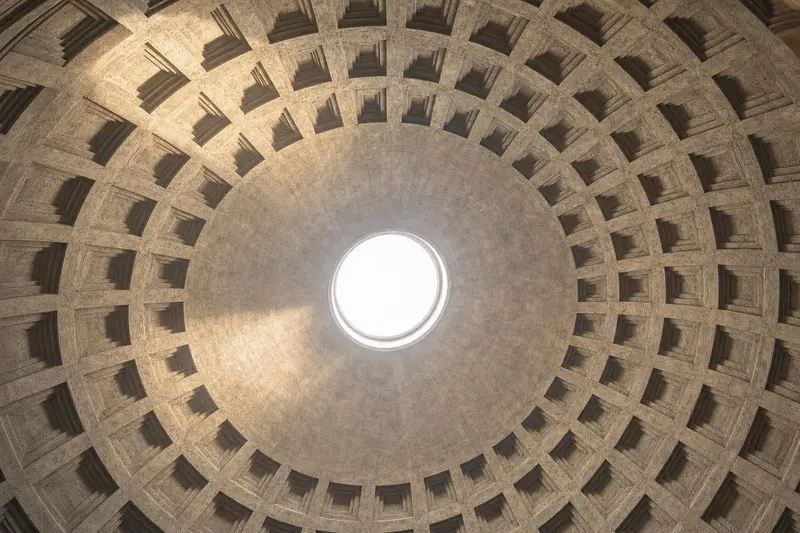
St Peter’s Basilica stands at the heart of Vatican City, the independent state within central Rome. The church visible today was begun under Pope Julius II in 1506 and completed in 1626, replacing the Constantinian basilica of the fourth century. Its scale reflects a project that unfolded across more than a century and many papacies, joining Renaissance architecture to Baroque interventions. The Fabbrica di San Pietro, established for the rebuilding, continues to care for the Basilica through conservation and maintenance.
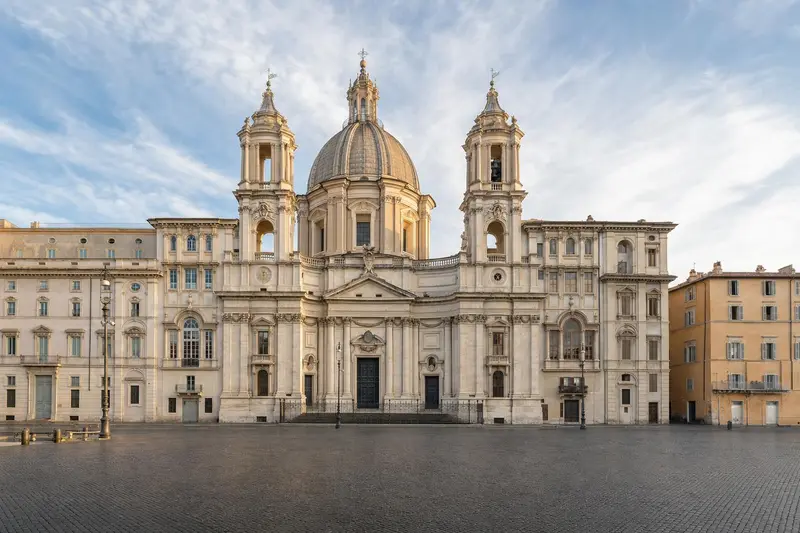
Its design belongs to a succession of hands: Bramante, Raphael, Michelangelo and others shaped the church before Carlo Maderno completed the façade in 1612. Michelangelo brought the dome to the drum; Giacomo della Porta and Domenico Fontana finished it between 1588 and 1590. Across the square, Bernini’s colonnade is a distinct work, completed in 1667.
Inside, Michelangelo’s Pietà was carved in 1498 for a French cardinal’s tomb. Beneath the dome, Bernini’s bronze Baldacchino marks the papal altar and the Basilica’s tradition of Saint Peter’s tomb below. The bronze statue of Saint Peter has its own devotional history: generations of pilgrims have touched its foot. Look down as well as up: the Vatican Grottoes form a separate lower level, and the archaeological Necropolis lies deeper still.
This is both a great work of art and an active place of Catholic worship. Masses and other liturgies shape access, so check the current opening hours and celebrations and move through the church quietly. For a wider itinerary, continue with our Rome guide or the nearby Castel Sant’Angelo.