In this article
A miniature baker stands beside the Nativity; a bowl of filled pasta arrives at lunch; a stocking waits for the Befana. Italian Christmas has a shared calendar, but the details belong to places and families. Follow those differences and the season becomes much more interesting than a single national menu or a universal list of customs.
This guide connects the dates, the presepe, gift traditions and the table. For a journey, begin with the Christmas markets. For cooking, the recipe collection groups complete methods by course and feast, while the main Christmas guide brings the season together.
The calendar, from December to Epiphany
The Immaculate Conception on 8 December, Christmas Day on 25 December and Santo Stefano on 26 December are national public holidays. So are New Year’s Day on 1 January and Epiphany on 6 January. Christmas Eve and New Year’s Eve are important occasions within that sequence, but they are not additional national public holidays.
Use the dates to plan individual visits, rather than assuming a holiday means every door is closed. Check each museum, market and restaurant for the day you want. A seasonal opening range does not establish its Christmas Day hours, and an evening service needs its own timetable.
The presepe: a world around the Nativity
The presepe, also called presepio, is a representation of the Nativity. Greccio, in the province of Rieti, is inseparable from Francis of Assisi’s Christmas celebration of 1223. The present historical reenactment has been staged there since 1972; a visit to the sanctuary and a performance are different experiences, so check them separately.
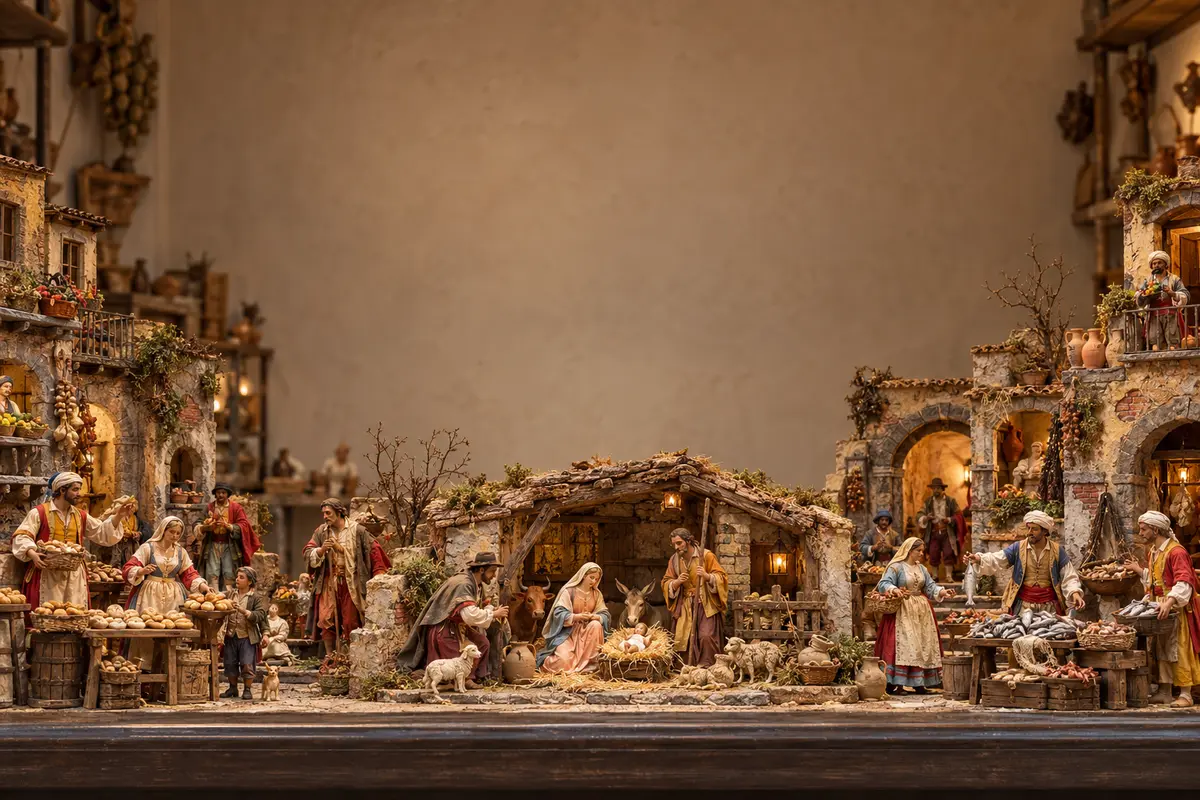
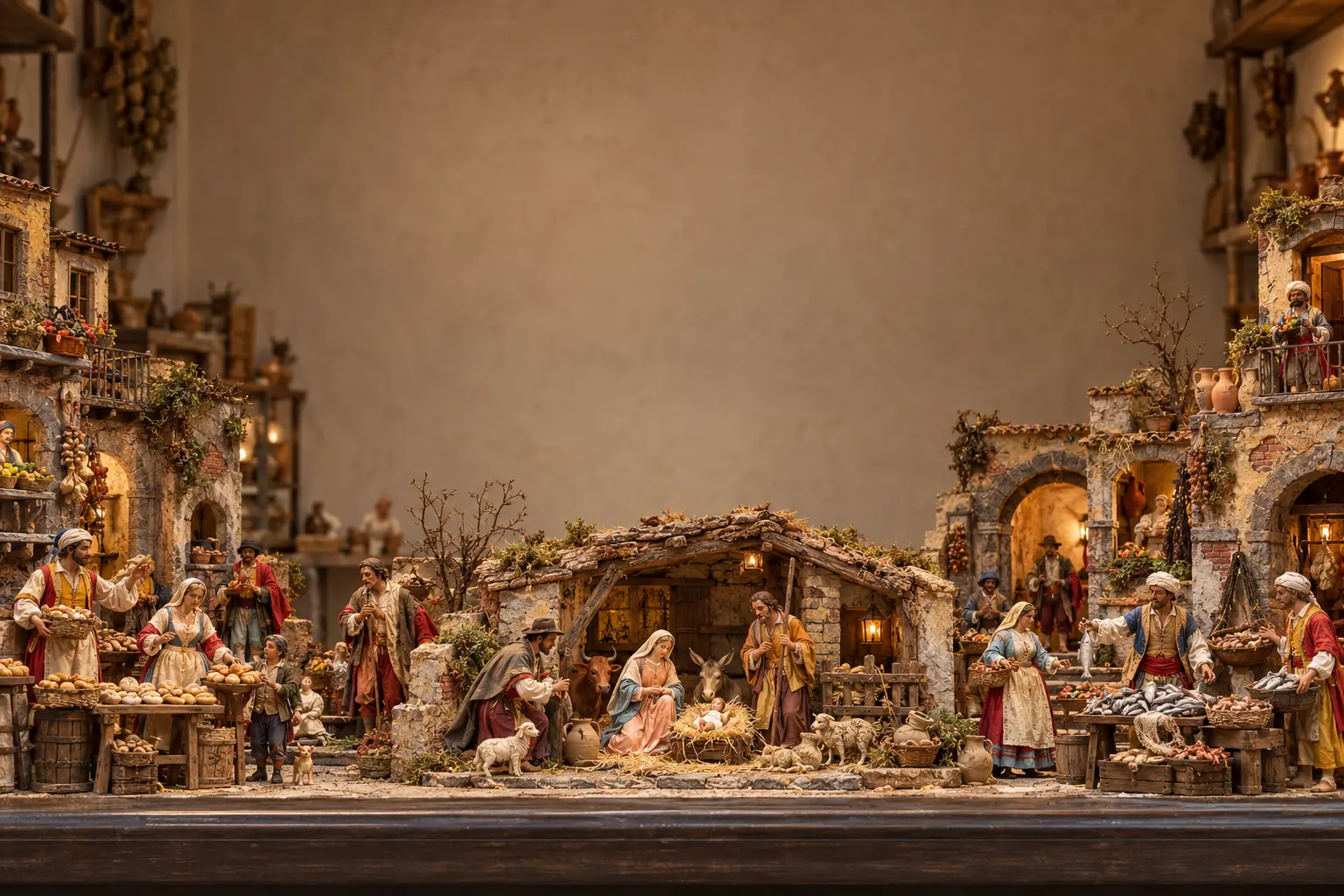
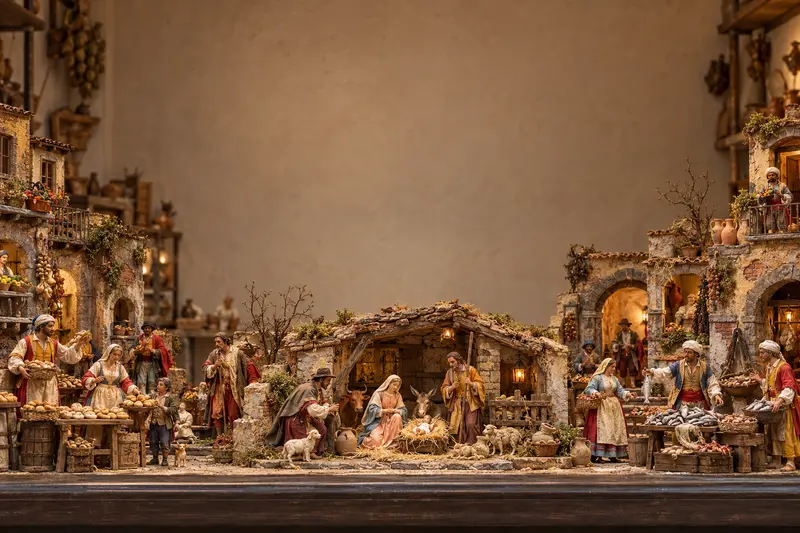
In Naples, Via San Gregorio Armeno brings the tradition into workshops and shops selling figures and the materials for miniature scenes. Look beyond the central stable: the surrounding village and its everyday occupations are part of the pleasure of exploring a presepe. The small scene on this page’s cover shows that miniature scale, with terracotta and cloth figures beside food stalls.
Different nights for gifts
In parts of Trentino, Santa Lucia brings gifts on the night of 12 December, before her feast on the 13th. Children join noisy strozegade, pulling strings of tins through the streets. Saint Nicholas traditions also belong to the Alpine season, sometimes accompanied by masked Krampus figures. These are local customs, not a timetable followed by every Italian child.
The Befana belongs to the night between 5 and 6 January. In the folk tale, an old woman fills children’s stockings with sweets or coal. Gift customs can sit alongside one another; ask your hosts what their family celebrates before choosing the moment for an exchange.
Christmas Eve and the Christmas lunch
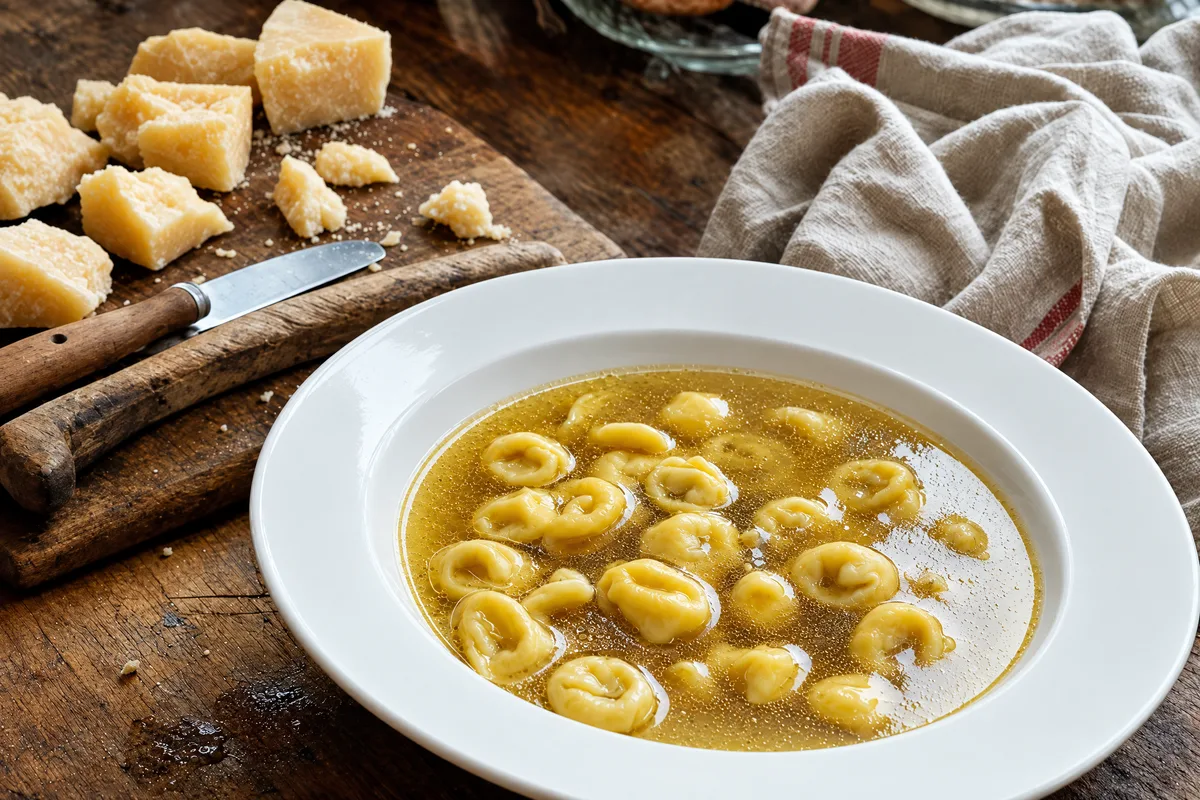
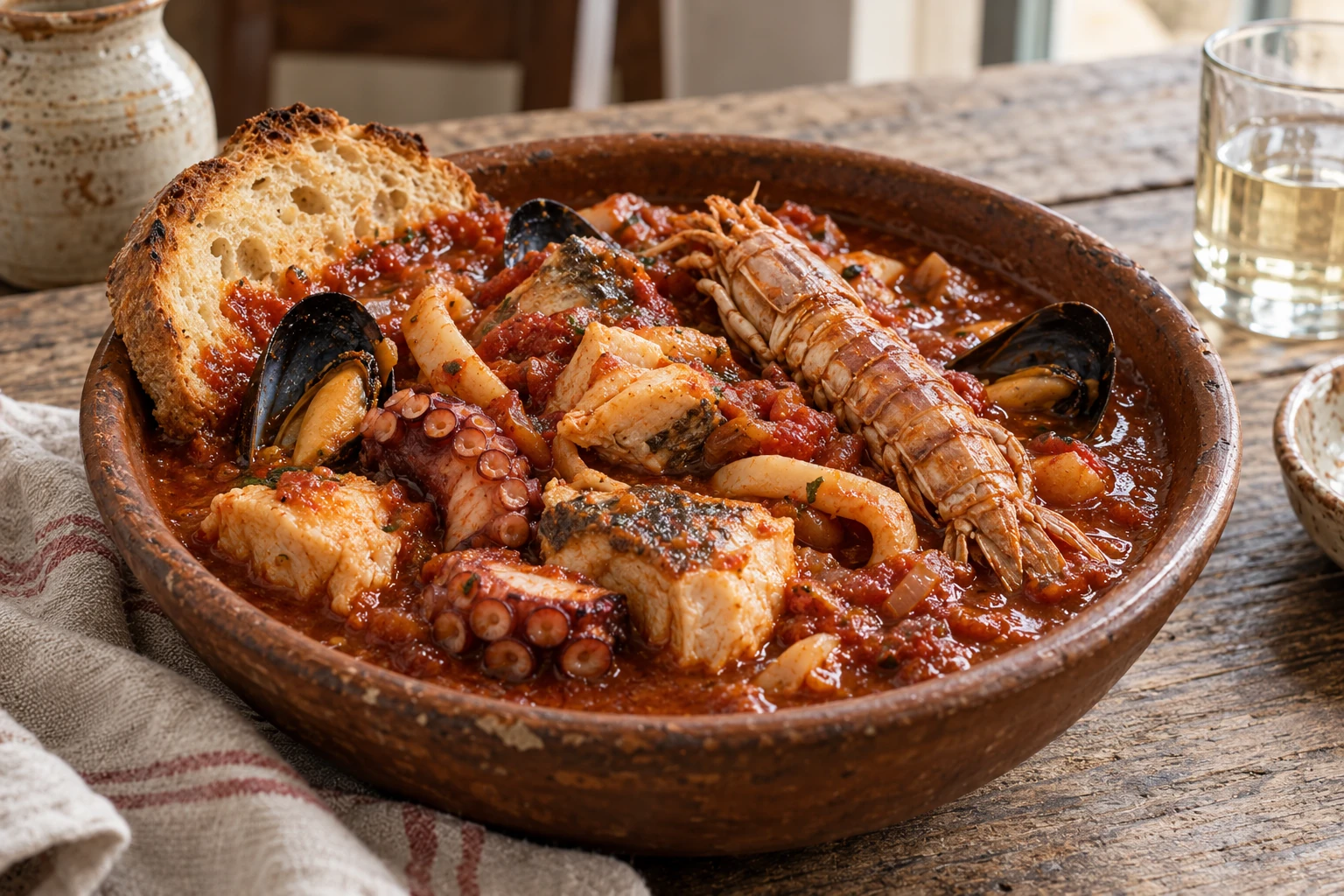
Rome’s traditional Christmas Eve table includes fish and winter vegetables; Christmas lunch can bring cappelletti in broth and capon. That contrast is a useful beginning, not a rule for every household. The Italian-American Feast of the Seven Fishes is a distinct framing of the Vigilia meal. Its name does not make seven dishes a compulsory national Italian menu, and the symbolic explanations for the number are not an established single origin.
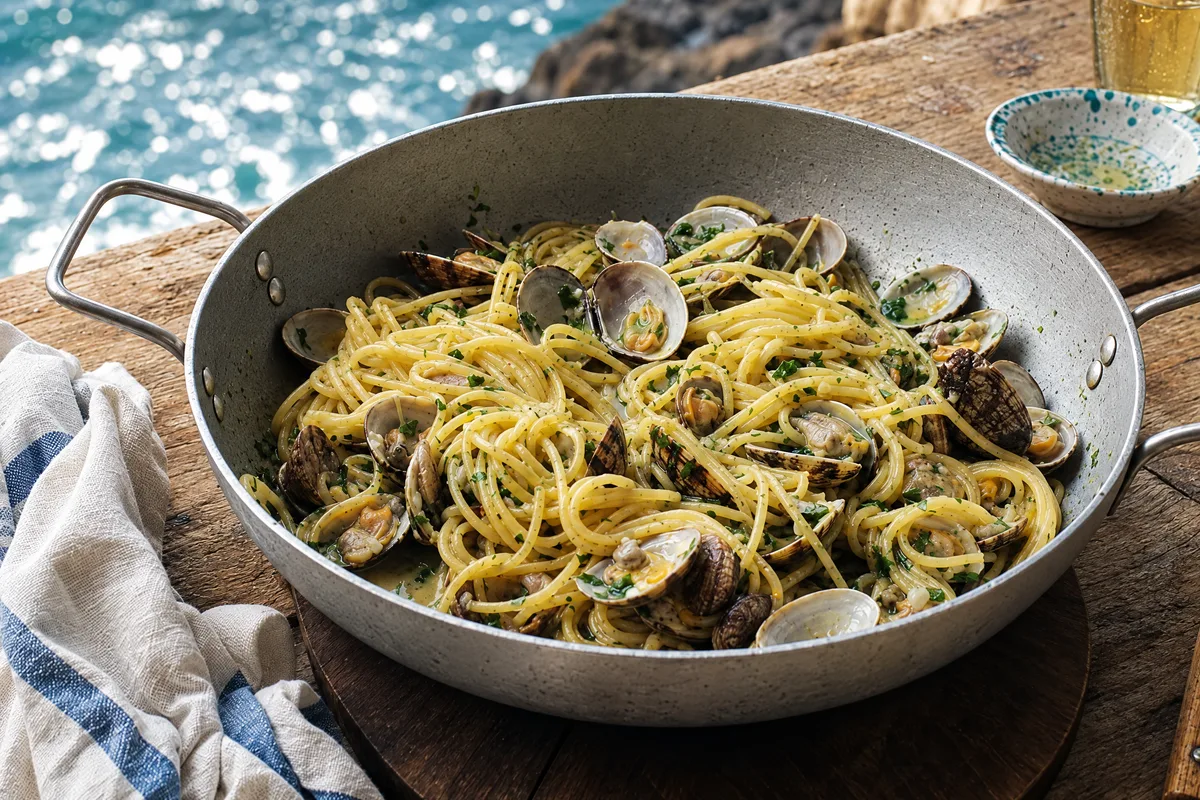
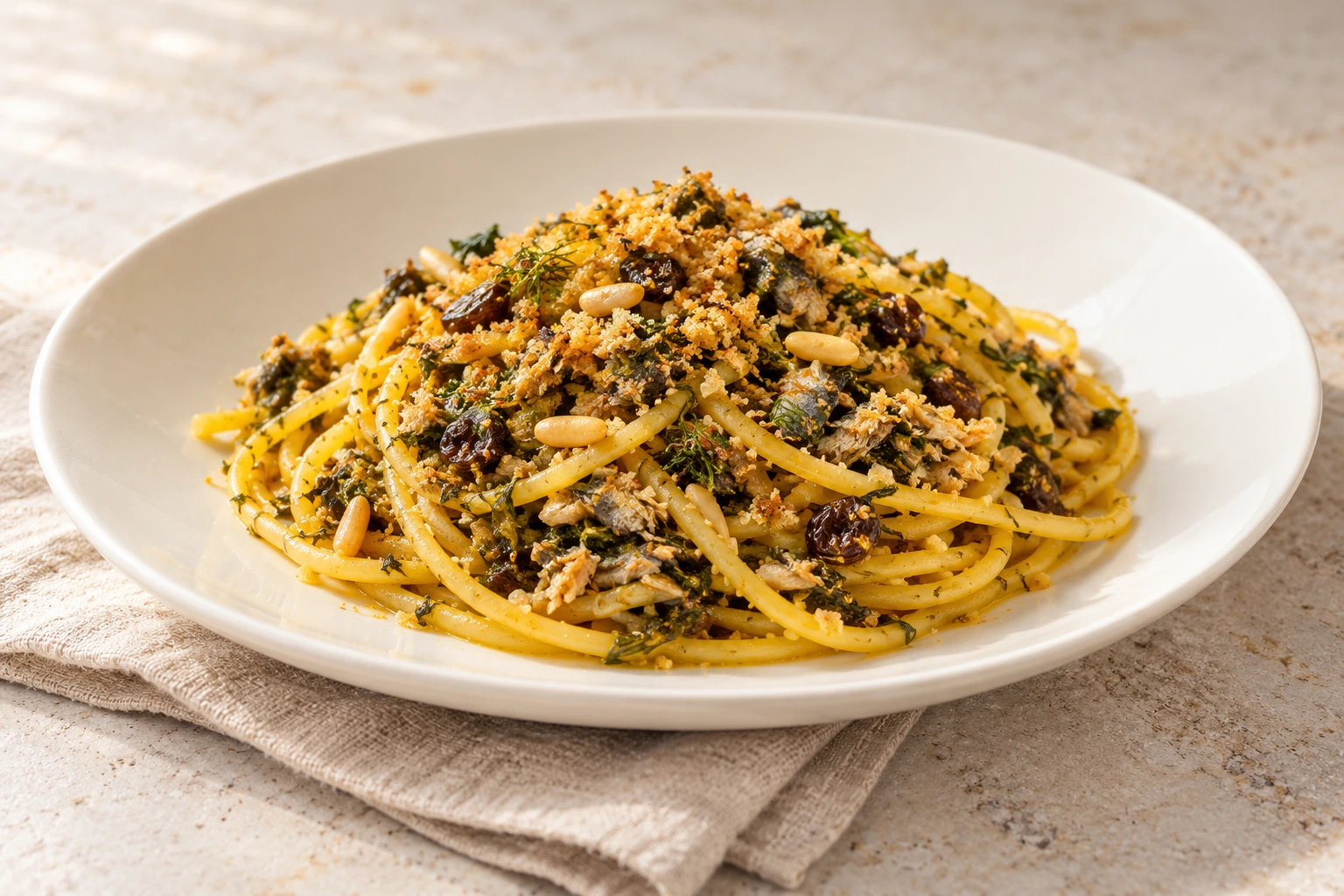
For your own supper, choose the course you want to cook before adding more dishes. Spaghetti alle vongole needs a different final service from a baked dish. A pot of broth and filled pasta gives lunch another rhythm. The recipe cards above lead to the full methods; check the preparation, soaking and resting times there before deciding how much to make.
The sweets have their own identities
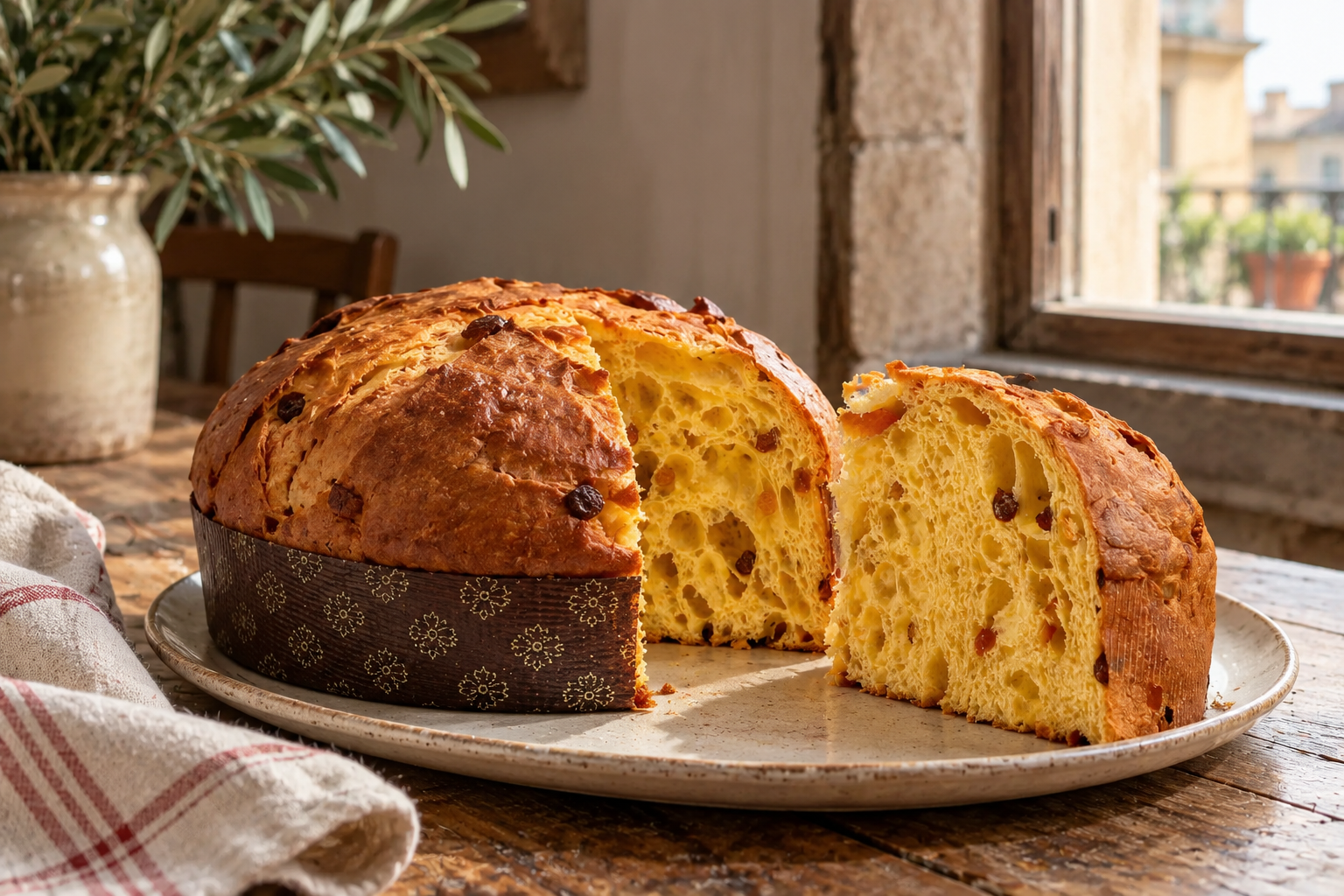
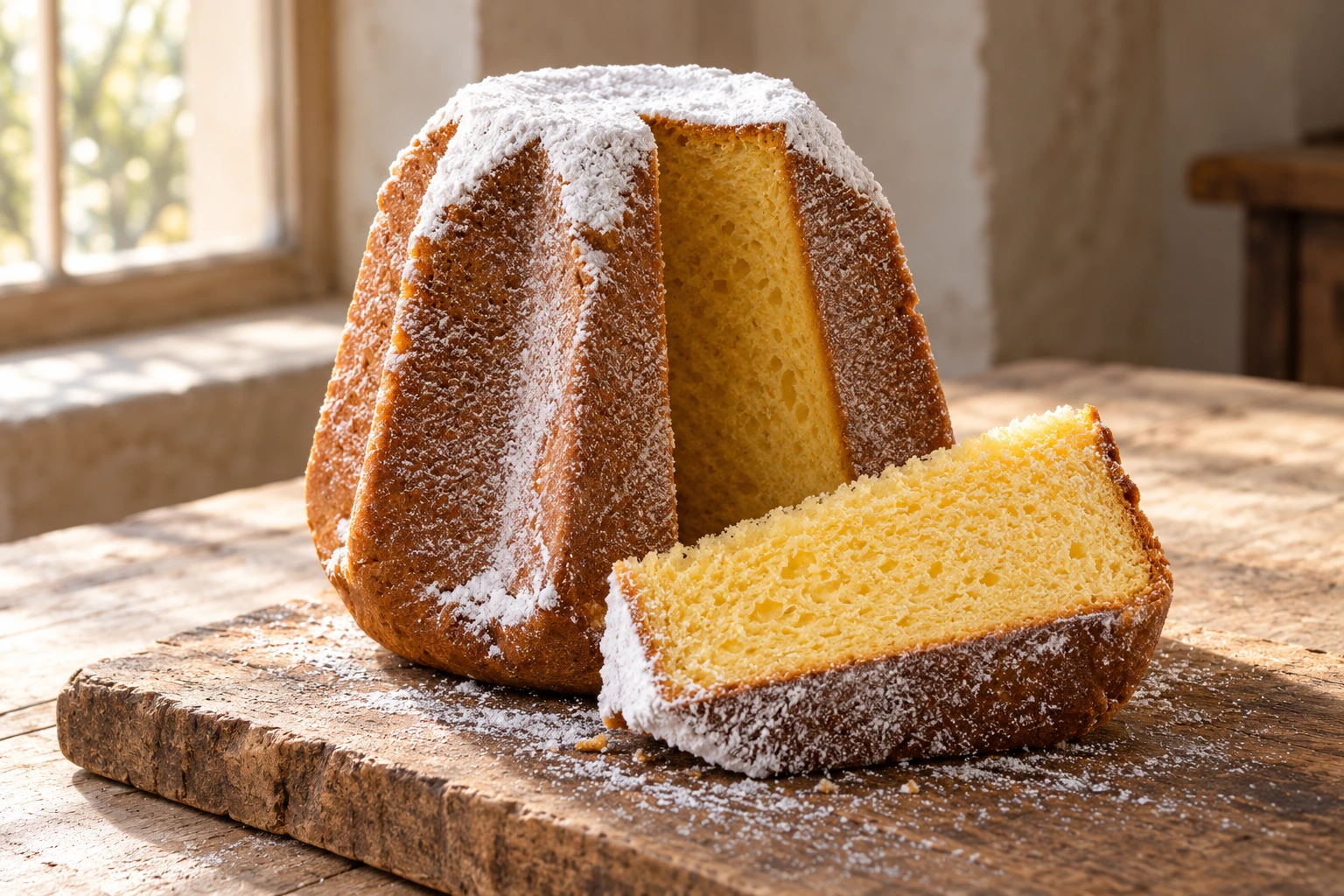
Panettone and pandoro are different baking projects, not interchangeable names for Christmas cake. The panettone method uses a mature lievito madre, two doughs and inverted cooling. The pandoro has its own preferment and enriched dough schedule. Read those timelines before making either the centre of a busy cooking day.
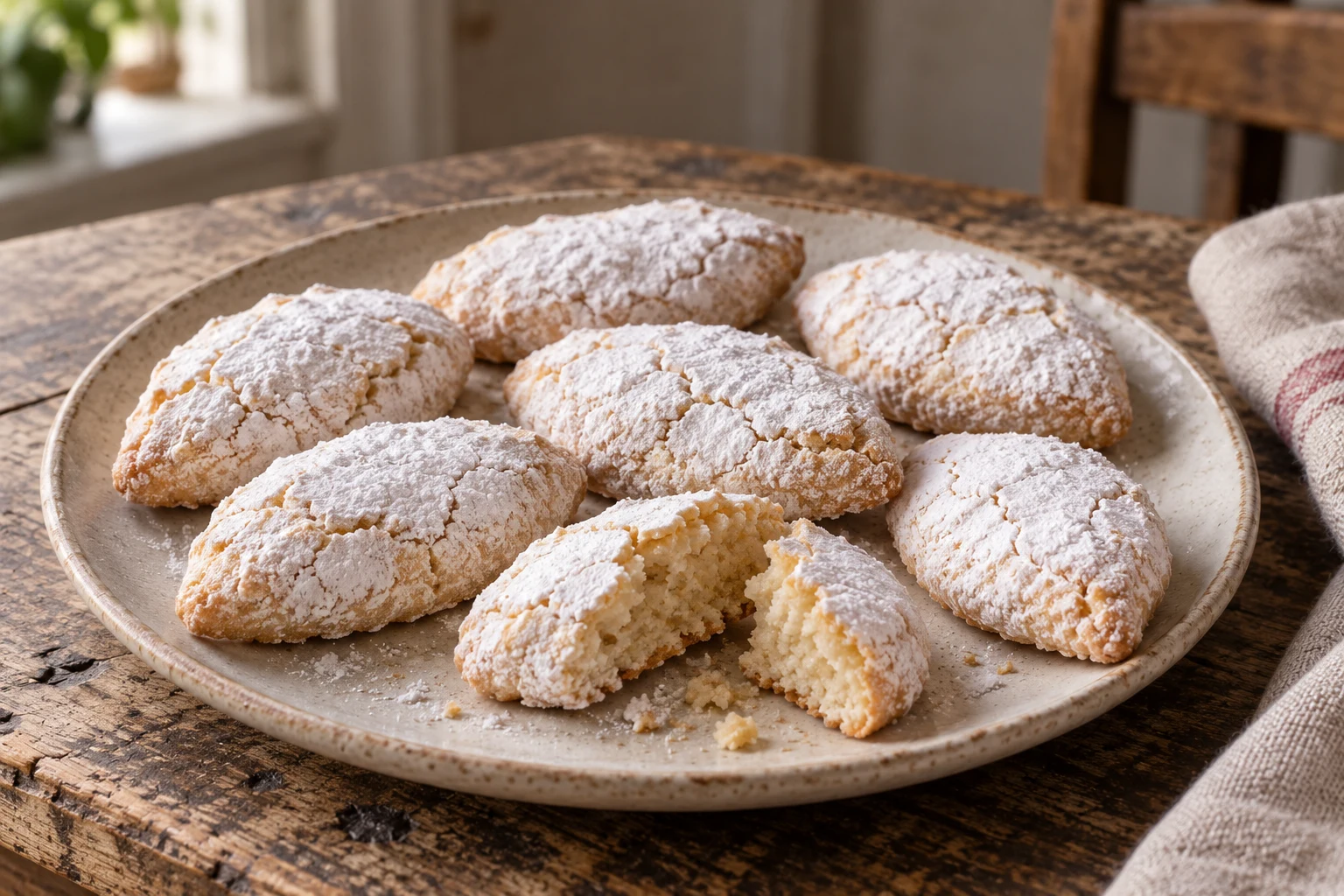
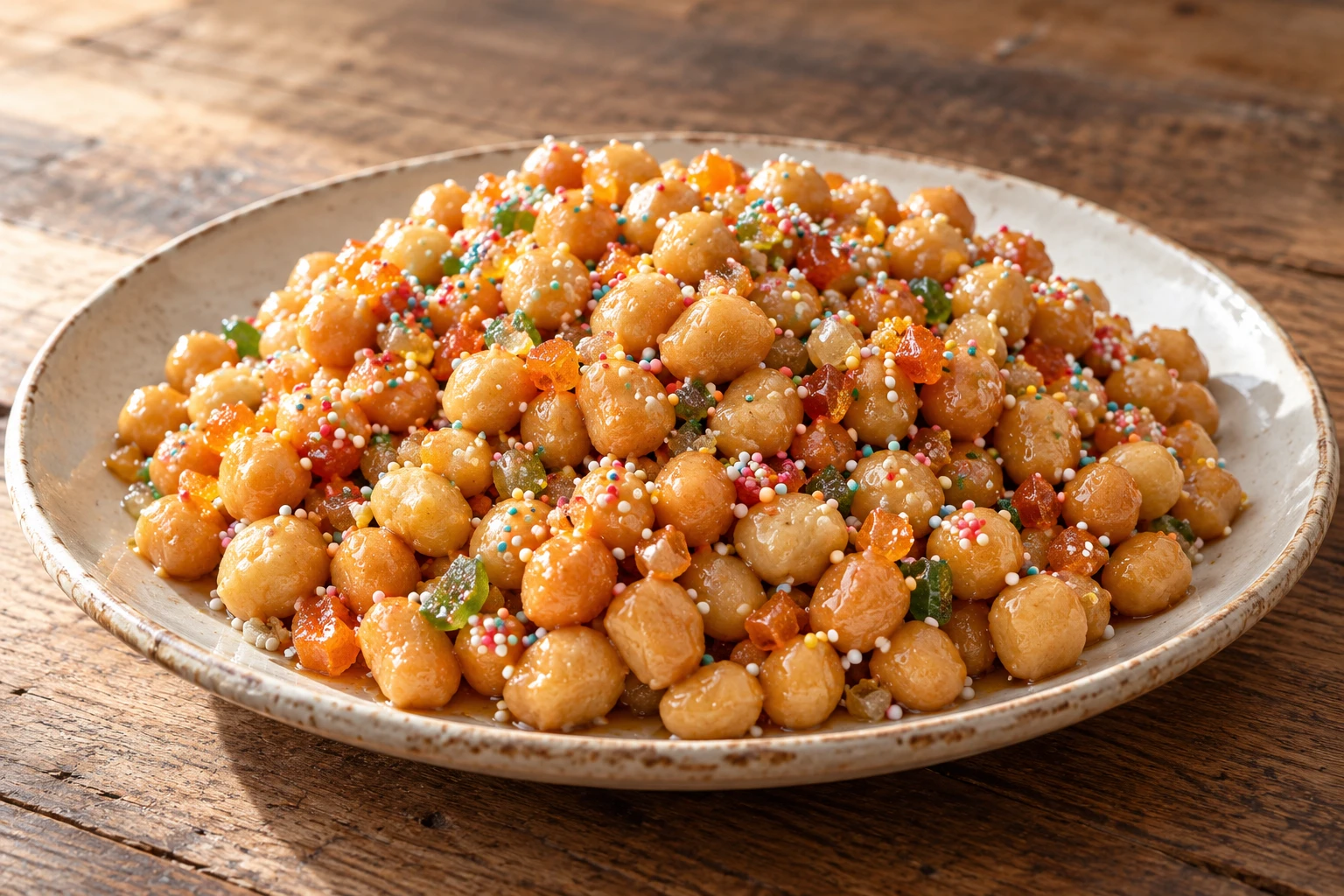
A smaller sweet can change the scale of the work. Ricciarelli offer an almond biscuit; struffoli bring small fried pieces together with honey. Choose a few contrasting forms rather than trying to make the whole pastry counter. The cookies and sweets collection keeps each recipe’s ingredients and preparation distinct.
Tombola after the meal
Tombola is closely associated with Christmas family gatherings in Naples. Its number calls connect with the Smorfia, where images, people and situations have symbolic numbers. The spoken call is part of the game’s character, rather than merely background to marking a card.
At home, make the gathering easy to join: explain your chosen rules before beginning, share the caller’s task if people want a turn and leave enough room on the table for the cards.
Three questions about the season
What is a presepe?
A presepe is a Nativity scene, also called a presepio. It can include a whole miniature village around the central figures. Greccio is linked to Francis of Assisi’s Christmas of 1223; Naples’s San Gregorio Armeno is a street of workshops and shops for figures and the materials used to build scenes.
Does every Italian family eat seven fish dishes?
No. The Feast of the Seven Fishes is an Italian-American Christmas Eve tradition, and even family accounts describe different menus and numbers. In Italy, Christmas Eve meals vary by place and household. A fish-based Vigilia supper should not be presented as a compulsory seven-course national menu.
When does the Befana come?
In Italian folklore, the Befana visits on the night between 5 and 6 January, filling stockings with sweets or coal. Epiphany itself falls on 6 January and is a national public holiday. Public appearances and celebrations have their own programmes; the folk tale does not establish an event’s time or opening hours.
Sources and citations (12)
- National public holidays in Italy
- Greccio: the Nativity and historical reenactment
- San Gregorio Armeno: the street of Nativity workshops
- Trentino: Saint Nicholas, Santa Lucia and Alpine traditions
- The Befana: history and traditions
- Christmas time in Roman cuisine
- La Vigilia: an Italian-American family account
- Neapolitan intangible heritage: tombola and the Smorfia
- Panettone milanese: the complete method
- Pandoro: the complete method
- Ricciarelli: almond biscuits
- Struffoli: fried pieces with honey