In this article
The Feast of the Seven Fishes is an Italian-American Christmas Eve seafood meal. Its roots reach into the meatless cena della Vigilia of Italy, especially the south, while its name and numbered menu belong to the story of Italian-American family tables. The dishes change from household to household. There is no single list of seven fish that every host must buy.
That distinction leaves room for both histories. A grandmother’s baccalà, a platter of calamari and a newer shrimp dish can belong to the same family’s evening. The meal carries memories as well as recipes. Start with the dishes your guests want to share, then give each one a place in the kitchen and at the table.
An Italian-American name, Italian roots
In Italy, the evening meal is commonly called cena della Vigilia. Eating di magro means a meal without meat; fish and seafood have an important place in many southern Christmas Eve traditions. That background helps explain the seafood table carried into Italian-American homes. It does not establish one nationwide Italian menu with a compulsory number of courses.
The Feast of the Seven Fishes gives that evening a particularly recognisable American name. Italian-American menus can include cod, anchovies, squid, clams, mussels, eel, shrimp or lobster. A fish might appear in pasta, in a cold preparation or as the centre of a larger dish. Seven ingredients and seven courses are different ways of arranging a meal, so ask what the number means in your own household.
What does the seven mean?
Several religious explanations circulate, including the seven sacraments. The number’s origin is disputed; a symbolic explanation should not be presented as the proven reason every family follows the custom. Menus with other counts also exist. The name gives the dinner an identity without making every family’s practice identical.
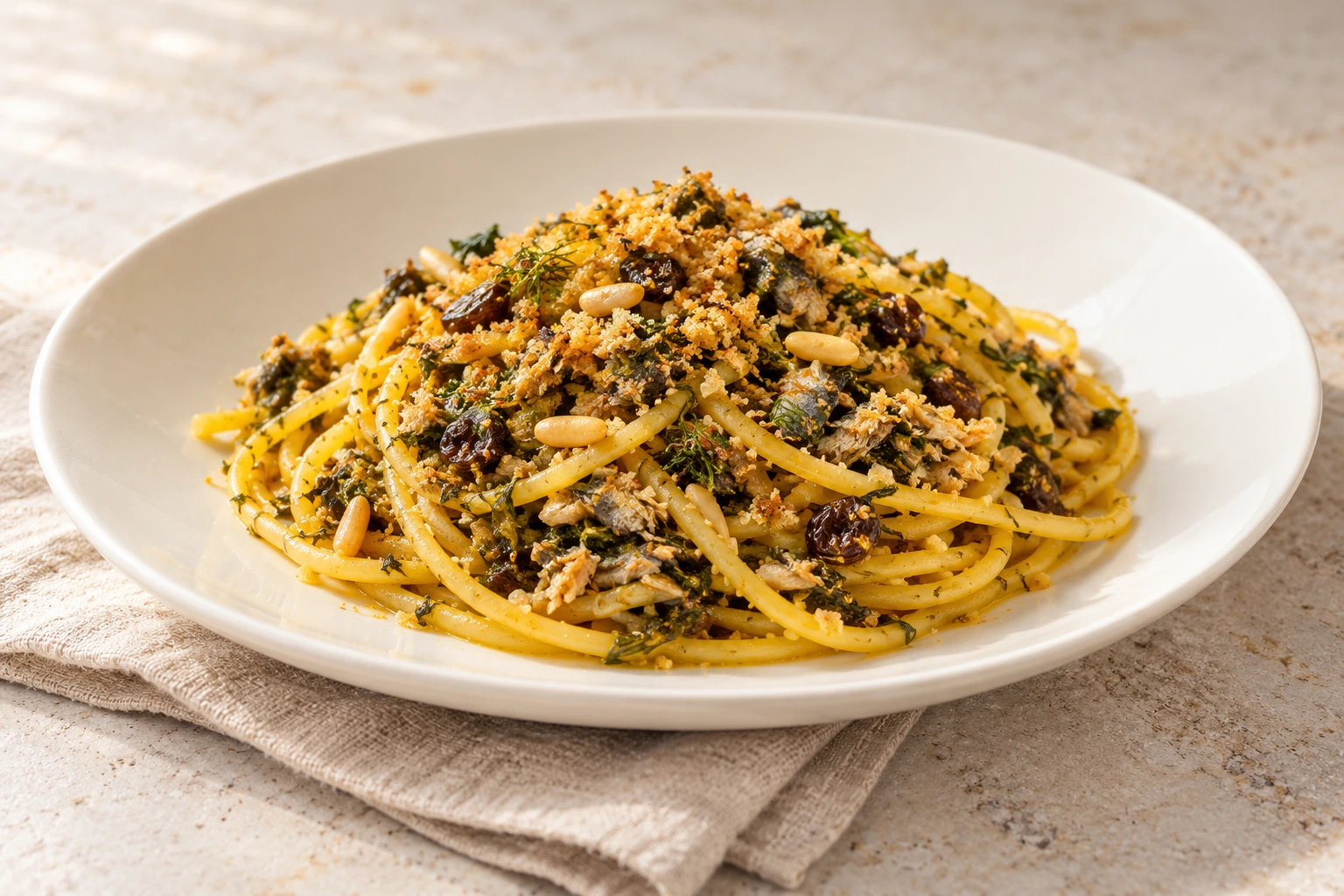
Tony Traficante’s account of his mother’s Christmas Eve table includes stuffed calamari, baccalà and pasta with anchovies; shrimp joined the meal for a younger generation. That is one family’s memory, with a change inside it. Keep the same precision when passing on your own story: name the person and the dish, and distinguish a remembered custom from a claim about all of Italy.
The Italian table changes with the place
Rome’s Christmas Eve repertoire includes spaghetti with clams, roast fish and fried vegetables, with salt-cod fillets among the fried foods. It offers a useful example of fish sharing the table with vegetables and pasta. It is not a numbered Seven Fishes checklist. The regional Christmas guide opens out the view to all twenty regions.
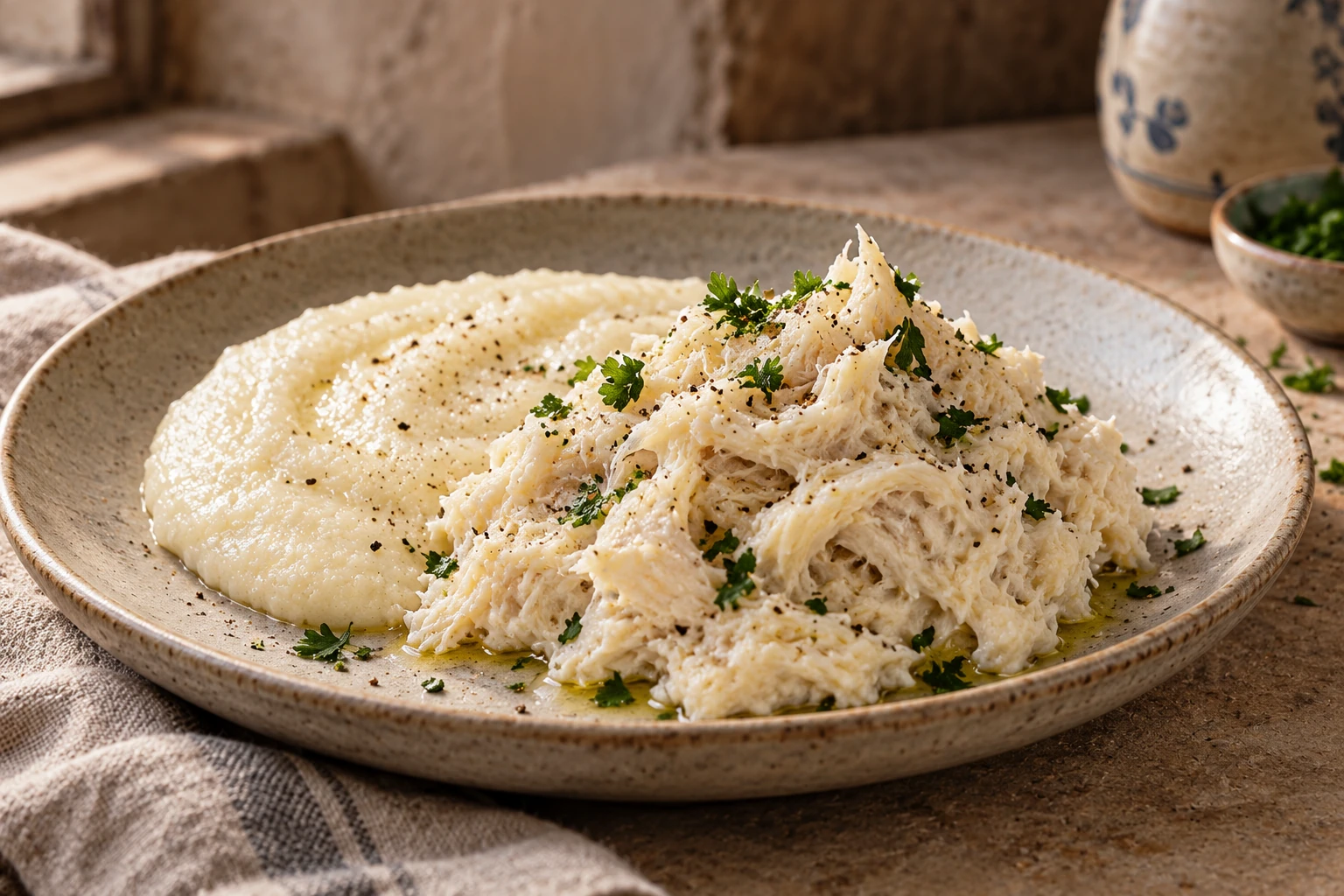
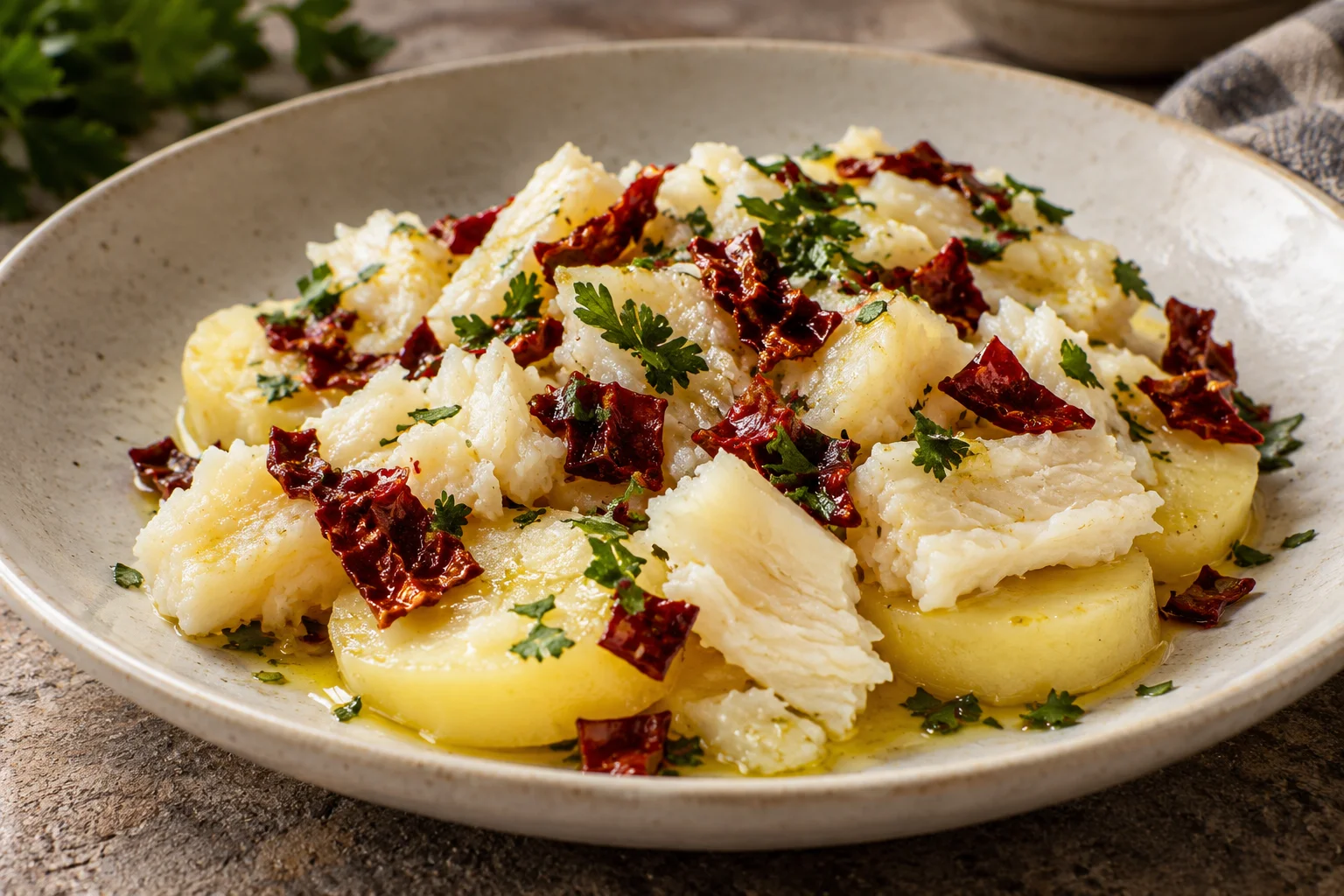
The recipes above offer further comparisons. Venetian baccalà mantecato uses rehydrated stockfish whipped with oil. Baccalà with peperoni cruschi pairs desalted salt cod with potatoes and crisp dried peppers in Basilicata. The similar fish name conceals a practical difference in what you buy. Read the chosen recipe before ordering: salt cod and dried stockfish need different preparation.
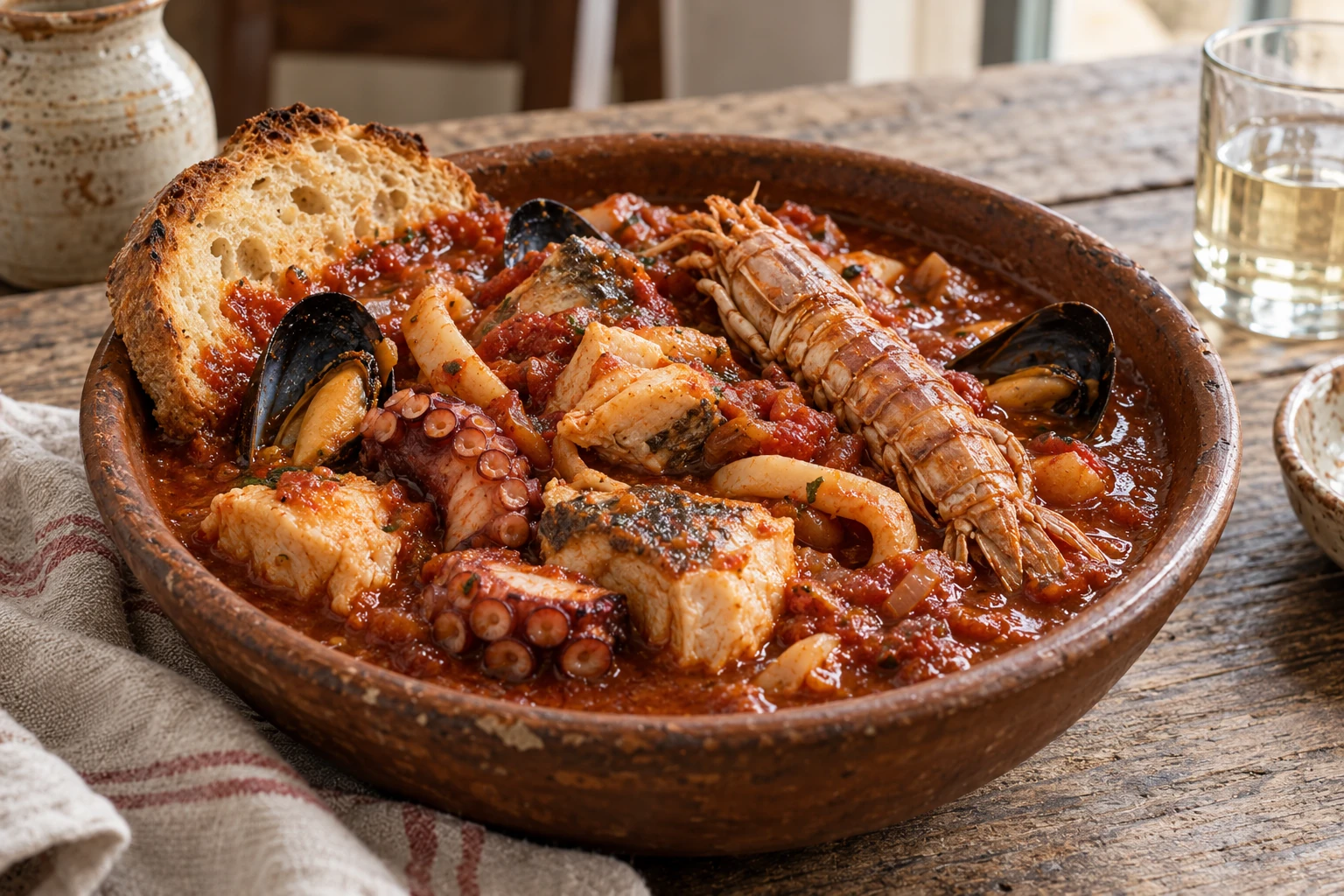
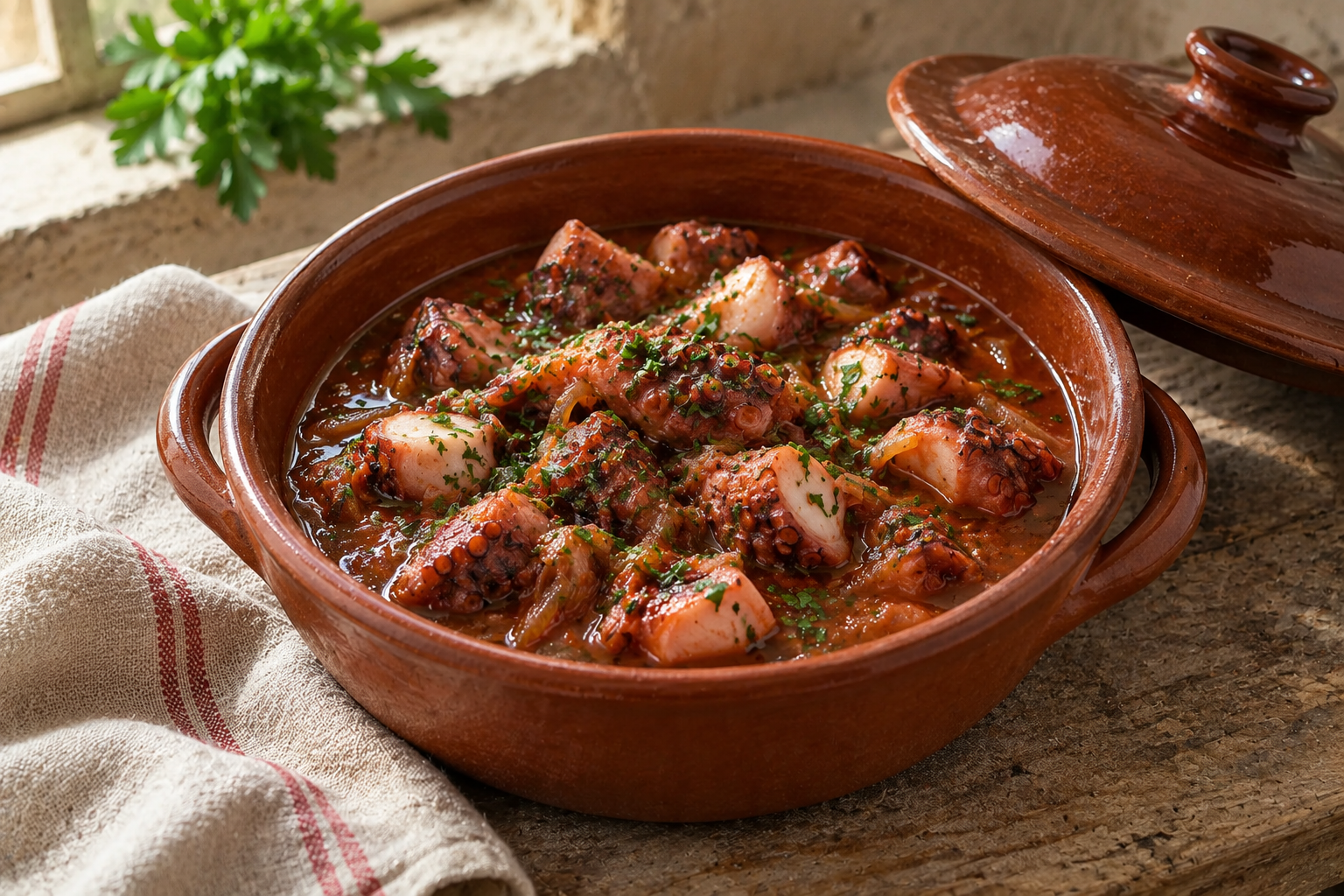
Polpo alla pignatta brings octopus to an earthenware pot, while Livorno’s cacciucco combines several kinds of seafood over bread. These are dishes you can choose for your table, each with its own preparation. Bringing them together would be an editorial selection across regions, rather than a claim to reproduce one town’s Christmas dinner.
Choose the dishes, then the running order
Write down the dishes you intend to serve before making a combined shopping list. Beside each one, note the recipe’s yield, the portion you want to offer and the pan or oven space it needs. A full main-course portion becomes a different proposition when several other plates follow. Scale the actual recipes deliberately; a list of seven names alone says nothing about how much dinner you are making.
Separate preparations that can wait from those that need the last minutes. Leave a clear place for the pasta pan and a route from the kitchen to the table. If two dishes need your attention at once, change their order or ask another cook to take responsibility for one. A smaller menu with a comfortable service can be the better choice for your gathering.
Keep the complete recipe open for each preparation. A seafood assortment bought for a stew does not automatically suit a fried dish, and a shopping substitution can change the method. Confirm the fish and its preparation state when ordering. Decide about sides and dessert separately; they need their own space and serving time.
Questions about the feast
Do Italians celebrate the Feast of the Seven Fishes?
Seafood Christmas Eve meals are part of Italian traditions, especially in the south. The name Feast of the Seven Fishes is an Italian-American framing. In Italy, cena della Vigilia describes the evening meal, whose dishes and size vary. A particular family’s seven dishes do not establish a fixed national menu.
Must there be seven different species?
There is no single rule shared by every family. Some hosts count seafood types, others arrange several dishes, and some use a different number altogether. Decide how your own menu will work before shopping. Repeating cod in two preparations is two dishes, but it does not turn cod into two species.
Where should I start with the recipes?
Choose the dish you most want to share and read its complete recipe first. Check the fish, preparation state, yield and equipment, then choose companions that fit the same kitchen. The Christmas recipes guide groups the wider table by course, while the Christmas guide connects the meal with the season.