

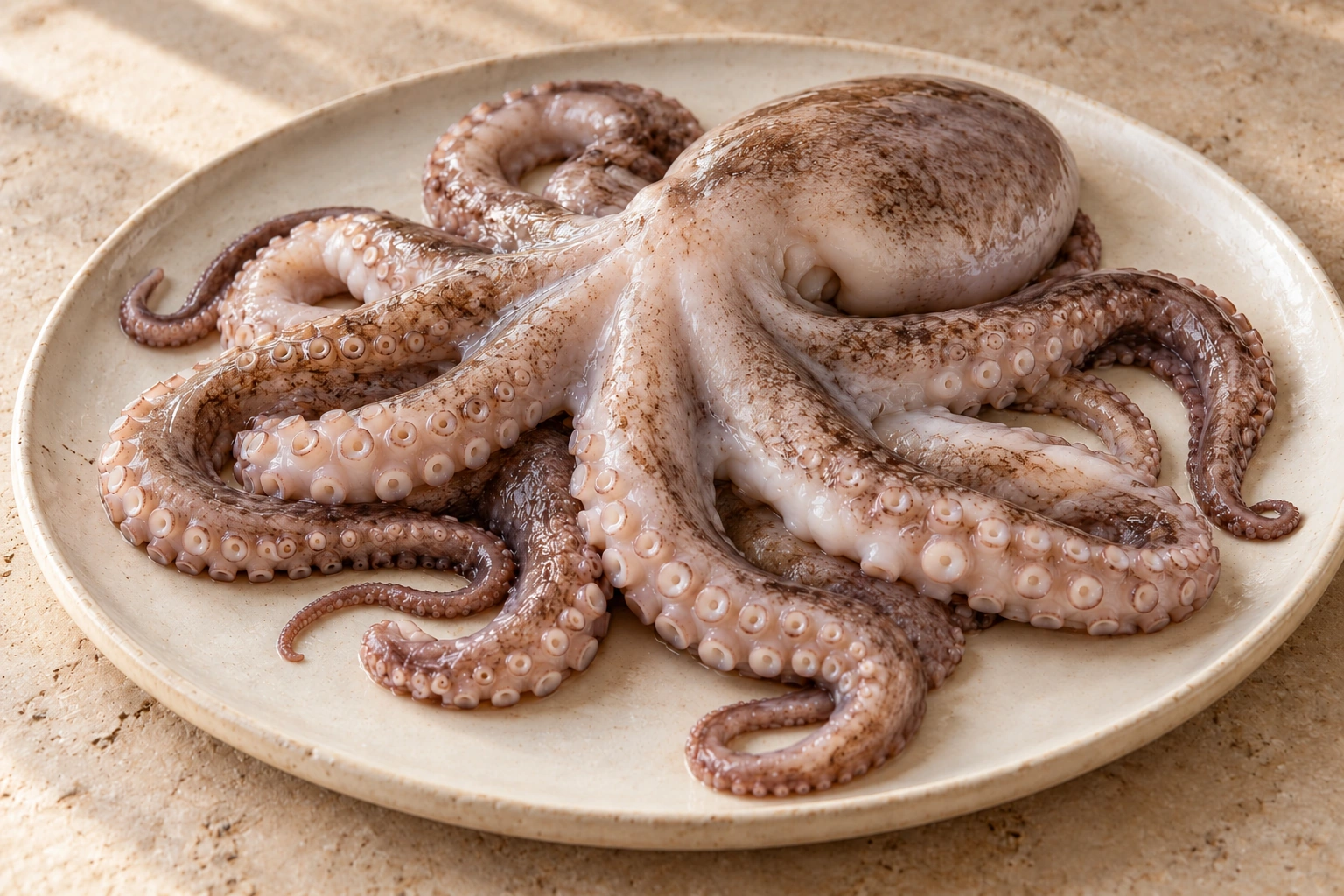
Octopus
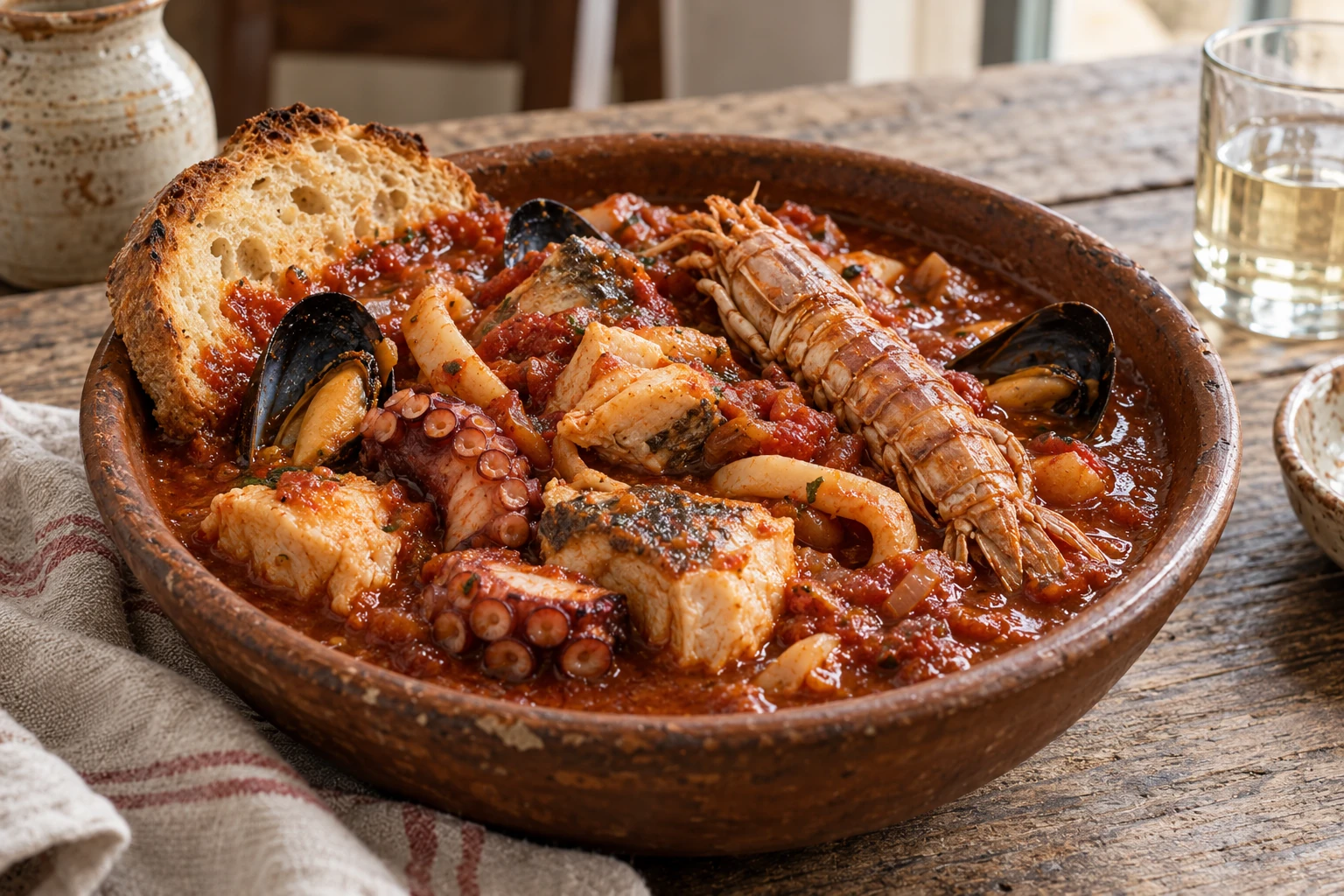
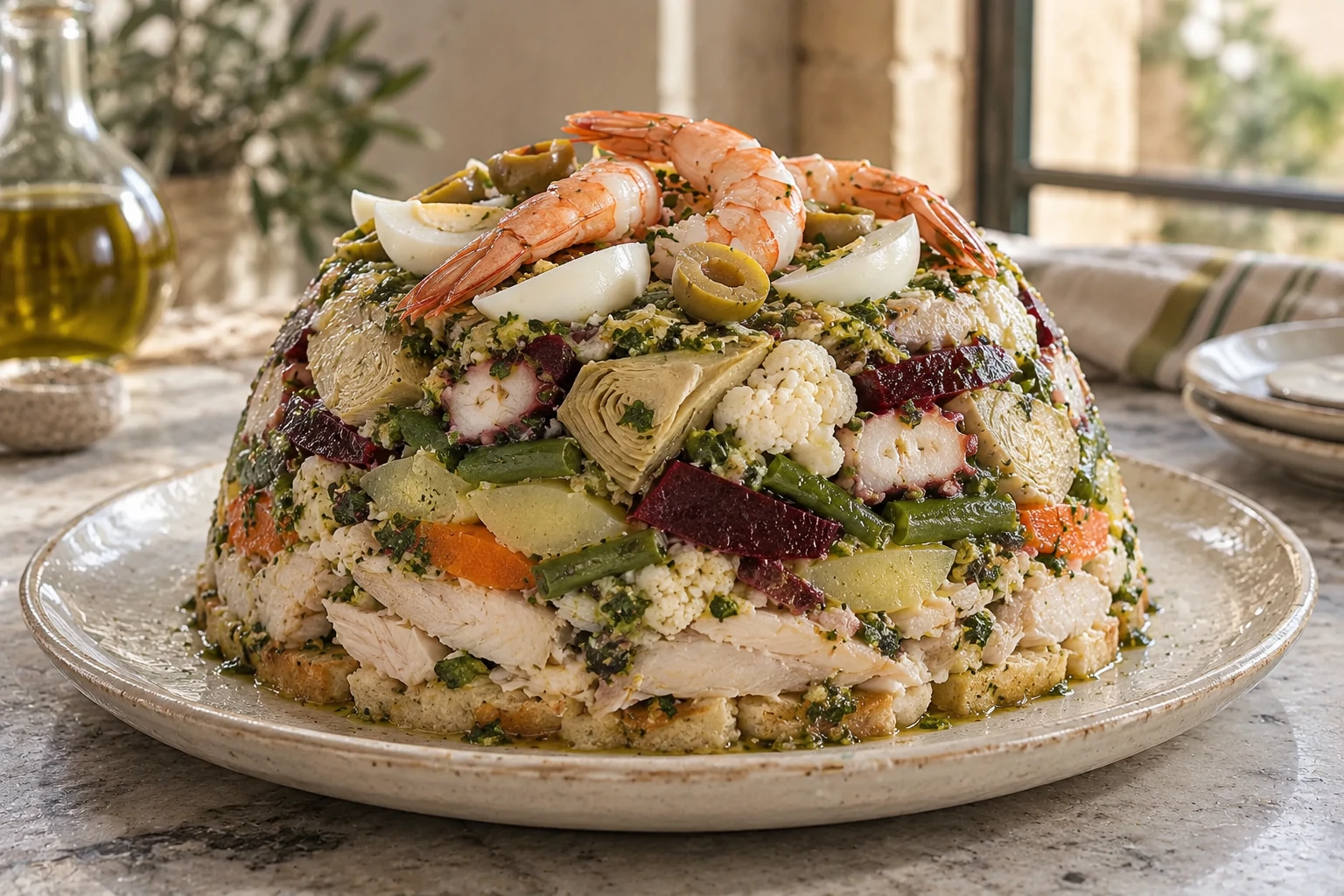
Raw cleaned octopus gives cacciucco its substantial arm pieces and supplies seafood for cappon magro. Weigh it before cooking, after the viscera, eyes and beak have been removed.
- Identity
- Common octopus, Octopus vulgaris; confirm the species on the label.
- Anatomy
- Eight arms with suckers and a soft mantle.
- Form
- Raw cleaned flesh, rather than cooked tentacles or a mixed seafood preparation.
Confirm what cleaned includes
Ask for the mantle cavity to be emptied and the eyes and central beak removed. Check the arm bases and suckers for sand or debris. For a product sold already cleaned, confirm those operations rather than assuming the word covers every step. Follow the recipe’s cooking method and test tenderness in a thick part of an arm.
From stew to layered seafood
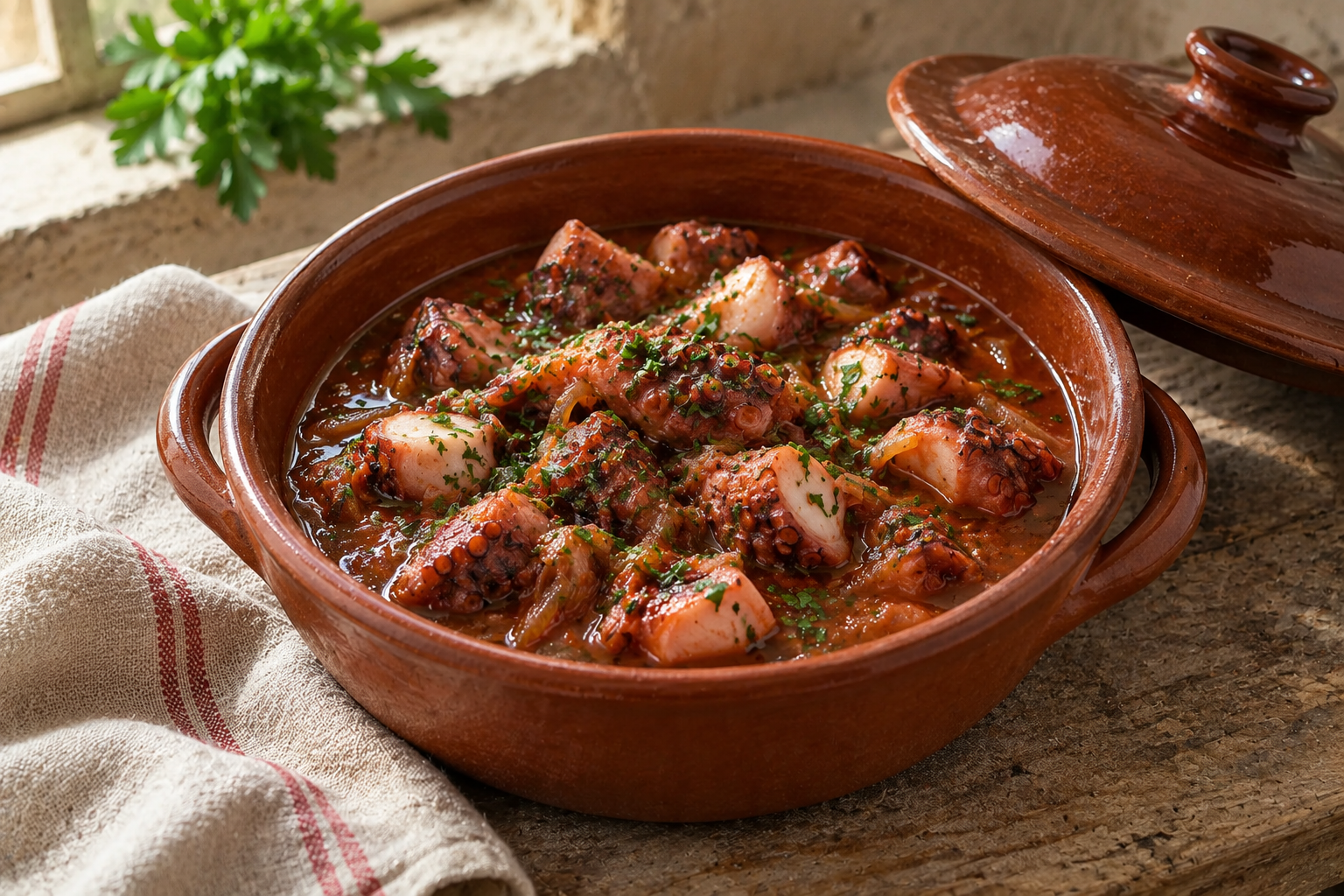
The muscular arms and soft mantle need a different treatment from delicate fish fillets. For cacciucco, cut the cleaned octopus into substantial, even pieces and start it before the fish. For cappon magro, cook it separately until tender before cutting it for assembly. Raw and cooked weights are different.
Keep species and preparation distinct
Read the scientific name and whether the octopus is raw or cooked, fresh, frozen or thawed. Moscardini and other labelled octopus species are not automatically this ingredient. Pre-cooked arms need a different timing and cannot be entered as the same raw cleaned quantity.
Keep the raw form cold
Refrigerate promptly in a covered container, separated from ready-to-eat food. Follow the seller’s storage directions and use-by date. Thaw frozen seafood in the refrigerator, not on the worktop, and keep it cold until cooking.
Sources and citations (7)Last checked October 2026
- Imperadore et al., Scientific Reports; PMC repository — retained exact scoped contribution
- MASAF — retained exact scoped contribution
- Nesher et al., Proceedings of the Royal Society B; PMC repository — retained exact scoped contribution
- www.fao.org — retained scoped contribution
- www.soniaperonaci.it — retained scoped contribution
- Kennedy et al., Scientific Reports; PMC repository — retained exact scoped contribution
- www.nhm.ac.uk — retained scoped contribution
