

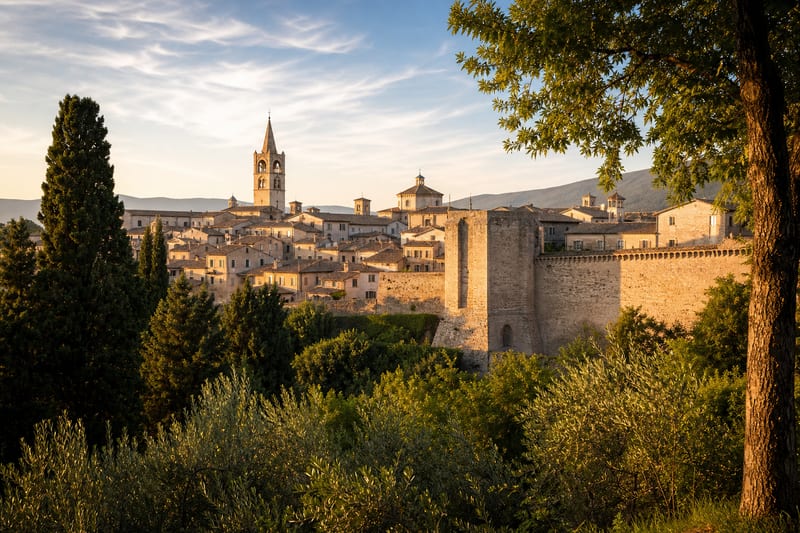
The birthplace of Saint Francis is a pink-stone pilgrimage city rising on Monte Subasio.
Its UNESCO-listed Basilica di San Francesco stacks two churches above the saint's tomb, walls alive with Giotto's Life of Saint Francis and frescoes by Cimabue.
When to visit Assisi
Average highs and lows across the year.
What to see first
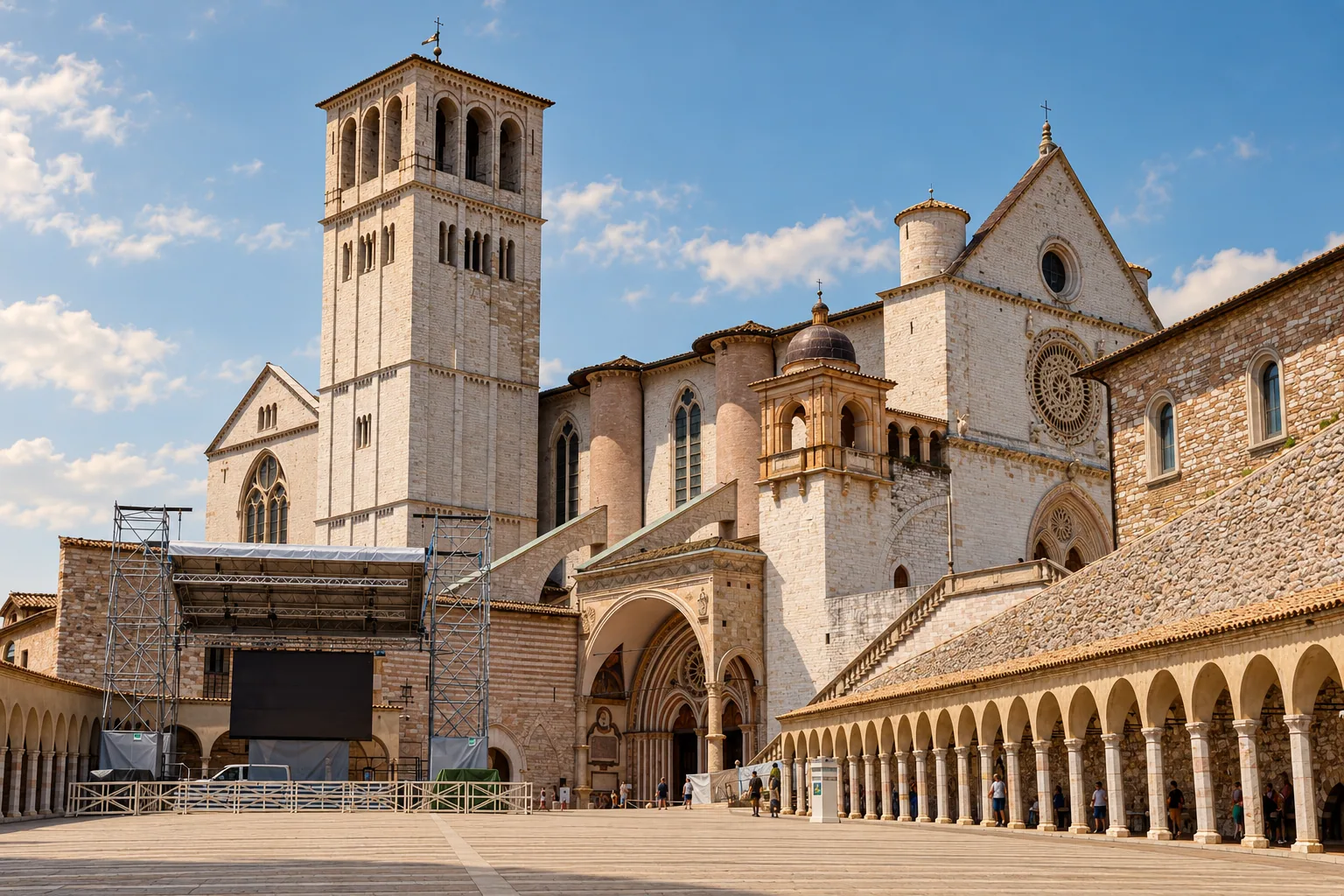
Basilica of San Francesco
The double basilica over Saint Francis's tomb, its walls covered by Giotto and Cimabue's frescoes.
Read the guide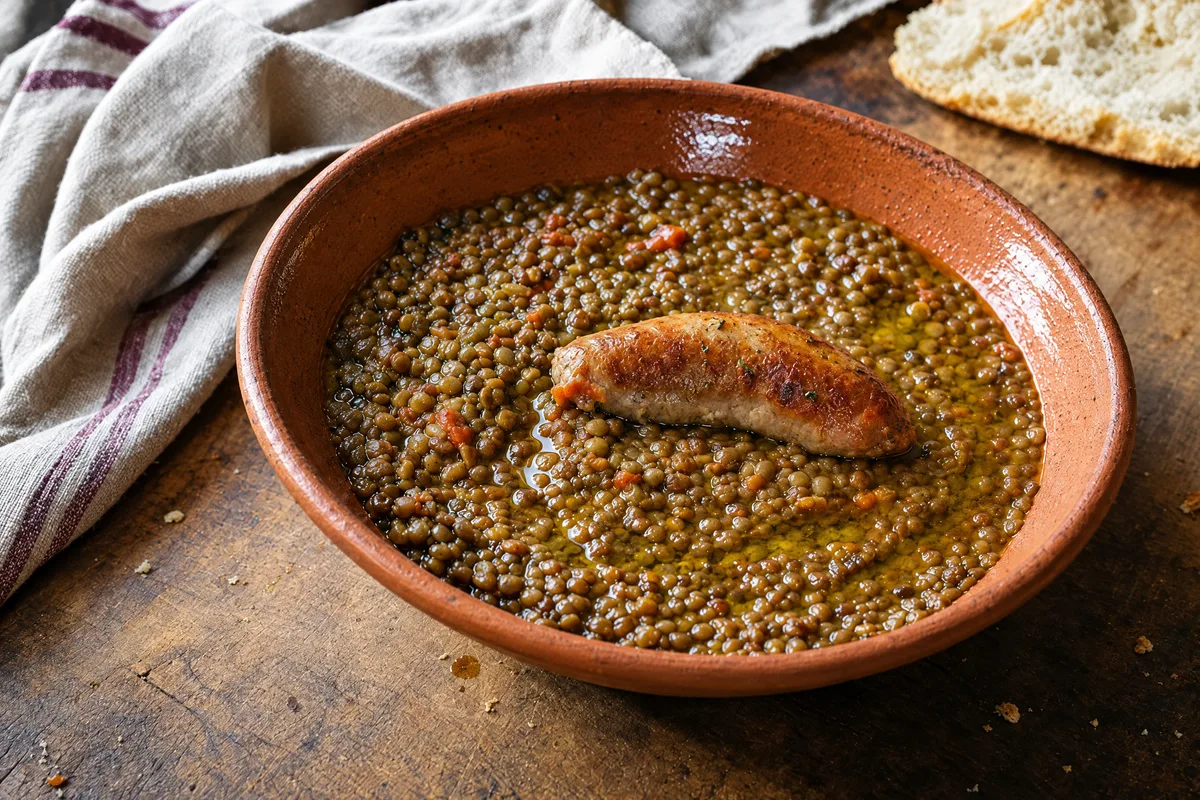
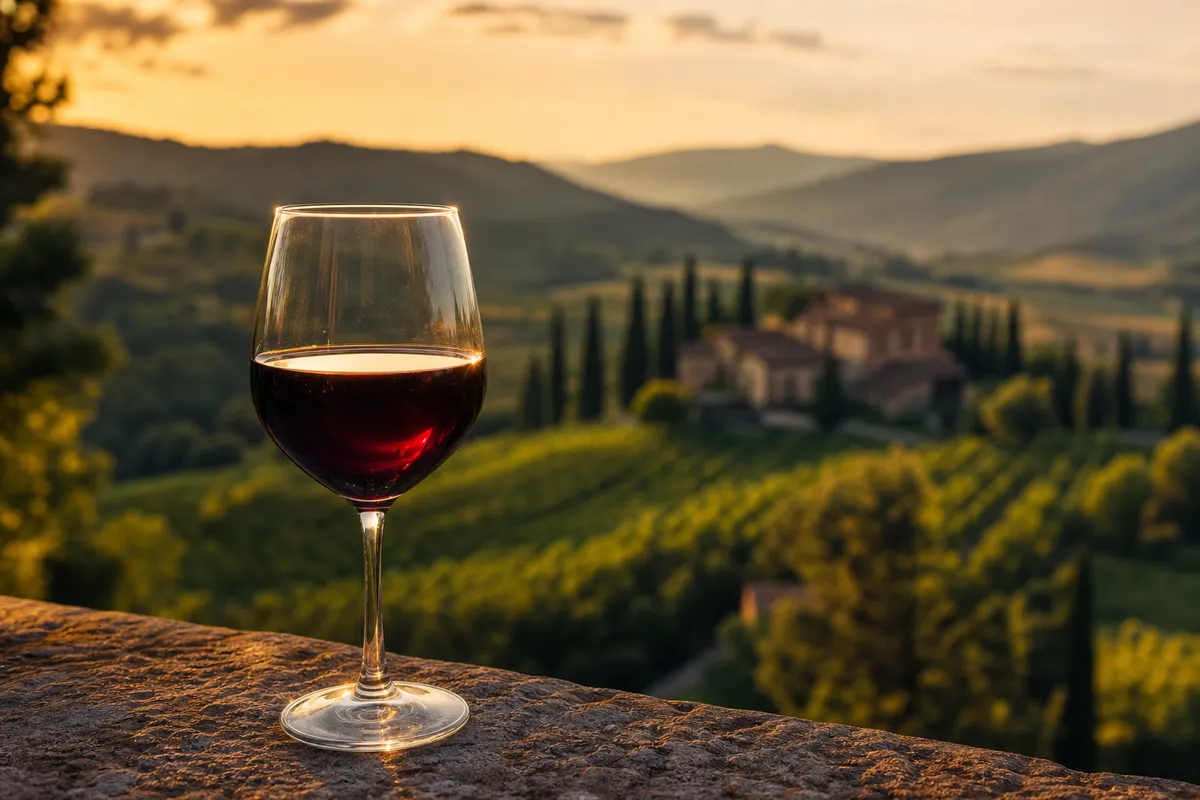
Eating and drinking in Assisi
Well-loved everyday tables and Michelin stars, each checked open.
- Trattoria SpadiniTrattoria
- La piazzetta delle erbeTrattoria
- La Fortezza RestaurantTrattoria
- Bar Santa ChiaraPizzeria
- Il BaccanaleTrattoria
- Il tempio ristorante pizzeriaPizzeria
Michelin-starred
- Une ★
Sleeping in Assisi
Well-reviewed places to stay, each checked open, by town.
- Hotel La Terrazza3-star
- Hotel Porta Nuova3-star
- Hotel Moderno Assisi
- Nun Assisi Relais & Spa Museum5-star
- Hotel IL Palazzo
- Hotel Sorella Luna
The year in Assisi
The rituals, races, and processions the city still keeps.
Assisi in a nutshell
Assisi is both a hill town and a dispersed municipal territory. The historic centre climbs the western flank of Monte Subasio above the Valle Umbra, while the railway station, the Basilica of Santa Maria degli Angeli, and the Porziuncola stand on the plain below. San Damiano lies outside the walls among olive slopes. The Eremo delle Carceri is higher on Subasio. Rivotorto occupies a separate settlement southwest of the centre. The Franciscan places do not fit into one walkable old town, so plan them as separate outings.
The city's global prominence comes from the lives and legacies of Francis and Clare, but Assisi is not only a devotional itinerary. Roman Asisium survives beneath and within the medieval town. Piazza del Comune preserves the ancient forum area, the facade commonly called the Temple of Minerva, and later civic architecture. The cathedral, castles, confraternities, museums, local archives, olive landscape, and living settlements extend the account well beyond two famous basilicas.
What you see in Assisi is one story told in several buildings. The Basilica of San Francesco holds the tomb of Francis and its great fresco cycles; the Basilica of Santa Chiara shelters Clare's remains and the Crucifix of San Damiano; San Damiano itself, where that crucifix hung, is a quiet sanctuary among the olive trees. Each has its own character and its own pace, which is why a good visit gives them room rather than racing through all three.
Assisi and the World Heritage listing
In 2000 UNESCO inscribed Assisi, the Basilica of San Francesco and Other Franciscan Sites as a single World Heritage property, recognising it under criteria (i), (ii), (iii), (iv) and (vi). It is a serial property: more than one basilica, more than one hilltop. The listing covers 14,563 hectares, with a buffer zone of about 4,087 hectares around it.
Two geographical components make it up. The first takes in the historic town, San Damiano, the Eremo delle Carceri, Rivotorto and the surrounding historic landscape. The second is the Basilica of Santa Maria degli Angeli on the plain, together with the Palazzo del Capitano del Perdono. The designation belongs to these named places and their setting, not to every building within the municipal boundary.
From Umbrian settlement to Roman Asisium
Assisi's steep urban form predates the Franciscan city. Archaeologists identify remains of Roman Asisium around the forum below Piazza del Comune, including the podium traditionally associated with the Temple of Minerva, a cistern, paving and architectural fragments. The municipal Forum and Archaeological Collection is entered through the former crypt of San Niccolò and shows excavated remains alongside local finds.
The temple front on the piazza is a textbook case of reuse. The Roman podium and columned facade were absorbed into the church of Santa Maria sopra Minerva, and the square later became the communal centre, its medieval character shaped by the Palazzo del Capitano del Popolo and the Torre del Popolo. Read it as layers of religious, political and archaeological history rather than as a reconstructed Roman forum.
More Roman traces are scattered through the town: the amphitheatre area, domus remains, stretches of wall and inscriptions. Some survive in private or restricted settings, and some are best understood through the archaeological collection, so not every spot on an old map is open to visit.
The medieval town and civic spine
The easiest line through town runs from the Basilica of San Francesco along the lower streets to Piazza del Comune, then uphill to the Cathedral of San Rufino and on to the Basilica of Santa Chiara. It is not a level promenade. Lanes rise and fall, the stone is polished smooth, and stairs interrupt distances that look short on a map. Side streets, terraces and gates reward a slow pace, so give the day plenty of time.
Piazza del Comune is the civic hinge. Santa Maria sopra Minerva keeps the transformed temple front, the Torre del Popolo and the Palazzo del Capitano del Popolo recall the communal city, and the Palazzo dei Priori completes the frame. Cafes and events make it a lively meeting place, and the Roman forum lies directly beneath your feet.
The Rocca Maggiore dominates the ridge at about 500 metres. The Comune describes a fourteenth-century reconstruction, a later raising of the central keep, a walkway to a polygonal tower and a circular bastion added in 1535. The climb to the tower is rewarded with a sweeping view over the Valle Umbra, and the fortress is a managed monument rather than a free lookout.
The Cathedral of San Rufino anchors another layer of the town. The official account describes Roman remains and a cistern below or around it, an earlier church expanded under Bishop Ugo in 1029, and the Romanesque church consecrated in 1253. It is an active cathedral, and the Museo Diocesano e Cripta di San Rufino, which has its own entrance, holds the diocese's collections rather than every work in the church.
Basilica of San Francesco and the Sacred Convent
The Basilica of San Francesco is the great western anchor of the old town. Francis died in 1226; work on the basilica began in 1228, and the altars were consecrated in 1253. It is really two churches, one above the other: the Lower Church, built first to shelter the saint's body, and the Upper Church, a brighter space for solemn ceremonies. The crypt around Francis's tomb, created after the tomb was rediscovered in 1818, is the most sacred spot in the complex.
The paintings make the building one of the landmarks of Italian art. Cimabue, Giotto, Simone Martini and Pietro Lorenzetti all worked here. Giotto is credited with the 28 scenes from the life of Francis in the Upper Church, and Cimabue with a Madonna and Child with Saint Francis. Attributions of individual scenes are still debated among scholars, so take the famous names as a guide rather than a guarantee.
The Sacred Convent next door is the home of the friars and keeps an archive, a library and a Treasure Museum.
Clare, San Rufino, and the eastern sacred axis
The Basilica of Santa Chiara stands at the eastern end of the central walk and opens onto a broad view of the valley. Built from 1257 over the earlier church of San Giorgio, it is faced in white and pink stone from Monte Subasio, with a three-part gabled facade, a rose window and three flying buttresses added in the fourteenth century. Below the nave, a nineteenth-century neo-Gothic crypt holds the remains of Clare.
The Chapel of the Crucifix in the basilica houses the original Crucifix of San Damiano, the painted cross that by tradition spoke to Francis. The crucifix, the church that shelters it and the sanctuary of San Damiano where it hung are three different places to see. Clare's tomb is a place of devotion rather than a museum highlight, and the church asks for quiet and respect.
Between these two great sanctuaries, San Rufino deserves real time so that it does not become a facade you pass on the way uphill. Its Romanesque architecture, diocesan museum and archaeological levels each reward a look. Santa Maria Maggiore and the Sanctuary of the Spoliation, close by, add another Franciscan chapter.
San Damiano and Eremo delle Carceri
San Damiano lies below the town in a quieter olive landscape. It is tied to Francis, to Clare's early community of Poor Ladies, to the Canticle tradition and to the crucifix now kept at Santa Chiara. Buildings, garden, paths and views form an intimate complex that is still a living sanctuary. The descent from Assisi and the climb back can be strenuous.
San Damiano belongs to the World Heritage property as a named part of the first component, not simply as a place near Assisi. Stories about the rooms Francis or Clare used rest on devotional tradition as much as on architectural proof, so treat them as tradition.
The Eremo delle Carceri sits in woods higher up Monte Subasio, about four kilometres from the centre and near 800 metres above sea level. It is a place of retreat, prayer, small rooms and forest paths. The name comes from the idea of seclusion, not from any prison. Silence matters here, and the narrow historic spaces can be hard going for some visitors.
The Eremo is not served like a central stop in town. Walking up from Assisi is a sustained ascent, and the trip is shaped by the road, heat, winter conditions and the state of the trails. San Francesco, San Damiano and the Eremo are best not squeezed into one rushed day, which would turn three meaningful places into a logistics exercise.
Santa Maria degli Angeli, Porziuncola, and Rivotorto
Santa Maria degli Angeli is a frazione of Assisi on the plain. It has the railway station and the monumental basilica built around the Porziuncola. It is not a separate municipality and it is not part of the hilltop old town, which matters when you choose a hotel: a room near the station suits regional rail but leaves a bus, taxi or steep climb between you and the old town.
The basilica is a vast later church enclosing the tiny Porziuncola, the chapel at the heart of Franciscan memory. Around it are the Cappella del Transito, the rose garden, a museum and the Palazzo del Capitano del Perdono, each with its own history. UNESCO places this group in the second geographical component of the property.
Rivotorto is another frazione with its own Franciscan sanctuary, separate from Santa Maria degli Angeli and the old town. The sanctuary encloses the stone Tugurio, the humble shelter tradition links to the early friars. An earthquake in 1853 nearly destroyed the earlier church while the Tugurio stood unharmed, and the present neo-Gothic sanctuary was then built on the ruins to a design by Bernardo Tini. The church is therefore a rebuilt shell around an older core, not surviving early Franciscan fabric.
The Tugurio has its own story of conservation. In 1926 a restoration meant to return it to its primitive appearance removed additions made after the thirteenth century, especially nineteenth-century decoration. What you see today reflects that selective clean-up as much as the original structure.
Bosco di San Francesco and Monte Subasio
The Bosco di San Francesco, run by FAI, extends a visit from the basilica area into woodland, cultivated clearings, watercourses and the restored complex of Santa Croce. The path is sloped dirt with steps, not a level urban park, so wear sturdy shoes and expect to climb on the way back.
The Regional Park of Monte Subasio covers a far larger protected landscape across Assisi, Spello, Valtopina and Nocera Umbra, some 7,169 hectares, with the mountain reaching 1,290 metres. It is shared among those communes, so think of it as a place of its own with trails, grazing land, villages and viewpoints, not an Assisi site.
The olive slopes between Assisi and Spoleto are recognised by the FAO as a Globally Important Agricultural Heritage System, designated in 2018. Terraces, dry stone walls, mills and hamlets form a living agricultural landscape, not just scenery behind the basilicas. It is a separate honour from UNESCO World Heritage, and visits to groves and mills are usually arranged with the producers themselves.
Museums, collections, and objects
Assisi does not have one big museum, and that is part of its charm. The municipal Roman Forum and Archaeological Collection interprets ancient Asisium. The Museo Diocesano e Cripta di San Rufino tells the cathedral's story. The Museo della Memoria documents how local people sheltered persecuted civilians in the Second World War. The Sacred Convent, the Porziuncola and other religious houses keep their own collections under their own rules.
The Museo della Memoria deserves a quiet hour. The diocesan account documents the Assisi network that hid and helped Jews and other persecuted people during the German occupation, and the museum names the people, places and documents involved. It tells the story of particular people, and not every institution or resident took part.
Food, wine, and agricultural context
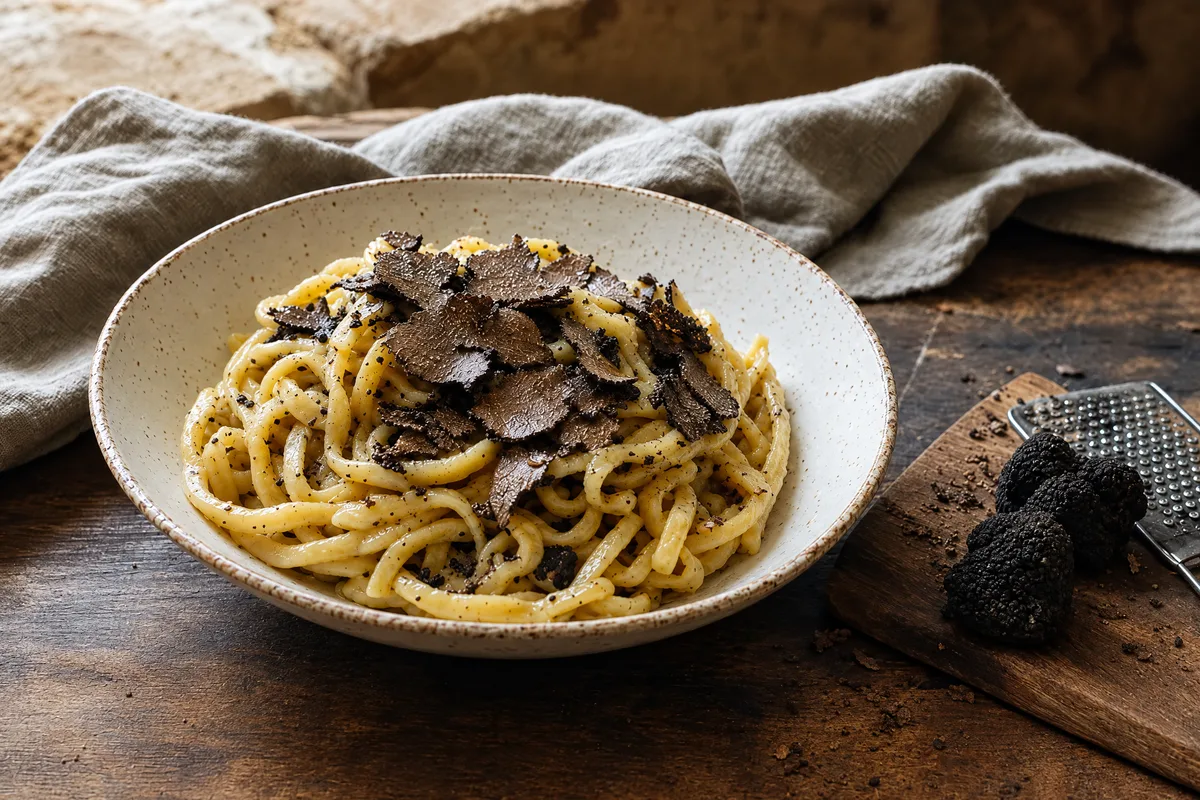
The table in Assisi is Umbrian. The official destination site associates the area with olive oil, wine, cured meats, cheeses, legumes, truffles, breads and sweets. It also notes that the rolled pastry called rocciata around Assisi and Foligno is known as attorta elsewhere, which shows a shared local name rather than a single birthplace.
Torta al testo is Umbrian rather than exclusively Assisan, and strangozzi turn up across a wider part of the region. The national list of traditional agri-food products recognises Umbrian specialities at regional level, so expect to meet them all over the region.
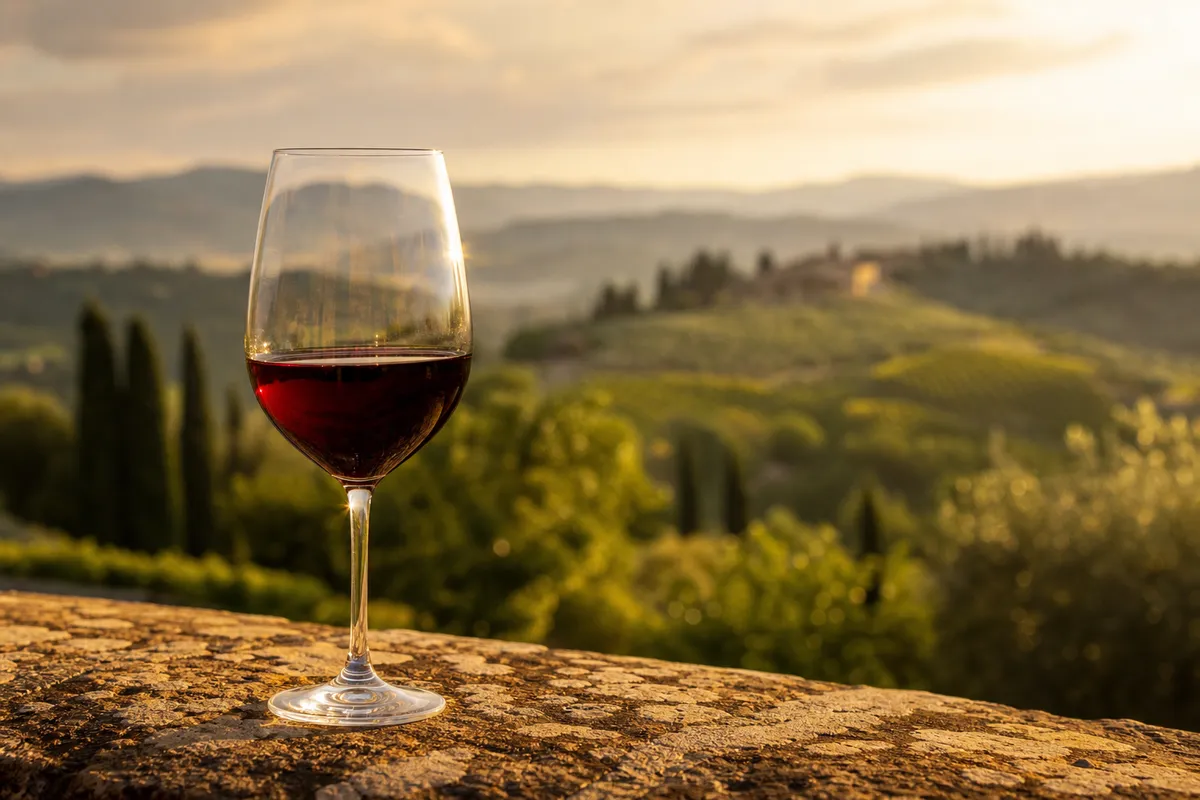
The national wine register recognises Assisi DOP/DOC, whose specification sets the permitted wine types, production area, grapes and labelling. A producer near Assisi is not automatically making Assisi DOC, and a bottle under another Umbrian denomination is a different wine.
Olive oil belongs to both table and landscape. The FAO-recognised Assisi-Spoleto olive system frames the terraces and the cultivation, while protected-origin oil has its own specification. Ask where the olives were grown and the oil milled, the harvest date and the cultivar, and do not treat every bottle in a shop as equivalent.
Arriving and moving around
Assisi's railway station is on the plain at Santa Maria degli Angeli, not beside the basilicas of the old town, so you always have a link to the hill to plan for.
Drivers are directed to parking areas outside the restricted traffic zone around the old town. A lodging address inside the walls does not by itself give legal access, so sort out the ZTL and the exact car park with your hotel before you arrive.
Perugia San Francesco d'Assisi Airport is the regional air gateway. Taxis, private transfers and rental cars all reach Assisi from there, so plan a late arrival from your actual flight rather than from a map distance.
Access, worship, weather, and safety
Assisi's official accessibility material, "Assisi for everyone", is organised route by route rather than as a single citywide rating. It describes gradients, surfaces, parking, toilets, entrances and approaches for selected areas. Plan your own route from arrival point through each venue and back; a ramp at one entrance does not guarantee step-free access to crypts, towers, woodland paths or every chapel.
The principal churches and sanctuaries are active places of worship, so services and staff instructions come before sightseeing, and dress, silence and photography rules are posted on site. Before you set out, confirm opening hours, worship times and the day's weather with the operator of each place you plan to visit.
Summer heat is fiercer on the exposed climbs between the plain and the hill town, since the historic centre sits high on Monte Subasio's western slope. Winter on the mountain, which rises to 1,290 metres, can feel very different from the plain, and rain makes stone lanes and dirt paths harder going. Those are general patterns tied to Assisi's change in elevation.
During crowded pilgrimages and festivals, use ordinary travel sense: keep valuables close, agree a meeting point, carry water and do not count on mobile coverage on every trail.
Events and the Franciscan calendar
The year 2026 was the eighth centenary of the death of Francis, which fell in 1226, and Assisi marked it with a programme of religious and cultural events.
Calendimaggio, held each spring in early May, celebrates the arrival of spring through a rivalry between two medieval parties, the Nobilissima Parte de Sopra and the Magnifica Parte de Sotto, with processions, theatre and period costume.
Realistic itineraries
One day: Begin at the Basilica of San Francesco, giving the Upper and Lower churches enough time without trying to catalogue every fresco. Walk gradually through the lower town to Piazza del Comune for its Roman and communal layers. Continue to San Rufino and finish at Santa Chiara. Choose either the Roman Forum collection or the diocesan museum as your main interior beyond the basilicas.
Two days: Keep the first day within the historic centre. On the second, choose one Franciscan landscape line. A lower-slope day connects San Damiano with Santa Maria degli Angeli and the Porziuncola, using transport between hill and plain. A higher, more demanding day joins the Eremo delle Carceri with a measured Monte Subasio walk. Do not attempt both unless your transport, fitness and the weather allow it.
Three days: Add depth rather than more check marks. Option A is Roman and civic Assisi, with the forum, the temple facade, the amphitheatre area, the Rocca Maggiore and a focused museum visit. Option B is landscape and agriculture through the Bosco di San Francesco and an arranged olive or wine visit. Option C adds Rivotorto, Santa Maria degli Angeli and the Museo della Memoria, for a broader account of Franciscan settlement and twentieth-century history.
More of Umbria
A letter from Italy, once a month.
The places, tables and makers we found worth your time. One email, no noise.
One letter a month. Unsubscribe at any time. We never share your address.