

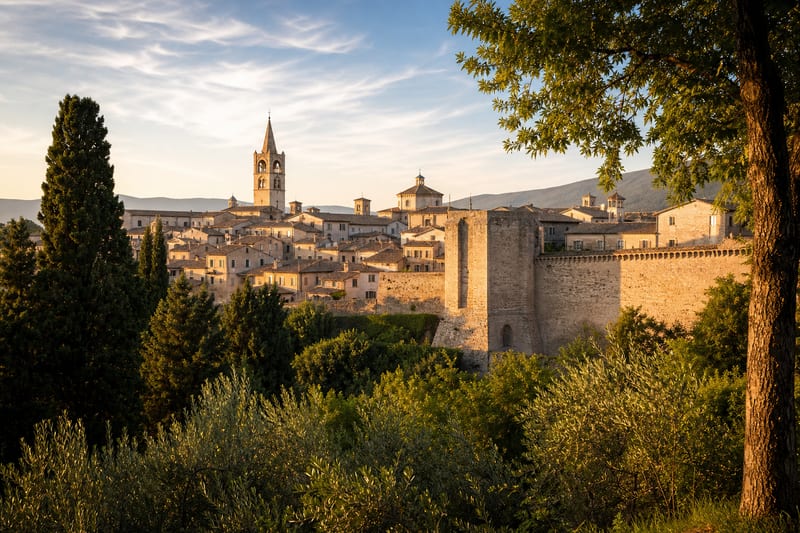
Umbria's hilltop capital is a city of students and chocolate, its medieval core gathered around the Fontana Maggiore (carved by the Pisanos) and the Palazzo dei Priori, home to the National Gallery of Umbria and Perugino's luminous rooms.
When to visit Perugia
Average highs and lows across the year.
What to see first
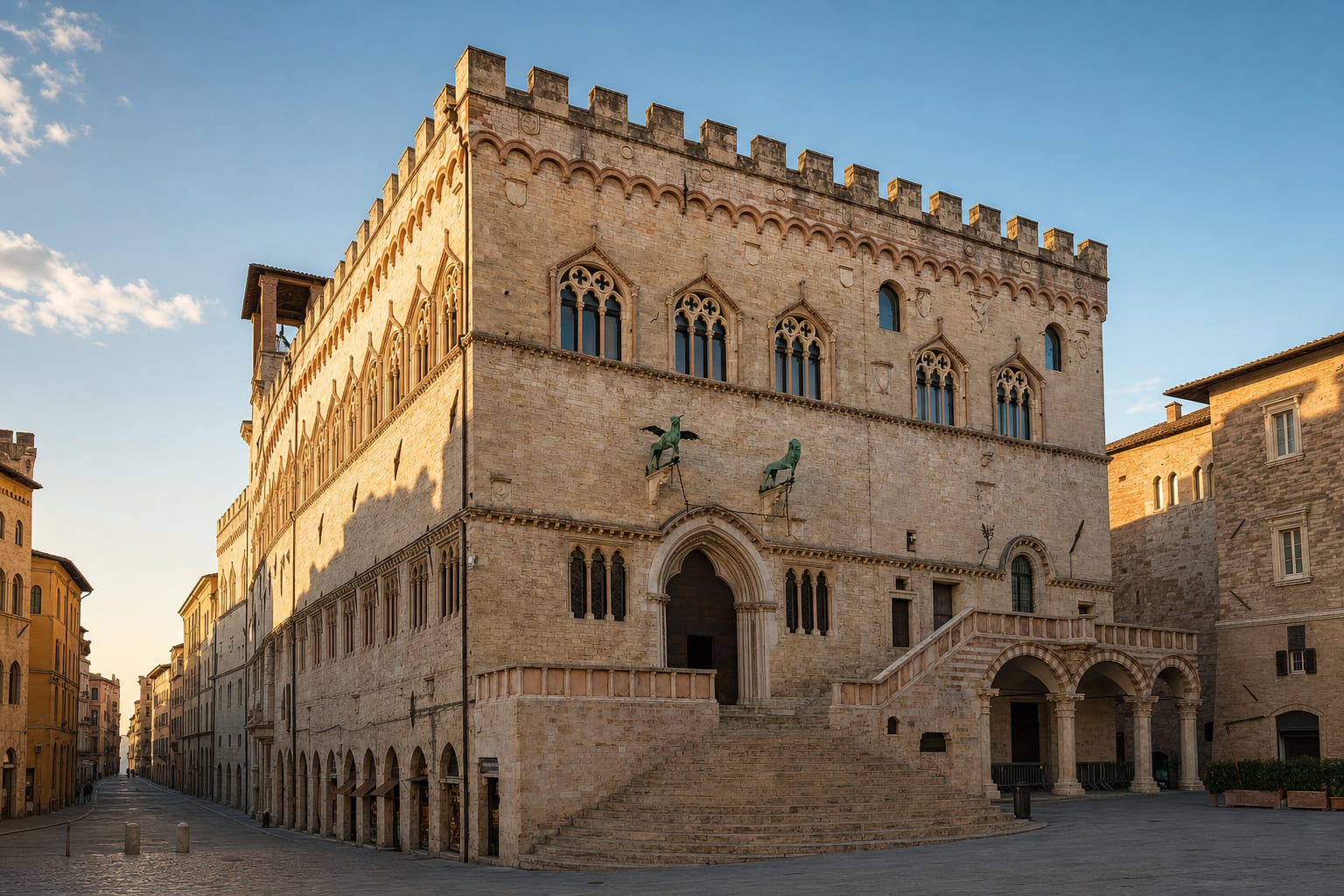
Palazzo dei Priori
Perugia’s Gothic town hall since 1297, with the National Gallery of Umbria and Perugino upstairs.
Read the guide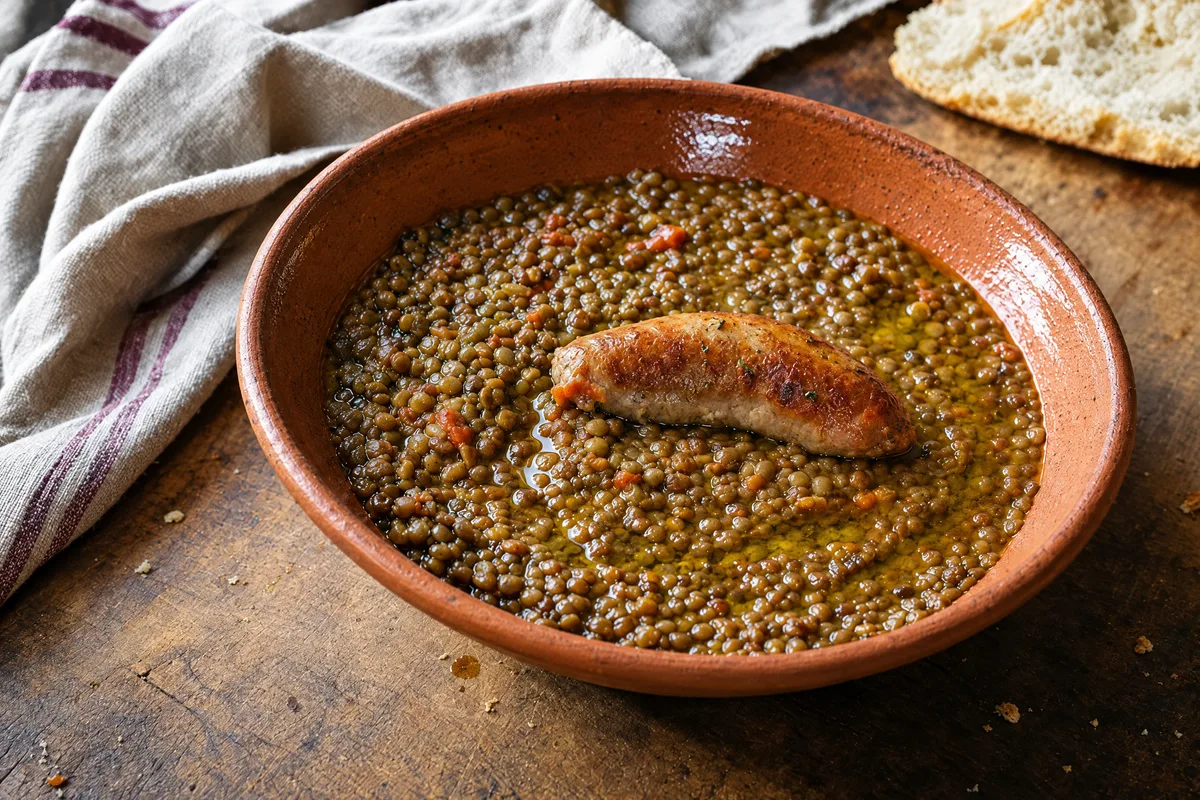
Eating and drinking in Perugia
Well-loved everyday tables and Michelin stars, each checked open.
- Il GiuristaTrattoria
- Trattoria Oberdan PerugiaTrattoria
- La Bottega di PerugiaTrattoria
- Al TartufoTrattoria
- L'Antica Pizzeria da Michele PerugiaPizzeria
- ImpastoPizzeria
Michelin-starred
- Ada ★
- Elementi ★
Sleeping in Perugia
Well-reviewed places to stay, each checked open, by town.
- Hotel Locanda della Posta4-star
- Castello di Monterone
- Priori Secret Garden
- I Fiori di Margherita Luxury B&B
- Le Cappuccinelle Suites & SPA
- Residenza Il Punto
The year in Perugia
The rituals, races, and processions the city still keeps.
Perugia in a nutshell
Perugia is not a city that yields its meaning from a single panoramic square. Its historic centre occupies a defended hill whose Etruscan gates and walls survive inside a later medieval and Renaissance city. Piazza IV Novembre is the clearest point of orientation: Fontana Maggiore, the Cathedral of San Lorenzo, and Palazzo dei Priori bring civic government, religious life, water engineering, sculpture, and painting into one compact urban room. Yet the best account of Perugia continues below the square, through the remains incorporated into Rocca Paolina, and outward along the ridges toward Porta Sant'Angelo, Borgo XX Giugno, and the lower modern transport gateways.
This layering matters when planning. Palazzo dei Priori is the civic building, not a synonym for every institution inside it. The Galleria Nazionale dell'Umbria is a state museum occupying its upper floors. The Nobile Collegio del Cambio and Nobile Collegio della Mercanzia are distinct historic bodies with their own rooms and visit conditions. Fontana Maggiore is a public monument outside. Treating these as separate places produces a more truthful visit and prevents a hurried palace stop from swallowing several very different experiences.
Why the hill looks the way it does
The Comune's archaeological account traces settlement on the Perugian hills to the ninth century BC and the city's emergence as an important Etruscan centre in the seventh and sixth centuries BC. The defensible acropolis also commanded routes through the Tiber valley. Roughly three kilometres of travertine walls, generally dated to the later third century BC, enclosed the Etruscan city. The monumental Arco Etrusco survives as a standing gate; its later inscriptions record Perugia's Roman identities as Augusta Perusia and Colonia Vibia. Porta Marzia survives differently: elements of the ancient gate were moved and recomposed in the fabric of Rocca Paolina.
The Roman rupture was severe. During the Perusine War of 41 to 40 BC, Octavian's forces took the city after a siege. Perugia was burned and subsequently rebuilt as a Roman municipium. That sequence helps explain why Roman inscriptions sit upon Etruscan masonry and why the centre should be read as adaptation rather than a frozen archaeological period. The Pozzo Etrusco, a roughly 37 metre deep hydraulic structure beneath Palazzo Sorbello, adds an engineering dimension to the surviving walls and gates.
Medieval communal Perugia reshaped the acropolis around its cathedral and public palace. The present Palazzo dei Priori began in 1293 to 1297 and expanded through later campaigns. Fontana Maggiore was completed in 1278 to 1280 to celebrate the arrival of water by aqueduct. Frate Bevignate directed the project, Boninsegna da Venezia handled its hydraulic work, and Nicola and Giovanni Pisano created its sculptural program. Its two marble basins carry fifty reliefs and twenty-four statues whose subjects reach beyond saints and civic emblems to months, agricultural work, liberal arts, biblical history, and classical culture. It is best approached as a public encyclopedia in stone, not merely a decorative fountain.
Renaissance Perugia appears in the painted chamber of the moneychangers. Pietro Perugino decorated the Collegio del Cambio's Sala dell'Udienza between 1496 and 1500, giving a guild tribunal an ambitious moral and intellectual program. The Galleria Nazionale offers the broader artistic sequence: two floors cover eight centuries, with especially strong Umbrian painting, rooms devoted to Perugino and Pinturicchio, and Piero della Francesca's Polyptych of Saint Anthony.
A different urban intervention arrived with Rocca Paolina. Antonio da Sangallo the Younger designed the fortress built from 1540 to 1543. Its construction absorbed a district associated with the Baglioni family. Much of the upper fortress disappeared in the nineteenth century, while surviving lower spaces now form an underground route crossed by the city's escalator system. Alberto Burri's Grande Nero, installed there permanently in 1984, adds a contemporary work to this charged setting.
The civic and artistic centre
Begin in Piazza IV Novembre before committing to an interior. Walk once around Fontana Maggiore to follow the sculpture, then look at the relationship between cathedral steps, fountain, and the long palace facade. The griffin and lion above the palace entrance are copies; the medieval bronze originals are preserved in the palace atrium. Sala dei Notari belongs to the civic complex, while the Galleria, Cambio, and Mercanzia require separate decisions about time and tickets.
The Galleria Nazionale dell'Umbria deserves at least a focused half day for anyone interested in central Italian art. Its value lies not only in famous names but in continuity: medieval painted crosses and panels lead toward Renaissance experiments in space and light, then into the local careers of Perugino and Pinturicchio. Piero della Francesca's polyptych, made around 1467 to 1469 for the convent of Sant'Antonio da Padova at Porta Sant'Angelo, retains a documented relationship to the city even after entering the museum. The museum offers tactile resources, Italian Sign Language content, augmentative and alternative communication material, and an accessible audioguide.
The Collegio del Cambio is smaller and more concentrated. Its frescoed audience chamber repays slow looking, while the historic building has architectural barriers. Staff assistance can make three rooms available, subject to stated conditions, and photography rules are room-specific.
The Collegio della Mercanzia preserves a different guild identity. It occupied rooms in Palazzo dei Priori from 1390, and its timber-lined hall, pulpit, and archive evoke the institutional world of Perugia's merchants. Visit days and admission remain changeable. This is a distinct place within the palace system, not an extension of the Galleria or Cambio.
Cathedral, chapter, and the city below the square
Perugia's municipal authorities decided to build a new cathedral in March 1300, although the present building took shape over a long campaign completed late in the fifteenth century. The Cathedral of San Lorenzo remains an active place of worship. Art viewing must therefore defer to liturgy, services, and respectful dress and conduct. Its choir, sacristy painting, and devotional works belong to a living ecclesiastical setting rather than a conventional museum circuit.
The wider Isola di San Lorenzo system should be planned separately. It joins the cathedral, fifteenth and eighteenth-century cloisters, former canons' houses, the Museo del Capitolo, the Loggia di Braccio, and Perugia Sotterranea. The underground route descends beneath Piazza IV Novembre into an archaeological sequence described by the operator as spanning twenty-five centuries.
Etruscan and Roman Perugia
For a coherent archaeological day, connect standing architecture to museum collections. Start at the Arco Etrusco, compare its masonry and inscriptions with the better-fragmented Porta Marzia at Rocca Paolina, and add the Pozzo Etrusco if its current visit conditions work. Then continue to the Museo Archeologico Nazionale dell'Umbria in the former convent of San Domenico. The museum covers prehistoric, Umbrian, Etruscan, and Roman material rather than functioning only as an Etruscan collection.
The Cippo di Perugia is one object that merits advance context. The travertine block was found at Colle San Marco in 1822. Its long Etruscan inscription records a legal agreement involving the Velthina and Afuna families. It is evidence of language, land, and law rather than a mysterious undeciphered relic.
The Ipogeo dei Volumni and Necropoli del Palazzone belong to Ponte San Giovanni, within the municipality but outside the hilltop centre. The necropolis contains nearly two hundred tombs, while the monumental Volumni hypogeum preserves an elite family funerary context and urn group.
South and north beyond the piazza
The southward ridge gives Perugia a useful second axis. From Rocca Paolina and the Carducci gardens, continue toward Corso Cavour, San Domenico and the archaeological museum, the medieval gate, Borgo XX Giugno, and the Basilica and Abbey of San Pietro. San Pietro was founded in 966 on a site with earlier religious associations. Its church, monastic complex, collections, and gardens require more time than a quick facade stop.
North of the civic centre, Via Ulisse Rocchi leads to the Arco Etrusco and the university quarter, then toward Porta Sant'Angelo and the circular church commonly called the Tempio di Sant'Angelo. This direction works particularly well after the archaeological core because it reveals the extent of the defended hill. It also reconnects Piero della Francesca's polyptych in the Galleria with the former convent at Porta Sant'Angelo for which it was made.
San Bevignate requires a deliberate trip outside the immediate pedestrian core. The complex documents the Templar presence in Perugia from 1237 and preserves an unusual medieval painted cycle. Restoration also revealed a Roman fullonica, or textile-working installation, below the church. Those are separate chronological stories within one site.
For a contemporary counterpoint, Palazzo della Penna contains a permanent group devoted to Gerardo Dottori and Umbrian Futurism and six blackboards made by Joseph Beuys for Opera Unica, associated with a 1980 encounter with Burri. Giardini Carducci, by contrast, is an open-air belvedere. Its view helps explain the hilltop geography and the relationship between the historic centre, valleys, and surrounding relief.
A university city, not only a heritage stop
The Università degli Studi di Perugia dates its formal foundation to the papal bull Super specula of 8 September 1308. The Università per Stranieri developed from courses begun in 1921 and has occupied Palazzo Gallenga since 1927. Their presence gives the centre a lived academic rhythm and helps explain why Perugia remains active outside conventional visitor hours. Both are working universities rather than walk-in monuments.
What to eat and drink
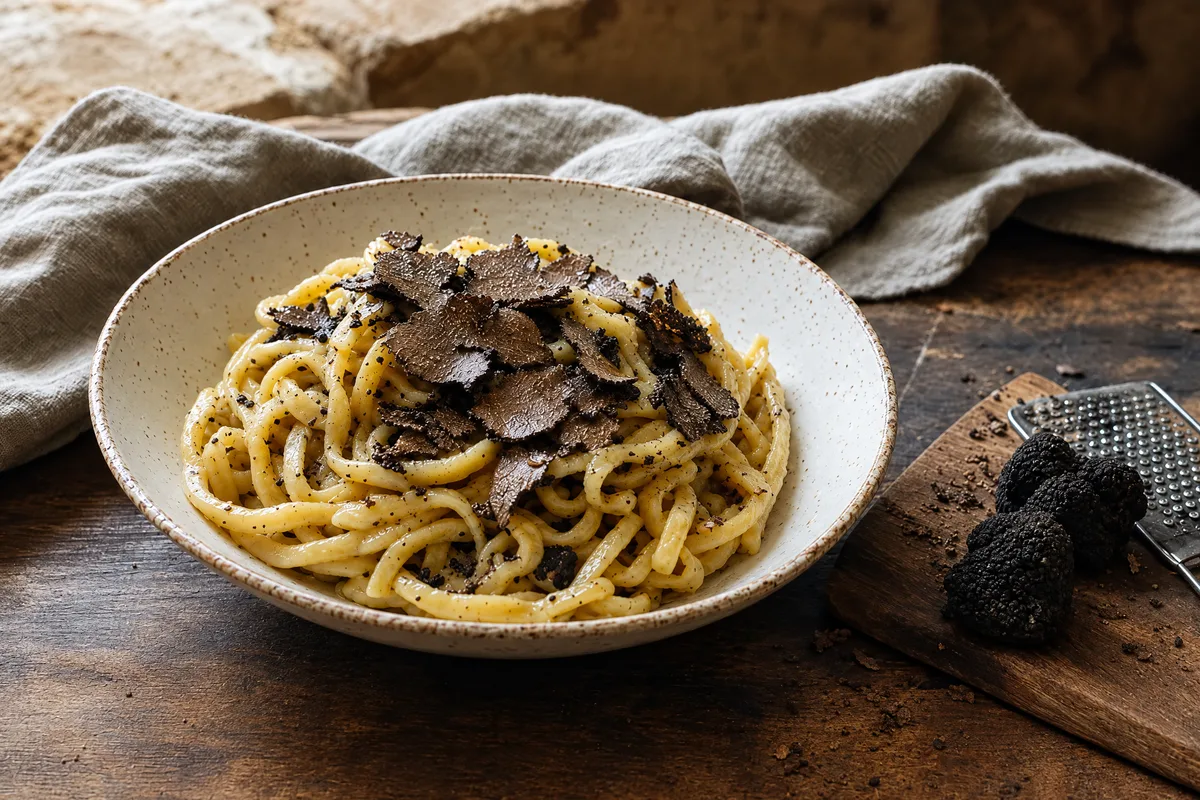
Perugia has a documented calendar of sweets without owning all Umbrian cooking. Torcolo di San Costanzo is linked to the city's patronal feast on 29 January; regional tourism material records several traditions about its ring form rather than a single origin story. Ciaramicola is associated with Perugia and Easter. Official regional tourism material also associates Pinolate and torciglione with Christmas in the Perugia area, Fave dei morti or Stinchetti with All Saints in Perugia, and Strufoli alla perugina with Carnival. These sweets appear in Italy's national inventory of traditional agri-food products under Umbria, as regional traditions rather than exclusively Perugian ones.
Chocolate is part of modern Perugian identity through industrial history, craft shops, and Eurochocolate, but the city should not be reduced to one brand or festival. Ask a producer what is made on site and distinguish an artisan laboratory from a retailer. Products from Norcia, Spoleto, Trevi, and other municipalities are not Perugian specialities.
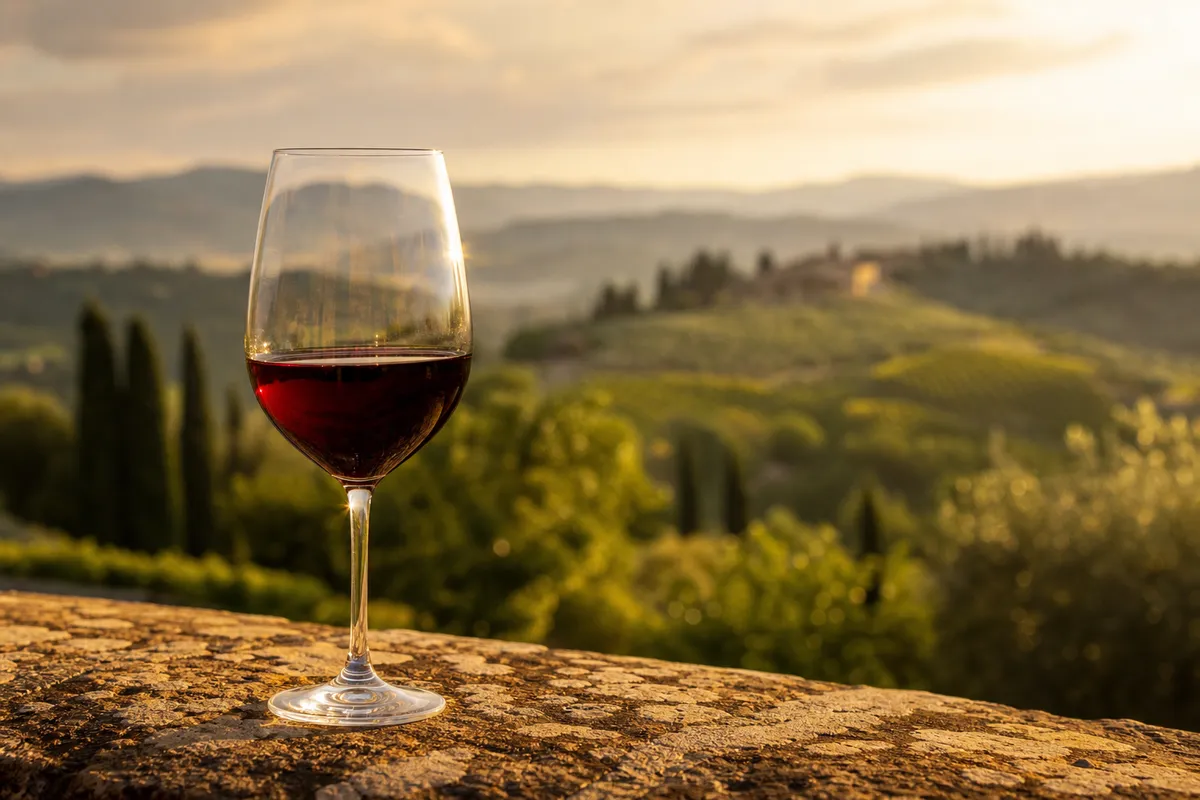
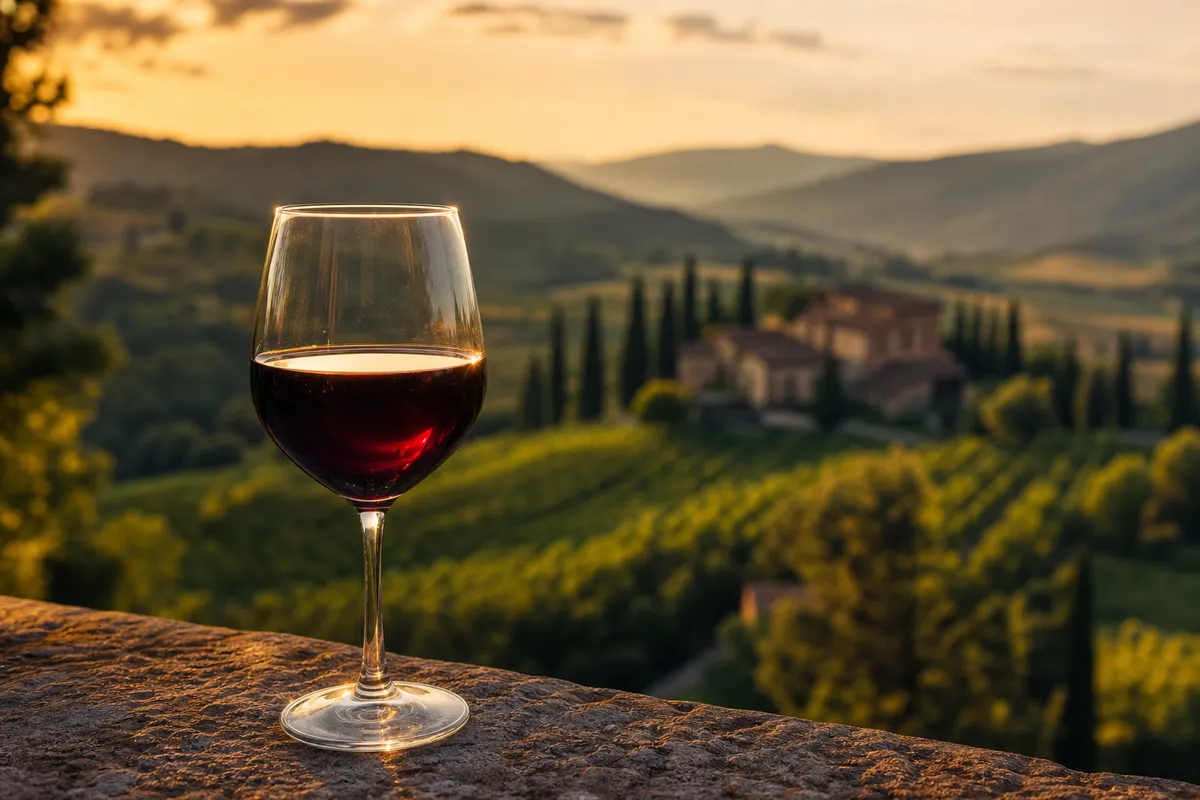
The national register separately lists Colli Perugini DOP/DOC, Torgiano DOP/DOC, and Torgiano Rosso Riserva DOP/DOCG. A good wine recommendation names the producer, vintage, denomination, and municipality rather than using "Perugia wine" as a catch-all.
Festivals and the cultural calendar
Umbria Jazz is a summer jazz festival held in Perugia each July, and Eurochocolate, in the autumn, is the city's annual chocolate festival.
The Feast of San Costanzo is tied to 29 January and gives Torcolo its clearest civic context. University calendars, museum exhibitions, religious feasts, and one-off performances can matter as much as headline festivals.
Accessibility and practical care
Perugia's steep grades, stone surfaces, stairs, and separated levels make a venue-by-venue plan essential. The existence of an escalator or lift network does not make every historic building step-free. Bus accessibility depends on vehicle, stop, and route; rail accessibility likewise requires a journey-specific check of station route, lift status, platform, and train. Contact the transport and venue operators with the exact date, mobility aid, and assistance requirement.
Plan access venue by venue: the Comune publishes per-venue listings for its own sites. The Galleria publishes dedicated accessibility resources, while the Cambio explains staff-assisted access within a barrier-affected historic building. Each venue's arrangements are its own, so do not assume they apply to neighboring spaces.
Realistic itineraries
One day: Start in Piazza IV Novembre with Fontana Maggiore and the palace exterior. Choose either a focused Galleria visit or the two guild colleges, rather than racing through all three. Add the cathedral and one Isola di San Lorenzo component if time allows. Walk Corso Vannucci to Giardini Carducci, then descend through Rocca Paolina. Reverse the order if transport delivers you first to Pincetto or the lower escalators.
Two days: Keep the first day civic and artistic. On the second, build an archaeological line from Arco Etrusco and Pozzo Etrusco to Porta Marzia in Rocca Paolina, then continue south to the Museo Archeologico, San Domenico, Borgo XX Giugno, and San Pietro. This is a full day once museum time, gradients, and breaks are counted.
Three days: Use the third day for one theme, not a miscellaneous sweep. Option A is medieval and religious Perugia with Tempio di Sant'Angelo, San Bevignate, the cathedral complex, and a church or archive visit. Option B is twentieth-century art at Palazzo della Penna followed by a deeper Galleria return.
The whole municipality, not only the acropolis
The city on the hill is the obvious beginning, but not the whole of Perugia. Istat's 2021 locality file records 48 inhabited centres across the municipality, among them Bagnaia, Colle Umberto, Fontignano, Lacugnano, Mugnano, Ponte Felcino, Ponte Pattoli, Ponte San Giovanni, and Sant'Egidio, along with 43 smaller inhabited nuclei. Ponte San Giovanni is a useful eastern gateway: its railway station is separate from Perugia Fontivegge, and the Volumni hypogeum lies there.
More of Umbria
A letter from Italy, once a month.
The places, tables and makers we found worth your time. One email, no noise.
One letter a month. Unsubscribe at any time. We never share your address.