

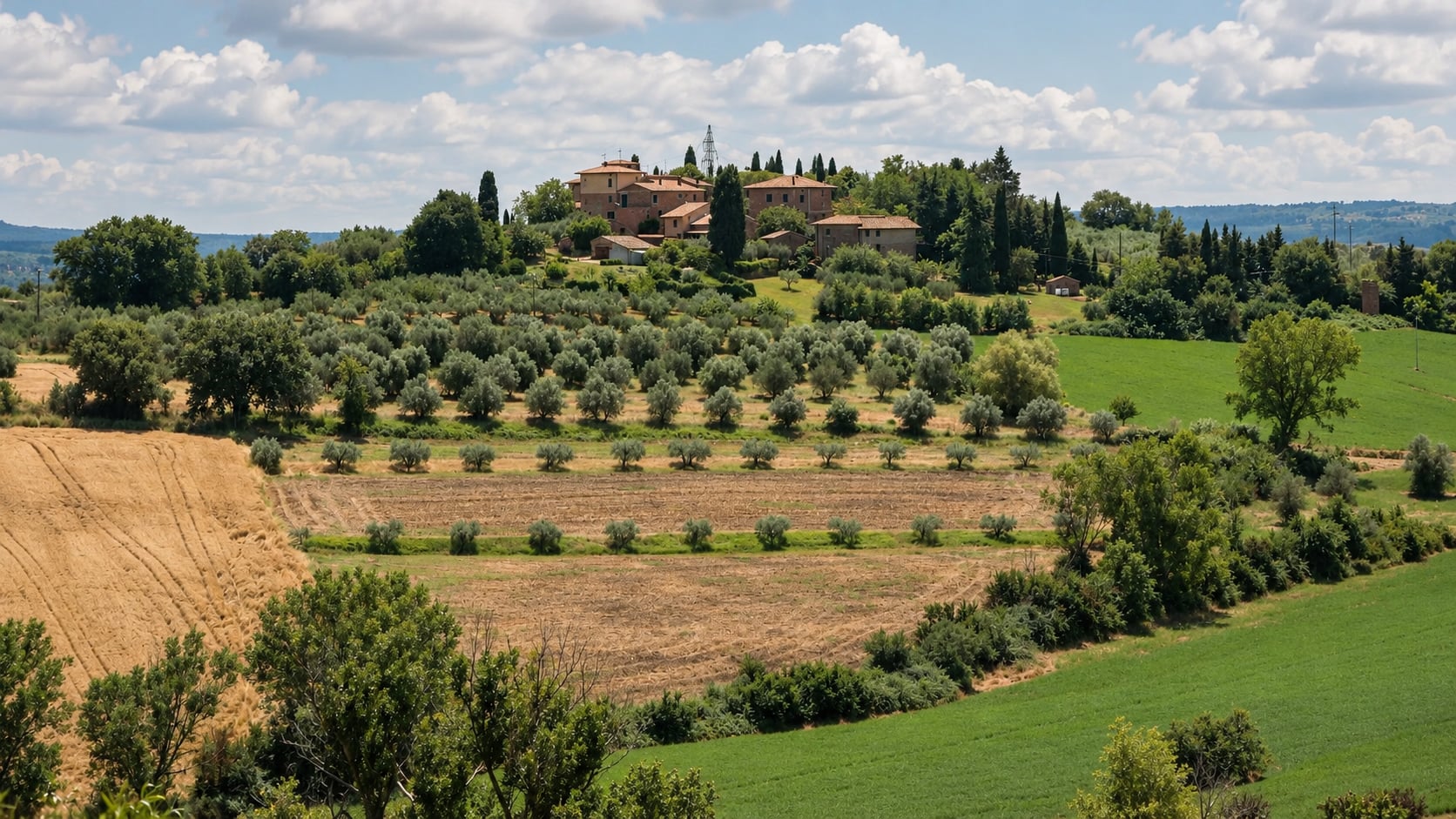
When to visit Umbria
Typical climate in Perugia, the regional capital.
The short version
If you only remember one thing: aim for late April through June, or September into October. Those are Umbria's best weeks. Days are warm but not punishing, the hill towns (Assisi, Spoleto, Orvieto, Perugia) are lively without being mobbed, and the green landscape that gives the region its nickname is at its most photogenic. Spring brings wildflowers and Assisi's Calendimaggio; early summer brings Spello's famous flower-carpet Infiorata; fall brings the grape and olive harvests, new oil, and the first truffles. Both shoulder seasons give you the warm-but-comfortable Umbria most people picture.
Choose by what you want. Spring and fall suit walkers, food travelers, and anyone who hates heat and crowds. Summer works if you're here for the big music festivals (Umbria Jazz, Spoleto) and don't mind hot afternoons. Winter is for travelers who want truffles, near-empty churches, and the cheapest rates, as long as you accept short days, real cold, and some closures. There's no bad month, just different trade-offs.
Spring (March to May)
Spring is when Umbria earns the "green heart of Italy" name. The hills go properly green, the Valnerina and the plains below Assisi fill with wildflowers, and the light is soft and clear. March can still be cold and damp, with highs around 12 to 14C (54 to 57F) and a real chance of rain, so it feels more like late winter. By late April and through May things warm into the low 20s C (low 70s F), which is close to ideal for walking the towns and the countryside between them.
Spring also has the calendar going for it. Assisi's Calendimaggio fills the streets with medieval costume, song, and a flag-throwing rivalry between the upper and lower town over four days in early May (the Wednesday to Saturday after May 1). Crowds are still light compared to summer, hotel rates are reasonable, and restaurants are open and unhurried. Pack layers: mornings and evenings up in the hill towns stay cool even when afternoons are warm, and a passing rain shower is always possible.
Summer (June to August)
Summer is hot, dry, and busy in the famous towns. June is the gentlest of the three, often warm and clear in the mid-to-high 20s C (high 70s to low 80s F), and it's a lovely month before the real heat lands. July and August bring highs around 30 to 31C (86 to 88F), with August usually the hottest, and because many Umbrian towns sit on exposed hilltops, the midday sun feels strong. Rain almost disappears (July is the driest month), so days are reliable, but you'll want to do your sightseeing in the morning and slow down in the afternoon like the locals do.
This is festival season, and that's the real reason to come now. June kicks off with Spello's Infiorata: overnight, residents carpet the lanes with intricate pictures made entirely of flower petals for Corpus Domini (usually a mid-to-late June weekend), and it's worth arriving the evening before to watch them work. The Spoleto Festival dei Due Mondi then runs from late June into mid-July, and Umbria Jazz takes over Perugia for about ten days in mid-July, drawing big international acts and big crowds. Book accommodation and tables well ahead for those weeks. If festivals aren't your reason to come, summer is the season to base yourself near a pool, lean on the cooler hours, and consider the higher Valnerina and the Monti Sibillini foothills, where the air is fresher.
Autumn (September to October)
Autumn is, for many people, the best time of all. September holds onto summer's warmth (highs in the mid-20s C / high 70s F) but loses the worst of the heat and the festival crowds, so the towns feel relaxed again. October cools steadily into the high teens C (low 60s F) and brings the harvest: vineyards turn gold and red, the olive crop comes in, and the first new oil and early truffles start appearing on menus. This is the most rewarding stretch for food travelers.
The events lean delicious. The end of October into early November is white-truffle time around Città di Castello in northern Umbria, where the National White Truffle Fair takes over the town for a long weekend, and new-oil celebrations spread through towns like Assisi and Spello as the olives come in. Rain picks up as October goes on, with November turning genuinely wet, so the earlier half of autumn is the safer bet for clear days. Bring a light jacket for the evenings. One scheduling note: Eurochocolate, Perugia's huge chocolate festival, used to fall in mid-October but moved to mid-to-late November starting in 2024, so don't plan an October trip around it anymore.
Winter (November to February)
Winter is quiet, atmospheric, and cheap, with real trade-offs. Highs sit around 7 to 10C (45 to 50F), nights drop near or below freezing, and November is the wettest month of the year, with grey, damp spells common into December. Days are short. Some countryside agriturismi, smaller restaurants, and seasonal attractions close or cut their hours, especially in January and February, so check before you build a trip around any one place. Snow is possible in the higher Valnerina and the mountains, and occasionally dusts the hill towns. Note that Eurochocolate now lands in mid-to-late November and packs Perugia, so plan around those dates if crowds aren't your thing.
The upside is a region almost to yourself. Assisi's basilicas and Orvieto's cathedral are calm and uncrowded, and you'll get the warm, slow Umbria that summer hides. This is prime truffle time: the prized black winter truffle season runs roughly mid-November through mid-March, centered on Norcia and the Valnerina, and it shows up in trattorie everywhere. Norcia is worth a word here, the 2016 earthquake leveled much of the center, but the town has rebuilt steadily and its landmark Basilica of San Benedetto reopened in late 2025 after years of work. Christmas brings markets and nativity displays, and the Nero di Norcia fair, spread over two weekends from late February into early March, celebrates black truffles and Valnerina cured meats. Dress for genuine cold and grey, and treat it as a food-and-art trip rather than a sightseeing-all-day one.
Weather, by the part of Umbria
Umbria is landlocked, so forget the sea: this is a region of valleys, hill towns, and mountains, and altitude drives most of the differences. The central valleys and plains, around Perugia, Assisi, the Tiber valley, and Lake Trasimeno, are the warmest and mildest. Trasimeno, Italy's fourth-largest lake but a shallow one, softens the towns on its shores a little and is the closest thing Umbria has to a beach scene in summer. These lower areas get the hottest summers and the most comfortable spring and fall days.
The higher you go, the cooler and wetter it gets. The Valnerina (the Nera river valley around Norcia and Cascia) and the foothills of the Monti Sibillini sit at real elevation, so they run several degrees colder than Perugia, hold snow longer in winter, and stay pleasantly fresh when the valleys bake in July and August. Hill towns perched on ridges, including Orvieto and Todi, catch more wind and feel cooler and breezier than their valley-floor temperatures suggest, which is a relief in summer and a reason to pack a layer the rest of the year.
Insider timing
For the best balance of weather, prices, and quiet, target the shoulder weeks: roughly the second half of May and the first three weeks of June in spring, and all of September into the first half of October in fall. You get warm days, open restaurants, and far smaller crowds than high summer. The festival weeks are the ones to plan around deliberately: book months ahead if you want to be in Perugia for Umbria Jazz (mid-July) or Eurochocolate (now mid-to-late November), or skip those towns on those dates if crowds aren't your thing.
Watch the mid-August squeeze. Around Ferragosto (August 15) many Italians take their own holidays, so some family-run restaurants and shops close for a week or two and the popular towns get crowded with domestic tourists at the same time. It's the one stretch we'd actively steer you away from unless you have a festival reason to be there. One more tip: even in the warm months, pack a layer and a light rain shell. Up in the hill towns, evenings cool off fast, and a quick afternoon shower can roll through almost any time of year.