






In this article
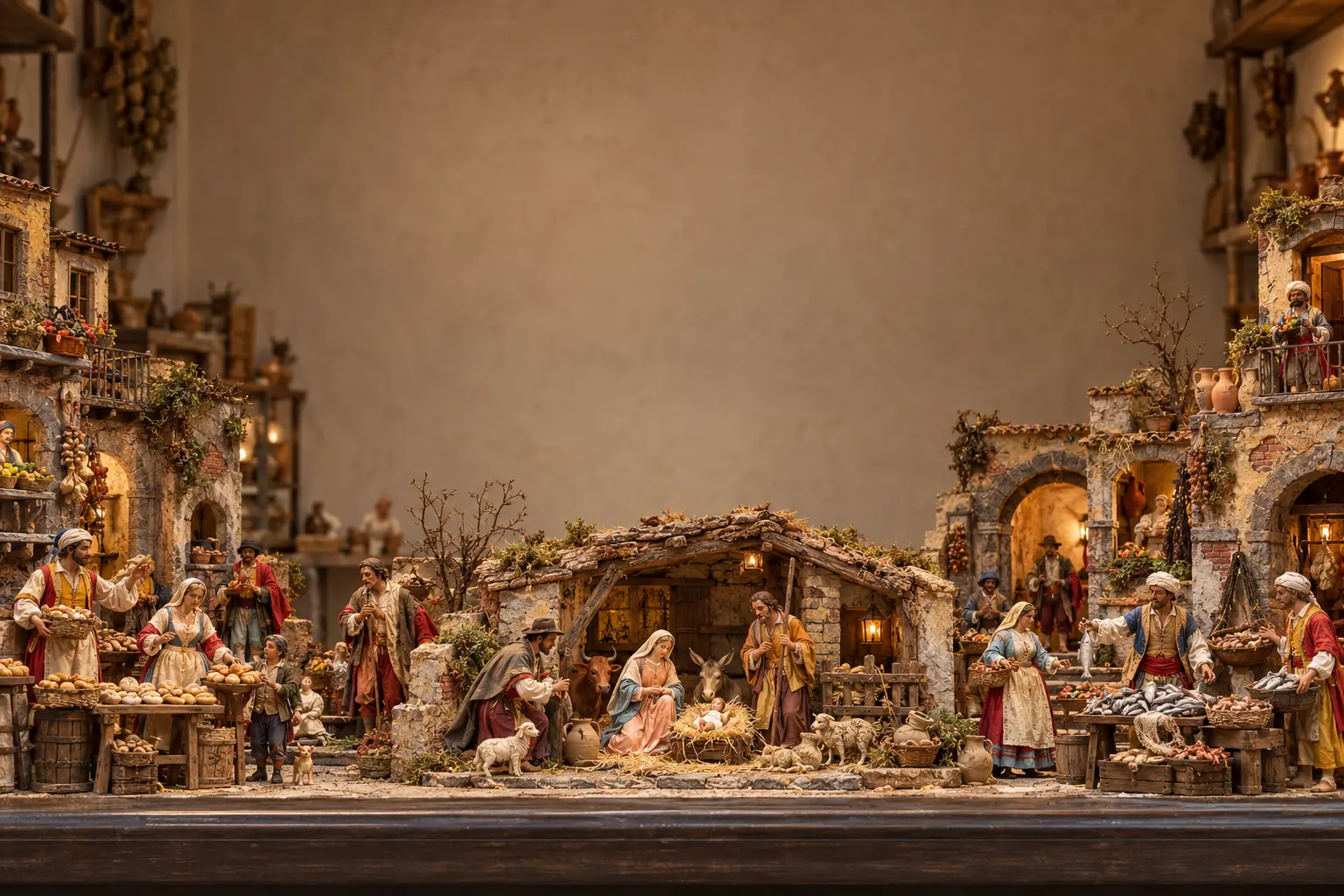
A presepe is a Nativity scene, but the Italian tradition reaches well beyond a cradle and a handful of figures. It can be a village of miniature shops, a collection of carved and dressed figures, or a gathering in which people enact the Christmas story. Looking closely means noticing the materials and the surrounding everyday world as well as the central scene.
Start with Greccio for the Franciscan story, Naples for the great miniature stage, and museum collections for the differences between regional workshops. A single well-chosen visit gives you more to look at than a hurried circuit of displays.
Greccio and the Christmas of 1223
At Greccio, near Rieti in Lazio, Francis of Assisi arranged a manger with hay, an ox and a donkey for the Christmas celebration of 1223. People gathered with the friars for worship. There were no statues: this was an enacted setting for the celebration, rather than the miniature village familiar from a domestic presepe.
That distinction makes Greccio a useful starting point. The history of the place and the figures you see elsewhere belong to connected strands of the tradition, rather than to one unchanged design. The convent against its limestone cliff gives the story a setting. For a staged visit with performers, use the separate living nativities guide and its event-specific dates.
Naples: a world around the manger
The Cuciniello presepe at the Museo di San Martino draws together roughly eight hundred figures, animals and accessories from the collection donated by Michele Cuciniello in 1879. Its setting combines wood, cork, papier-mâché, stucco and terracotta. Tiny foodstuffs and household objects reward attention as much as the figures themselves.
This is a good reason to slow down. Look first for the Nativity, then follow the surrounding trades, gestures and objects. A basket, a piece of clothing or the scale of a shop entrance can make the scene feel like a complete small world. For a visit to the city and its workshop street, continue with Naples at Christmas.
Wood in Genoa, terracotta in Bologna
At Villa Luxoro in Genoa, the collection compares carved and painted wooden Genoese mannequins with Neapolitan figures assembled from terracotta and wood on wire-and-tow bodies. It also distinguishes different makers, including Pasquale Navone; attributing every Genoese figure to Anton Maria Maragliano would erase those differences.
Bologna offers another material vocabulary. The permanent collection at the Museo Davia Bargellini includes eighteenth- and nineteenth-century Nativity figures modelled in coloured terracotta. Compare their surfaces with the cloth costumes and constructed bodies of other traditions.
How to look at a presepe
Begin with the whole arrangement, then choose a few details. Notice where the light draws your eye, how the figures turn towards one another, and which ordinary objects surround the central group. Look at hands and faces before trying to count every character.
Materials change the experience. A painted wooden face, a folded fabric sleeve and a modelled clay basket each ask for a different kind of attention. Read the individual labels for the maker, workshop or attribution. Keep those distinctions when you describe what you have seen, especially where several artists contributed to a collection.
Choose the visit you want
A museum collection and a temporary Christmas display need different plans. For a museum, check that the particular Nativity section is accessible on your chosen day. For a living Nativity, check the performance date, entry arrangements and route. A seasonal exhibition from an earlier winter is not evidence that the same event is running this year.
At home, start by deciding where the scene will sit and how much space it has. One clear arrangement is easier to appreciate than a crowded collection of unrelated pieces. For the wider celebration, read about Italian Christmas traditions, then return to the Christmas in Italy guide to connect the places and the table.

