



In this article
A small presepe needs a clear centre more than a large collection of figures. Begin with the Nativity group you already own, give it a stable setting and leave a path through the scene. A shelf, console or side table can hold a complete arrangement without becoming a miniature town.
The presepe represents the birth of Jesus within Christian tradition. Its surrounding world can include shepherds, animals and ordinary working life. For the different Italian materials and places behind that tradition, begin with the Italian presepe guide. Here, the project is a simple removable paper-and-card setting for existing figures, designed to be packed away and used again.
1. Choose the space and gather the pieces
Measure the surface before unpacking. For a first arrangement, try a rigid board about 45 × 30 cm with figures roughly 8–10 cm tall. These are suggested project dimensions, not a traditional rule. Use a smaller group if the figures crowd the board, and make sure the board rests fully on the furniture.
Gather a pencil, ruler, scissors, paper tape, plain brown paper, a clean cardboard box and your figures. Choose card that stands firmly when folded; keep a second piece for a backdrop. Set aside the Nativity group, one or two shepherds and a few animals before deciding whether anything else is needed. A plain blue or earth-coloured sheet can supply the whole background.
Work on the empty board first. Keep valuable or fragile figures safely aside while cutting and folding. Adults should handle sharp tools; young children can choose paper colours or arrange large, unbreakable pieces with supervision. Small figures and loose decorations belong out of the reach of children who might put them in their mouths.
2. Map the scene before fixing anything
Set the central group slightly towards the back, leaving space in front to see the faces. Turn Mary and Joseph towards the manger. Try one shepherd to the side and a second farther forward, rather than lining everyone along the front edge. Look from the height at which the scene will be viewed, including from a chair if that is how you will enjoy it.
Draw a curved path on scrap paper and lay it across the board. Let it lead towards the central group without cutting through the figures’ bases. A modest open area does more for the scene than another accessory. Move the pieces until the relationships are readable, then take them off again before building the setting.
3. Make a simple cardboard shelter
Open the clean box into flat pieces. Draw a back wall wide enough for the group and a shorter side wall; leave the front open. Fold a broad foot along each wall’s bottom edge and tape those feet to the board. Join the two walls at the corner with paper tape. Test that the setting stands steadily before bringing any figures back.
Cover the visible card with brown paper, folding it neatly around the edges. Use pencil marks for a few stone joints or a doorway outline. Keep the shelter low enough that it frames the figures rather than hiding them. This first version can remain open above: a roof is optional, and omitting it makes the group easier to see.
Lay a separate strip of pale paper for the path and use gently crumpled brown paper for low ground around it. Keep every figure’s standing area flat. Avoid loose sand, glitter and scattered fibres; a few broad paper shapes give the setting texture and are easier to remove later.
4. Add the figures and one everyday detail
Return the central group, then the shepherds and animals. Check that each base sits securely and that nothing leans on a neighbouring figure. Add one small detail you can read from the room: perhaps a paper basket shape, a folded cloth beside a figure or a little stack of card parcels. Leave delicate heirlooms free of tape and glue.
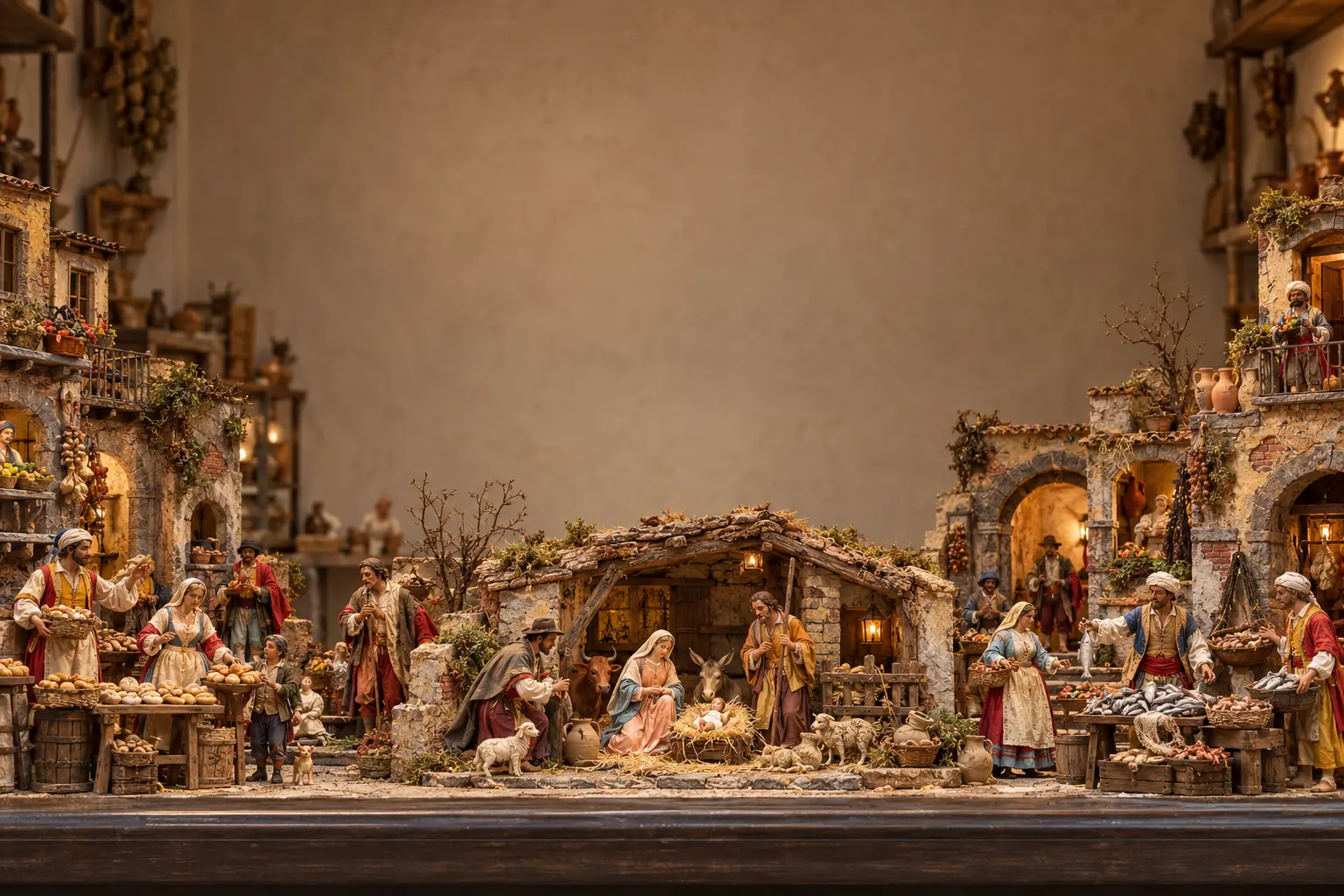
Italian presepi can build an extensive everyday world around the Nativity. The Cuciniello setting in Naples combines materials including wood, cork, papier-mâché and terracotta, with miniature food and household objects. That is inspiration for looking closely, rather than a shopping list for a first home scene. The Naples Christmas guide connects the tradition with the city and its workshop street.
5. Decide whether you need lights
Try the arrangement in the room’s ordinary light before adding anything. An unlit scene is a complete option. If you choose a light set, use an intact product intended for the location, follow its instructions and keep its power source accessible. Never repair damaged wiring or assemble a homemade electrical circuit for this project.
Keep the setting away from candles, fireplaces and other heat sources. Paper and card are combustible. Do not hide lights or their power supply inside the cardboard shelter or beneath paper. Switch decorative lights off when leaving the room or going to bed. The Vigili del Fuoco home-safety guide covers placement, electrical condition and open flames around Christmas decorations.
6. Make room for the family ritual, then store it well
Let each person place one figure and explain the choice. You can keep the scene complete throughout the season or follow your family’s custom for adding the infant and the Magi. There is no need to turn one household’s sequence into a rule for everyone. Continue with Italian Christmas traditions for the wider celebration.
Before packing away, photograph the arrangement for your own record. Number the card pieces on their backs, flatten what can be flattened and wrap figures separately so their surfaces do not rub together. Keep the photograph with the box. Next year, begin with the same pieces and change one small part: the path, the background or the everyday detail. A remembered arrangement leaves room for something new.


