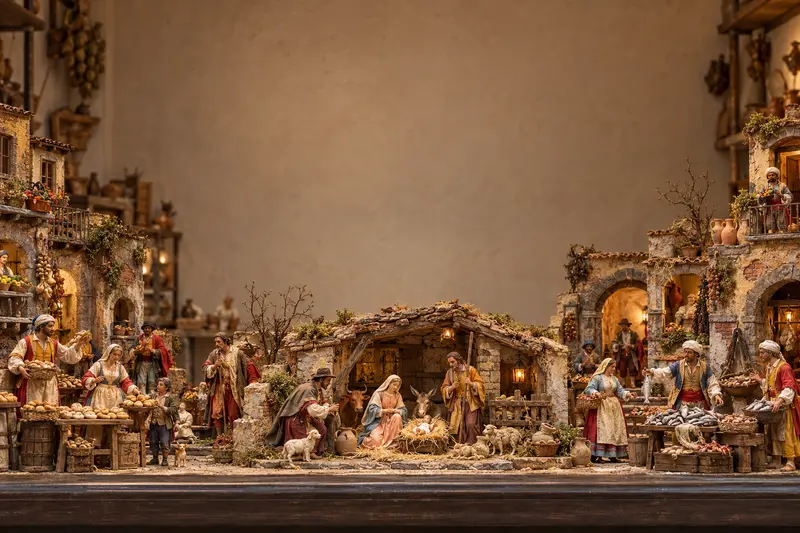
In this article
A tin of biscuits, a small cake to cut after lunch, or a tray carried straight to someone’s table: an Italian food gift works best when you decide how it will be eaten before deciding how it will look wrapped. These six choices lead to complete recipes, from the crisp bite of cantucci to the fig filling of a Sicilian buccellato. Choose one well, or put together a small selection whose different textures have room of their own.
For a first batch, start with cantucci. For someone who loves soft almond sweets, choose ricciarelli. For a whole household, take pandolce or buccellato on a firm base. Panforte suits a small, rich portion; cuccidati turn the same broad pleasure of dried fruit and pastry into individual biscuits. These are editorial choices for making and sharing, rather than a list of products with promised availability or delivery.
Cantucci: a crisp biscuit for the coffee tin
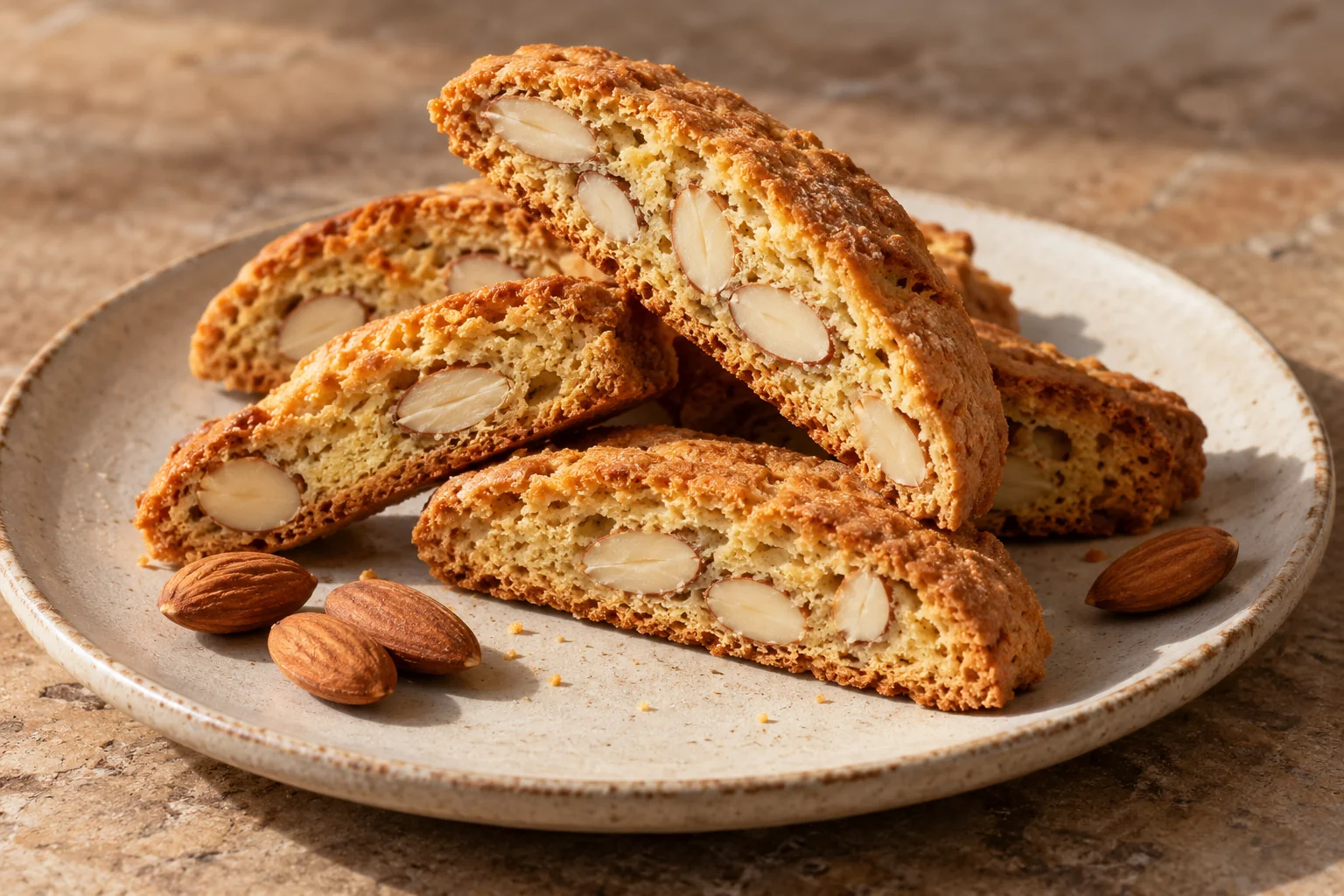
Cantucci are Tuscan almond biscuits, shaped in logs and sliced across the grain. Our version goes back into the oven after slicing, giving the cut faces their dry, crisp finish. Whole almonds make each cross-section slightly different. Serve them with coffee or tea; Vin Santo is the traditional wine pairing, when an alcoholic accompaniment suits the recipient.
Make cantucci alle mandorle. Let the recipe determine the batch size, then divide it between small containers rather than making a large gift that becomes a storage problem. A shallow tin lets the biscuits sit in orderly rows. Put a plain recipe card beside it with the preparation date and ingredients. Choose this gift for someone who likes a firm biscuit; a crisp texture is part of its appeal, not a fault to conceal with an elaborate wrapper.
Ricciarelli: a softer almond gift
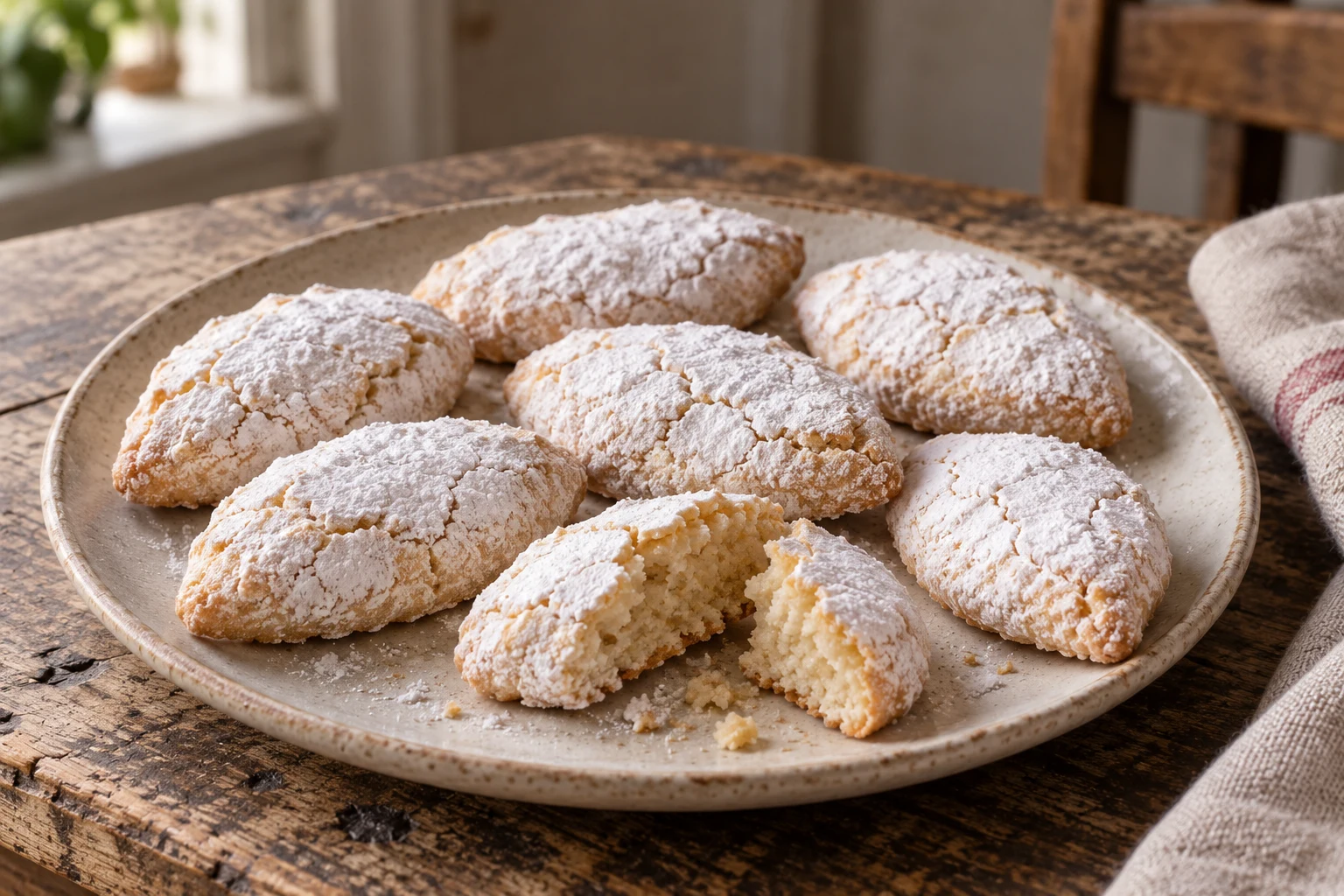
Siena’s ricciarelli offer a softer contrast: almond sweets beneath a pale, lightly cracked sugar coating. The orange-scented ricciarelli recipe includes an overnight dough rest, so allow for that pause before promising a batch for tomorrow morning.
Give them a box that protects their surface, with food-contact paper between any layers. A small quantity makes an attractive gift on its own; it does not need to share a tin with harder biscuits that might crush it. For a mixed present, place the ricciarelli in a separate inner container. Their soft texture is also a reason to plan a nearby handover carefully, rather than assuming that everything called a biscuit will tolerate the same journey. Follow the recipe’s storage directions and tell the recipient when they were made.
Panforte: a small wedge with plenty in it
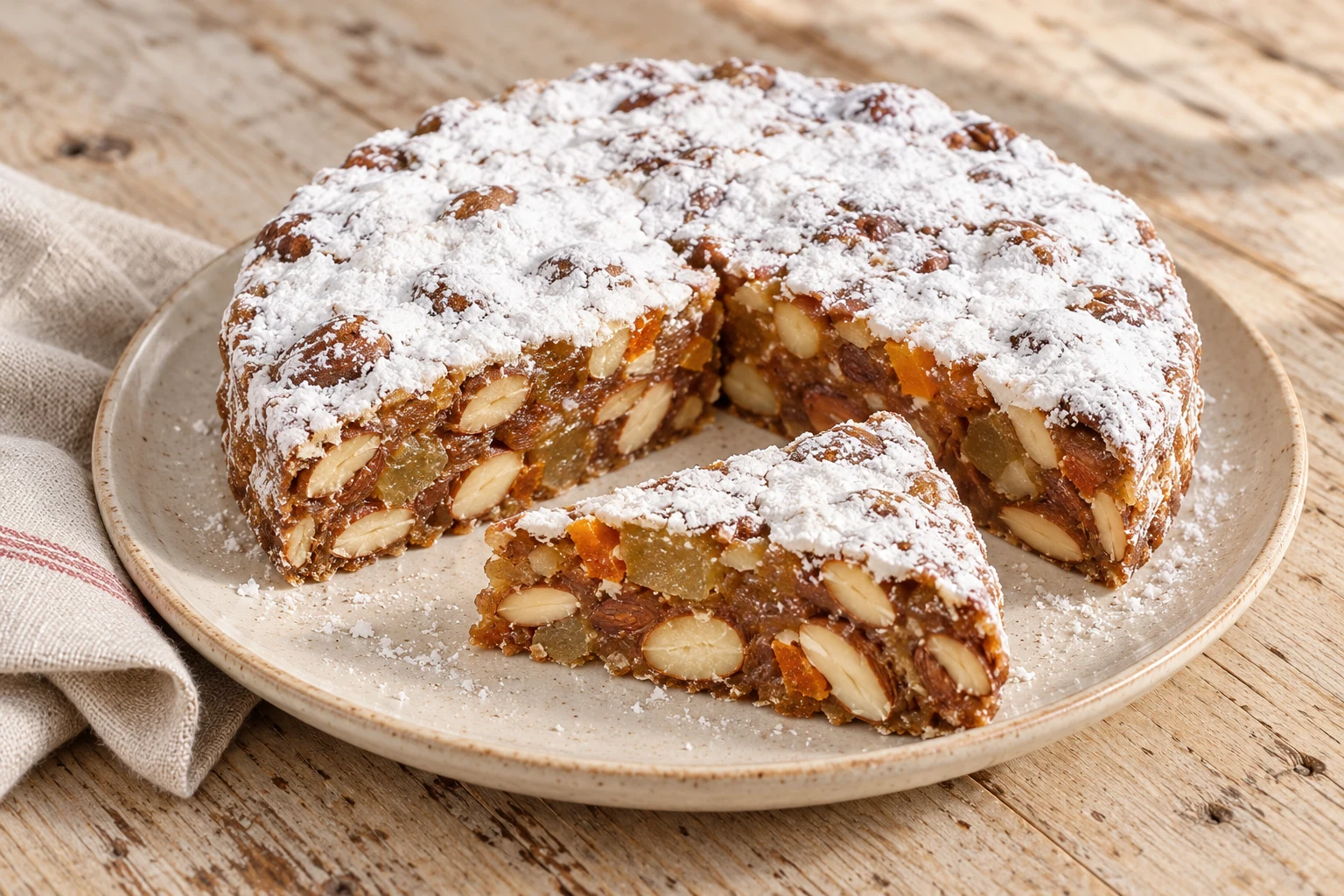
Panforte belongs to Siena’s Christmas sweet table. In our almond and candied-peel version, honey and sugar hold a dense mixture together; it cuts into a small, chewy wedge rather than a fluffy slice of cake. The contrast between nuts, peel and the binding mixture is the point.
Choose it for someone who enjoys a little rich sweetness after a meal. Keep a small whole round on a firm base, or wrap individual portions separately in material intended for contact with food. Include the name and a short serving suggestion so that the recipient knows to cut modest wedges. The presence of honey or sugar does not establish a homemade product’s safe shelf life: use the actual recipe’s instructions, not a guessed date borrowed from a commercial panforte.
Cuccidati: a box of Sicilian fig biscuits
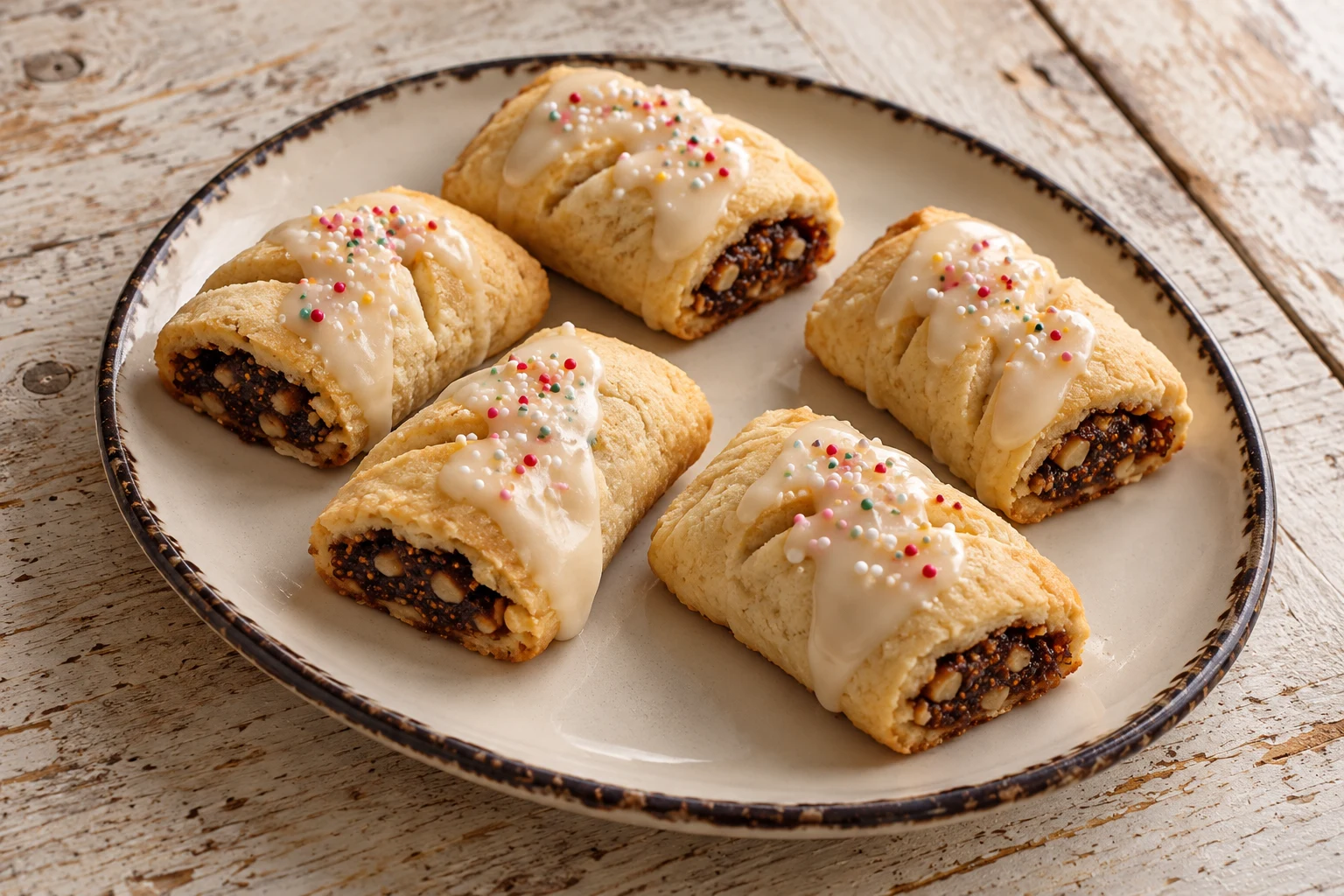
Cuccidati bring a dried-fig filling into small Sicilian pastries. Shapes and fillings vary between places and households. The recipe here uses butter pastry, figs, raisins, nuts, citrus and sweet Marsala, finished as individual decorated biscuits.
They suit a recipient who enjoys fruit-filled pastry and would rather open a few individual pieces than cut a whole cake. Let the decoration set as directed before packing; leave room above it when choosing the box. Name Marsala on the ingredient card instead of assuming that everyone welcomes a recipe made with wine. If you want to alter the filling, work from a recipe designed for that variation. An ingredient substitution can change more than the flavour, and a gift batch is a poor moment to improvise an untested method.
Buccellato: a centrepiece to take to lunch
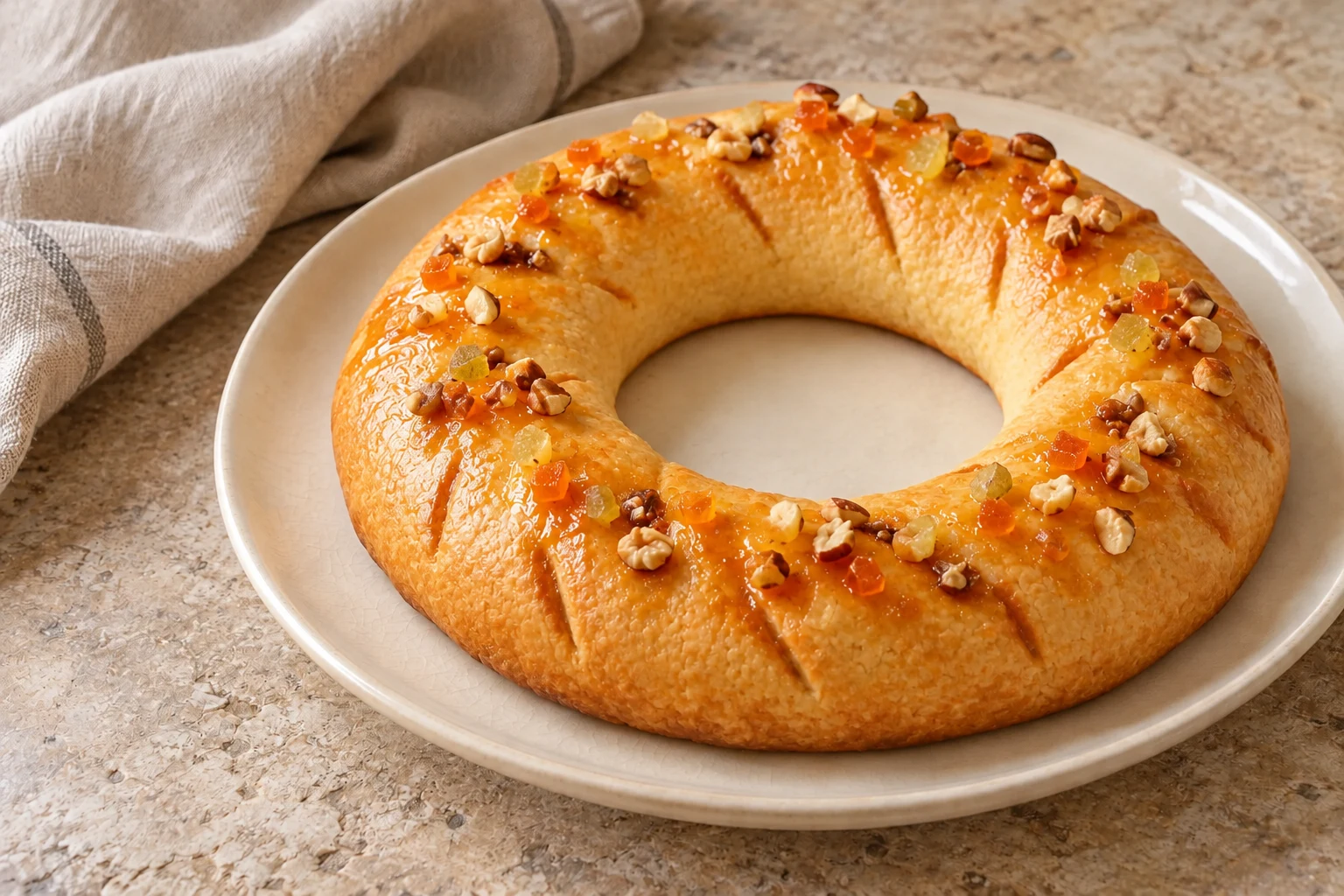
A Sicilian buccellato gathers fig filling inside a pastry ring. Christmas versions vary, but the ring makes a generous object to set on the table and cut together. Our recipe uses butter pastry around dried figs, nuts, citrus, honey and a little sweet Marsala.
This is the choice for a visit where you can carry the gift upright and hand it over yourself. Put a rigid base beneath the whole ring before wrapping it, and use a box wide enough that the edge is not pressed against its sides. Tell your host that it is intended for slicing, then let them decide whether it joins lunch or waits until later. A whole cake should be a pleasure for the household, not an extra serving obligation in the middle of a carefully planned meal.
Pandolce basso: a Genovese cake for sharing
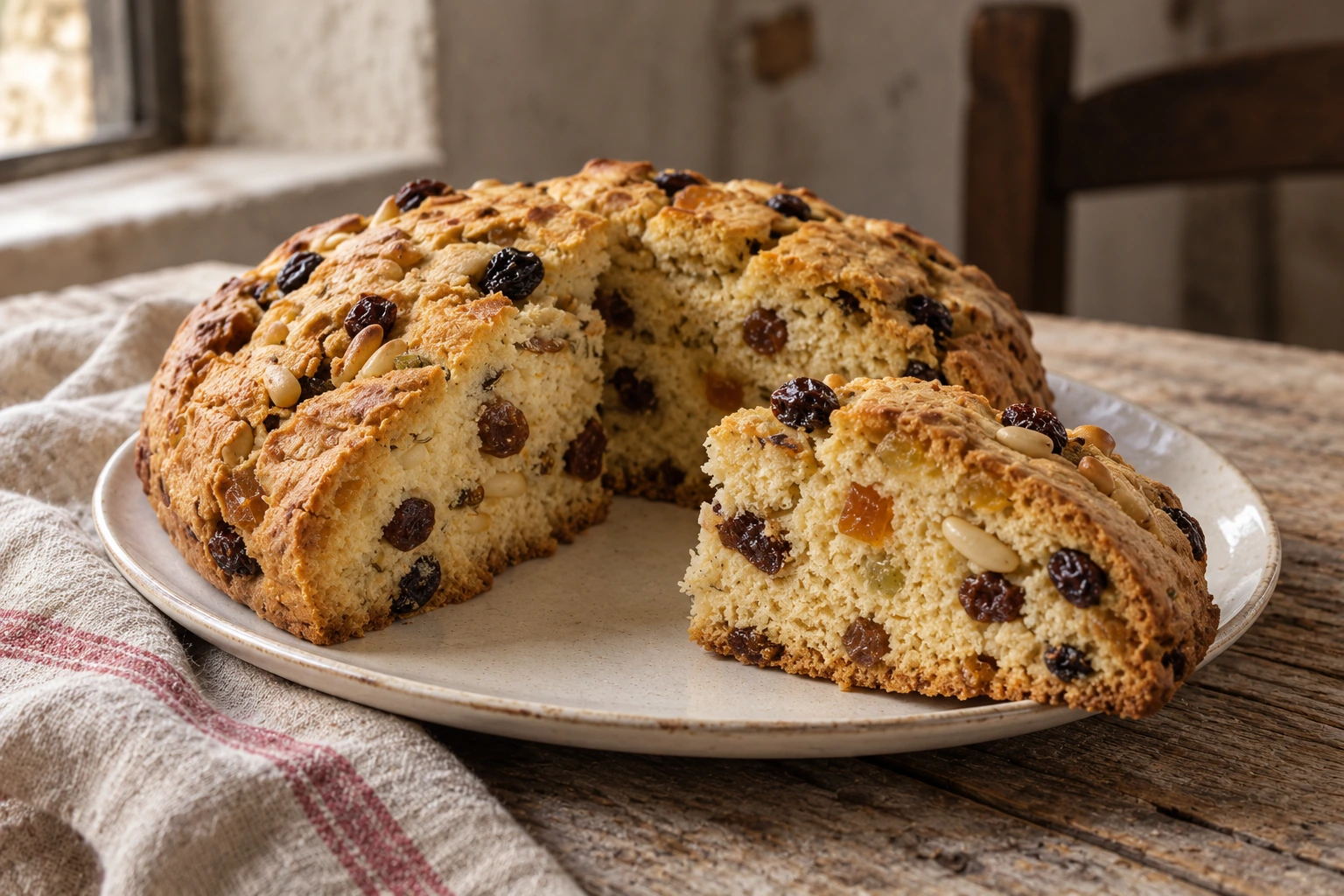
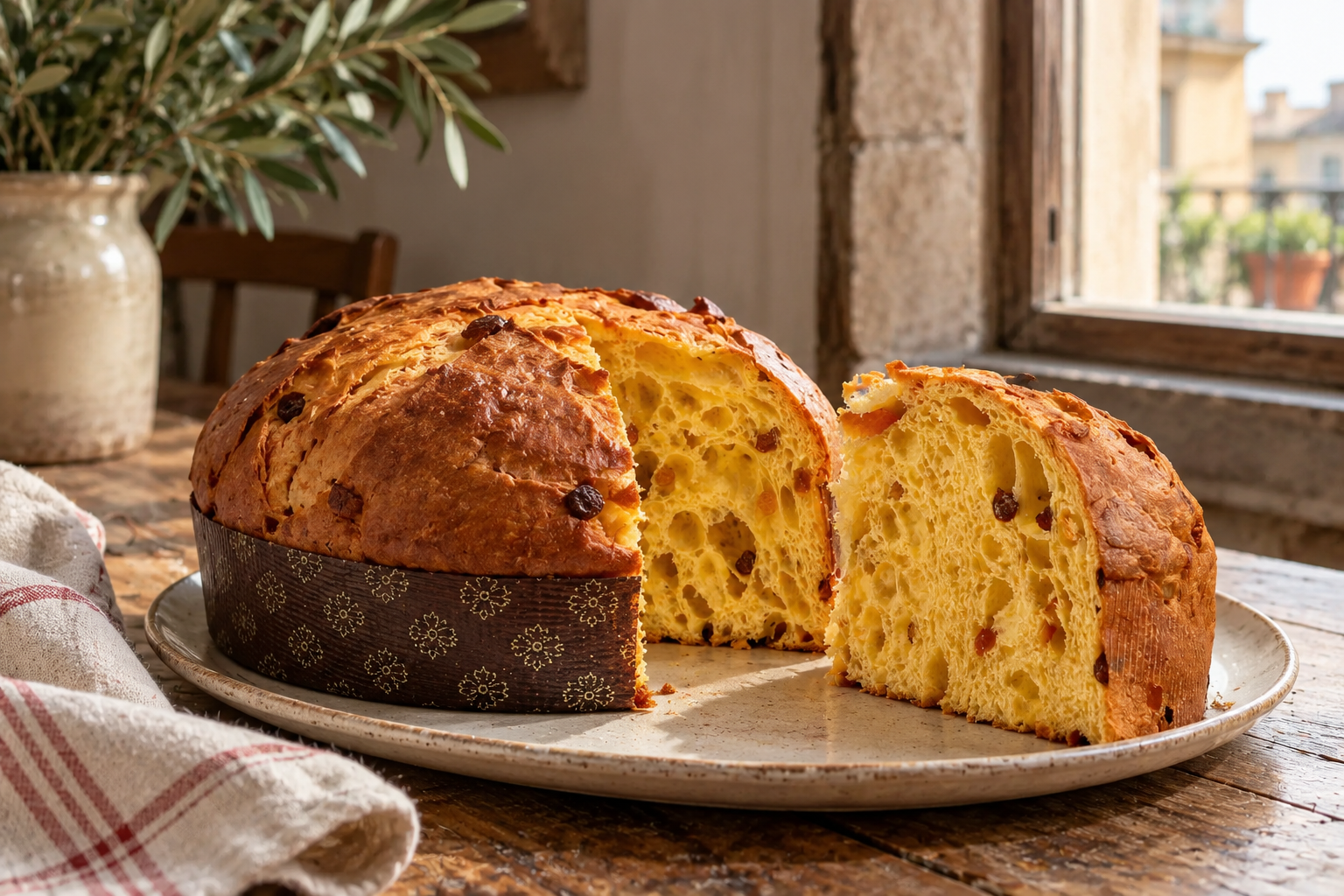
Genova’s pandolce comes in high and low forms. The basso version in this recipe has a compact crumb, raisins, candied citrus and pine nuts, with orange-blossom water and fennel seed. It uses baking powder, rather than the long fermentation associated with a raised festive loaf.
Take a whole small cake when you want the gift to be opened at home and sliced over several servings, following its storage instructions. Use a firm cake board and a box with a little clearance above the crust. A note that identifies the low Genovese style is more useful than an extravagant bow: it explains why the texture is closer and more crumbly than the tall Christmas breads the recipient may know. For a different fruit-and-pastry shape, return to buccellato; for something individually portioned, choose cuccidati.
Make the box useful after the ribbon comes off
Ask about food allergies and dietary requirements before you bake. Give a complete ingredient list, including ingredients in bought decorations, and explain any uncertainty about cross-contact in your kitchen. Nuts are central to several choices here; calling a sweet flourless or replacing a single ingredient does not establish that it is suitable for a person with an allergy or coeliac disease. For bought food, retain the original label and follow the manufacturer’s directions.
For homemade gifts, add the preparation date and the storage instructions from the recipe. Use clean packaging suitable for food contact. Keep crisp and soft items in separate inner containers and support cakes from underneath. A short message saying what is inside, how to serve it and when you plan to hand it over is more useful than an unsupported promise that it will keep for weeks.
If a gift needs refrigeration, its whole journey needs planning around that requirement. Postal delivery, a long drive and international travel are different decisions from taking a box next door. Check the destination’s current food-import rules and the carrier’s requirements before sending anything across a border; this guide does not establish that a particular homemade food is admissible or safe to post. For a complicated journey, buying locally for the recipient or giving the recipe and planning a baking afternoon together can be the more considerate choice.
Put together one small Christmas selection
For a first gift, make one recipe and pack it carefully. For a larger box, choose two contrasting textures, such as cantucci and ricciarelli, in separate containers. For a shared lunch, choose one whole cake and bring the ingredients card with it. Scale up only after the batch you know how to make fits the time and space you have.
Continue with the Italian Christmas sweets guide, the wider Christmas recipe collection, or the Christmas in Italy guide for the traditions and journeys around the table.