In this article
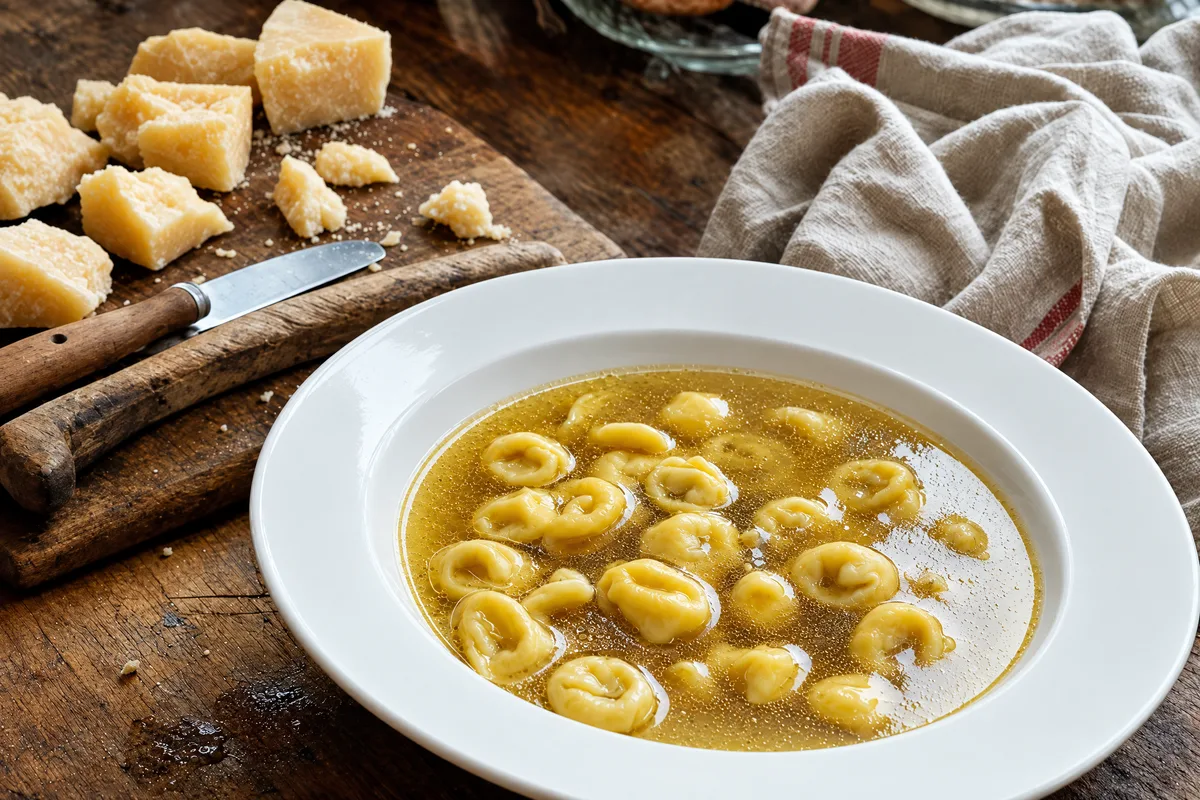
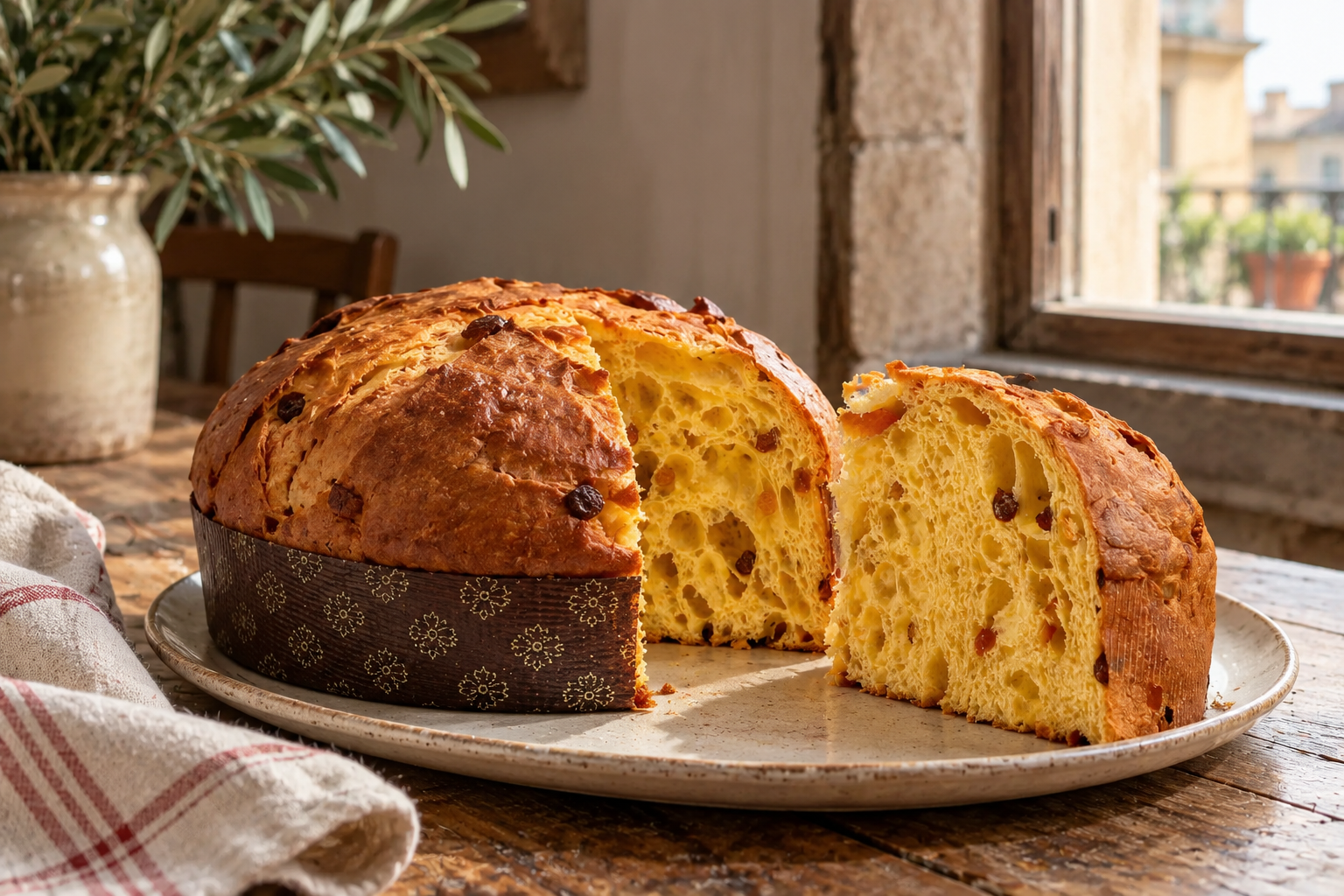
Tortellini in broth, bollito misto and panettone make a Christmas lunch built around three substantial recipes. The pasta brings the first warm bowls to the table, the mixed boiled meats follow with their sauces, and the cake closes the meal. This menu combines Emilian, Piedmontese and Milanese dishes; it is one way to organise lunch, rather than a single menu followed throughout Italy.
Open the three recipes before making a shopping list. Each is included once at its full yield: six servings of tortellini, eight of bollito and ten of panettone. Those quantities are different deliberately. The planner does not scale them to one guest count, and a full bollito can be a generous main course after filled pasta.
Choose the work you want to do
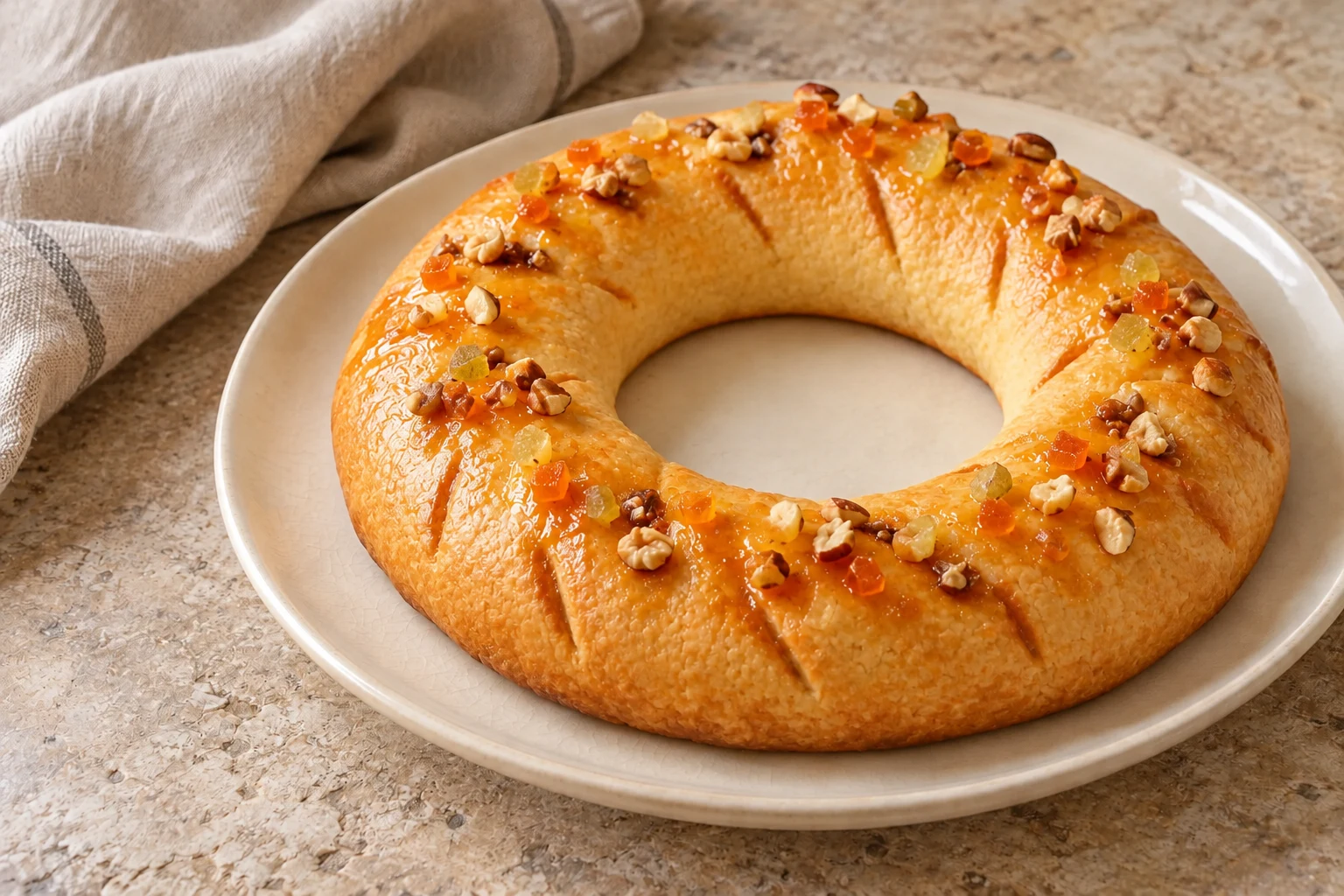
The biggest decision comes before the first pot goes on: will you bake the panettone? Our recipe takes about fifty-three hours, including repeated starter refreshments, long fermentation and an overnight inverted cooling period. It starts with an established firm sourdough starter at fifty per cent hydration, not a new culture made for the occasion.
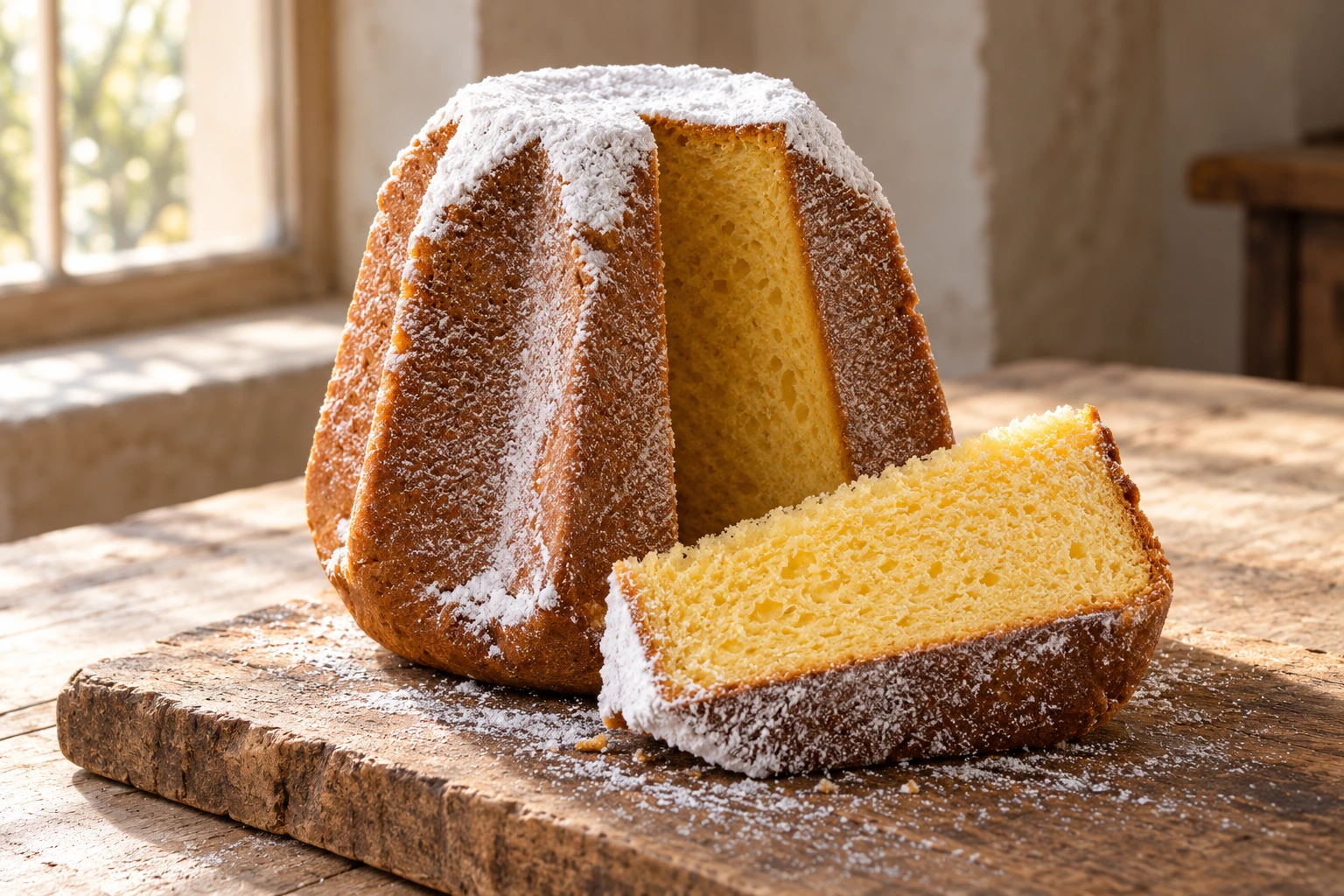
Start at least three days before lunch and leave room for fermentation to take longer. You also need the low one-kilogram paper mould and a secure way to suspend the baked loaf. Buying a panettone removes that whole baking project. The shopping list below assumes the homemade version, so omit its ingredients if you buy the cake; see the panettone and pandoro guide for the other choice at the sweet end of the table.
Plan the broth separately
The tortellini recipe calls for two litres of prepared capon or mixed-meat broth. Have that ready as a separate ingredient. This menu does not assume that the liquid from the bollito will be ready, suitable or available in time for the pasta course. The broth ingredient guide concerns the broth; it is not a recipe for a stuffed or roast capon.
Make the tortellini by their linked method, allowing for the dough rest and the work of filling and folding the small squares. The recipe permits freezing the formed pasta and cooking it from frozen, which can move the shaping out of Christmas morning. Keep the final broth cooking for service, and follow the recipe’s directions for judging the pasta rather than relying only on a clock.
Give the bollito its three pots
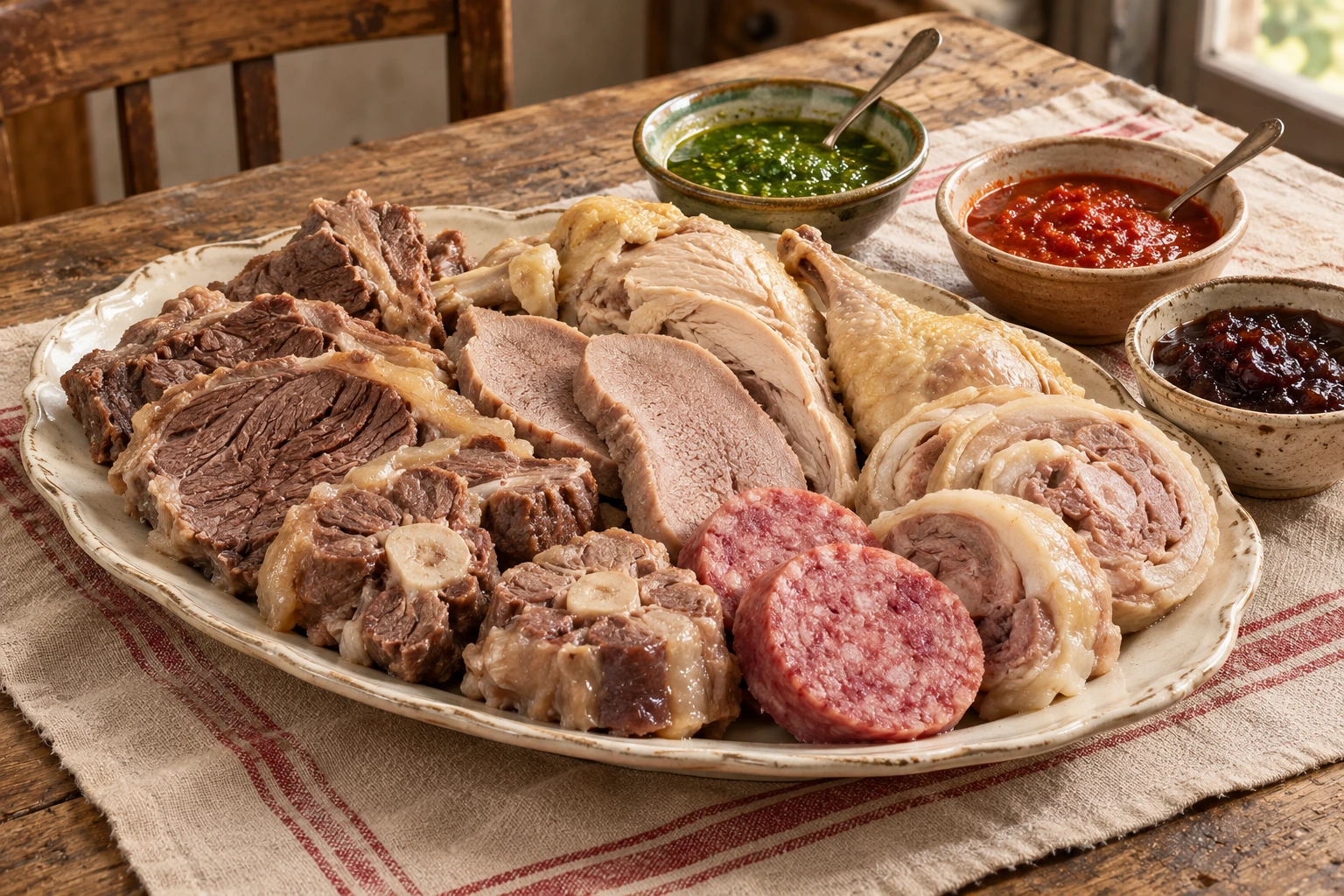
Bollito misto is the main cooking commitment on Christmas morning. Our recipe takes about four hours and twenty-five minutes, including heating the large volume of water. It uses three pots and staggered starts: the head meat has its own pot, the other beef cuts and hen share the large pot in a defined sequence, and the cotechino cooks separately.
Do not put every cut in together at the beginning. Read the full sequence before starting, lay out the pots and check that they actually fit on the hob. The tortellini need another pot for their prepared broth as lunch approaches. With all three bollito pots still working, that means space for four pots; burner count alone is not enough if wide pans cannot sit safely beside one another.
The three accompanying sauces are prepared ingredients in this bollito recipe: cognà, bagnet verd and bagnet ross. Arrange them before the final cooking stretch, so carving, removing bones and serving the meats do not coincide with making three sauces from scratch. Their shopping quantities belong to the prepared sauces, not to unlisted sauce recipes.
Serve lunch at the pace of the cooking
Start with the tortellini when the main course is approaching readiness. Cook the pasta in its separate broth, serve it promptly and finish preparing the meats for the table. A second person can carry bowls and clear plates while the cook handles the bollito. If you are cooking alone, make the table and serving dishes ready before the final stage and allow a pause between courses.
After the meats, clear the savoury plates before cutting the panettone. This cake does not need another last-minute kitchen process: its long cooling stage should already be complete. Water works throughout the lunch. Wine is optional; if you serve it, choose for the guests and the rich meat course rather than treating a different bottle at every stage as a requirement.
Before you print
Does this menu include a whole capon?
No. It uses prepared capon or mixed-meat broth for the tortellini, plus the cuts named in the bollito recipe. A roast or stuffed capon would be a different main course, with its own recipe, shopping and timing.
Can I make this on a small hob?
Check the actual pots first. The bollito uses three, and the tortellini broth adds a fourth near service. If they do not fit, choose a different main course from the Christmas recipe collection rather than improvising one-pot timing for these cuts.
Is the shopping list sized for six guests?
It lists the complete recipes: six pasta servings, eight meat servings and a ten-serving cake. Decide whether those batches suit your table before buying. The Christmas Eve menu offers a separate fish dinner for the previous evening.