In this article
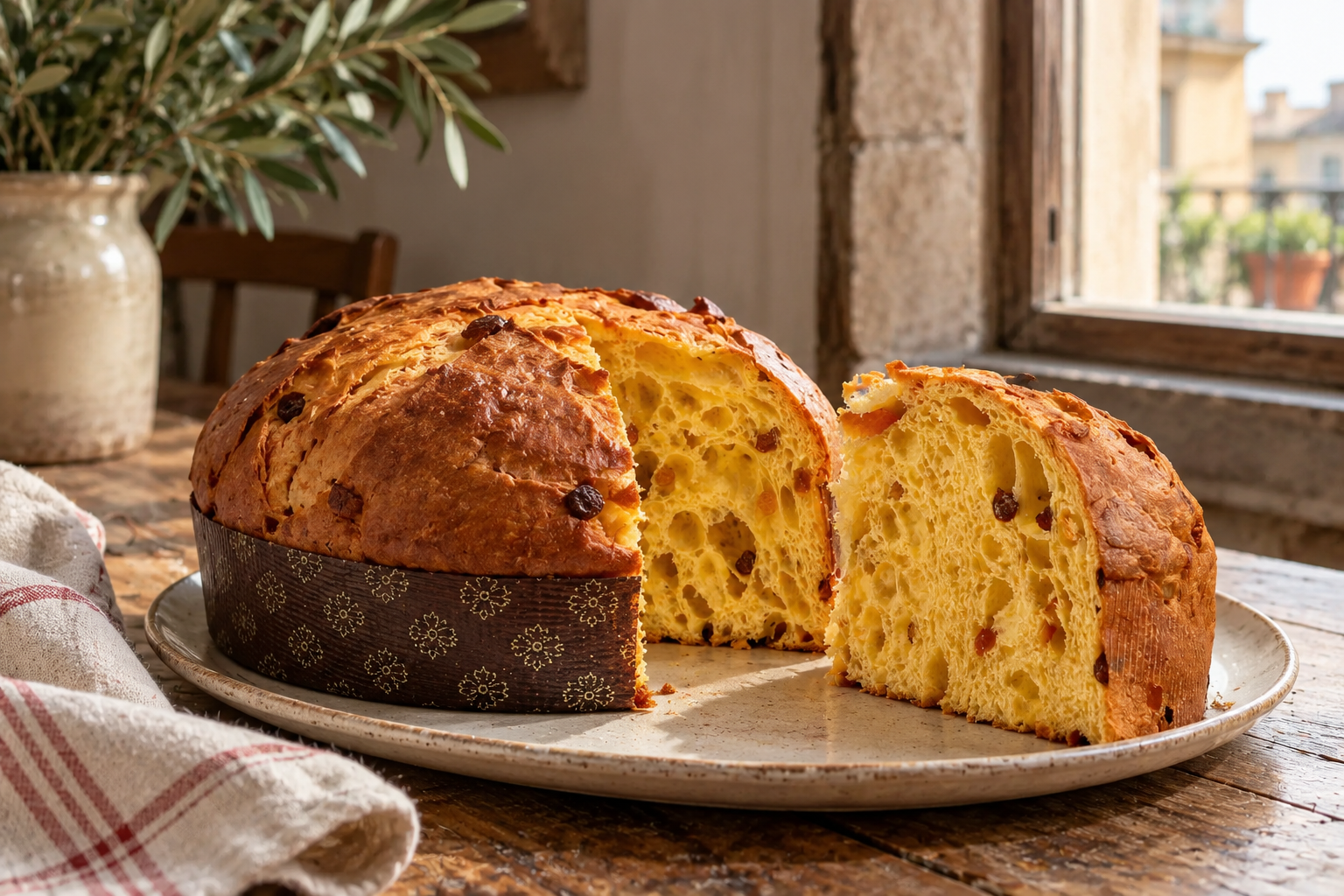
Panettone brings raisins and candied citrus to the Christmas table; classic pandoro offers a plain, butter-rich crumb beneath icing sugar. That is a useful place to begin the choice. If you enjoy fruit running through a slice, start with panettone. If you want the cake itself to take the foreground, try pandoro. For a gathering with both preferences, put out a little of each.
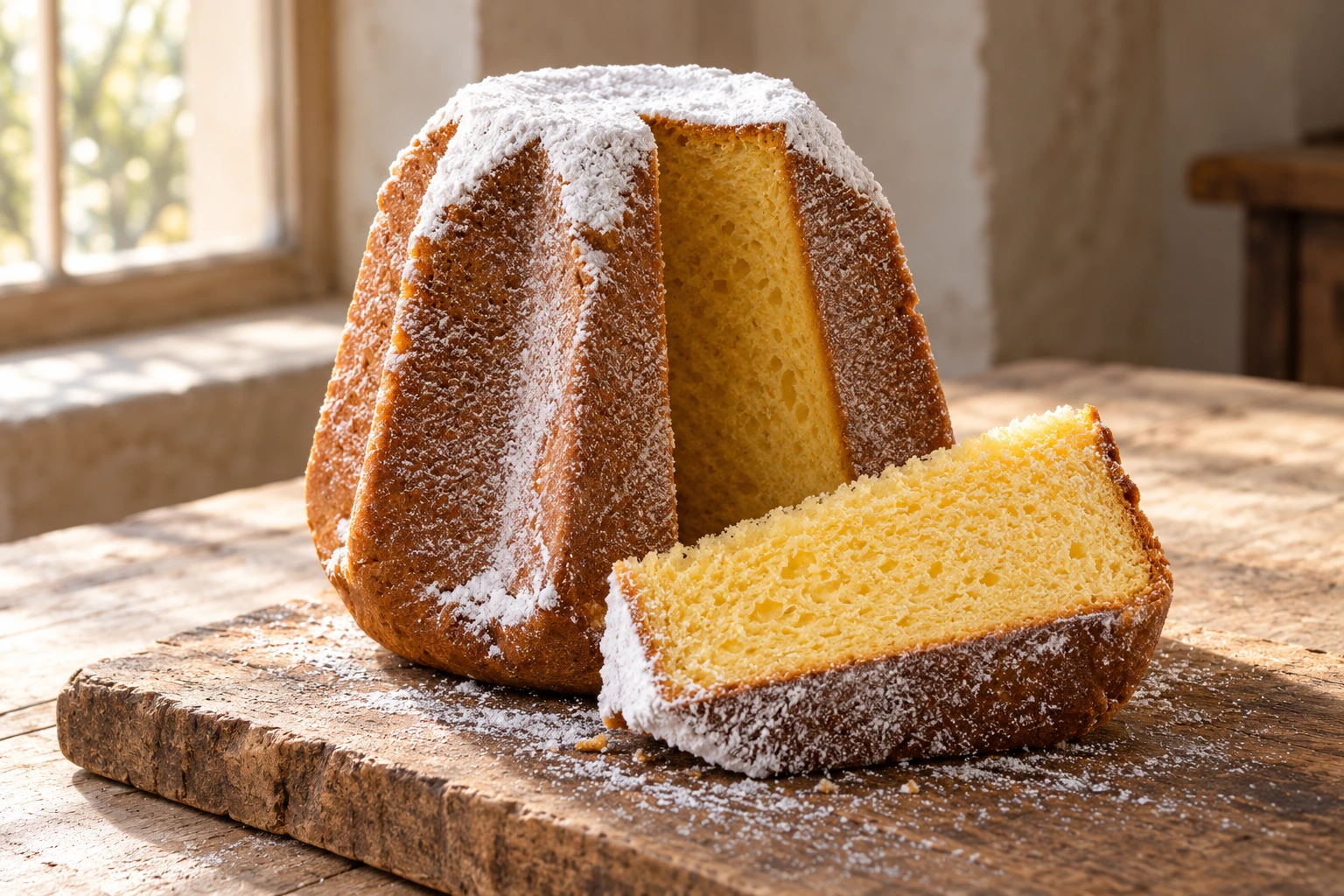
The two cakes also lead to different cities. Panettone belongs to Milan, while pandoro is a specialty of Verona. Their shapes make the distinction visible before the first cut: panettone has a round body and dome; pandoro rises in an eight-pointed star. Neither shape settles which one your guests will prefer.
The differences at a glance
| What to compare | Panettone | Pandoro |
|---|---|---|
| Home city | Milan | Verona |
| Recognisable shape | Round body with a domed top; low and tall versions exist | Tall, tapered eight-pointed star |
| Classic character | Raisins and candied fruit through the crumb | Plain crumb with butter and vanilla |
| The finish | Our Milanese recipe has a cross-cut dome without glaze | Our recipe finishes with icing sugar |
| Our kitchen version | Lievito madre and two enriched doughs | A firm preferment and two enriched doughs |
The last two rows describe our particular recipes. Read the full method before baking: their ingredients, moulds and schedules form separate preparations. A favourite panettone formula cannot become pandoro simply by leaving out the fruit and changing the tin.
Choosing an artisanal panettone
Begin with the baker and the actual loaf. Ask which version you are buying, when it was made and how the baker recommends keeping and serving it. Read the ingredient list for the fruit, flavourings and any filling or coating. A plain traditional loaf and a filled variation offer different things, even when they share the same maker.
In Milan, the Panettone tipico della tradizione artigianale milanese project connects participating bakers with a defined traditional production specification. Its map is a useful way to begin looking for a bakery; check the current business details before visiting. The project identifies a particular tradition. It does not provide a tasting verdict on every cake a shop sells.
When a tasting is available, try the cake before adding cream or wine. Notice the aroma, the way the crumb separates and how the raisins and citrus sit in the bite. Decide whether you enjoy that particular balance. A price, a large box or a claim of long preparation is not a substitute for your own preference, and this guide is not a ranked tasting of producers.
Giving pandoro its own place
Pandoro’s unfilled crumb makes butter, vanilla and the finish especially noticeable. Choose the plain version if that is the comparison you want to make. A chocolate-filled or cream-filled cake is another choice; read the package rather than assume that every star-shaped cake has the same contents.
For the first slice, keep the accompaniments on the side. You can offer a second piece with a chosen cream or preserve, but tasting it plain first makes the cake easier to judge on its own terms. Choose a plate large enough to hold the slice comfortably and add the icing sugar as directed by the recipe or maker.
Serving two cakes without two whole desserts
For a small comparison, cut modest pieces of both and serve them together. Keep a serrated knife and a clear cutting space beside the cakes, rather than passing a large loaf around a crowded table. Leave the remaining cake covered according to its maker’s instructions and cut more when it is wanted.
Let the rest of the meal decide the portion. After several courses, a small slice can be enough; a Christmas afternoon gathering may give the cake more room. The Christmas sweets guide offers biscuits and other regional sweets if your table needs a different ending. There is no obligation to serve every festive cake at once.
If you want to bake them
Our Milanese panettone uses mature lievito madre, raisins, candied orange and citron. Our pandoro uses a firm preferment and two enriched doughs. Both recipes need time and a suitable mould; read the whole schedule, including cooling, before choosing a serving day.
Follow one complete recipe rather than mixing its stages with another formula. Check the stated yield, equipment and ingredient preparation first. Buying one cake and baking the other is also a perfectly useful way to make a Christmas comparison without assigning two demanding preparations to the same kitchen.
Questions for the Christmas table
Does classic pandoro contain raisins?
Classic pandoro has a plain crumb rather than the raisins and candied fruit associated with panettone. Filled and flavoured variations exist, so read the particular product’s label. Our pandoro recipe keeps that plain identity, with butter, vanilla and citrus zest in its own carefully specified dough.
Is every panettone tall?
Panettone comes in low and tall forms. Our Milanese recipe uses a low mould and a cross-cut dome without glaze. When buying or baking, check the version and mould specified. The height alone does not establish the flavour, freshness or quality of the cake inside.
Which should I buy as a gift?
Start with the recipient’s preferences: raisins and candied citrus, or a plain butter-rich cake. Then check the exact version, size, ingredients and keeping instructions. Keep those details with the gift. If you are unsure and the occasion suits it, a small selection lets the recipient try both.