Skip to content

International Museum of Ceramics

Faenza's ceramics museum, the world's deepest maiolica collection, with pieces donated by Picasso and Chagall.

  • Faenza
  • Museum
Where
Faenza
Best for
World's largest maiolica collection
Allow
2 hours

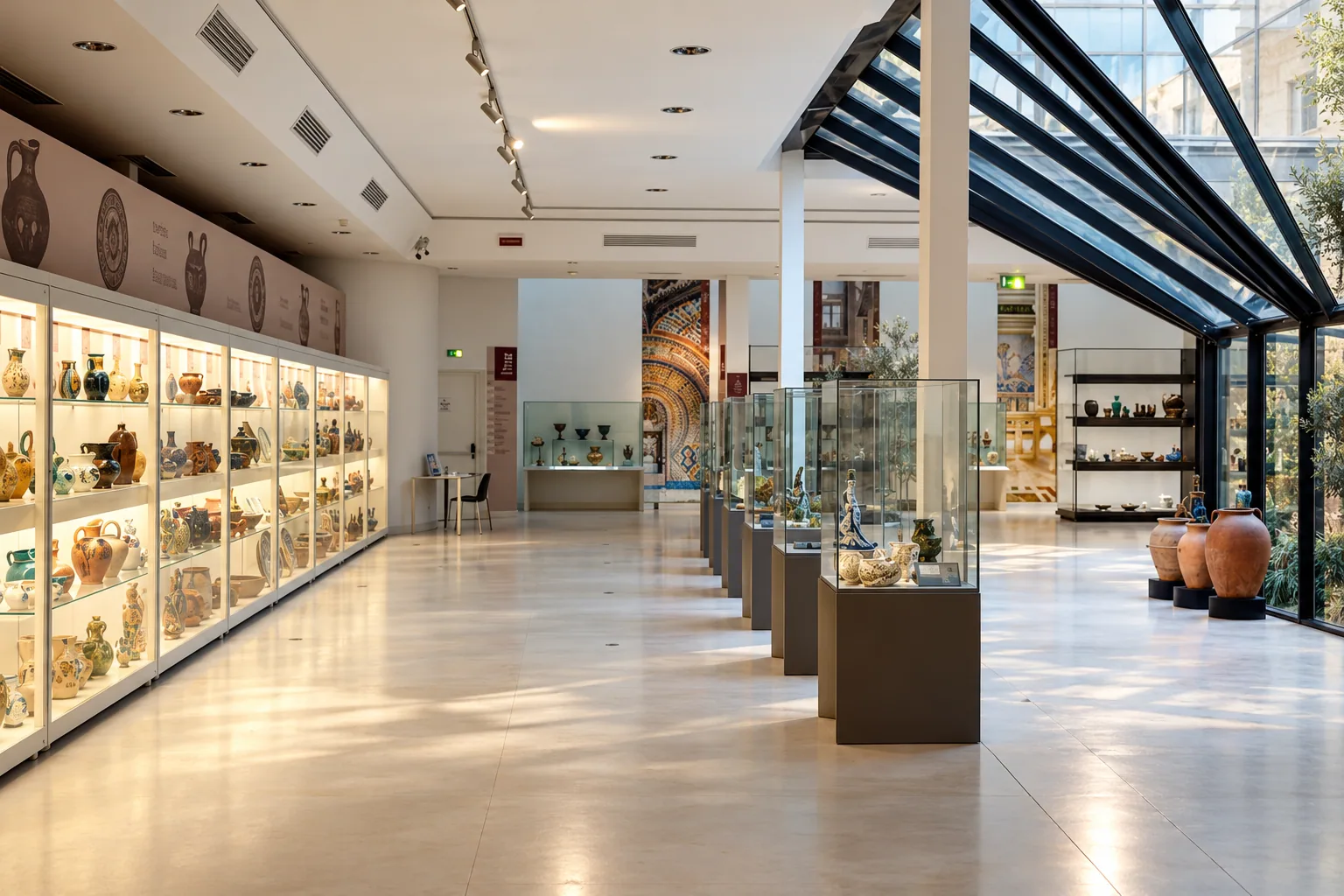
Faenza gave its name to faience, tin-glazed earthenware, and the museum founded here in 1908 grew into the deepest collection anywhere of that art, now holding more than sixty thousand pieces that run from Renaissance maiolica to contemporary studio ceramics.

Rebuilding after the Second World War's bombing raids became a cause international artists took up personally: Picasso, Léger, Matisse and Chagall all donated significant works to help restore the collections, and the Sala Europa now displays Picasso's ceramic plates as a preview to the museum's twentieth and twenty-first century sculpture galleries. Faenza's own workshops still fire and hand-paint maiolica using techniques largely unchanged since the Renaissance, so a visit to the museum pairs naturally with watching potters at work in the town's studios just outside its doors.
Five works worth finding

If you see nothing else, see these.

  1. The Sala Europa with Picasso, Matisse, Chagall and LégerPablo Picasso, Henri Matisse, Marc Chagall, Fernand Léger, 1940s and 1950s

    After the 1944 bombing these artists donated ceramic works to rebuild the collection. Picasso’s plates are the preview to the 20th- and 21st-century sculpture galleries.Modern wing, beside the temporary exhibitions hall

  2. Renaissance Faenza maiolicaFaenza workshops, 15th and 16th centuries

    From the deep cobalt “zaffera” style to love bowls with a portrait of the beloved, used to seal weddings.First floor, Faenza and Italian Renaissance section

  3. The Zucchini nativity scenePainted scenery by Romolo Liverani, 19th century

    Sixty-one painted terracotta figures set against spectacular painted backdrops.Lower floor, in its own room

  4. The Islamic and pre-Columbian galleriesSamanid to Ottoman; Peruvian and Mesoamerican cultures

    Slip-decorated Samanid wares, Iznik glazes and Hispano-Moorish lustre, which shaped Italian maiolica, plus six cases of pre-Columbian ceramics.Ground floor of the old convent quadrangle

  5. Twentieth-century Italian ceramicsLucio Fontana, Gio Ponti, Alberto Burri, Carlo Zauli and others

    Sculptors and designers who worked in clay, with Faenza’s own Carlo Zauli among the standouts.New wing

Plan your visit

Everything you need before you go.

Booking
No booking needed
Time needed
2 hours
Best time
A weekday morning, then continue on to a working ceramics studio in town
Getting there
On Viale Baccarini in central Faenza, a short walk from the train station, which has direct trains from Bologna and Ravenna.

Ask at the front desk which local workshops welcome visitors that week: seeing a potter hand-paint maiolica nearby makes the museum's oldest pieces feel far less remote.

Get directionsGoogle MapsApple Maps

Good to know

How long should you spend at the International Museum of Ceramics in Faenza?

Allow about two hours for a good visit. The museum holds more than sixty thousand works across many eras, so decide beforehand whether you want the Renaissance rooms or the modern wing. Ceramic lovers can easily spend more.

Is the International Museum of Ceramics in Faenza worth visiting?

Yes. Faenza gave its name to faience, and this is the deepest collection of the art anywhere, from ancient Near Eastern pieces to contemporary studio work. The room of Picasso, Matisse and Chagall donations is a real surprise in a small town.

Can you visit the ceramics museum as a day trip from Bologna or Ravenna?

Yes. The museum is on Viale Baccarini in central Faenza, a short walk from the train station, which has direct trains from Bologna and Ravenna. After the museum, visit a working ceramics studio in town to see potters hand-paint maiolica.

A letter from Italy, once a month.

The places, tables and makers we found worth your time. One email, no noise.

One letter a month. Unsubscribe at any time. We never share your address.

Help us get it right

What is it about?