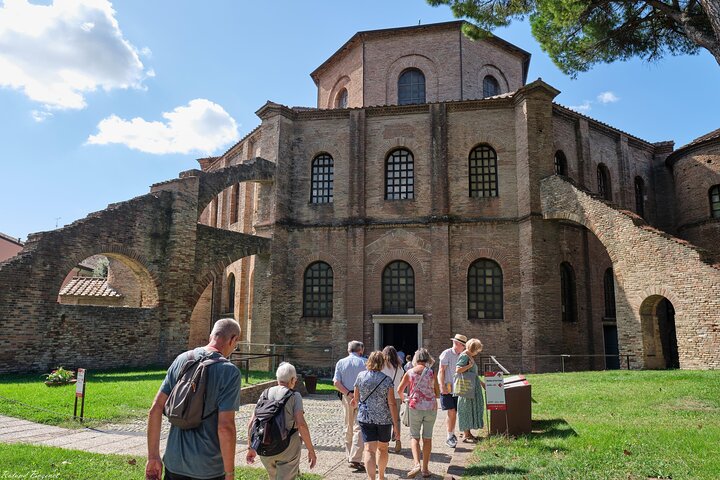
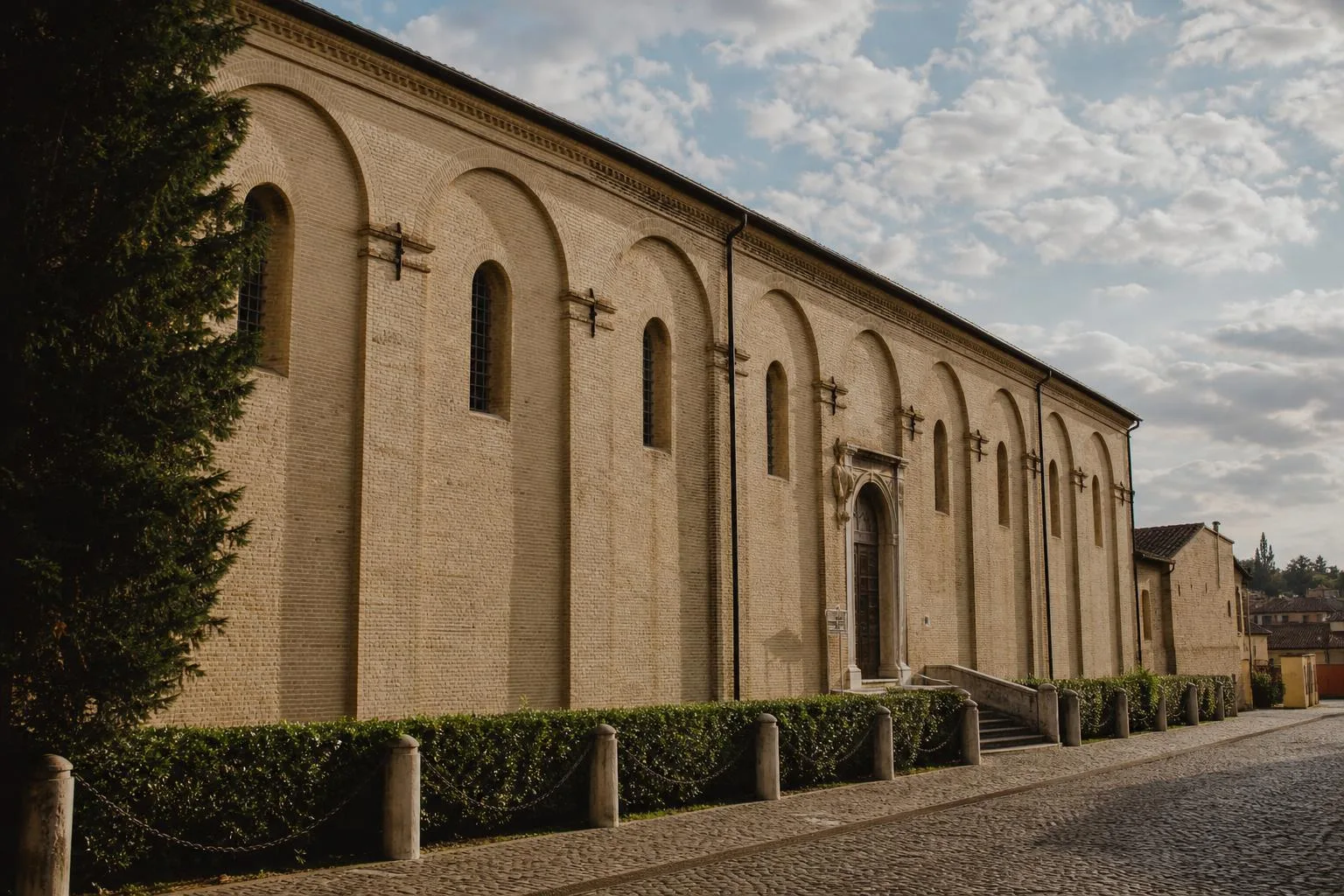
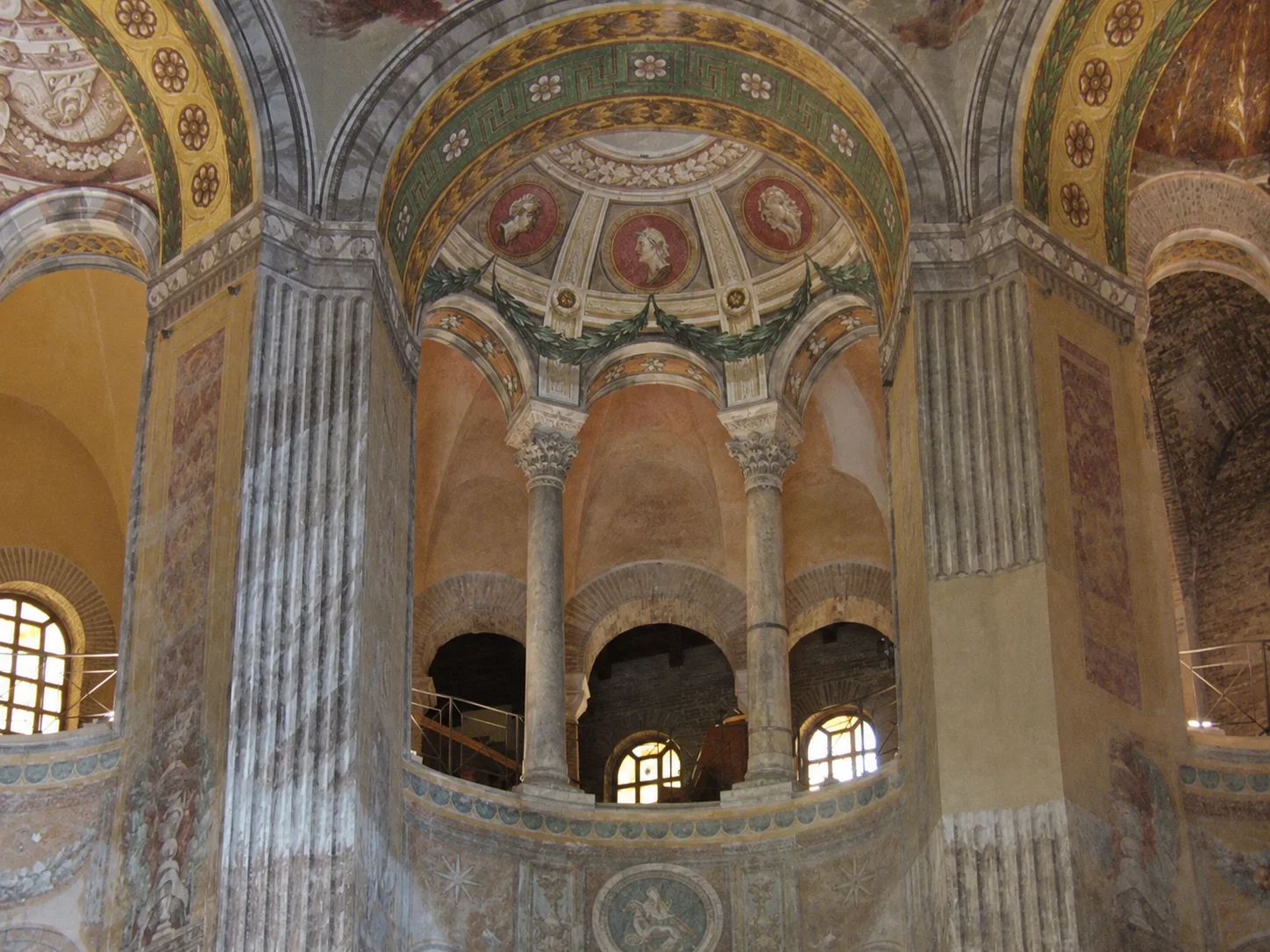
San Vitale was commissioned in the years of Bishop Ecclesius, around 525–526, and consecrated by Archbishop Maximian in 547. Its plan turns away from the long nave of a conventional basilica: two brick octagons, one rising above the other, enclose a central space, while a two-level ambulatory and upper gallery circle the drum of the dome.
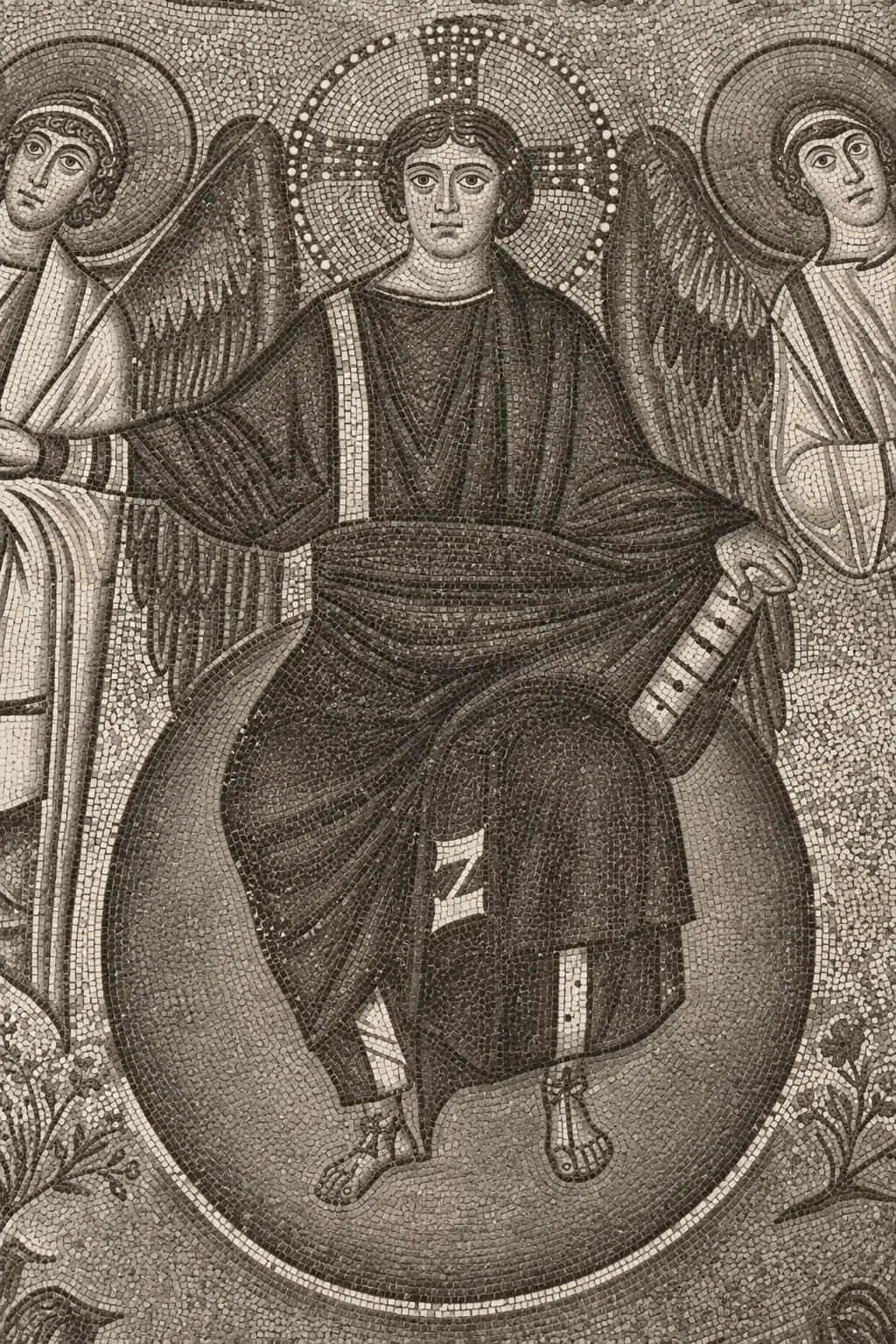
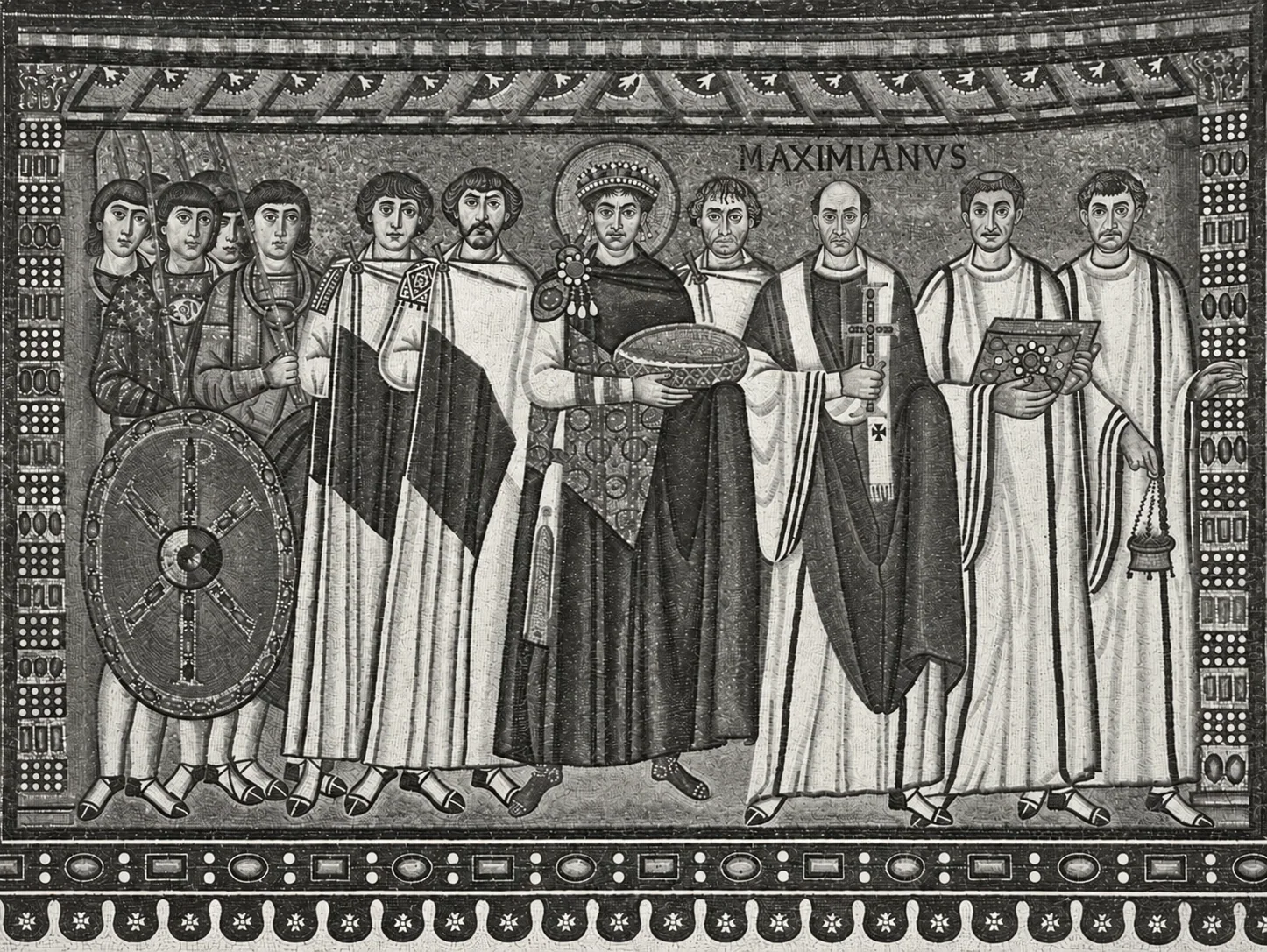
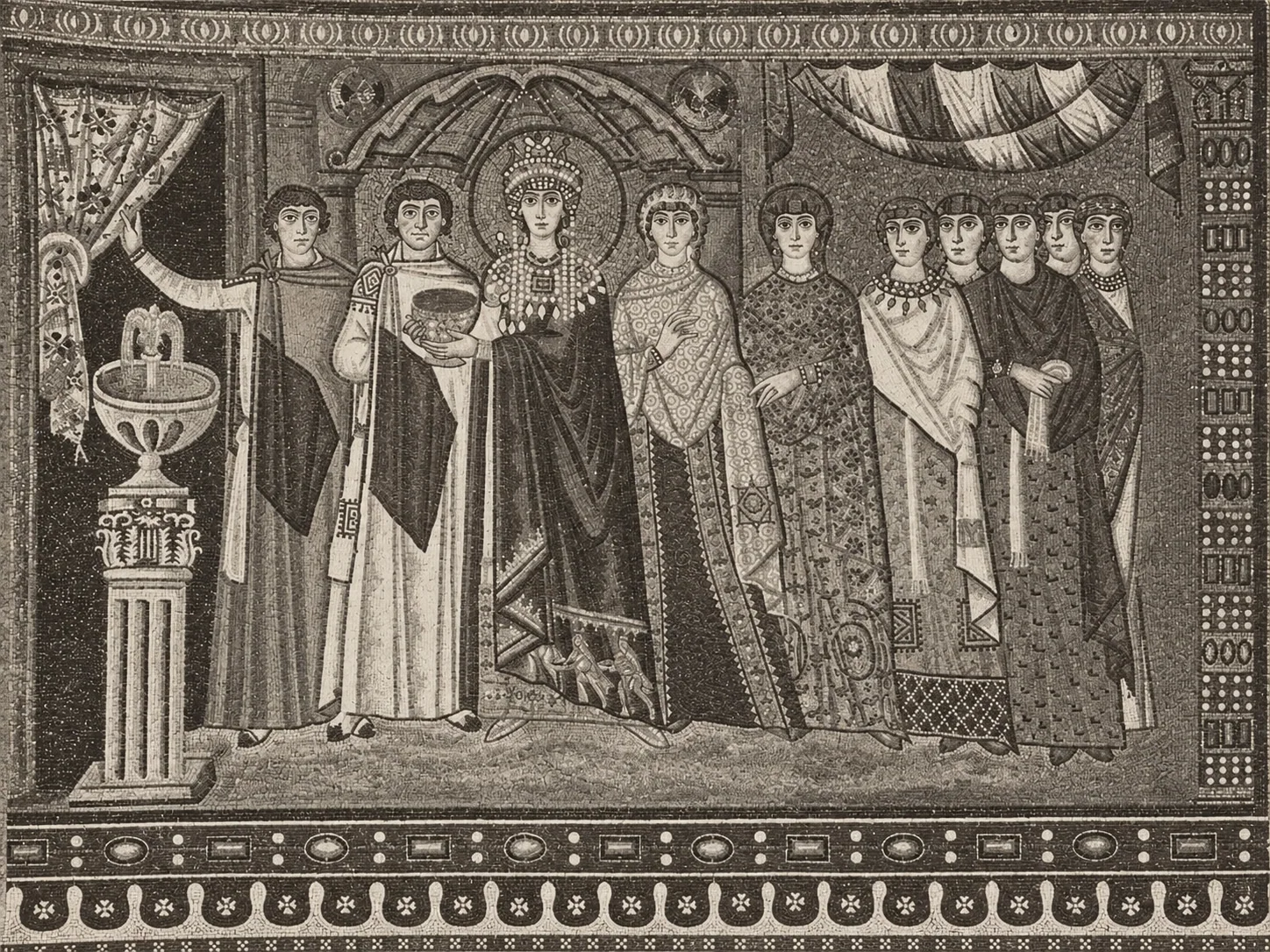
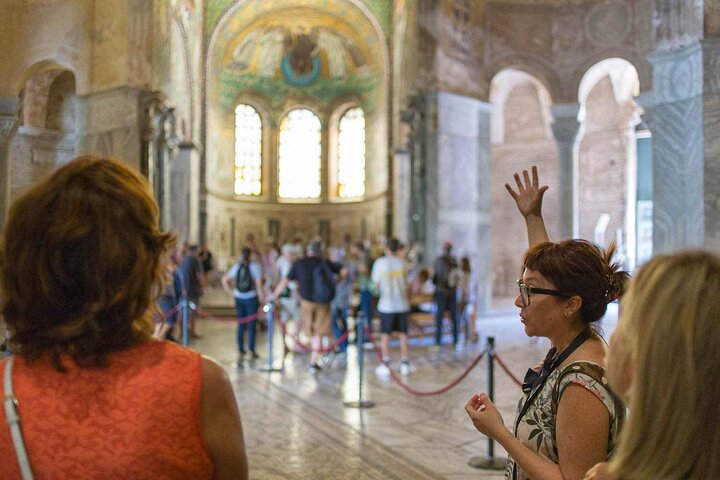
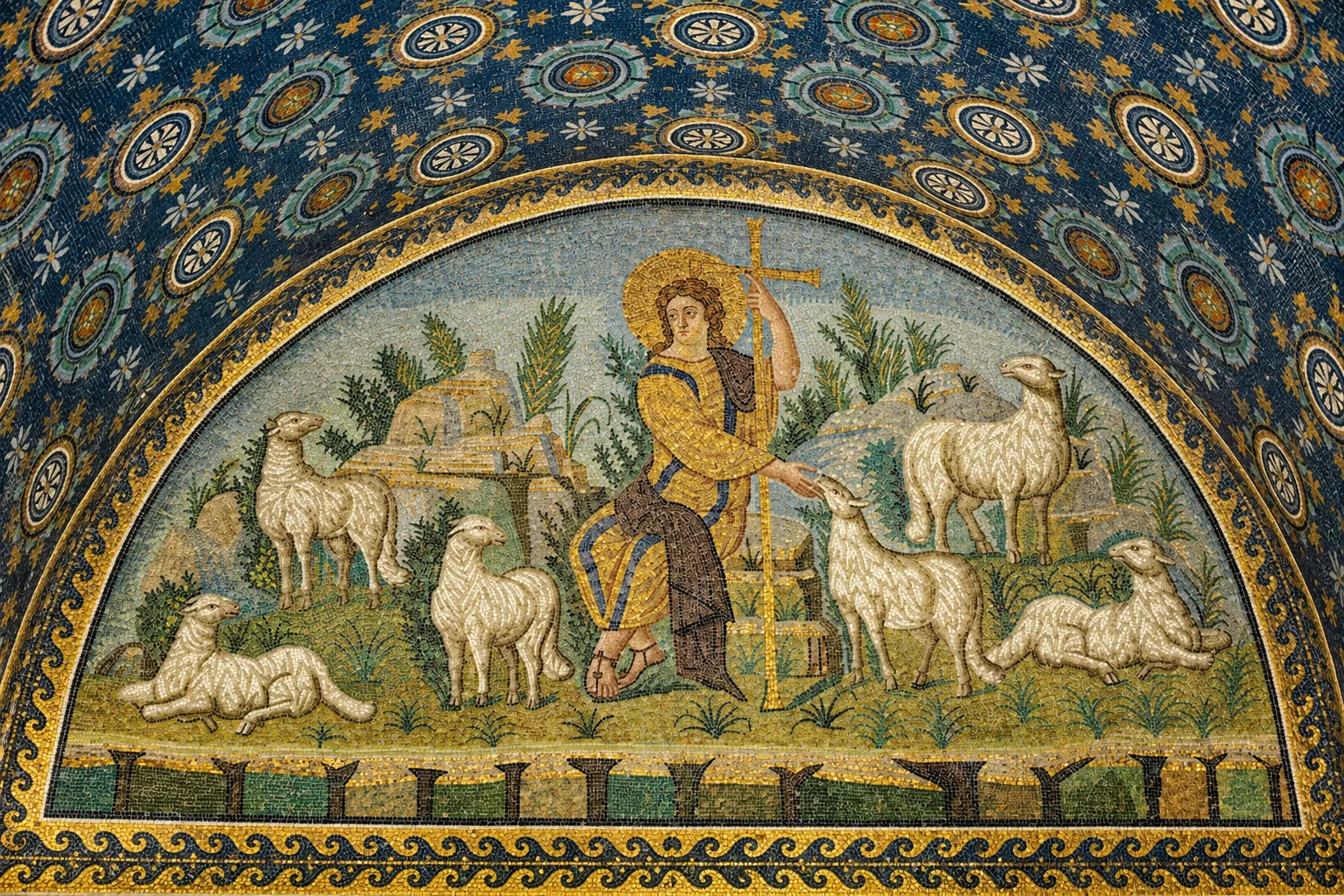
Move east into the sanctuary and the building’s surfaces change register. Biblical scenes cover the presbytery in vivid mosaic; in the apse, the facing processions of Justinian and Theodora stand against a gold ground. Above, the central vault carries a later Baroque fresco, not a continuation of the sixth-century mosaics. Look down before leaving the altar area: a circular marble labyrinth is set into the presbytery pavement. These shifts, from brick exterior to layered galleries, mosaic and marble, then a later painted vault, make the church rewarding to read as an architectural sequence as well as a treasury of images.
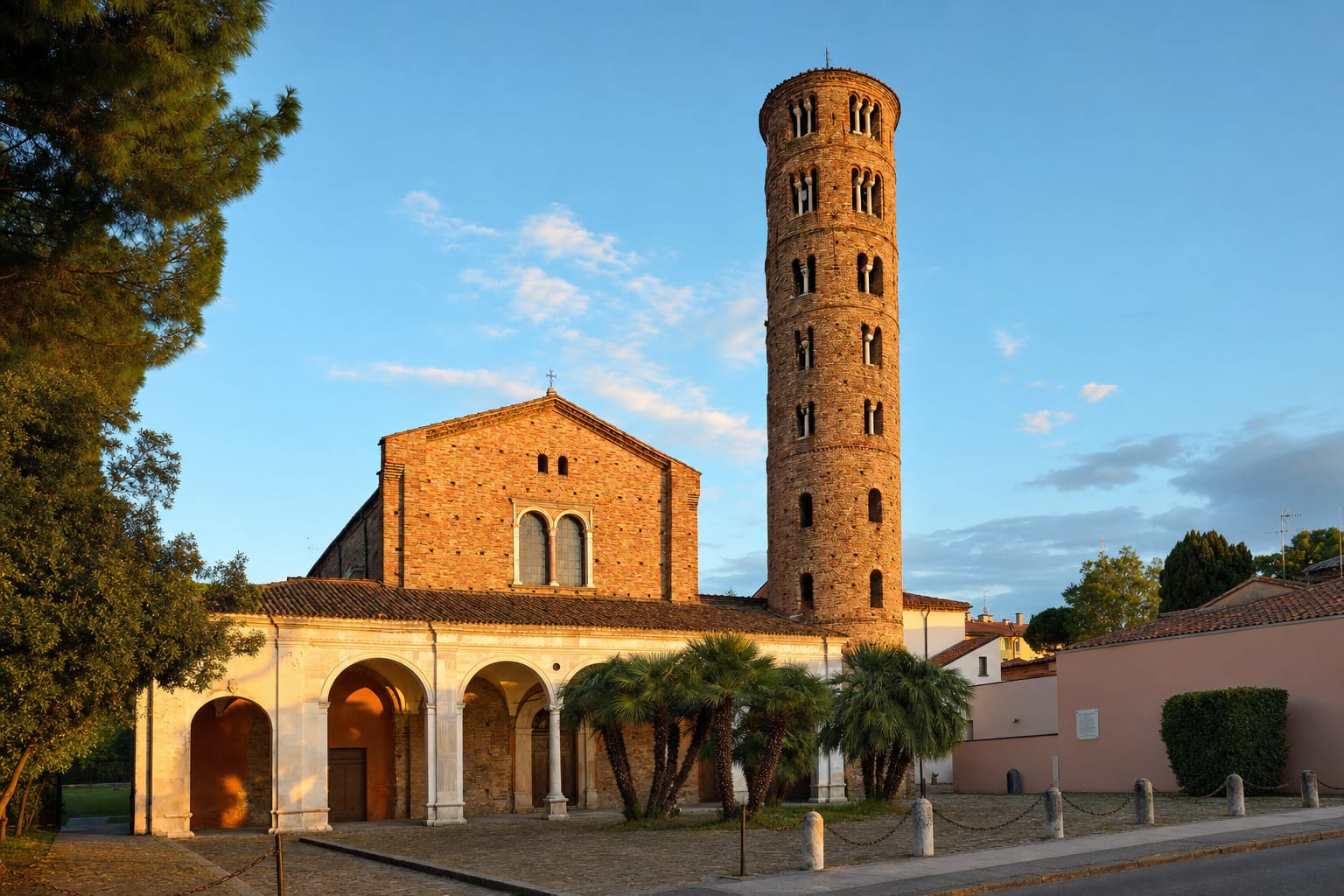
San Vitale belongs to Ravenna’s UNESCO-listed early Christian monuments. The nearby Mausoleum of Galla Placidia and Basilica of Sant’Apollinare Nuovo are included in the broader monument circuits. Galla Placidia requires its own reserved entry time.
Sources and citations (7)
- Ravenna Turismo — official Comune di Ravenna visitor informationBasilica of San VitaleHistory, lines 273–276: commissioned in Bishop Ecclesius’s years (525–526); consecrated by Maximian in 547.; Architecture, lines 282–285: central plan; upper and lower brick octagonal blocks; two-storey ambulatory and women’s gallery around the dome […]Read source
- Ravenna Turismo — official Comune di Ravenna visitor informationThe Procession of Justinian and Theodora in the Basilica of San VitaleLines 265–286: the processions of Theodora and Justinian are on the lower apse walls and face one another; their identities and attributes are described separately.Read source
- Ravenna Turismo — official Comune di Ravenna visitor informationIl corteo di Teodora e Giustiniano nella Basilica di San VitaleItalian companion page: the lower apse-wall processions face one another; section describes Justinian and Theodora’s panels and attributes.Read source
- UNESCO World Heritage CentreEarly Christian Monuments of RavennaLines 4, 45–52: San Vitale is one of the eight monuments within the inscribed serial property; all were built in the fifth and sixth centuries.Read source
- Opera di Religione della Diocesi di Ravenna — monument operatorOrari e prezzi“Tariffe 2026”: 2-site section lists Sant’Apollinare Nuovo and San Vitale; states that the access day must be agreed.; 4-site section adds Galla Placidia and the Neonian Baptistery; timed entry must be reserved for those sites.; 5-site section adds t […]Read source
- Ravenna Turismo — official Comune di Ravenna visitor informationBasilica di San VitaleStoria, lines 283–285: commission under Ecclesio (525–526) and consecration by Massimiano in 547.; Architettura, lines 291–294: central plan; octagonal brick bodies and two-storey ambulatory/matroneo.; Decorazione, lines 297–301: Italian page dates t […]Read source
- Opera di Religione della Diocesi di Ravenna — monument operatorBasilica di San Vitale“Accessibilità” section: exterior approach in cobblestones; paved route with a slight downward slope through the complex garden; two successive steps into the presbytery with fixed side ramp; tactile relief of the basilica exterior with Braille near […]Read source