

All the monuments in Ravenna
The landmarks and masterpieces worth planning a day around.
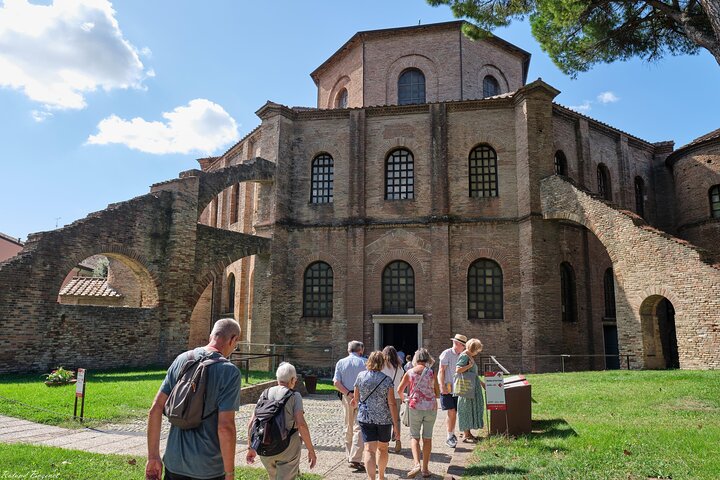
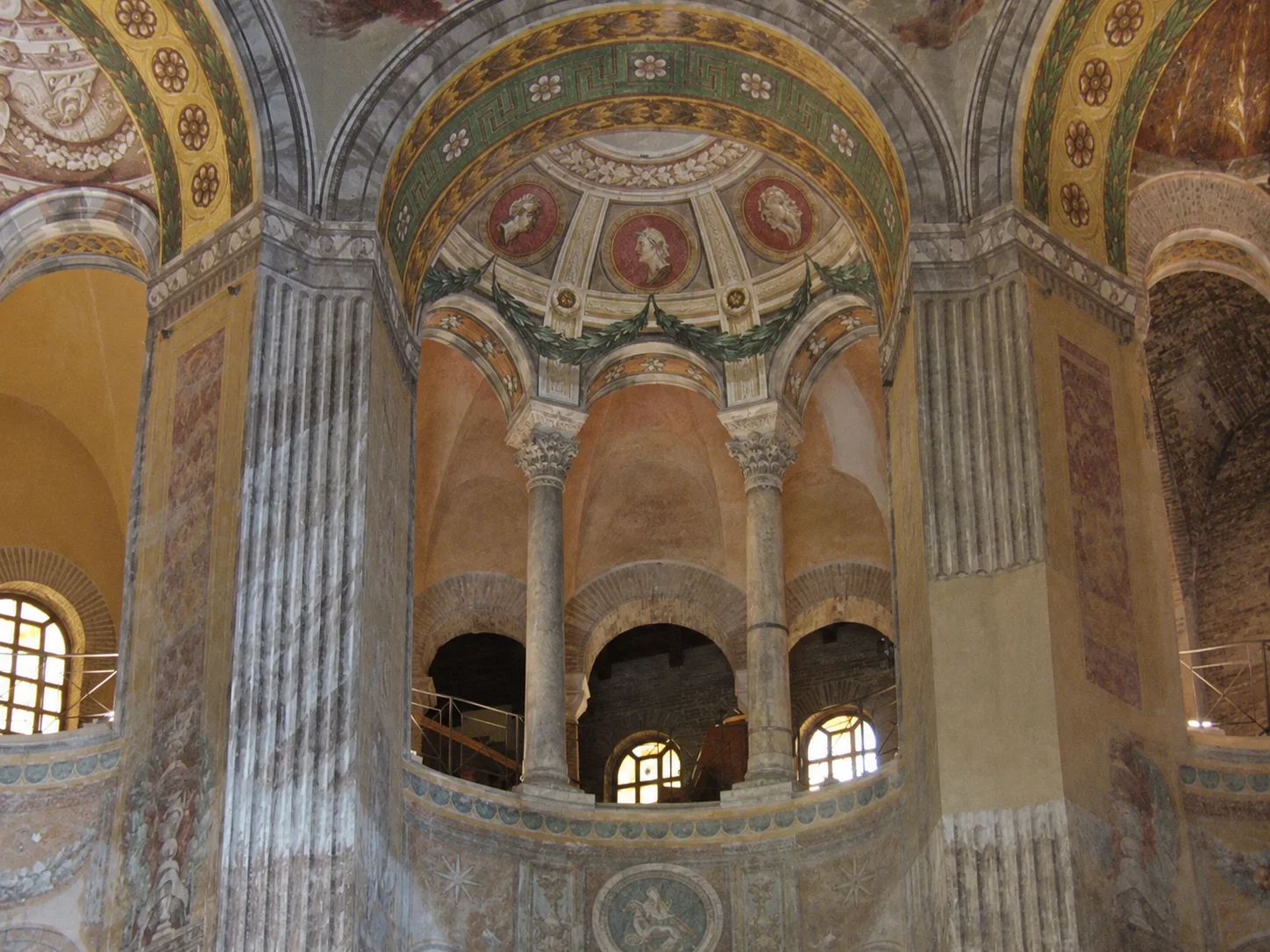 Basilica di San VitaleUNESCOBasilica of San VitaleJustinian and Theodora mosaics, octagonal Byzantine plan, sixth-century splendorSan Vitale was commissioned in the years of Bishop Ecclesius, around 525–526, and consecrated by Archbishop Maximian in 547. Its plan turns away from the long nave of a conventional basilica: two brick octagons, one rising above the other, enclose a central space, while a two-level ambulatory and upper gallery circle the drum of the dome.
Move east into the sanctuary and the building’s surfaces change register. Biblical scenes cover the presbytery in vivid mosaic; in the apse, the facing processions of Justinian and Theodora stand against a gold ground. Above, the central vault carries a later Baroque fresco, not a continuation of the sixth-century mosaics. Look down before leaving the altar area: a circular marble labyrinth is set into the presbytery pavement. These shifts, from brick exterior to layered galleries, mosaic and marble, then a later painted vault, make the church rewarding to read as an architectural sequence as well as a treasury of images.
San Vitale belongs to Ravenna’s UNESCO-listed early Christian monuments. The nearby <a href="/en/attractions/mausoleum-of-galla-placidia">Mausoleum of Galla Placidia</a> and <a href="/en/attractions/basilica-of-sant-apollinare-nuovo">Basilica of Sant’Apollinare Nuovo</a> are included in the broader monument circuits. Galla Placidia requires its own reserved entry time.Plan the visit
Basilica di San VitaleUNESCOBasilica of San VitaleJustinian and Theodora mosaics, octagonal Byzantine plan, sixth-century splendorSan Vitale was commissioned in the years of Bishop Ecclesius, around 525–526, and consecrated by Archbishop Maximian in 547. Its plan turns away from the long nave of a conventional basilica: two brick octagons, one rising above the other, enclose a central space, while a two-level ambulatory and upper gallery circle the drum of the dome.
Move east into the sanctuary and the building’s surfaces change register. Biblical scenes cover the presbytery in vivid mosaic; in the apse, the facing processions of Justinian and Theodora stand against a gold ground. Above, the central vault carries a later Baroque fresco, not a continuation of the sixth-century mosaics. Look down before leaving the altar area: a circular marble labyrinth is set into the presbytery pavement. These shifts, from brick exterior to layered galleries, mosaic and marble, then a later painted vault, make the church rewarding to read as an architectural sequence as well as a treasury of images.
San Vitale belongs to Ravenna’s UNESCO-listed early Christian monuments. The nearby <a href="/en/attractions/mausoleum-of-galla-placidia">Mausoleum of Galla Placidia</a> and <a href="/en/attractions/basilica-of-sant-apollinare-nuovo">Basilica of Sant’Apollinare Nuovo</a> are included in the broader monument circuits. Galla Placidia requires its own reserved entry time.Plan the visit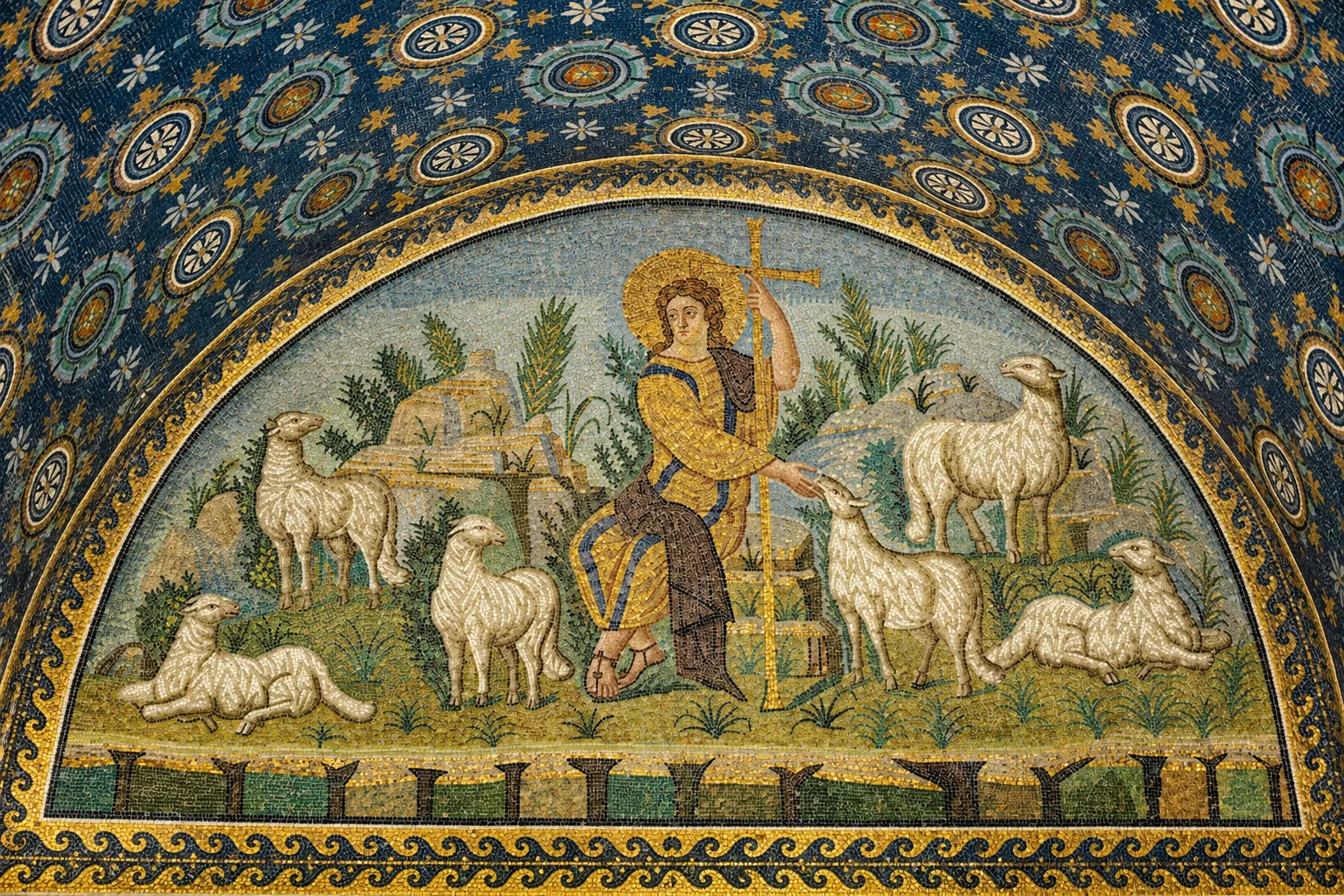 Mausoleo di Galla PlacidiaUNESCOMausoleum of Galla PlacidiaGold-star vault, Good Shepherd mosaic, alabaster windows, Cole Porter legendFrom the lane, the Mausoleum of Galla Placidia is a low brick building with a Latin-cross plan and a square tower-lantern concealing the dome. Ravenna’s official visitor history says it was commissioned after 426 as Galla Placidia’s intended burial place and was meant to connect by a narthex to nearby Santa Croce. It never served as her tomb: she died in Rome in 450 and was buried there. Three marble sarcophagi remain inside, described by the city as empty.
Inside, yellow marble covers the lower walls while mosaics fill the upper walls, arches, lunettes and dome. The central vault places a golden Latin cross among concentric fields of stars and four figures the city identifies as the Beings of the Apocalypse. The lunettes include the paired stags drinking from a spring and, above the entrance, Christ the Good Shepherd. The regional heritage catalogue identifies Saint Lawrence before a flaming grill in the south-arm lunette, opposite the Good Shepherd at the entrance. Small alabaster windows filter the light. A local story links the starry vault with Cole Porter’s “Night and Day”; Ravenna’s tourism office repeats it but gives no documentation that the song was composed here. The mausoleum belongs to Ravenna’s UNESCO-listed group of eight early Christian monuments. Just behind it, <a href="/en/attractions/basilica-of-san-vitale">San Vitale</a> makes a natural next stop; both are included in the four-monument circuit, which also covers <a href="/en/attractions/basilica-of-sant-apollinare-nuovo">Sant’Apollinare Nuovo</a> and the Neonian Baptistery.
Mausoleo di Galla PlacidiaUNESCOMausoleum of Galla PlacidiaGold-star vault, Good Shepherd mosaic, alabaster windows, Cole Porter legendFrom the lane, the Mausoleum of Galla Placidia is a low brick building with a Latin-cross plan and a square tower-lantern concealing the dome. Ravenna’s official visitor history says it was commissioned after 426 as Galla Placidia’s intended burial place and was meant to connect by a narthex to nearby Santa Croce. It never served as her tomb: she died in Rome in 450 and was buried there. Three marble sarcophagi remain inside, described by the city as empty.
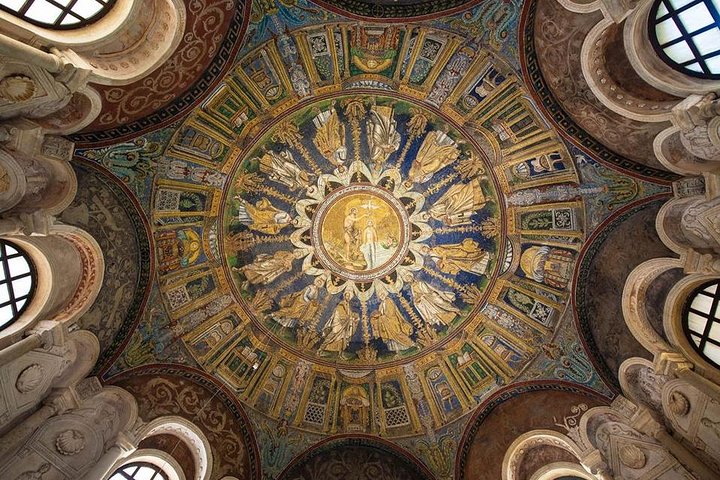
Inside, yellow marble covers the lower walls while mosaics fill the upper walls, arches, lunettes and dome. The central vault places a golden Latin cross among concentric fields of stars and four figures the city identifies as the Beings of the Apocalypse. The lunettes include the paired stags drinking from a spring and, above the entrance, Christ the Good Shepherd. The regional heritage catalogue identifies Saint Lawrence before a flaming grill in the south-arm lunette, opposite the Good Shepherd at the entrance. Small alabaster windows filter the light. A local story links the starry vault with Cole Porter’s “Night and Day”; Ravenna’s tourism office repeats it but gives no documentation that the song was composed here. The mausoleum belongs to Ravenna’s UNESCO-listed group of eight early Christian monuments. Just behind it, <a href="/en/attractions/basilica-of-san-vitale">San Vitale</a> makes a natural next stop; both are included in the four-monument circuit, which also covers <a href="/en/attractions/basilica-of-sant-apollinare-nuovo">Sant’Apollinare Nuovo</a> and the Neonian Baptistery.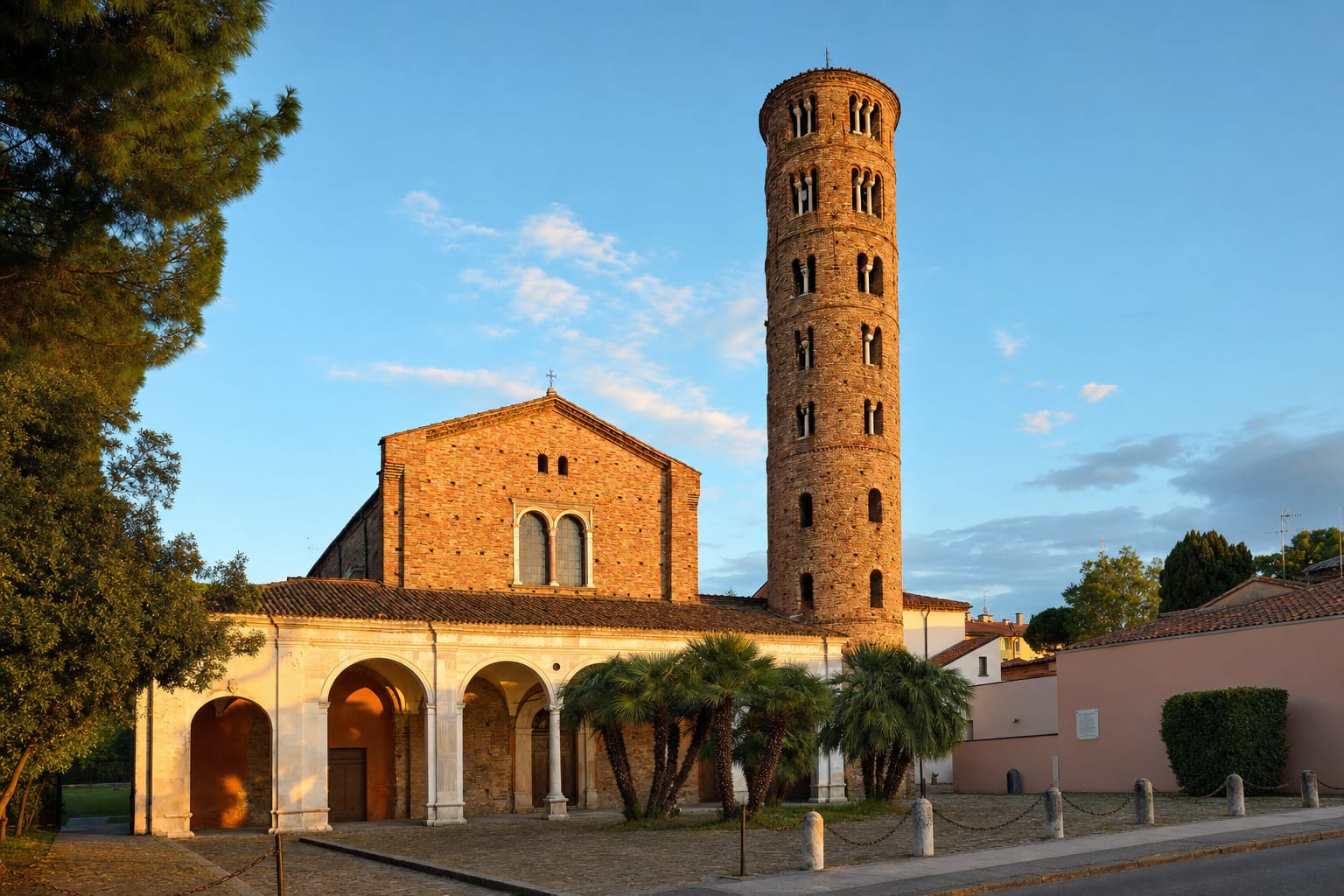 Basilica di Sant'Apollinare NuovoUNESCOBasilica of Sant'Apollinare NuovoProcessions of martyrs and virgins, Theodoric's palace church, twenty-six Christ scenes, nave-length mosaicsTwo mosaic processions run the full nave, virgins on one side and martyrs on the other, walking toward Christ and the Virgin since Theodoric the Great built this church beside his palace in the early sixth century, dedicating it around 504. Byzantine restorers rededicated it in 561 after Justinian's reconquest, scraping out the Ostrogothic king's courtiers from a mosaic of his palace and leaving only their disembodied hands clutching the curtained columns behind them. In 856 the relics of Saint Apollinaris arrived from Classe and gave the basilica its present name. Twenty-six martyrs process behind Saint Martin on the right wall, twenty-two virgins behind the Magi on the left, and the golden mosaic backdrop has held its color for close to 1,500 years.
Tours worth booking in Ravenna
Compared by our editors, across providers.
Booking through these links may earn Italia Magnifica a commission, at no cost to you.
- Viator
- 3h
- 5.0★ · 6 reviews
from €215Book this tour- Viator
- 2h 30m
- 5.0★ · 14 reviews
from €178Book this tour- Viator
- 5h
- 5.0★ · 5 reviews
from €454Book this tour- Viator
- 2h
- 5.0★ · 45 reviews
from €280Book this tour- Viator
- 3h
- 5.0★ · 23 reviews
from €160Book this tour- Viator
- 3h 30m
- 5.0★ · 10 reviews
from €125Book this tour


More within reach
Monuments a day trip away, elsewhere in Emilia-Romagna.
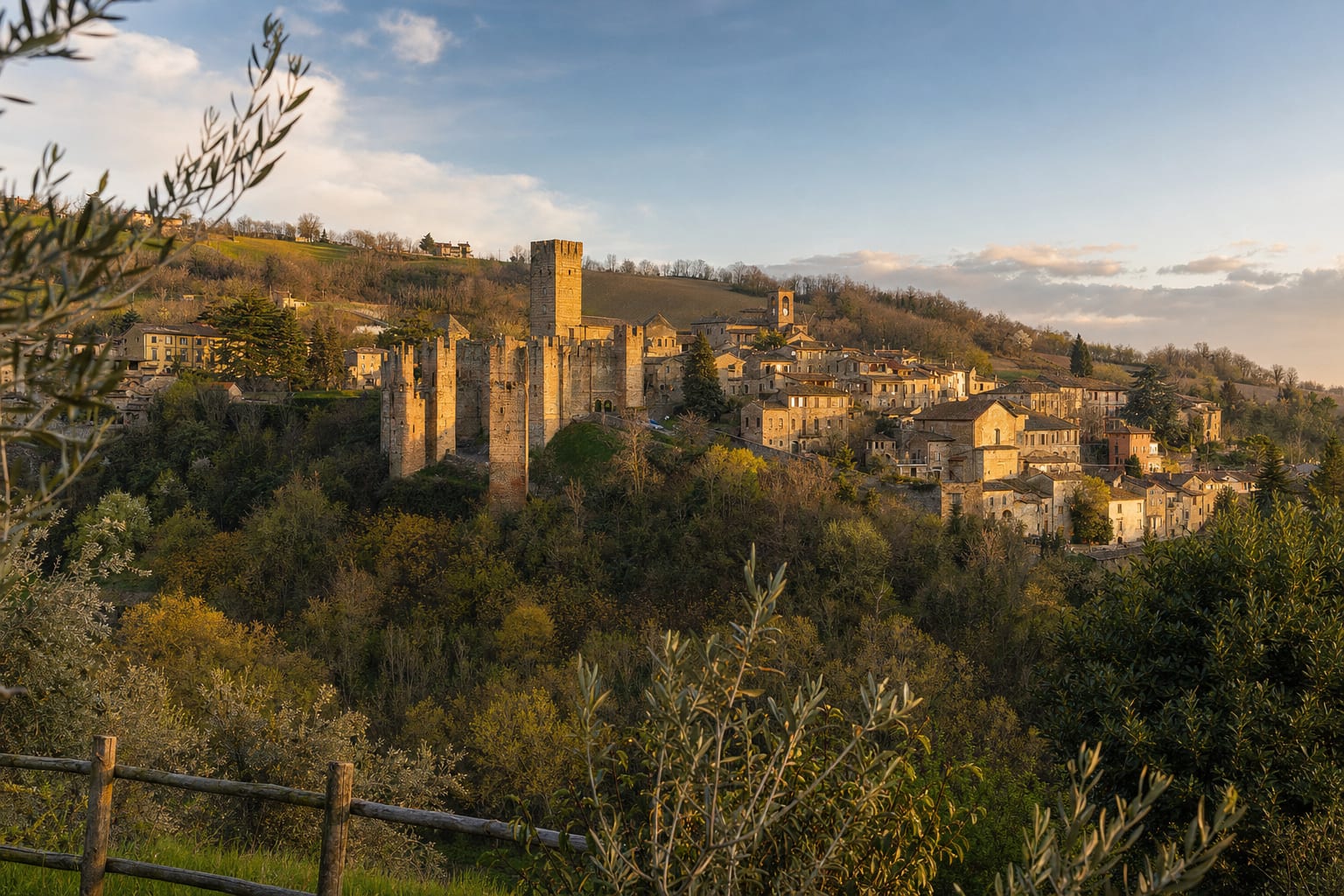 Castell'ArquatoCastell'ArquatoRocca Viscontea fortress, Collegiata church piazza, Gutturnio wine country, fossil badlands
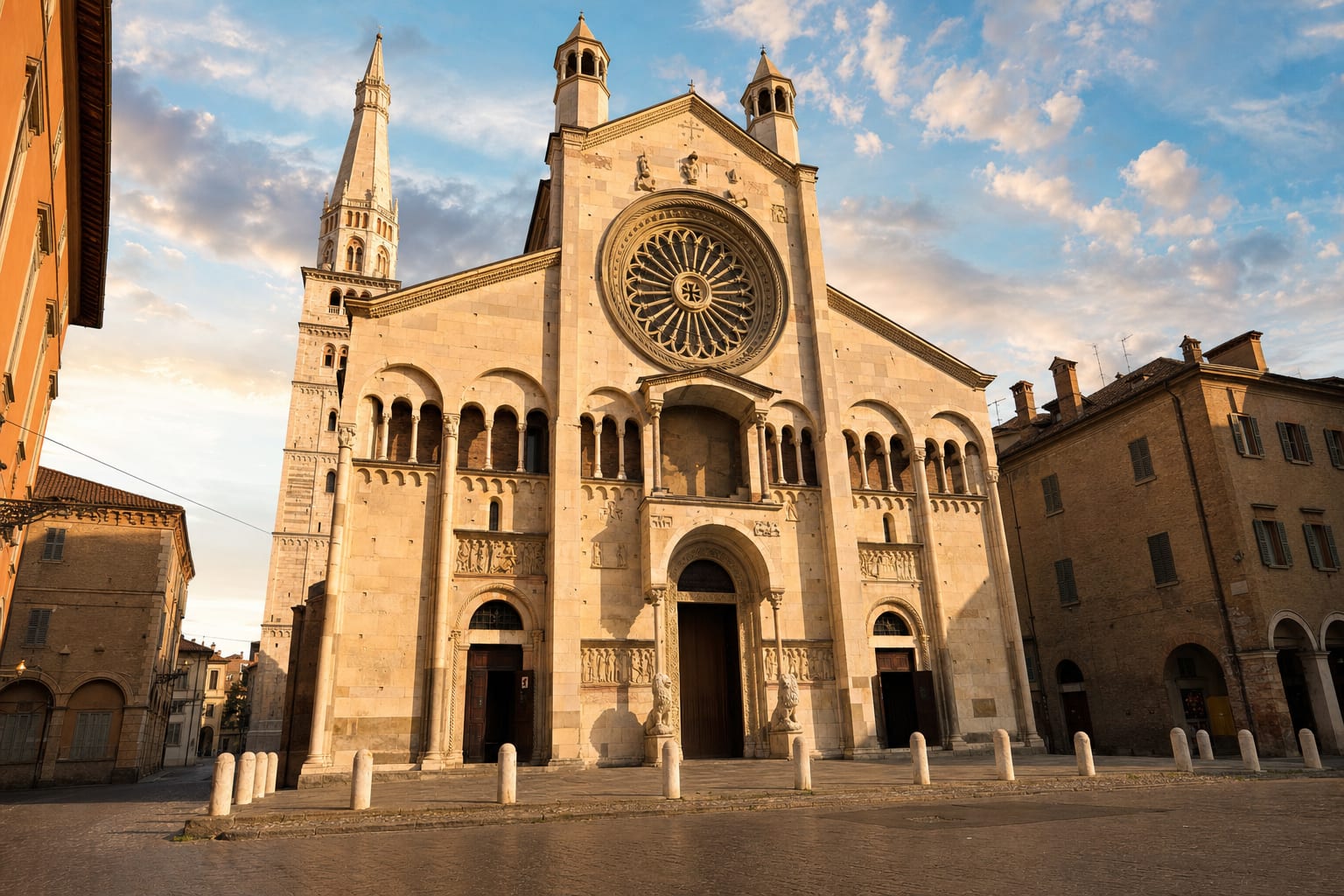 ModenaUNESCOModena CathedralRomanesque masterwork of Lanfranco and Wiligelmo, Genesis facade reliefs, the leaning Ghirlandina tower, Piazza Grande ensemble
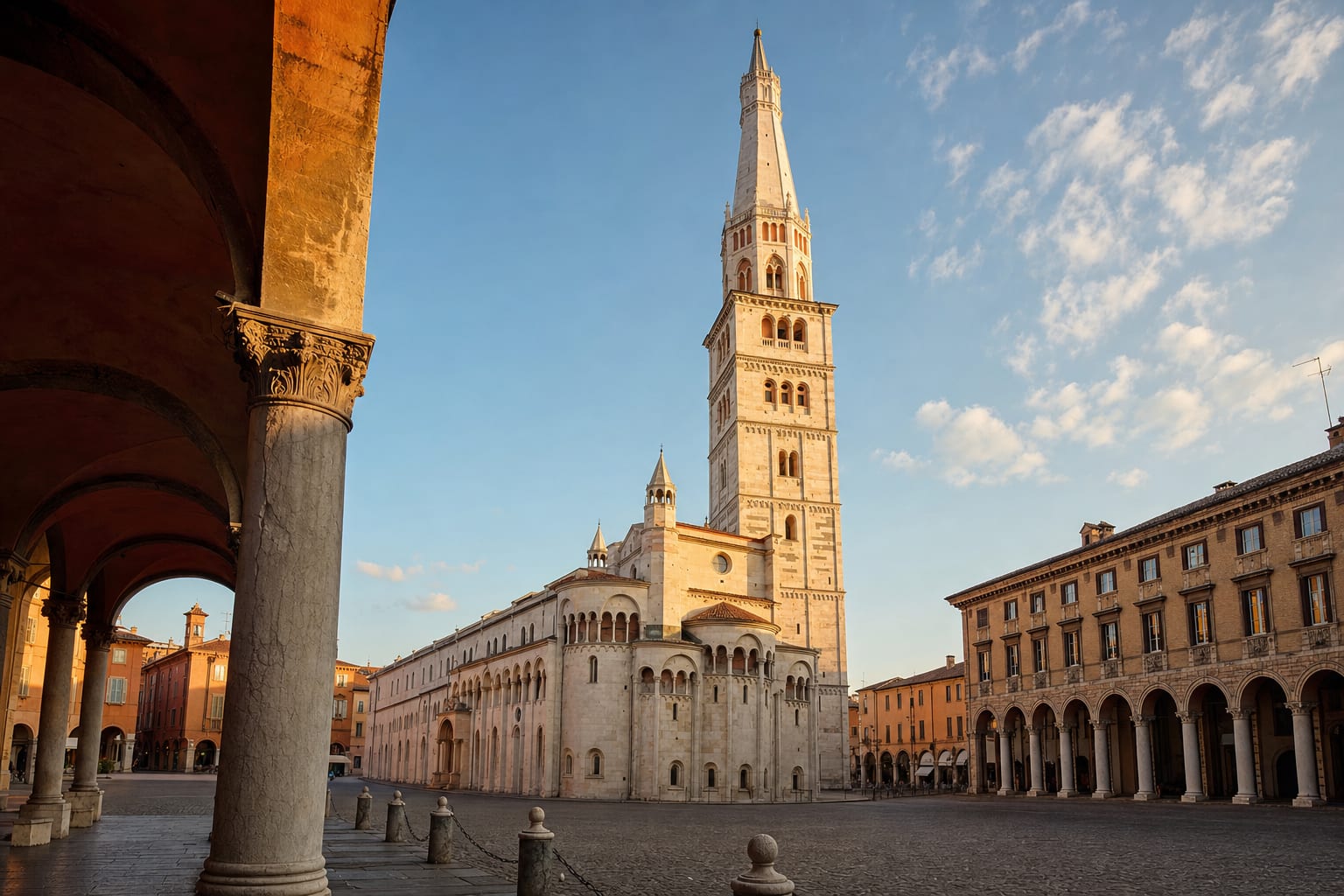 ModenaUNESCOGhirlandina TowerModena's emblem, stolen bucket legend, Sala dei Torresani, Gothic spire
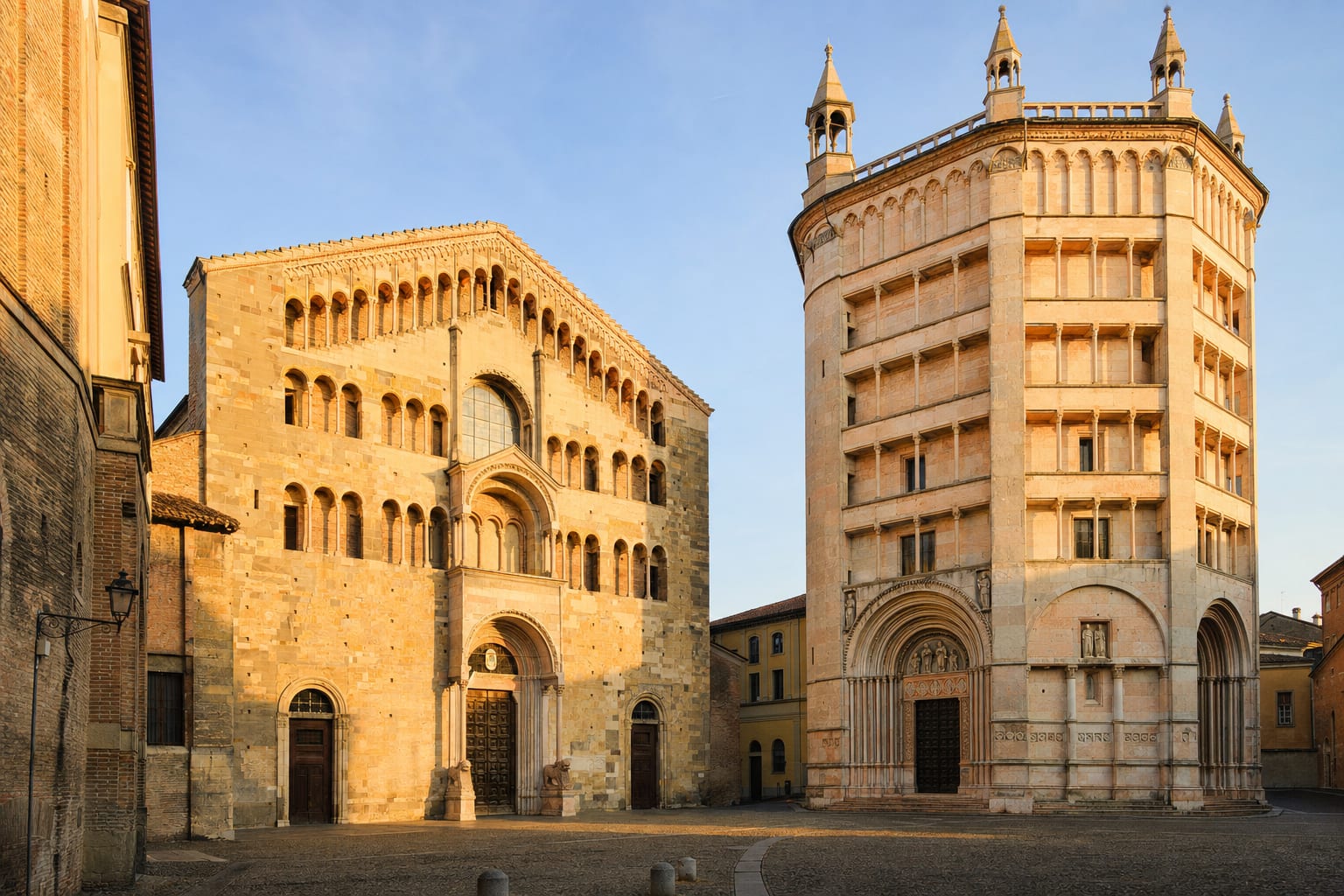 ParmaParma Cathedral and BaptisteryCorreggio's dome ascension, Antelami's pink baptistery, Romanesque ensemble, Benedetto's Deposition
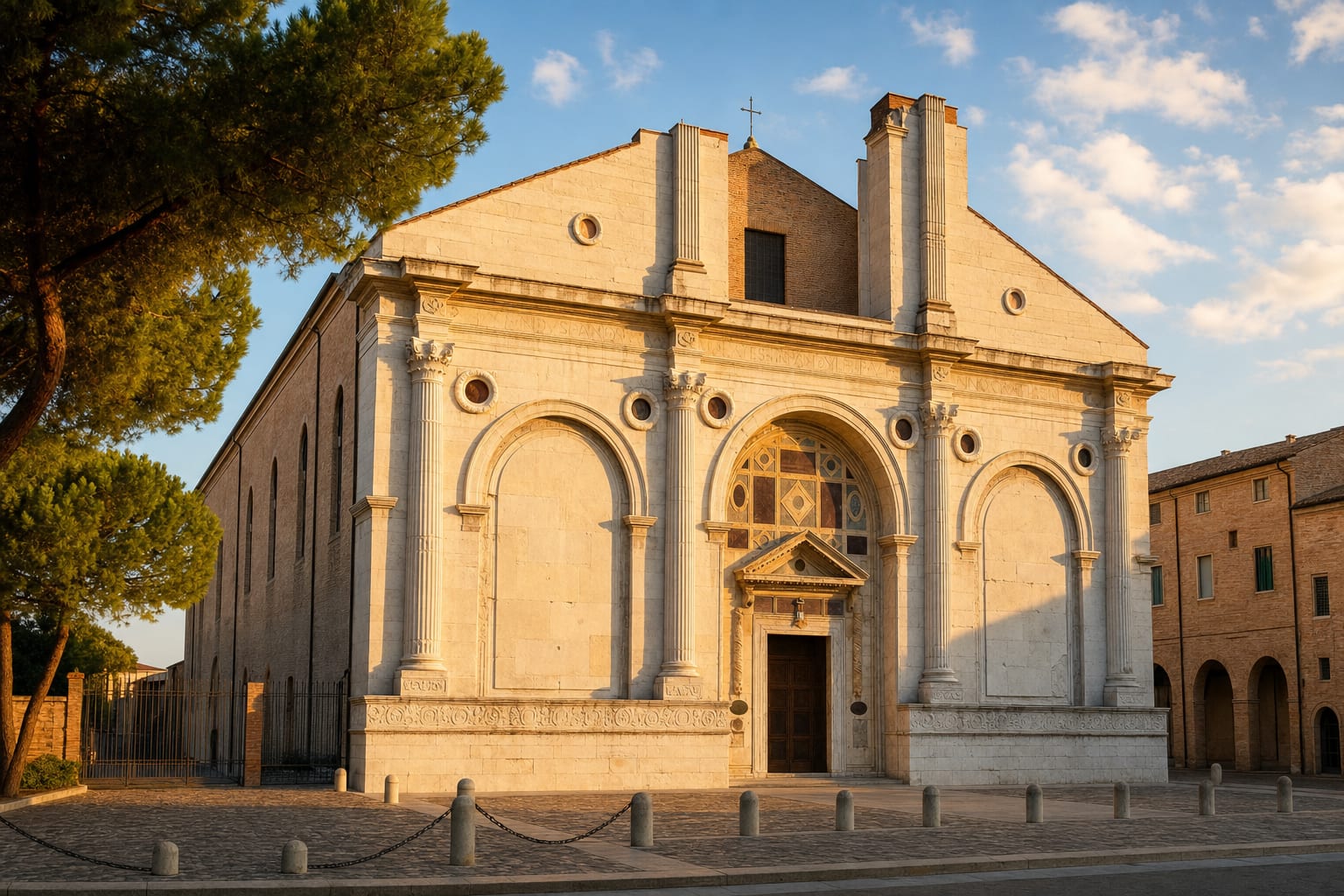 RiminiTempio MalatestianoAlberti's Renaissance facade, Sigismondo's pagan church, Piero della Francesca fresco, Giotto crucifix
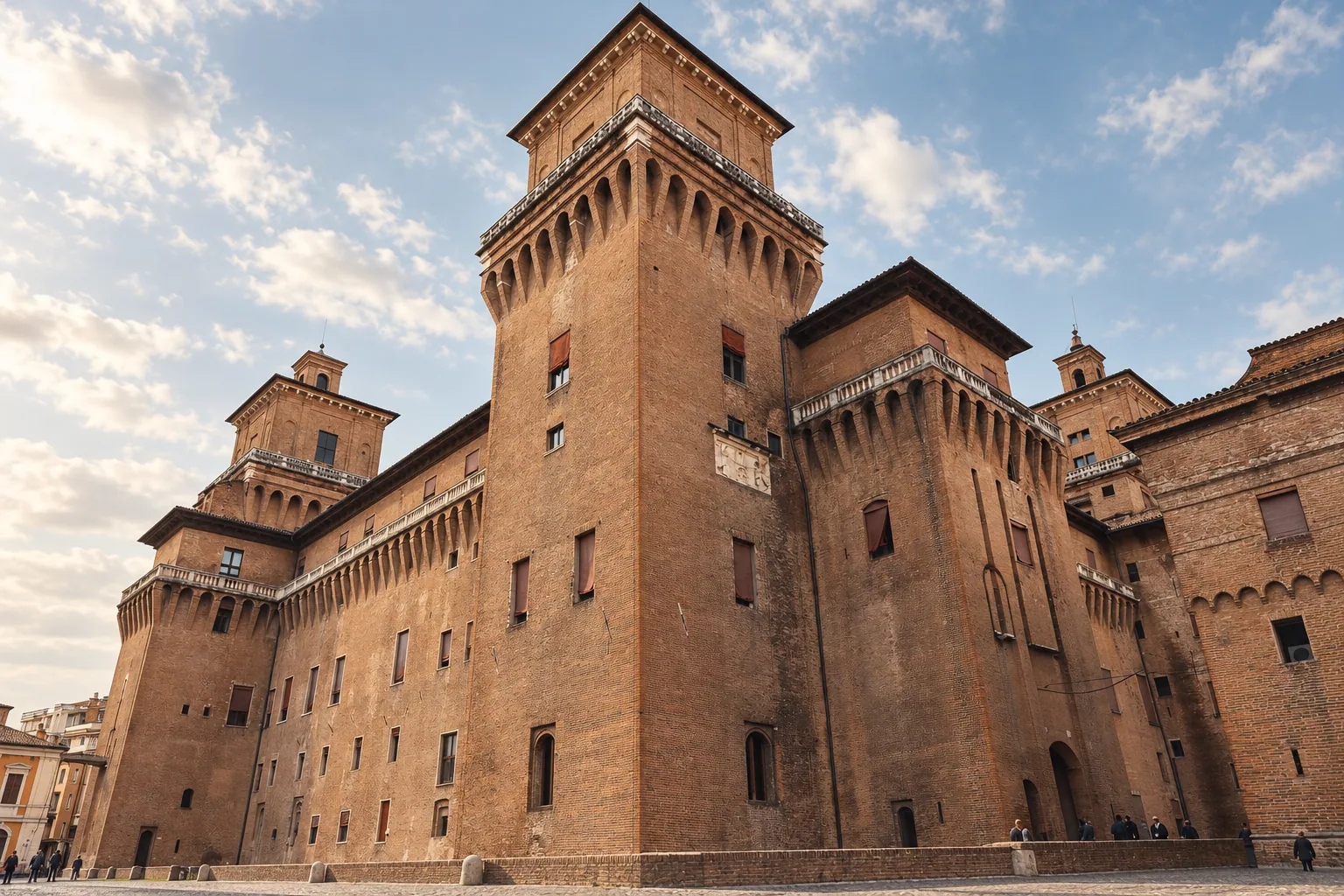 FerraraUNESCOEstense CastleMoated castle in the city center, Este dynasty seat, dungeon of Ugo and Parisina, hanging orange garden
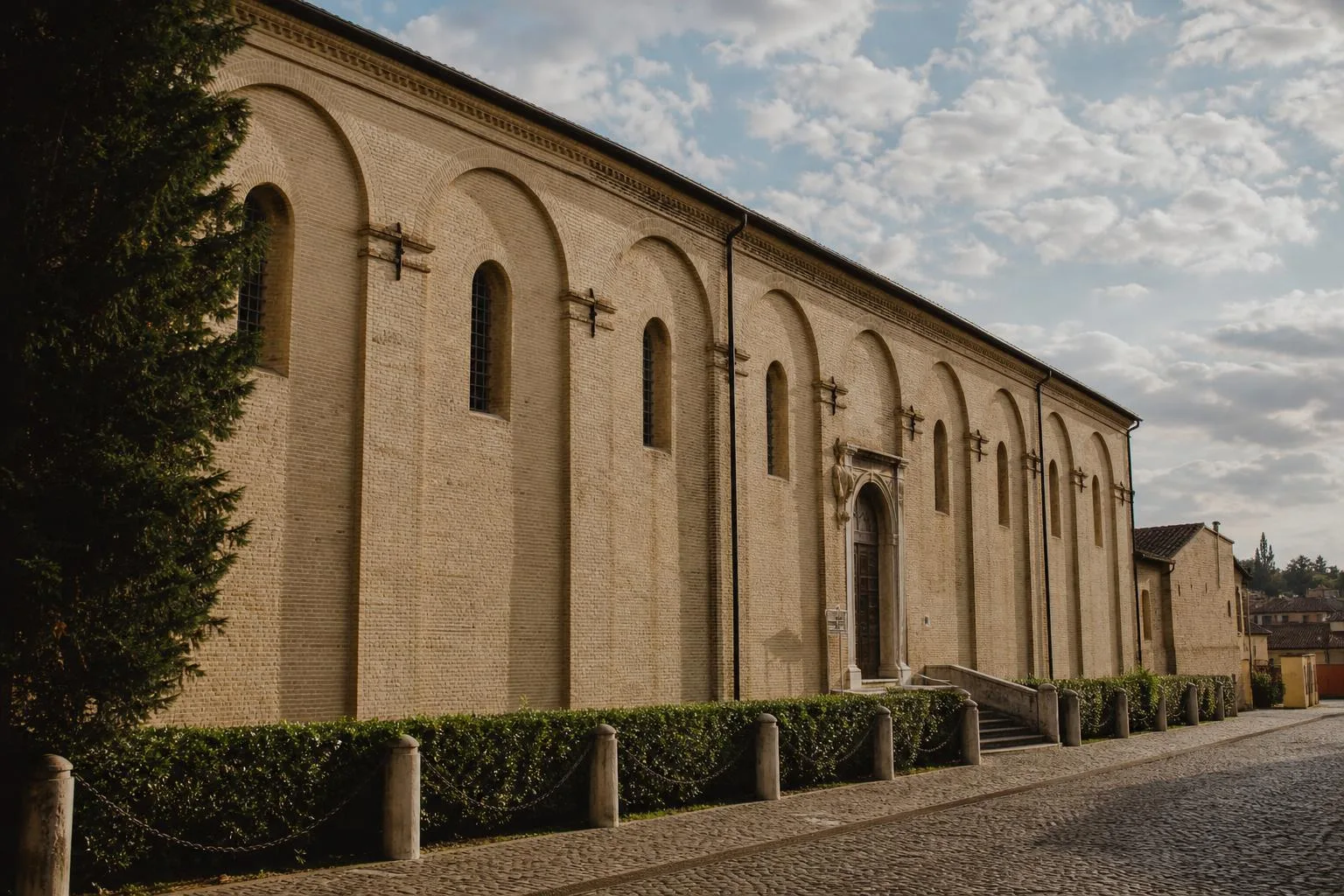 CesenaHidden GemMalatestiana LibraryEurope's first public civic library, intact 1454 reading room, chained codices, UNESCO Memory of the World
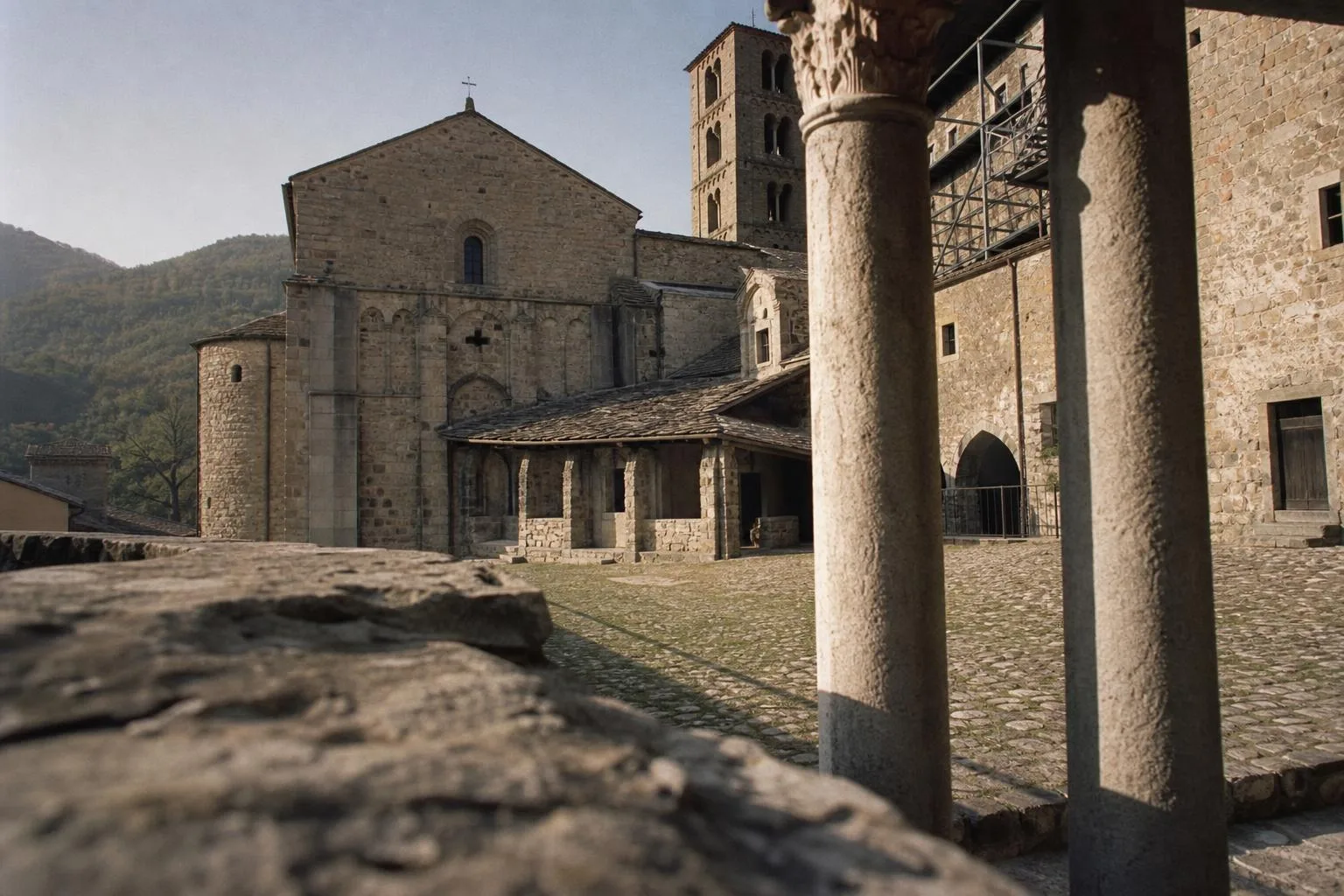 BobbioHidden GemBobbio AbbeySaint Columbanus, medieval scriptorium, crypt mosaic, Renaissance basilica, Abbey Museum