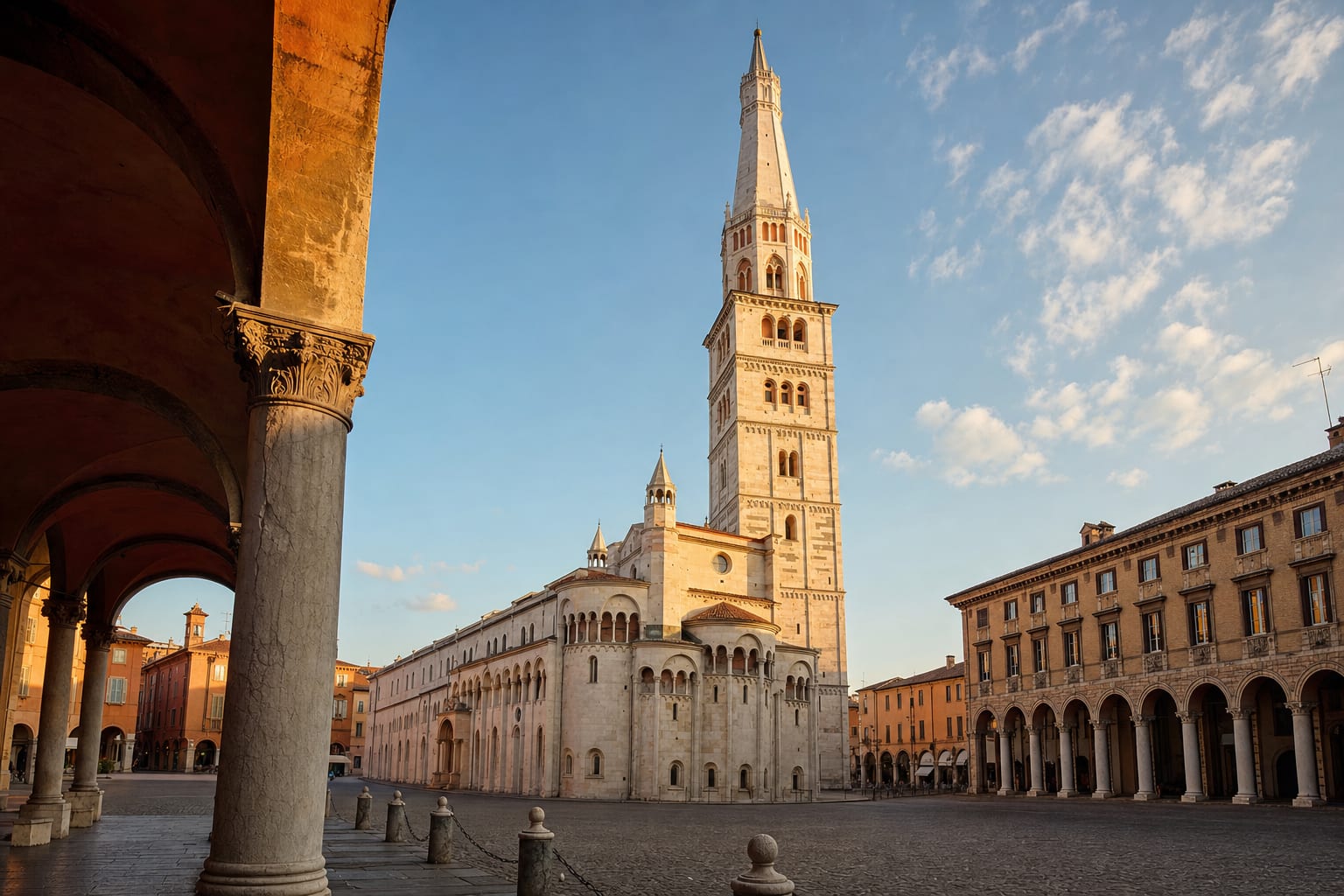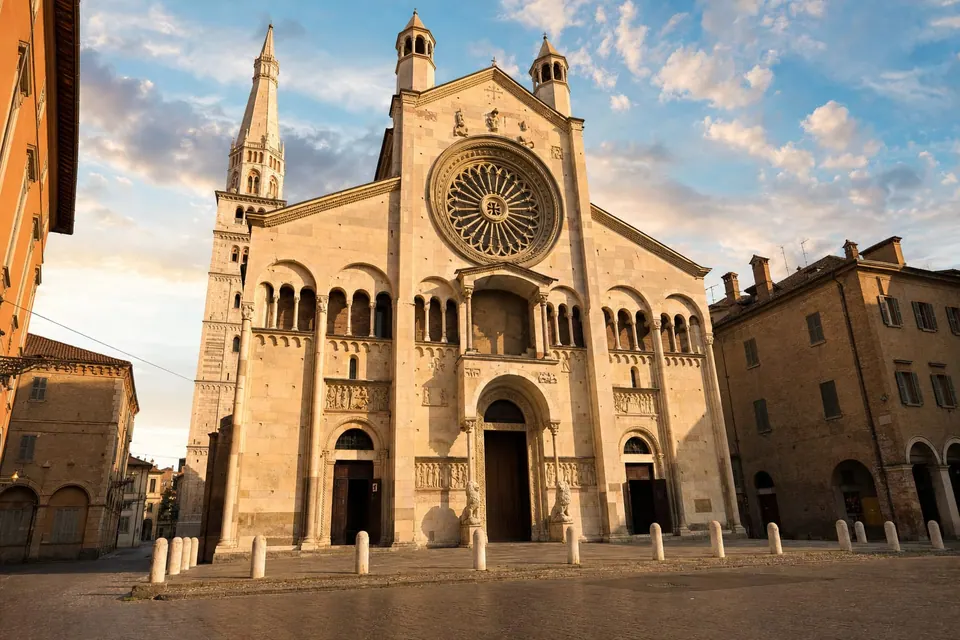
Work on the cathedral began in 1099, after the rediscovered remains of Modena's patron saint, Geminianus, prompted the demolition of two earlier churches on the site, and the project moved fast enough to be consecrated by Pope Lucius III in 1184.
An architect known only as Lanfranco directed the design and, unusually for the period, both he and the sculptor Wiligelmo are named in inscriptions on the building itself, an early instance of artists claiming public credit for their work. Wiligelmo's facade reliefs, cut directly into the pink-white stone around the main portal, run through the Book of Genesis, from Creation to Cain and Abel, in a sequence readable almost like panels of a comic strip, among the earliest and most influential sculptural cycles of the Romanesque period. Beside the cathedral, the Torre della Ghirlandina, a marble-topped bell tower visibly leaning from its own foundation settlement, rises over Piazza Grande, and the whole ensemble, cathedral, tower and piazza together, was inscribed as a single UNESCO World Heritage Site in 1997.