Skip to content

Tempio Malatestiano

Alberti's unfinished Renaissance temple for Rimini's magnificent, excommunicated tyrant Sigismondo Malatesta.

  • Rimini
  • Church
Where
Rimini
Best for
Alberti's Renaissance facade
Allow
40 minutes
Tickets
Free

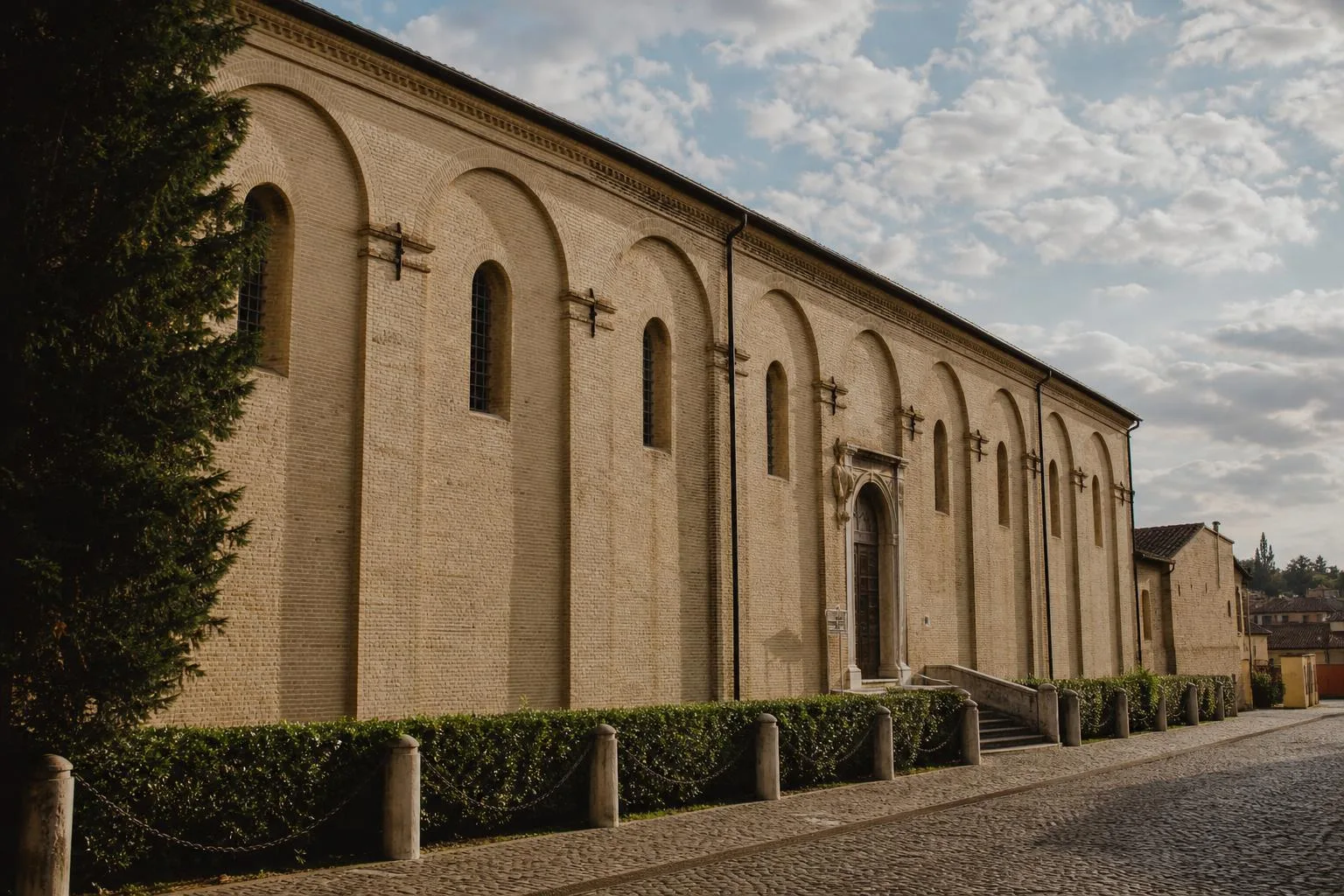
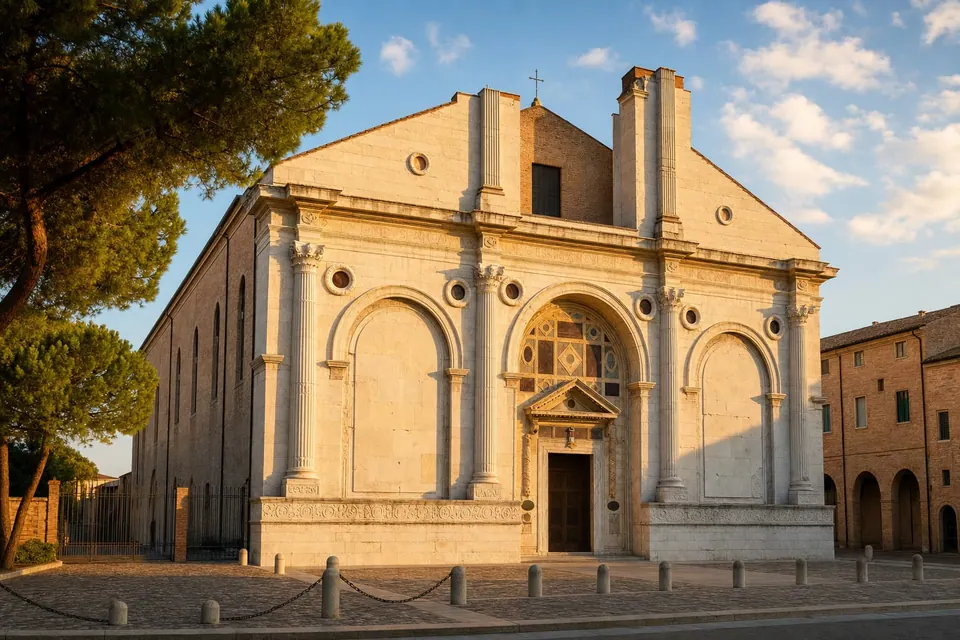
Sigismondo Pandolfo Malatesta, Rimini's warlord and patron, hired Leon Battista Alberti around 1450 to wrap the old Gothic church of San Francesco in a Renaissance shell modeled on Rimini's own Roman Arch of Augustus.

The result, the Tempio Malatestiano, was never finished (the upper facade still shows exposed brick), but inside it holds two treasures worth crossing the city for: a wooden crucifix Giotto painted around 1312 and a fresco by Piero della Francesca in which Sigismondo kneels, stiff and unrepentant, before his patron saint. Sigismondo built the temple as much for his mistress and eventual wife Isotta degli Atti, whose initials intertwine with his throughout the marble side chapels, as for God, and Pope Pius II never forgave him for it.
Five things worth finding

If you see nothing else, see these.

  1. Piero della Francesca’s Sigismondo frescoPiero della Francesca, 1451

    Sigismondo Malatesta kneels in profile before his patron saint, a portrait of unsparing candor, signed and dated 1451.Last chapel on the right

  2. Giotto’s CrucifixGiotto, about 1312

    A painted wooden cross made during Giotto’s stay in Rimini, with a grave, tender Christ that marks the start of a new way of painting the body.Over the main altar area

  3. Agostino di Duccio’s reliefsAgostino di Duccio

    Marble so finely carved it looks drawn: planetary chariots, zodiac signs, prophets and sibyls, with the Malatesta emblems threaded through them.Side chapels, including the Chapel of the Planets and the Chapel of the Sibyls

  4. Isotta’s tomb and the elephantsFifteenth-century Malatesta workshops

    Watch for the intertwined S and I of Sigismondo and Isotta and the marble elephants that support the tomb, the Malatesta family’s emblem.A side chapel on the right

  5. Alberti’s unfinished facadeLeon Battista Alberti, about 1450

    A classical arch frame modeled on Rimini’s Roman arch, left half finished: the plain brick above the marble is part of the story.Outside, on Via IV Novembre

Plan your visit

Everything you need before you go.

Tickets
Free
Booking
No booking needed
Time needed
40 minutes
Best time
Late weekday mornings, between the pre-Mass closures.
Getting there
The temple stands on Via IV Novembre in Rimini's pedestrian old town, an easy walk from the train station down Corso d'Augusto. There's no dedicated parking; use the Bastioni Settentrionali garage just outside the historic center.
Accessibility
Wheelchair access is available through a side gate in the bishop's residence garden, to the left of the main facade; multilingual audio guides are posted near the entrance.

Free entry to the church; groups of 5 or more with a guide pay €2 per person. Modest dress is expected, and access is closed during services.

Ask at the entrance for the free multilingual audio panel and head straight to the fourth chapel on the right for Giotto's crucifix; it hangs high and is easy to walk past without noticing.

Get directionsGoogle MapsApple Maps

Good to know

How long should you spend at the Tempio Malatestiano?

About 40 minutes is right: enough to walk the nave, look closely at the side chapels and stand in front of the Piero fresco and the Giotto crucifix without rushing.

Is the Tempio Malatestiano worth visiting?

Yes, it is a hidden gem of the early Renaissance. You get a Piero della Francesca fresco, a Giotto crucifix and a church turned into a monument to love and power, all in a single small space.

Do you need to book the Tempio Malatestiano?

No. It is a working cathedral, so you simply walk in, but it closes around services, so avoid the pre-Mass window and plan for late morning.

A letter from Italy, once a month.

The places, tables and makers we found worth your time. One email, no noise.

One letter a month. Unsubscribe at any time. We never share your address.

Help us get it right

What is it about?