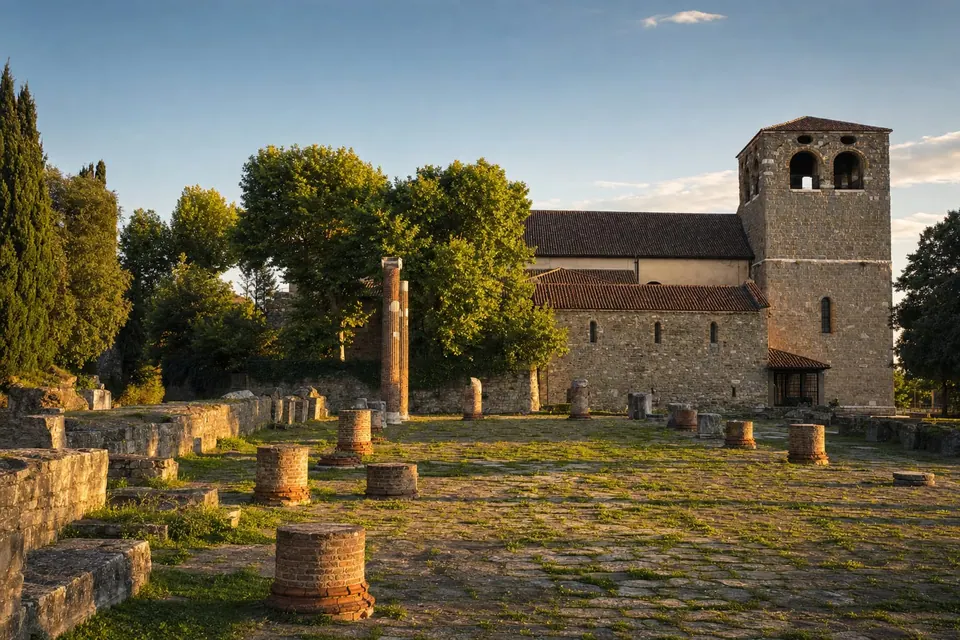
The first thing to look at on San Giusto is the ground between the cathedral and the castle. The exposed stonework marks the civic basilica and forum of Roman Tergeste, where public business took place. Then look at the foot of the cathedral’s bell tower. Part of the Roman gateway survives within the tower itself. On this summit, later builders put the city’s oldest stones back to work.
Two churches beneath one roof
Inside the cathedral, look towards the side apses for the mosaics. The building grew from the union of two churches, one dedicated to Santa Maria and the other to San Giusto. The different devotional spaces are easier to pick out if you start at the rear, where you can take in the width of the interior, and then move towards the mosaics. The separate bell tower climb has ninety steps and its own opening arrangements.
The harbour from the bastions
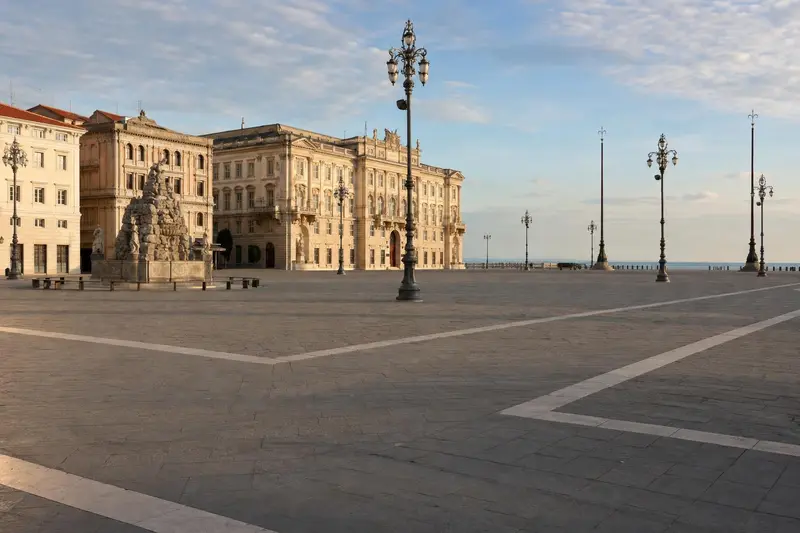
The castle took shape around the fortified home of the imperial captain. Walk the ramparts for views across the rooftops, harbour and gulf, then look for the Lapidario Tergestino inside Bastione Lalio. Its carved stones bring the hill’s Roman remains into focus after you have seen the ruins in the open air. If you are heading back to the water, continue down to Piazza Unità d’Italia and look uphill to see how far above the city you have been.