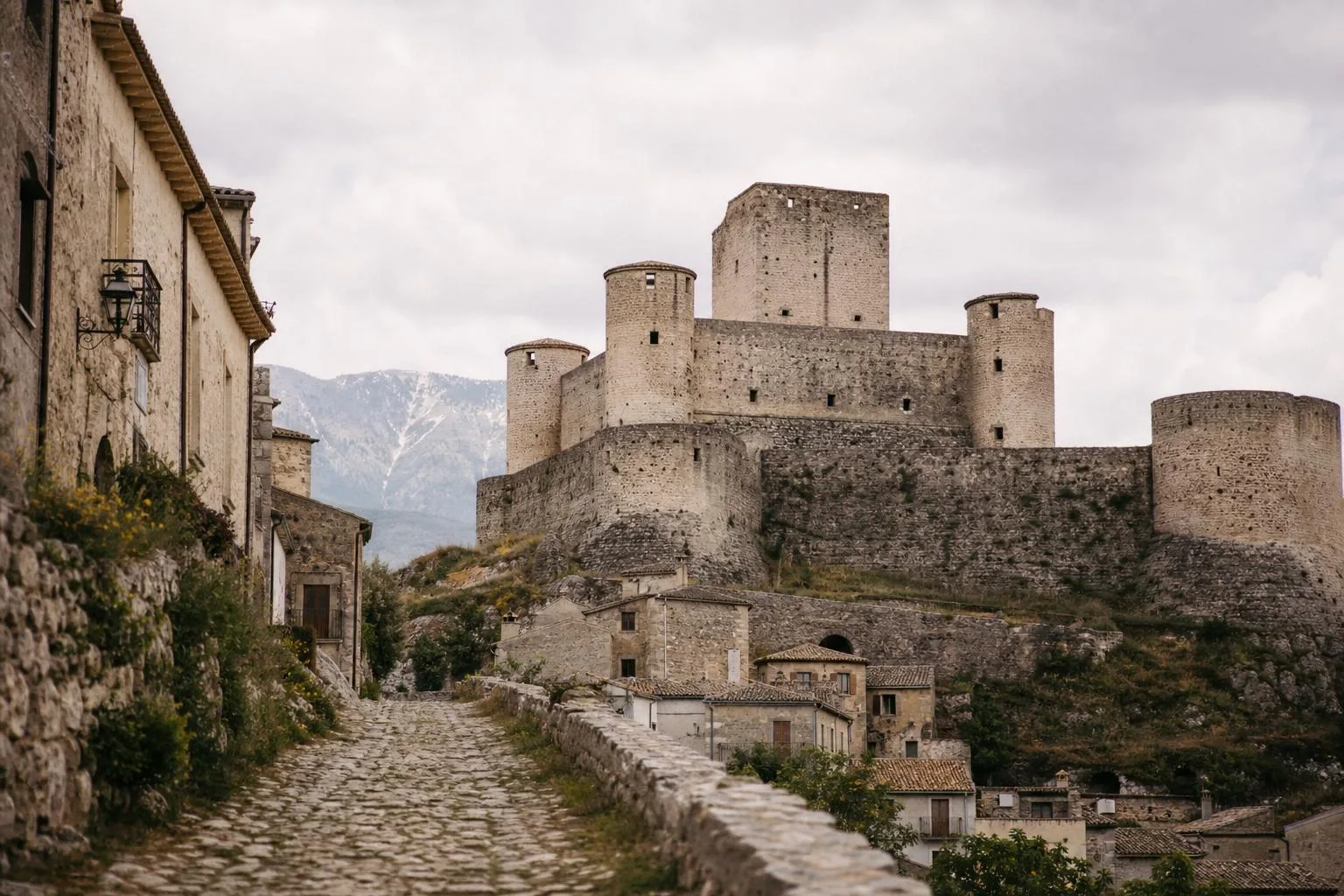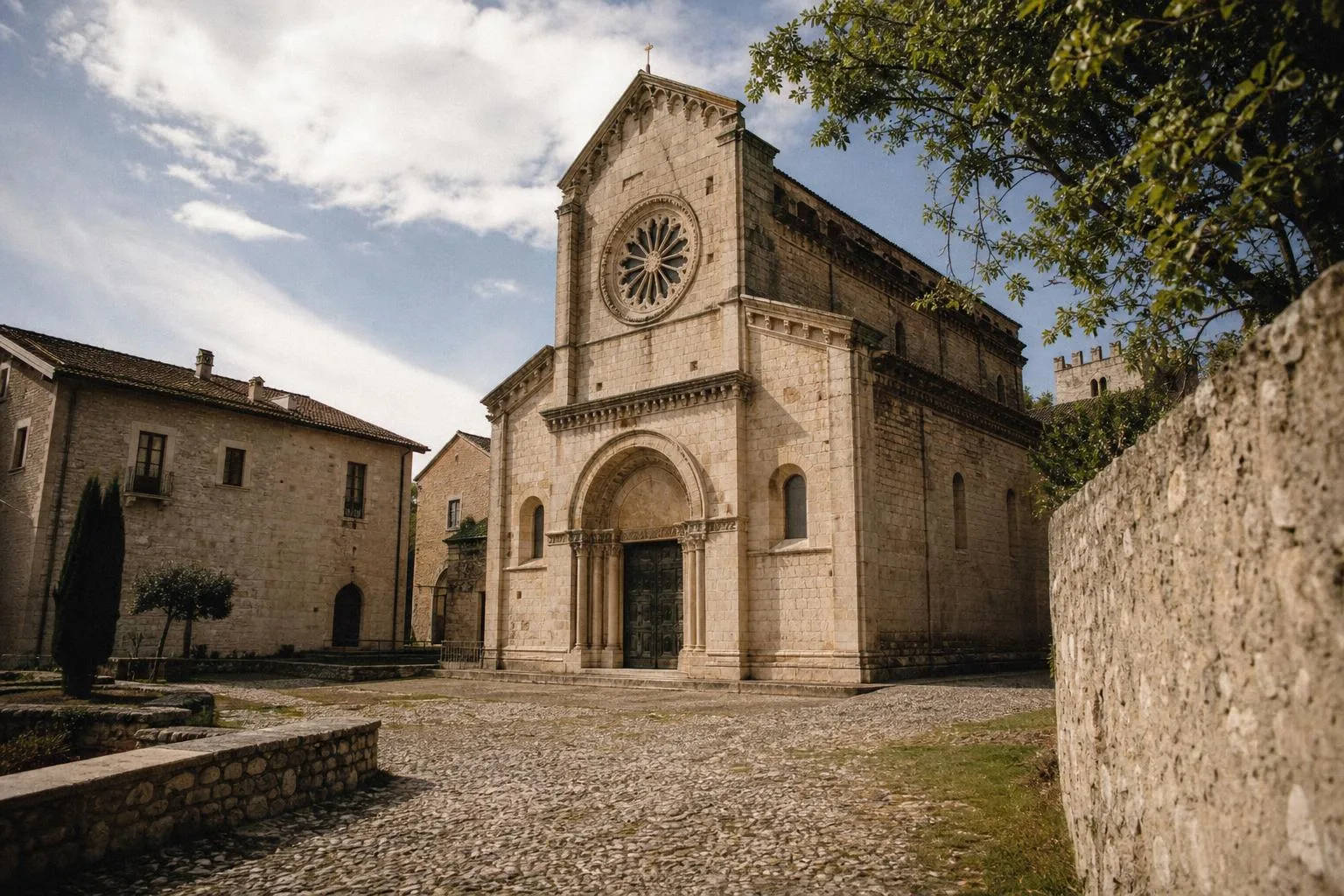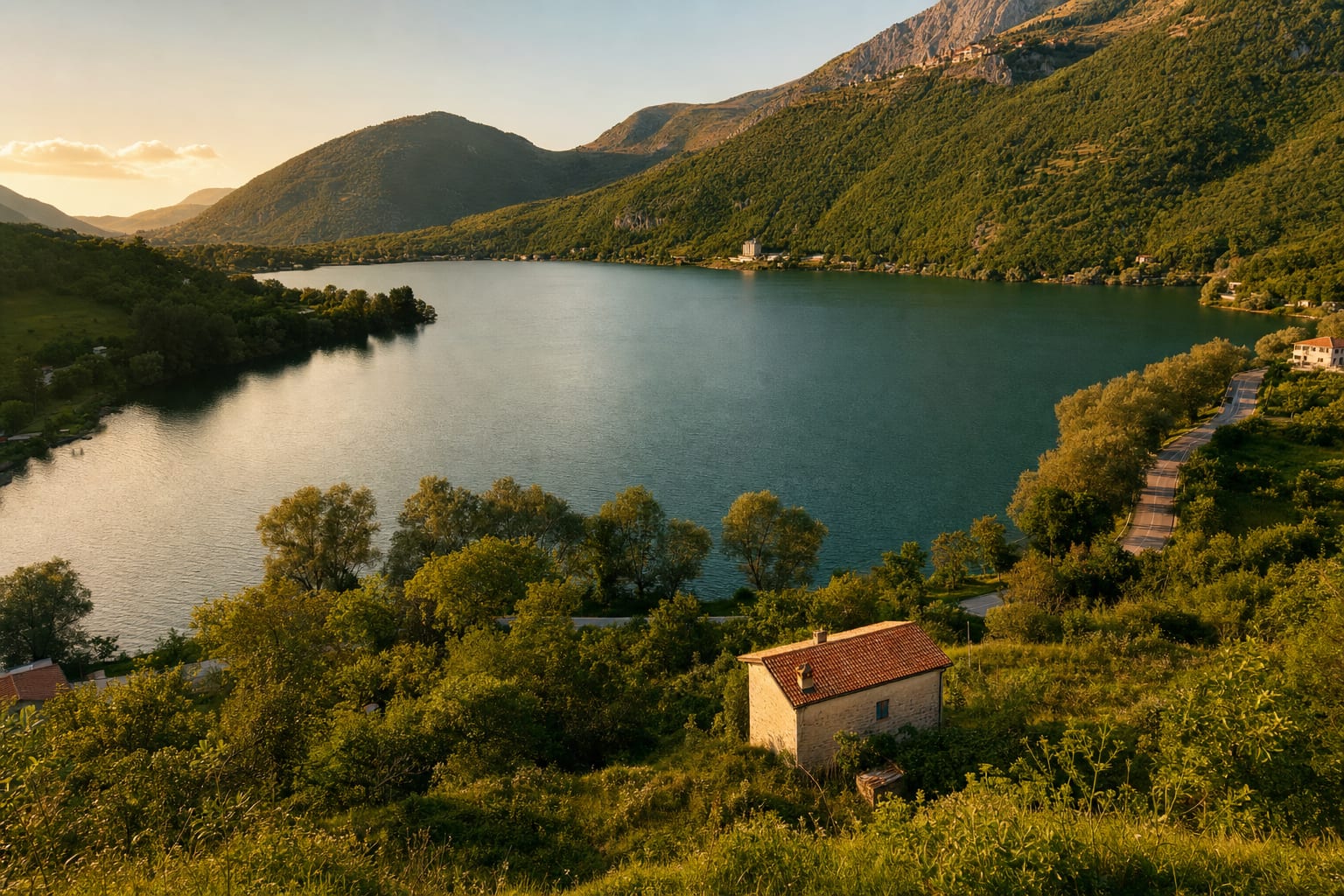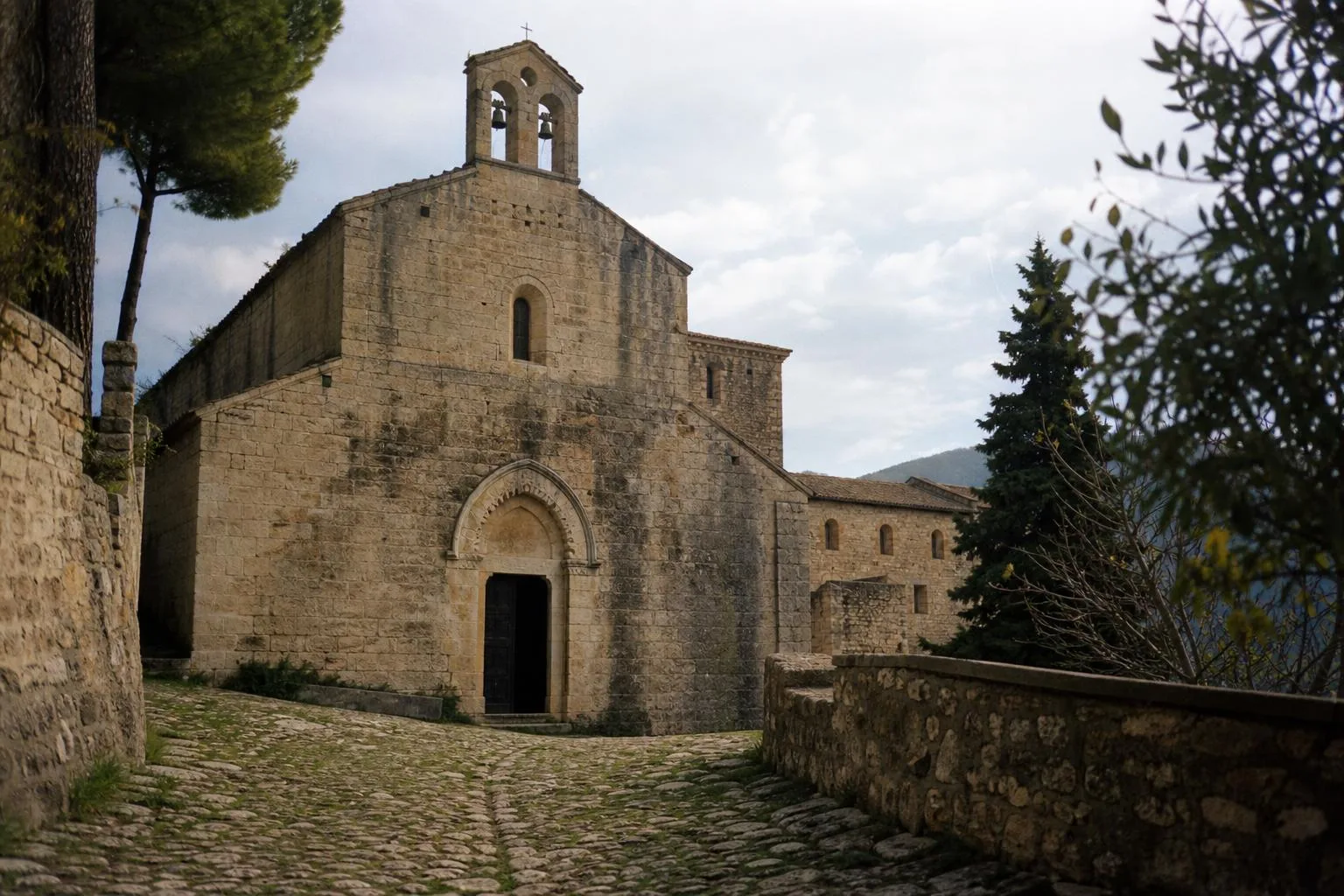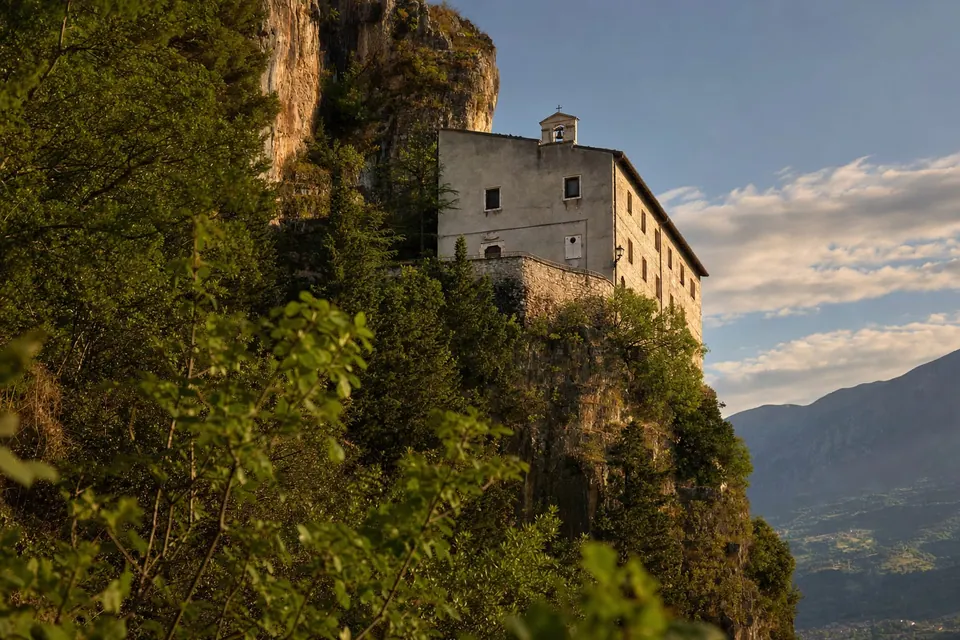
Pietro Angelerio, later Pope Celestine V, first settled on this cliff ledge above Sulmona around 1239, drawn to a hermit's life on Monte Morrone years before history caught up with him.
It did, dramatically, in 1294, when King Charles II of Anjou climbed the mountain himself to tell the hermit he had just been elected pope, an episode still commemorated at the hermitage. Celestine's papacy lasted barely four months before he abdicated, the only pope in history to resign voluntarily in the medieval period, and he returned briefly to monastic life before his successor, Boniface VIII, had him imprisoned at Fumone, where he died in 1296. The hermitage that shaped him survives with fifteenth-century frescoes, an original wooden ceiling, and a barrel-vaulted church, reachable only by a steep path from the hamlet of Badia.