The Roman colony of Minervia Scolacium rose here around AD 100, on the Gulf of Squillace, over an older Greek settlement the Greeks called Skylletion; Virgil, in the Aeneid, calls it ship-wrecking Scylaceum for its exposed stretch of the Ionian coast.
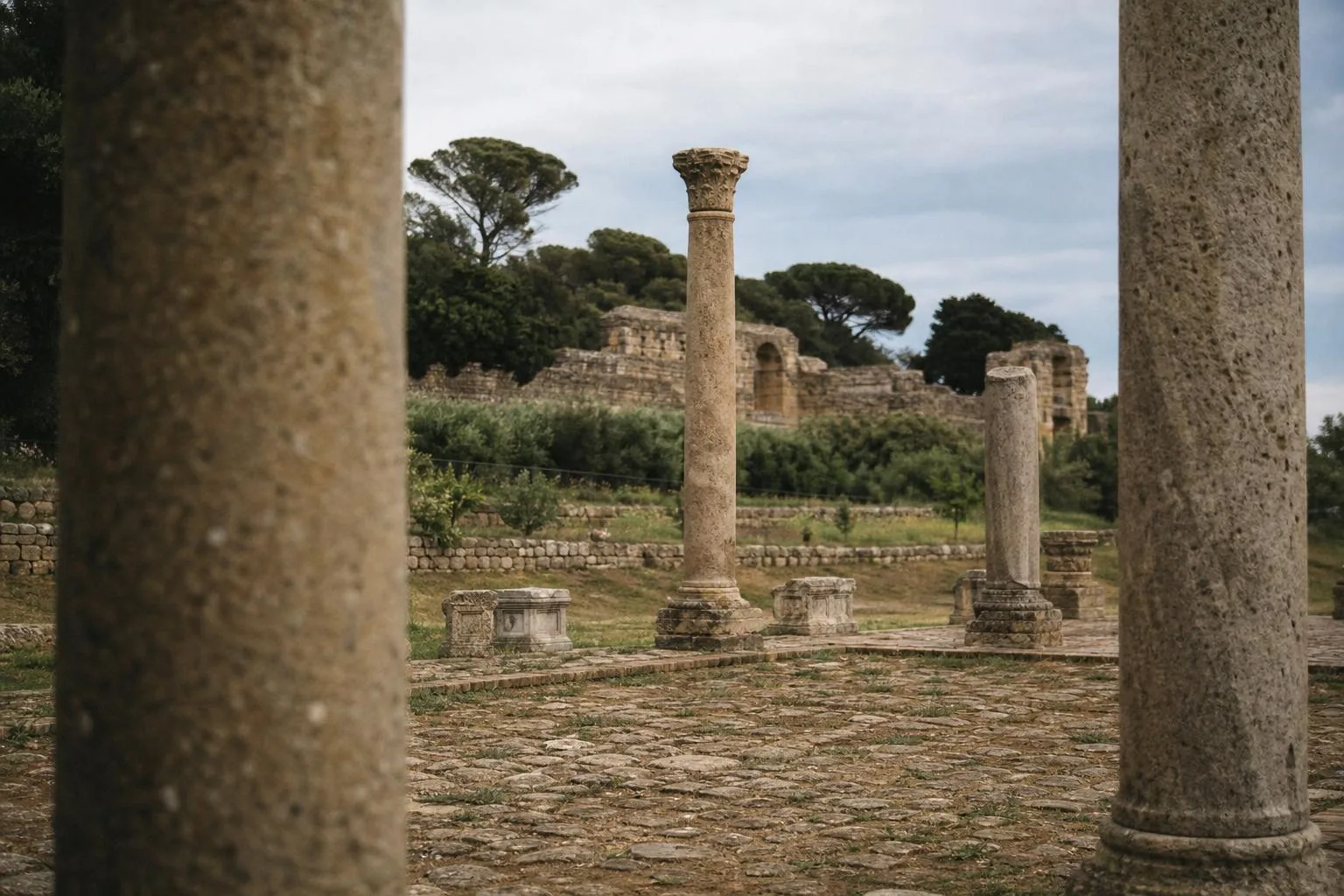
Excavated ruins scattered through an old olive grove now include a theatre cut partly into the hillside, an amphitheatre, a forum, and three sets of baths, along with the aqueduct that once fed them. The most photographed structure is newer by a thousand years: the roofless brick basilica of Santa Maria della Roccella, begun by Norman monks in the 11th century and never finished, its huge round window still open to the sky. A small on-site museum displays what excavation turned up, from inscriptions to household finds, and its own building, a restored olive mill, belongs to the estate's more recent working history.