Skip to content

Aosta Cathedral

A plain neoclassical facade hiding eleventh-century frescoes and centuries of mosaic floors.

  • Aosta
  • Church
Where
Aosta
Best for
Eleventh-century frescoes rediscovered in 1979
Allow
45 minutes
Tickets
Free

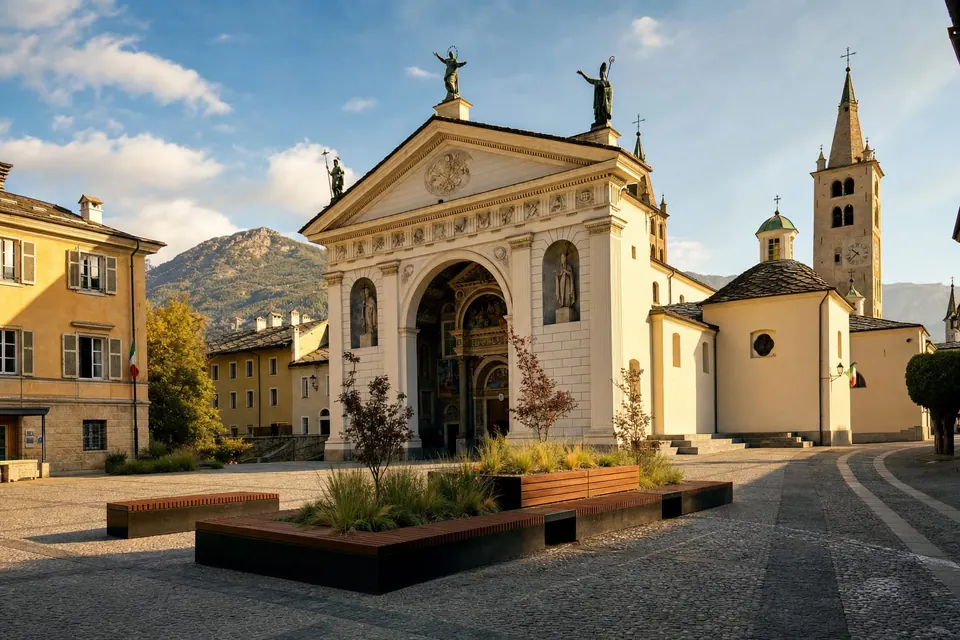
Behind a neoclassical front finished in 1848, Aosta's cathedral hides one of the Alps' most layered interiors. An atelier working around the mid-eleventh century frescoed the nave for the diocese; the paintings vanished under later renovations and were rediscovered only in 1979, opened to visitors in 2000, and are viewed today by climbing into the roof space above the current ceiling.

The choir floor carries two mosaics from different centuries: a Cycle of the Months from the late twelfth century, showing Christ as Lord of time surrounded by the year's twelve labors, and an early thirteenth century mosaic of real and imaginary animals. A separate treasury museum, open weekend afternoons, keeps a reliquary of Saint Grat, illuminated manuscripts and the monumental tombs sculptor Stefano Mossettaz carved for the church. The building has been a national monument since 1940.
Five things worth finding

If you see nothing else, see these.

  1. The eleventh-century frescoesOttonian atelier, mid-11th century

    Painted around the nave and forgotten for centuries; you walk among them at roof height, close enough to see the brushwork.Roof space above the current ceiling

  2. The Cycle of the Months mosaicRomanesque mosaic, late 12th century

    Christ stands as Lord of time, surrounded by the twelve labors of the year and the rivers of paradise.Choir floor

  3. The animal mosaicEarly 13th century

    Real and imaginary creatures set in geometric patterns, a medieval bestiary at your feet.Choir floor

  4. The tomb of Thomas II of SavoyStefano Mossettaz, about 1430

    An alabaster figure in armor with heraldic lions, one of the finest late Gothic tombs in the Alps.In the cathedral

  5. The reliquary of Saint GratMedieval goldsmith’s work

    The treasury keeps the casket of the city’s patron saint, together with illuminated manuscripts.Treasury museum

Plan your visit

Everything you need before you go.

Tickets
Free
Booking
No booking needed
Time needed
45 minutes
Best time
A summer afternoon, when the treasury and frescoes are open daily instead of weekends only.
Getting there
In the historic center, a five-minute walk from Piazza Chanoux along Via Sant'Anselmo; Aosta's train station is a fifteen-minute walk or a short bus ride away.

The cathedral is free; the treasury museum costs €4, or €5 combined with entry to the eleventh-century frescoes. Free for under-18s, students up to 25, and museum pass holders. Outside the posted hours, email info@cattedraleaosta.it to arrange a visit.

Pay the extra euro for the frescoes: the climb into the roof space to see them at close range is the most memorable part of the visit, and most tour groups skip it.

Get directionsGoogle MapsApple Maps

Good to know

How long should you spend at Aosta Cathedral?

About 45 minutes. That covers the nave, the choir mosaics and, if open to you, the frescoes in the roof space and the treasury.

Where do you see the eleventh-century frescoes at Aosta Cathedral?

They are not in the nave you walk into: they sit in the roof space above the current ceiling, reached by a separate climb. The treasury and frescoes have their own visiting times, so ask before you plan your day.

Can you see Aosta Cathedral and the Roman monuments in one day?

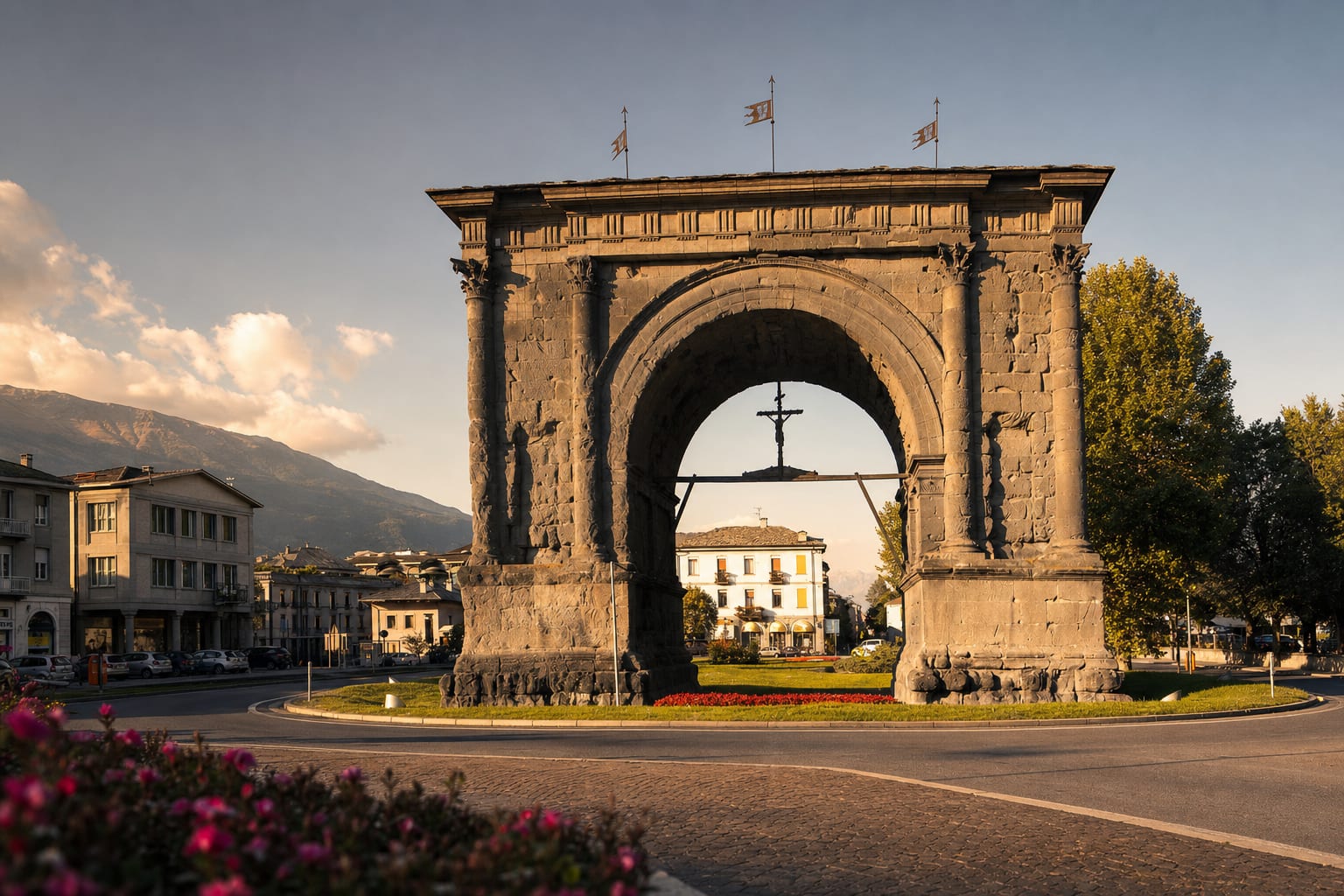
Yes. The cathedral is in the historic center, close to the Roman theatre, the Arch of Augustus and the Porta Praetoria, all on foot. A morning for the churches and an afternoon for the Roman sites works well.

A letter from Italy, once a month.

The places, tables and makers we found worth your time. One email, no noise.

One letter a month. Unsubscribe at any time. We never share your address.

Help us get it right

What is it about?