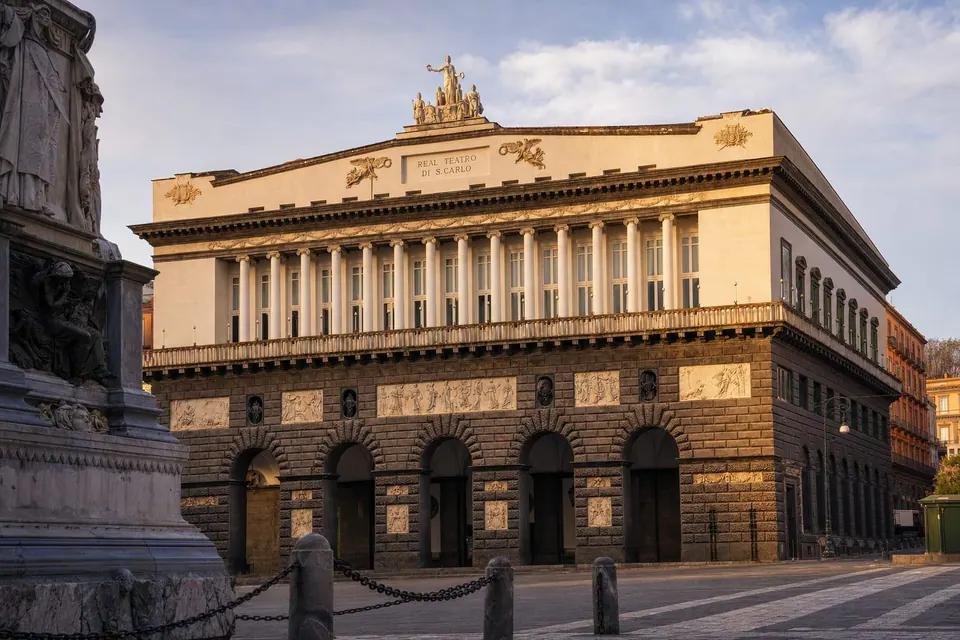
King Charles VII of Bourbon commissioned Teatro di San Carlo to replace Naples's aging Teatro San Bartolomeo, and it opened on 4 November 1737, his name day, decades before La Scala in Milan or La Fenice in Venice, which makes it the oldest opera house in the world still in continuous use.
Architects Giovanni Antonio Medrano and Angelo Carasale gave it the horseshoe-shaped auditorium that became the template for opera houses across Europe; when a fire gutted the hall in 1816, architect Antonio Niccolini rebuilt it within a single year, keeping that same horseshoe plan and its proscenium arrangement. The house originally seated 3,285 people, since reduced to 1,386 for comfort and modern sightlines, and its gilded boxes and royal box, connected directly to the adjoining Royal Palace, still telegraph exactly who this theater was built to impress. The opera season runs from late November to July and ballet from December to early June.
A royal theater built into Naples
Teatro di San Carlo was commissioned by Charles III of Bourbon, designed by Giovanni Antonio Medrano and Angelo Carasale, and inaugurated on 4 November 1737. The opening performance was Achille in Sciro, with a libretto by Pietro Metastasio and music by Domenico Sarro. The date was the sovereign’s name day, which made the opening a courtly and civic statement, not only a musical premiere.1
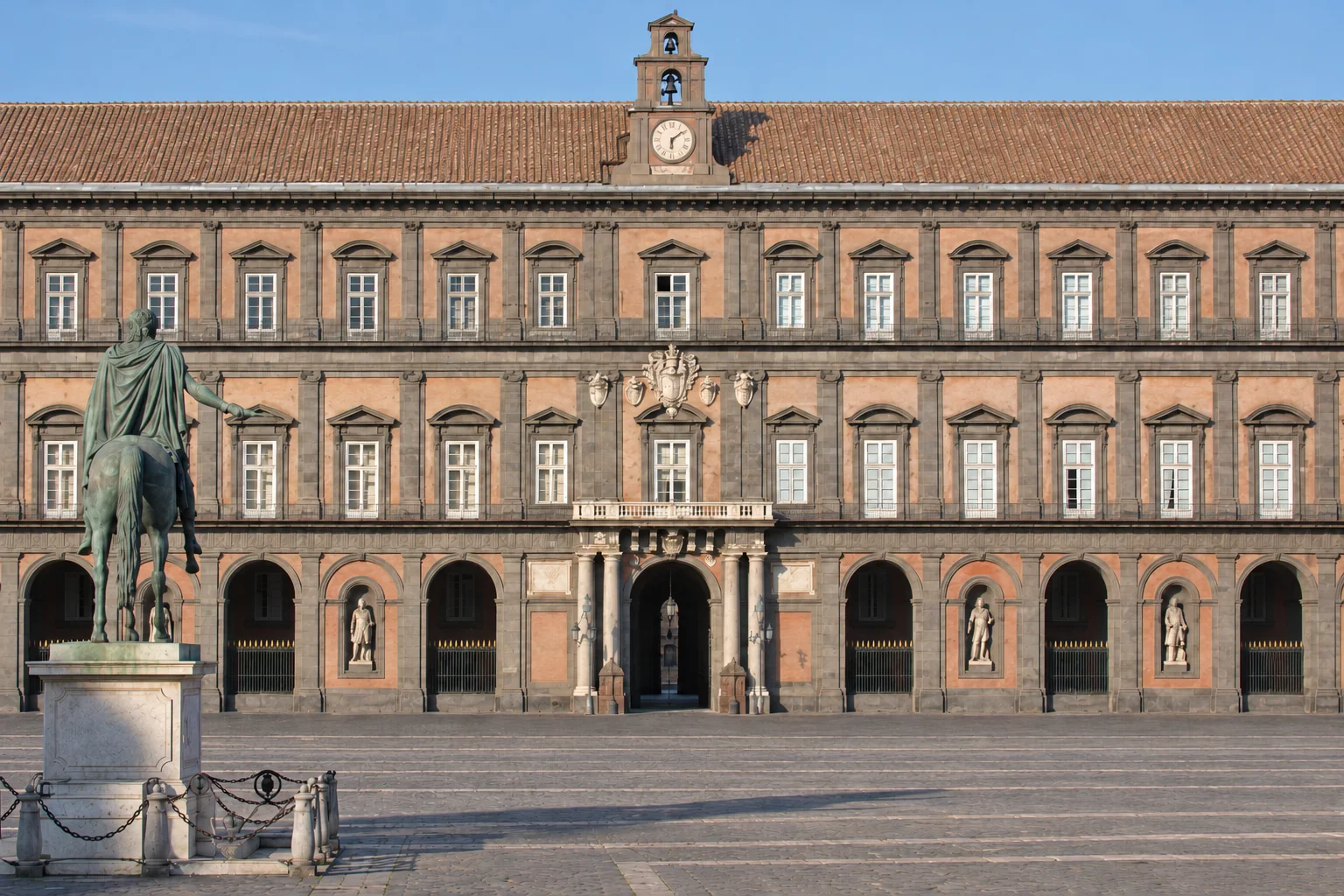
The new theater was built beside the Royal Palace, in the place of the earlier Teatro San Bartolomeo. The auditorium had a broad stalls area, five tiers of boxes, a gallery and a stage, organized in the horseshoe form that became a defining reference for the Italian opera-house model.1
San Carlo was a royal institution, a site for opera and dance, and a durable template for theater architecture.1
The first layout and the “Italian theater”
The original horseshoe plan is central to the building’s architectural history. The form organized sightlines, acoustics and social hierarchy through the relation of stalls, boxes, gallery, proscenium and royal box. It became a model for later theaters in Italy and Europe.1
The Royal Box remains part of the theater’s ceremonial language. Its prominence is evidence of the building’s courtly origin, while the rest of the auditorium shows that royal display and a larger public performance space were designed together. It is an architecture of audience as well as an architecture for performers.1
The 1737 history also connects San Carlo with the early repertory and institutions of Naples. Composers of its eighteenth-century world include Leonardo Leo, Niccolò Porpora, Domenico Sarro, Niccolò Jommelli, Giovanni Paisiello and Leonardo Vinci.1
Fire, rebuilding and continuity
In 1816 a fire destroyed the entire auditorium. Antonio Niccolini’s reconstruction retained the horseshoe layout and proscenium configuration, but it substantially reshaped the theater’s interior. The auditorium you see today keeps the theatrical form of 1737 through a decisive nineteenth-century reconstruction, but it is not untouched 1737 fabric.1
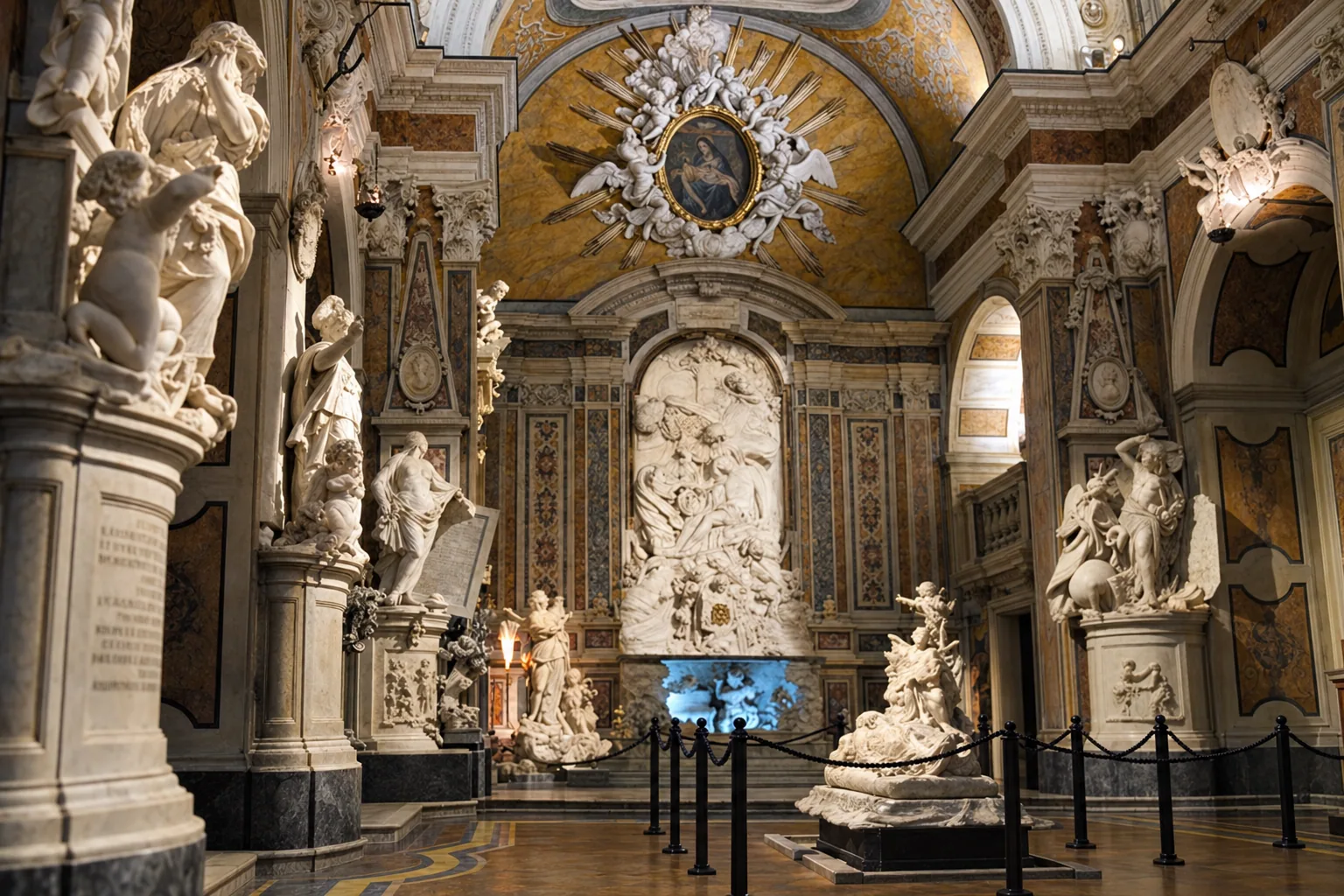
Niccolini also gave the façade its current neoclassical character. Inside, the reconstruction raised the ceiling to improve acoustics. The ceiling painting by Antonio, Giovanni and Giuseppe Cammarano is Apollo presenting Minerva with the greatest poets of the world, and the curtain is a symbolic Parnassus populated by eighty poets and musicians.1
These features belong to the rebuilt theater’s visual program, not to a single, unaltered Bourbon room. Access to individual spaces can change with rehearsals, performances and conservation work, so check before you go.1
Opera, dance and a changing institution
San Carlo’s history includes dance as well as opera. The theater’s Ballet School was founded in 1812 under Joachim Murat, the start of a tradition of training within the theater’s orbit.1
Nineteenth-century management under Domenico Barbaja is another important turning point, tied to major seasons directed by Rossini and Donizetti. Later generations brought composers, singers, conductors, choreographers and directors into San Carlo’s history, a changing cultural network rather than a list of famous names.1
The theater and the Historic Centre of Naples
Teatro di San Carlo is within the UNESCO World Heritage property Historic Centre of Naples, inscribed in 1995 under criteria (ii) and (iv). It is not a separately inscribed World Heritage property.2
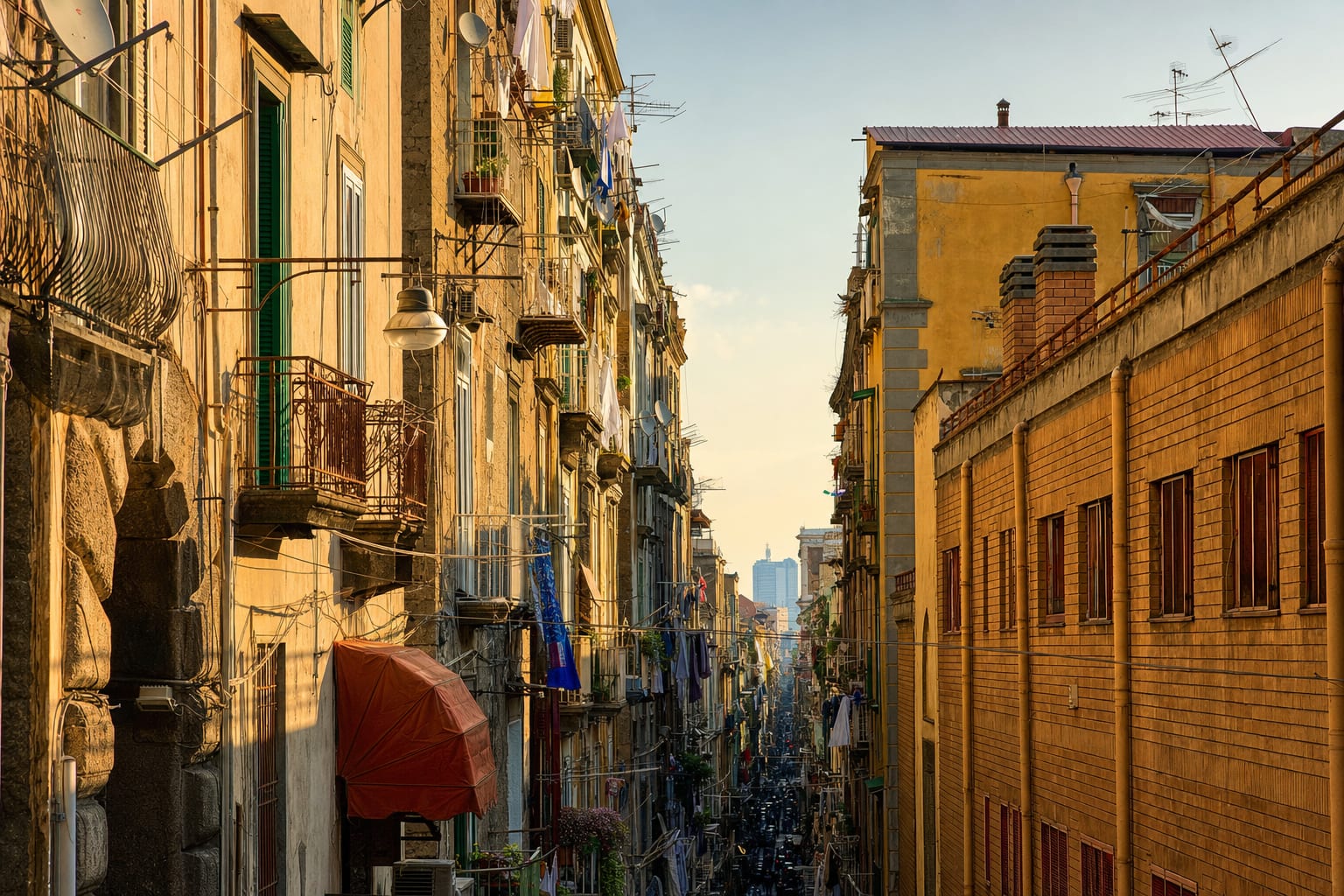
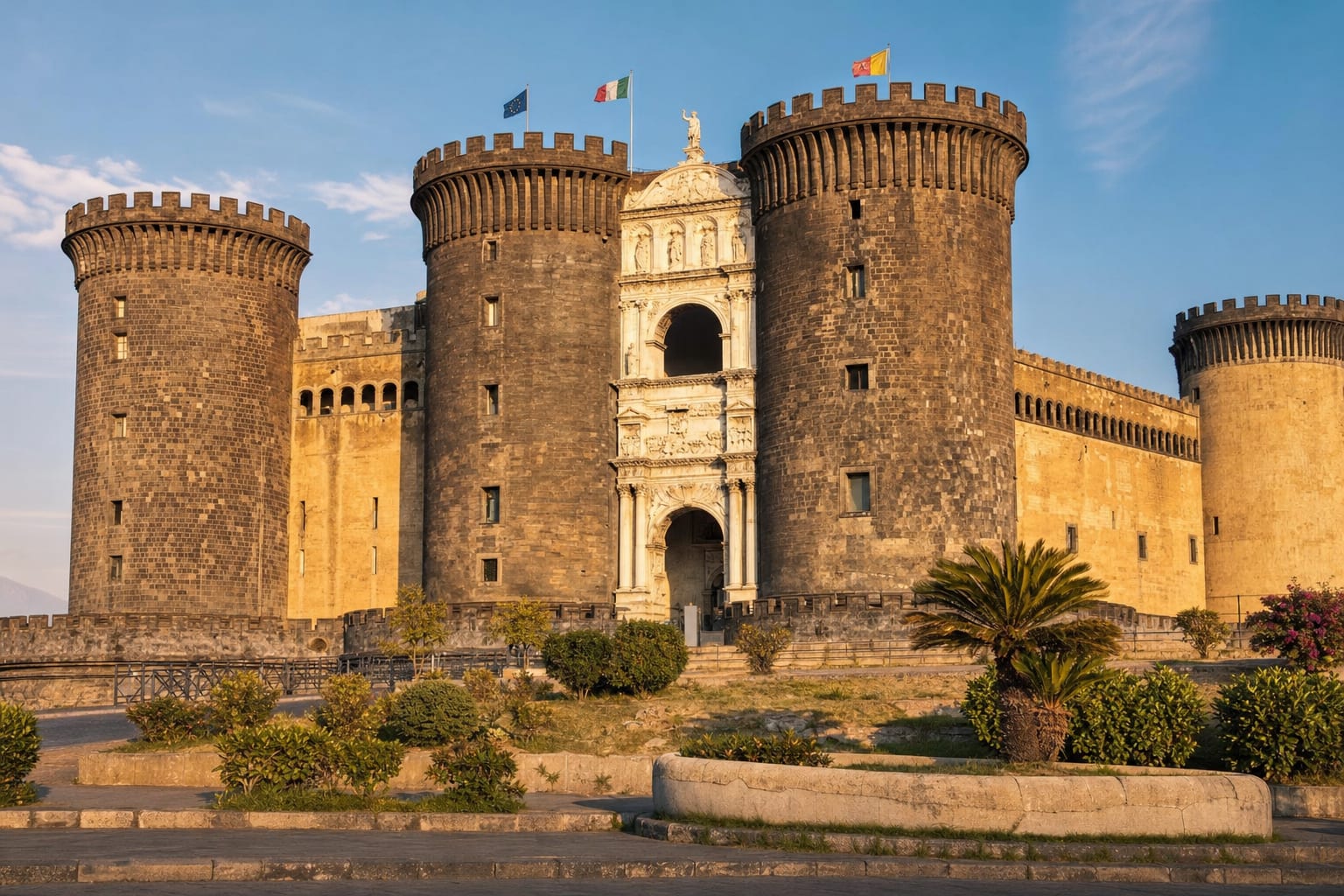
The setting matters. San Carlo belongs to a historic center whose significance comes from urban layers, monuments and relationships, not from one theater alone. It sits beside the Royal Palace and near the Piazza del Plebiscito, but those neighbors have their own identity and visiting conditions.2,1
Its position beside the palace also anchors San Carlo’s architectural history in the ceremonial and civic geography of central Naples.1
Sources and citations (2)
- Fondazione Teatro di San CarloBilancio Sociale 2022Theatre history chapterRead source
- UNESCO World Heritage CentreHistoric Centre of NaplesProperty header and criteriaRead source