


The monuments
All the monuments in Naples
The landmarks and masterpieces worth planning a day around.
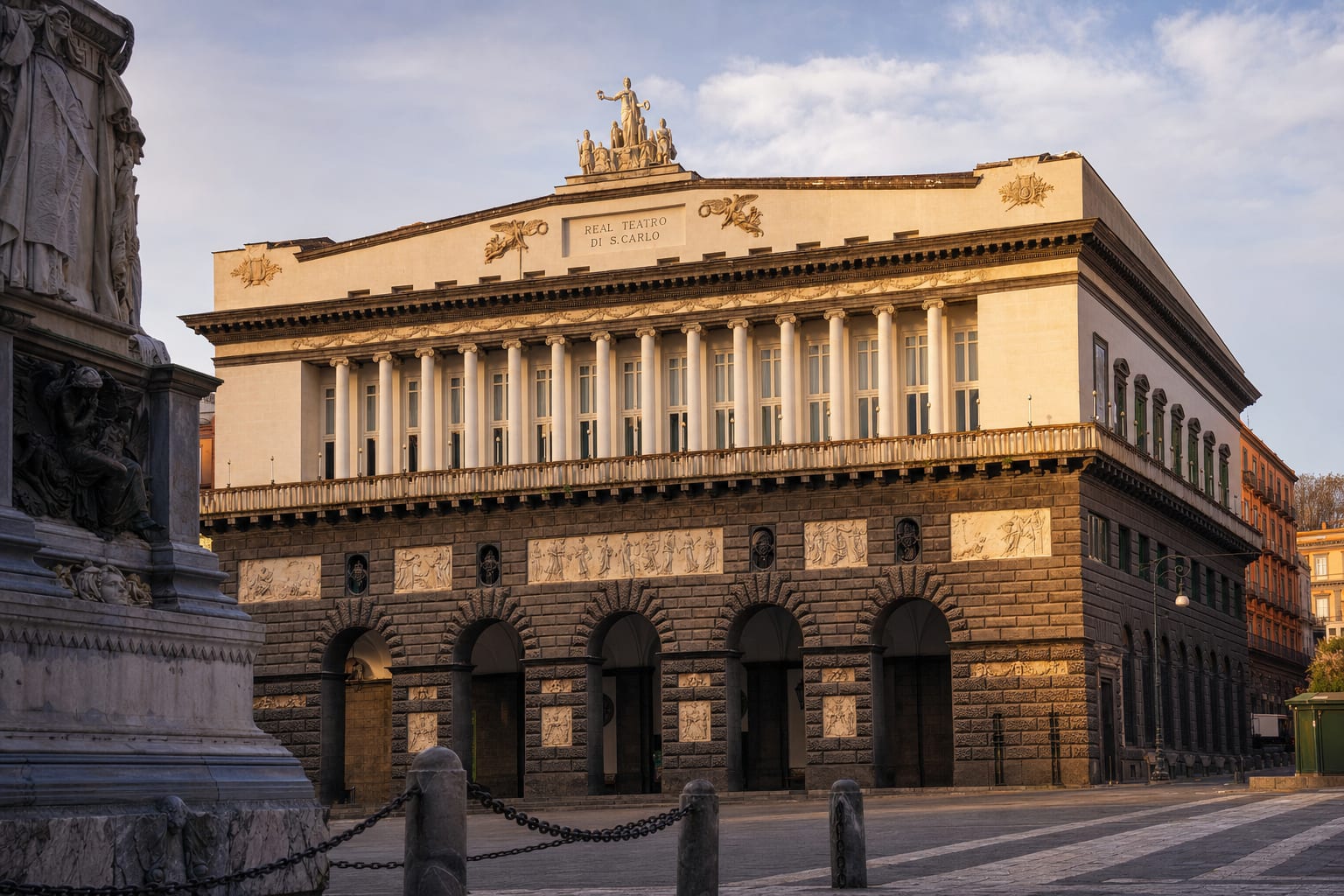 TheatreTeatro di San CarloIts 1737 Bourbon foundation and landmark horseshoe-plan auditorium.Teatro di San Carlo was commissioned by Charles III of Bourbon and opened in 1737. Its original horseshoe plan was designed by Giovanni Antonio Medrano and Angelo Carasale. After the 1816 fire destroyed the auditorium, Antonio Niccolini’s rebuilding retained the horseshoe layout and proscenium configuration.Plan the visit
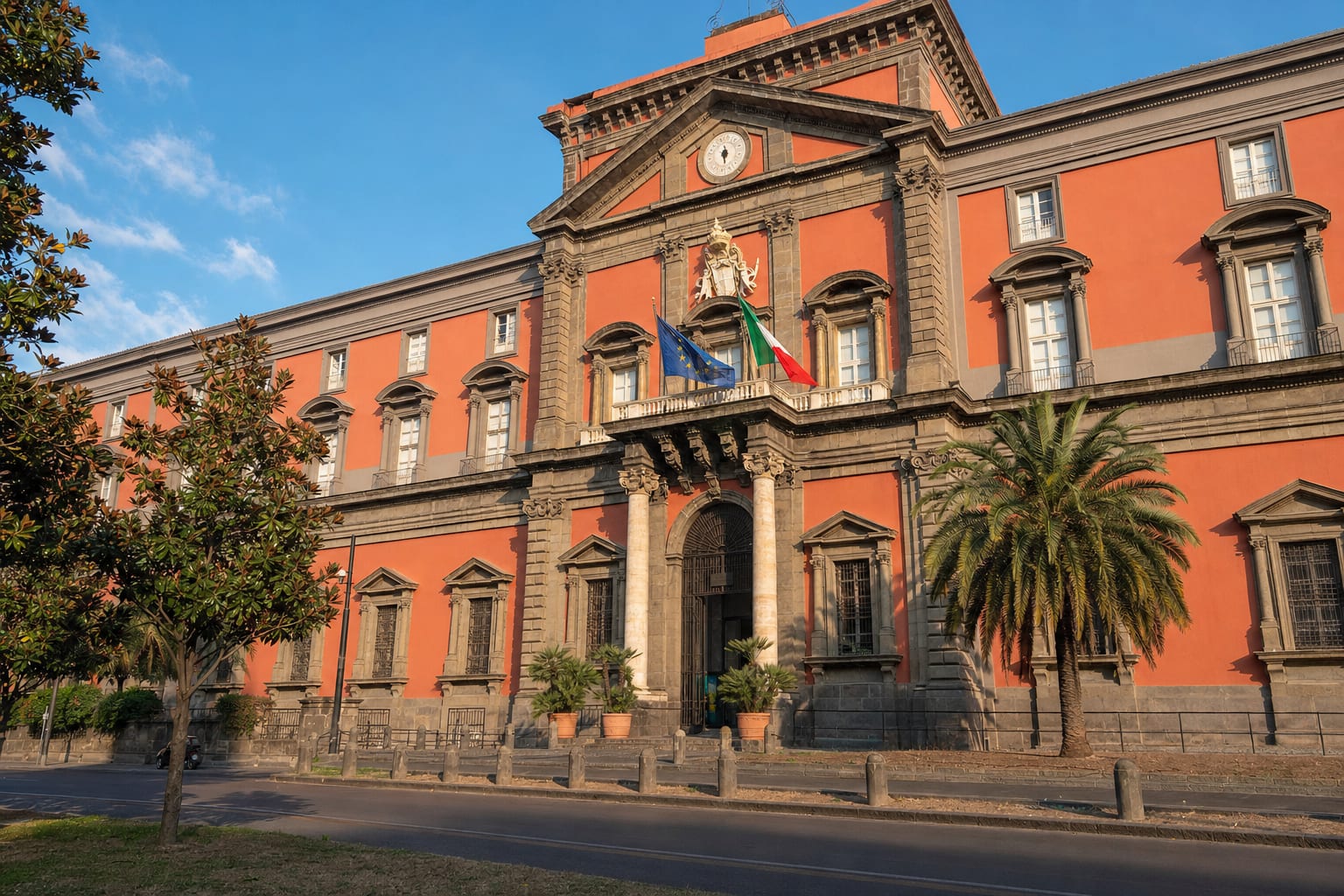 Museo Archeologico Nazionale di NapoliNaples National Archaeological MuseumThe Farnese collection and archaeological material from the Vesuvian towns.The National Archaeological Museum of Naples brings together the Farnese collection with relics from the Vesuvian towns excavated after Vesuvius’s eruption of 79 CE. Its present building was first royal cavalry barracks and then the University of Naples before opening as the Real Museo Borbonico in 1816.
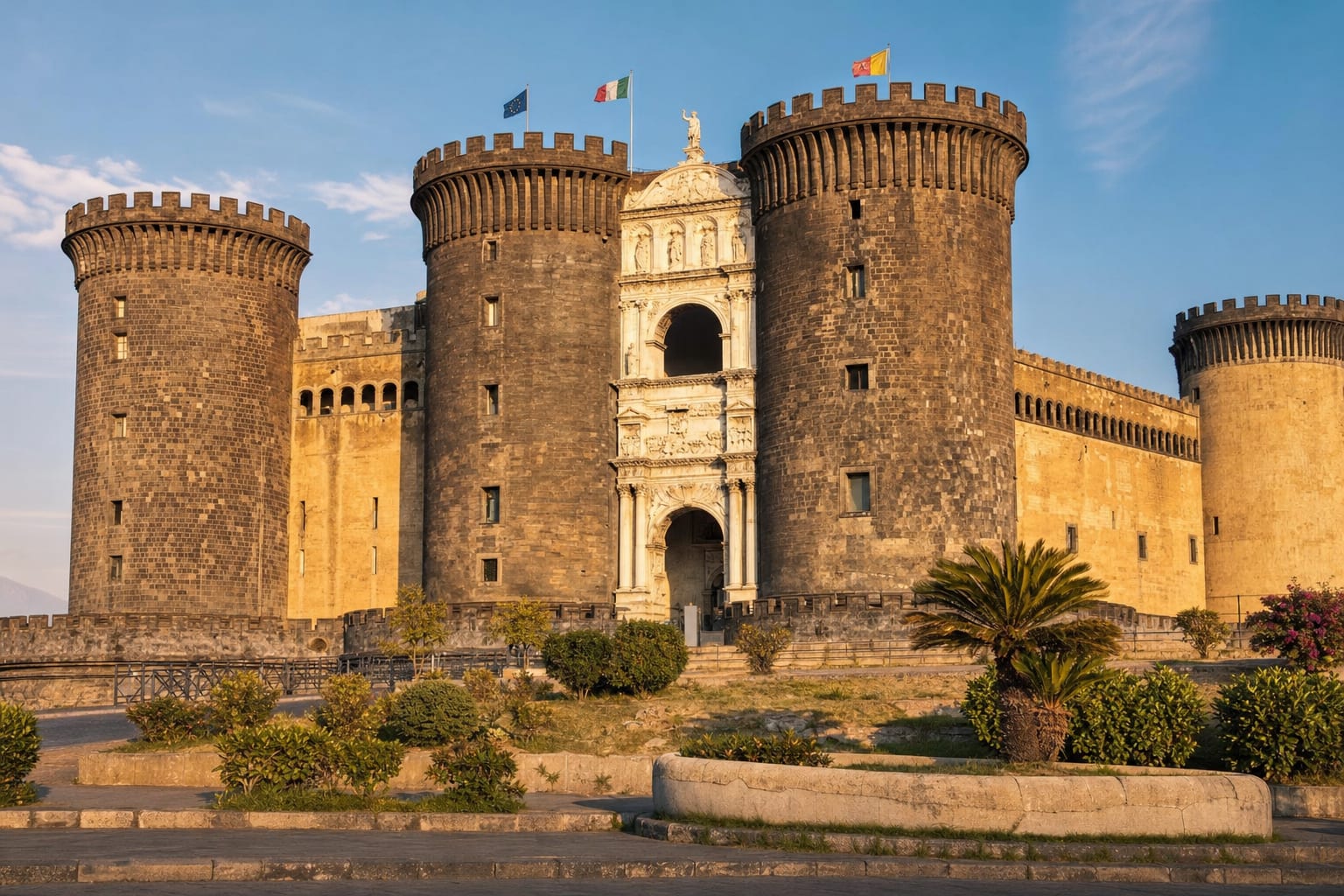 CastleCastel NuovoIts Angevin foundation, Aragonese reconstruction, the Palatine Chapel, Sala dei Baroni and Civic Museum.Castel Nuovo, also known as Maschio Angioino, was begun for Charles I of Anjou in 1279. After Alfonso of Aragon's 1442 conquest, it was gradually reconstructed for the defensive requirements of the mid-fifteenth century, with Guillem Sagrera named by the Ministry of Culture. Since 1990, the complex has housed Naples' Civic Museum.
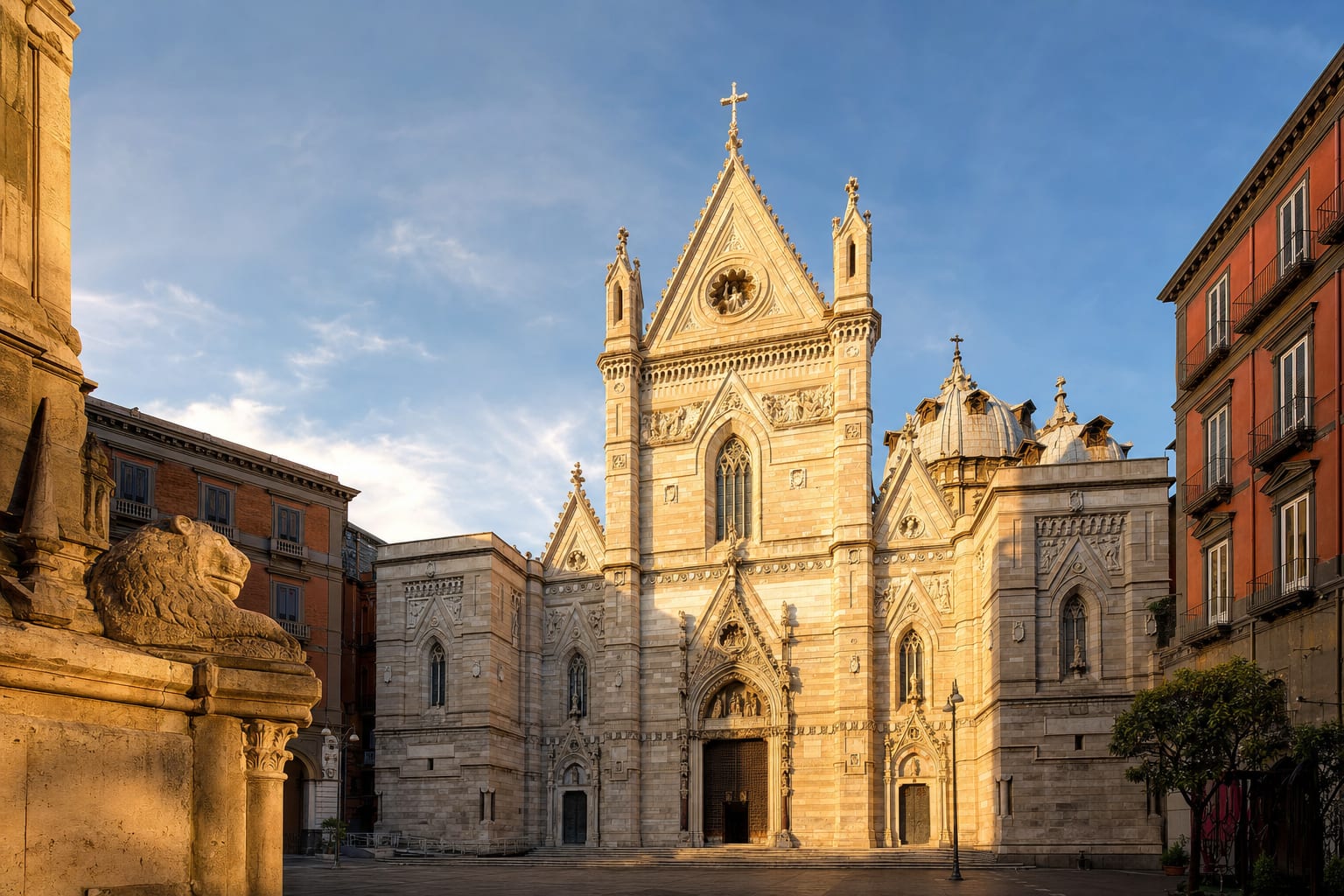 Duomo di NapoliNaples CathedralIts Angevin Gothic fabric, Santa Restituta, the Baptistery of San Giovanni in Fonte and the Chapel of the Treasure of San Gennaro.Naples Cathedral, formally Santa Maria Assunta, was begun for Charles I of Anjou in 1272, completed under Robert of Anjou in 1313 and dedicated in 1314. Its Latin-cross, three-naved Gothic framework has been modified across later centuries. The larger complex includes the related but distinct Santa Restituta, the Baptistery of San Giovanni in Fonte and the Chapel of the Treasure of San Gennaro, built from 1608 to 1637 in fulfilment of a civic vow made during the 1527 plague.
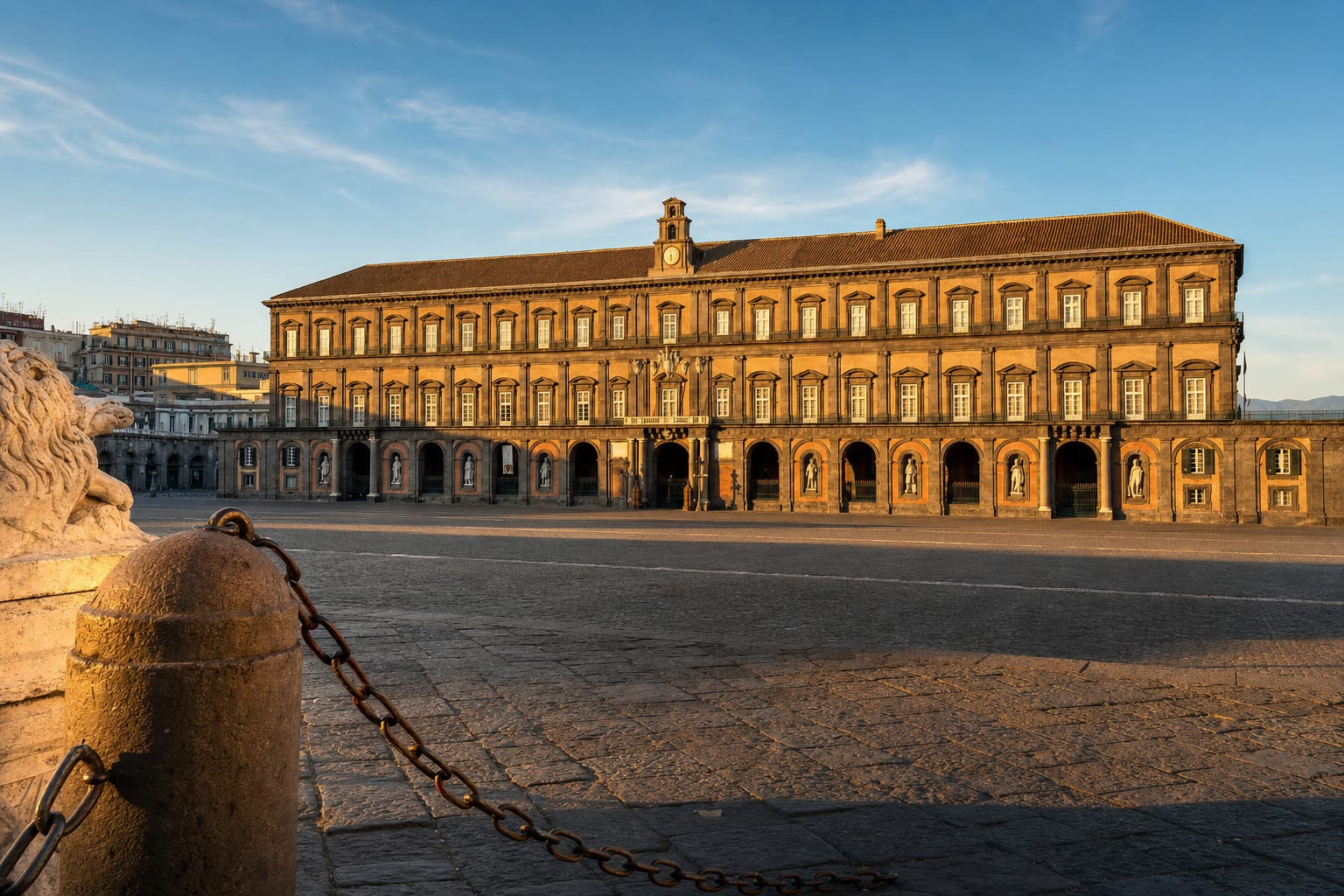 Palazzo Reale di NapoliRoyal Palace of NaplesFontana’s façade, the Scalone d’Onore, the Appartamento di Etichetta and Teatro di Corte.Founded in 1600 for Philip III of Habsburg and designed by Domenico Fontana, the Royal Palace was enlarged under the Bourbons and restored in the nineteenth century. Its historic rooms are now presented through the Appartamento di Etichetta museum.
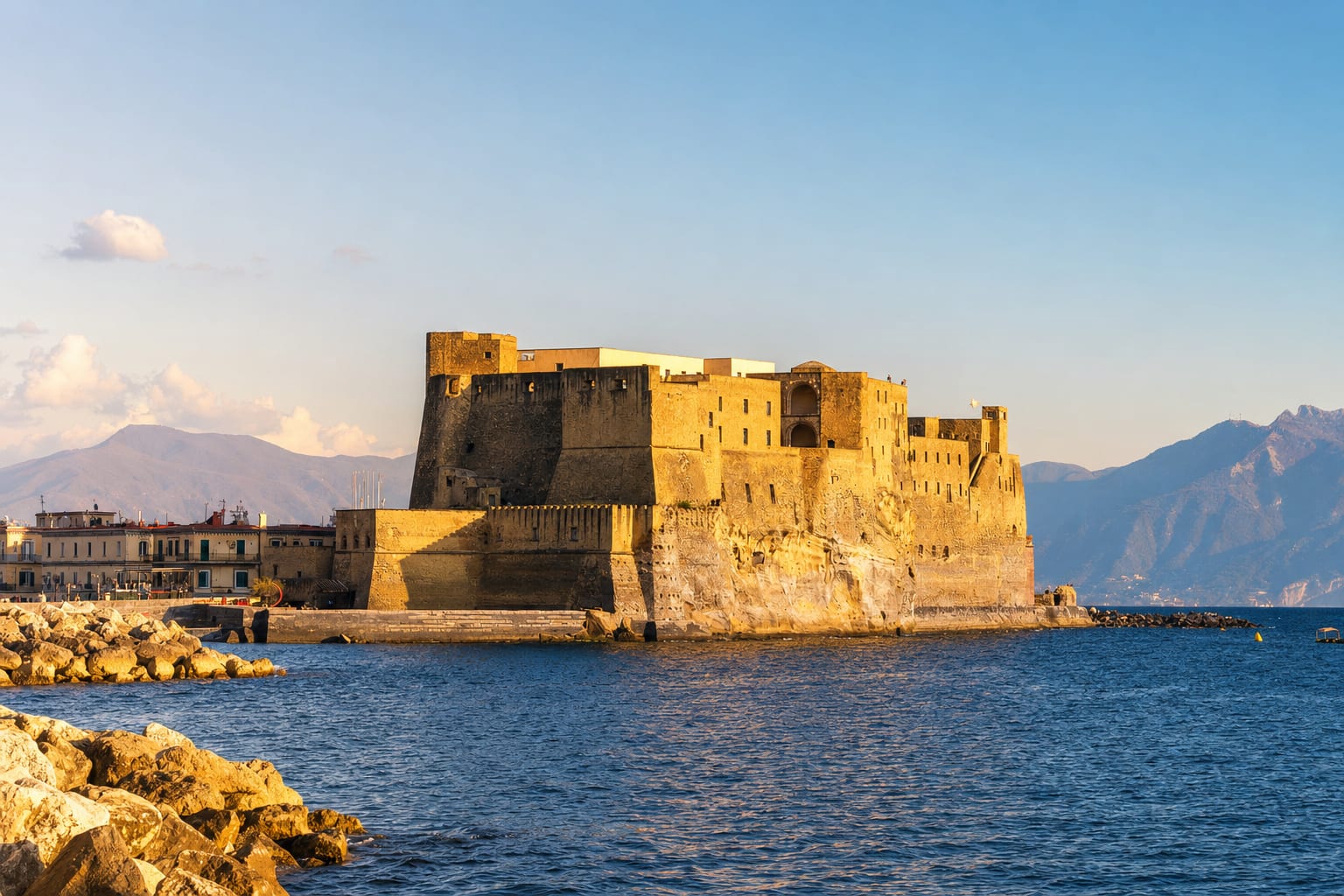 CastleCastel dell'OvoIts Megaride-islet setting, Norman-period survival and the Virgil-and-egg legend.Castel dell'Ovo, or castrum Ovi, stands on the Megaride islet and is described by the Ministry of Culture as Naples’ oldest castle. UNESCO identifies it as a substantial survival of the Norman period, subsequently remodelled several times. The Virgil-and-egg story is local legend rather than the documented origin of the monument.
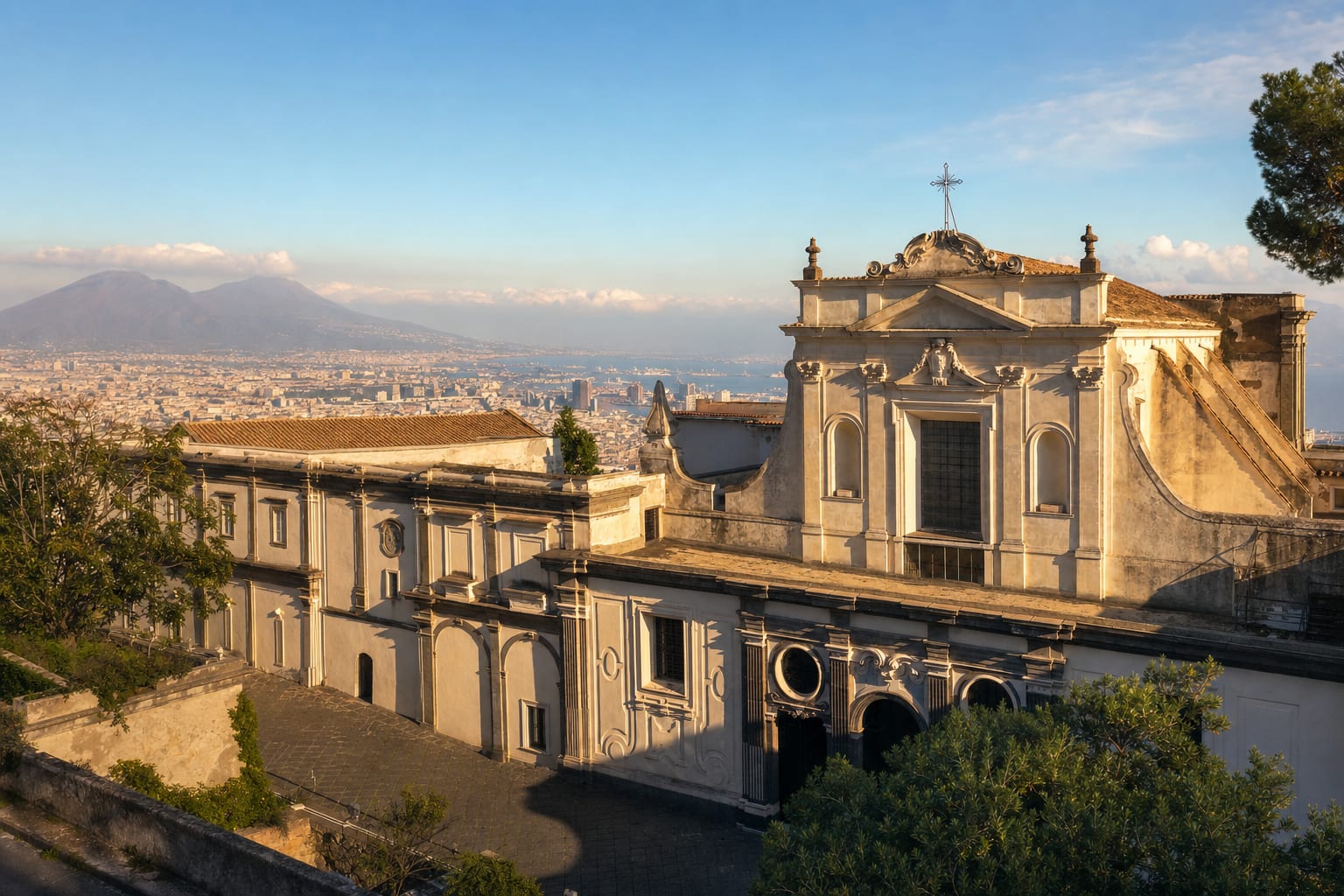 MuseumCertosa di San MartinoIts Carthusian complex, church and cloisters, Neapolitan presepe collection and city-history collections.Founded in 1325 as a Carthusian monastery and transformed over centuries, the Certosa di San Martino is a major complex of Neapolitan Renaissance, Baroque and Rococo art. Since 1867 it has housed the Museo di San Martino, with collections on the art and history of Naples.
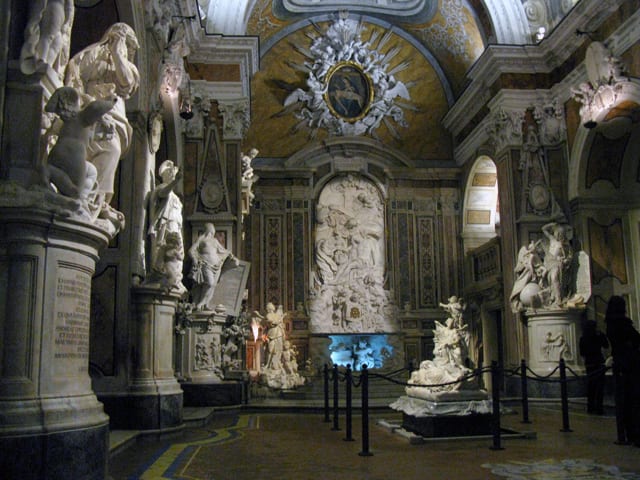 Cappella SanseveroSansevero ChapelThe Veiled Christ by Sanmartino, Pudicizia by Corradini, Disinganno by Queirolo and Giuseppe Salerno’s Anatomical Machines.Sansevero Chapel is the di Sangro family’s burial chapel, transformed in the 1740s under Raimondo di Sangro into a tightly conceived artistic programme. It contains Giuseppe Sanmartino’s 1753 Veiled Christ, together with works by Antonio Corradini, Francesco Queirolo and others; its underground Cavea displays Giuseppe Salerno’s Anatomical Machines.
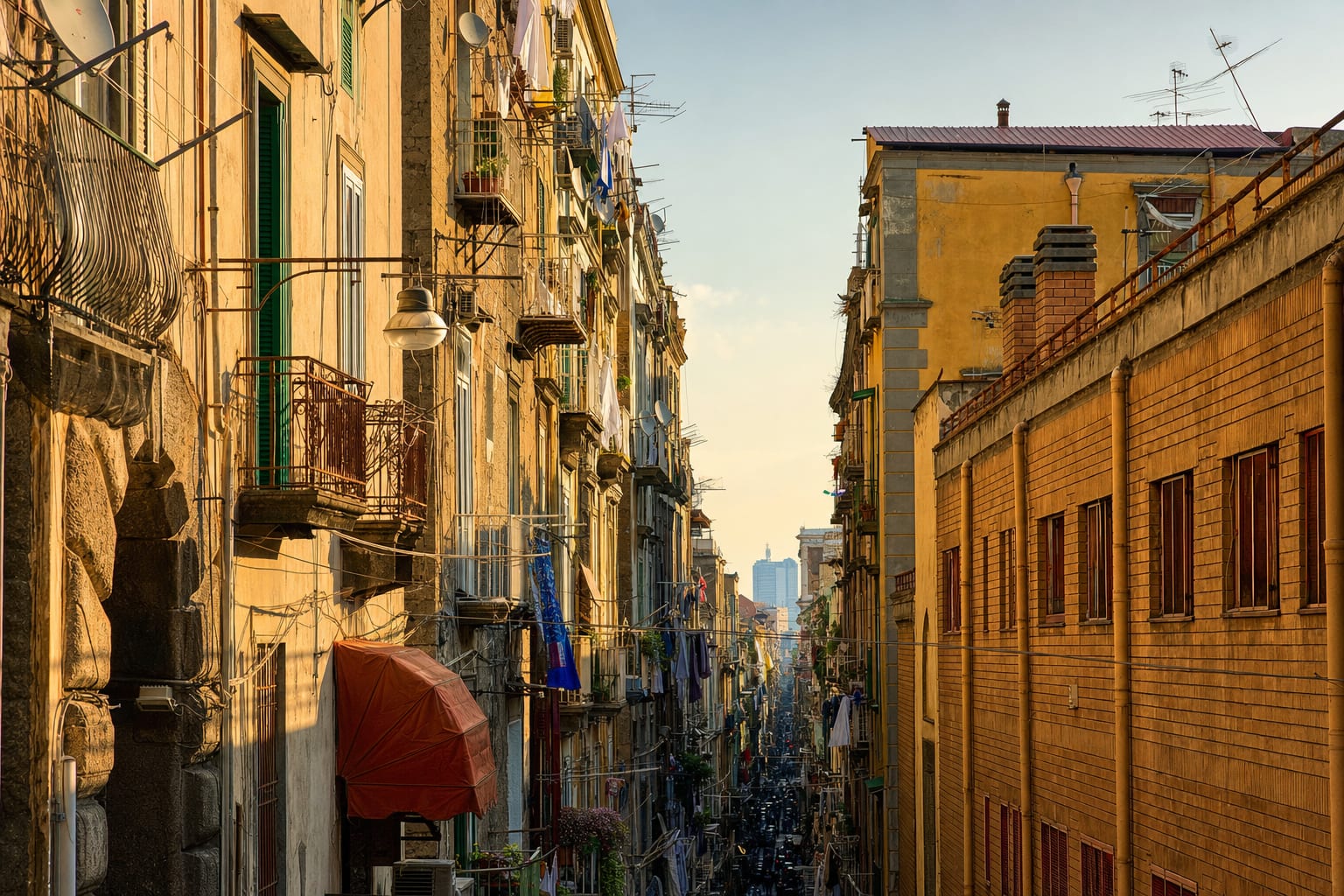 DistrictSpaccanapolilower decumanus; Greek Neapolis urban grid; Via San Biagio dei Librai; Palazzo Diomede Carafa; historic-centre routeSpaccanapoli is the popular name for the lower decumanus of Naples’ historic centre, a long east-west urban axis rather than a separate ancient monument. UNESCO identifies the rectangular grid of Greek Neapolis as still discernible in the present urban fabric, but the route should not be described as unchanged from antiquity. Via San Biagio dei Librai, identified by the Ministry of Culture as Spaccanapoli, includes Palazzo Diomede Carafa, whose fabric documents the transition from Gothic forms to Renaissance taste.
Book a visit
Tours worth booking in Naples
Compared by our editors, across providers.
Booking through these links may earn Italia Magnifica a commission, at no cost to you.
- 2h 30m
- 5.0★ · 17 reviews
from €25Book this tour- 2h
- 5.0★ · 11 reviews
from €170Book this tour- 1h 15m
- 5.0★ · 8 reviews
from €30Book this tour- 2h 30m
- 5.0★ · 14 reviews
from €230Book this tour- 2h
- 5.0★ · 14 reviews
from €250Book this tour- 1h 45m
- 5.0★ · 9 reviews
from €161Book this tour


More nearby
More within reach
Monuments a day trip away, elsewhere in Campania.
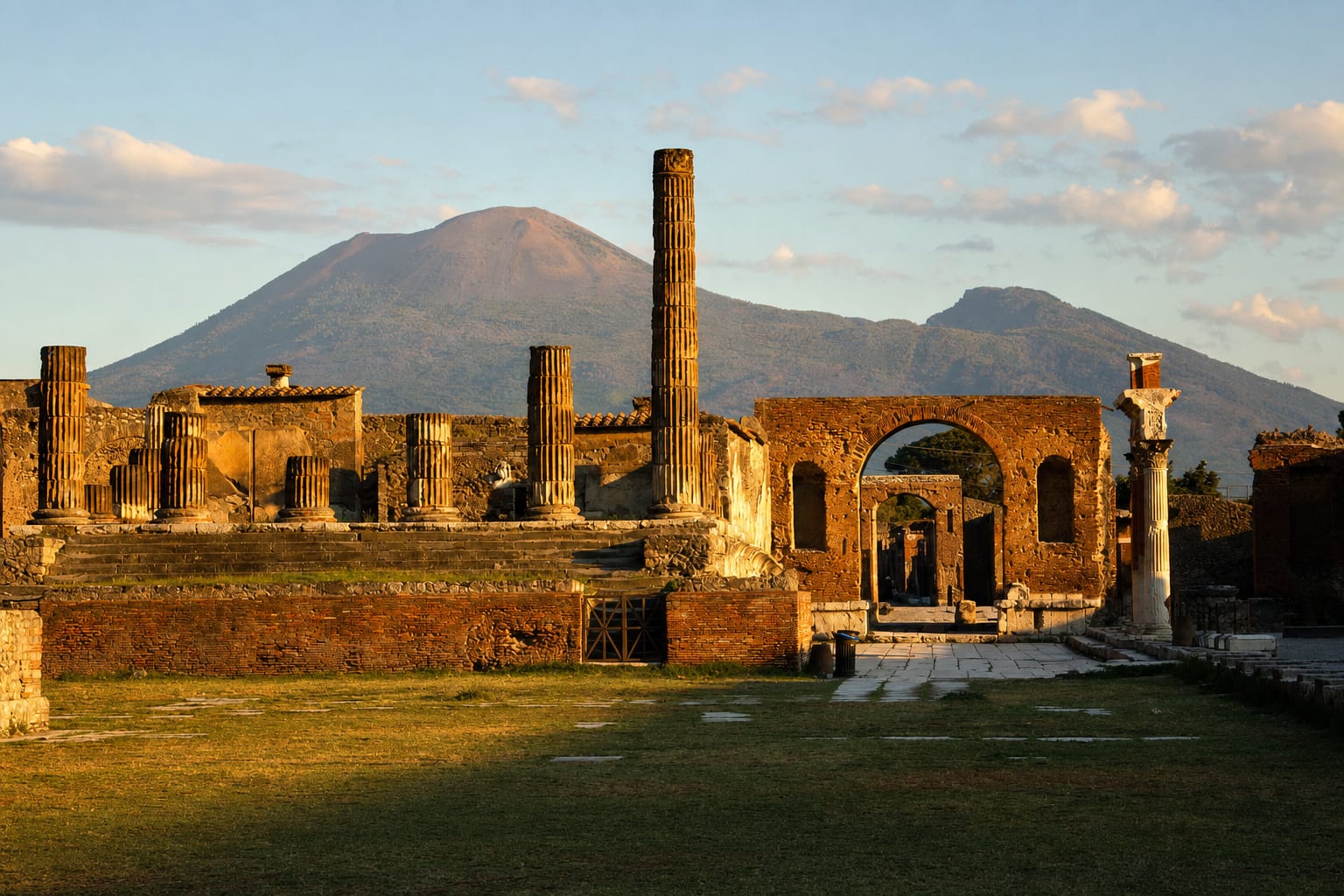 PompeiiUNESCOPompeii Archaeological Site79 CE eruption; Roman streets and houses; Forum; theatres; amphitheatre; exceptional urban preservation
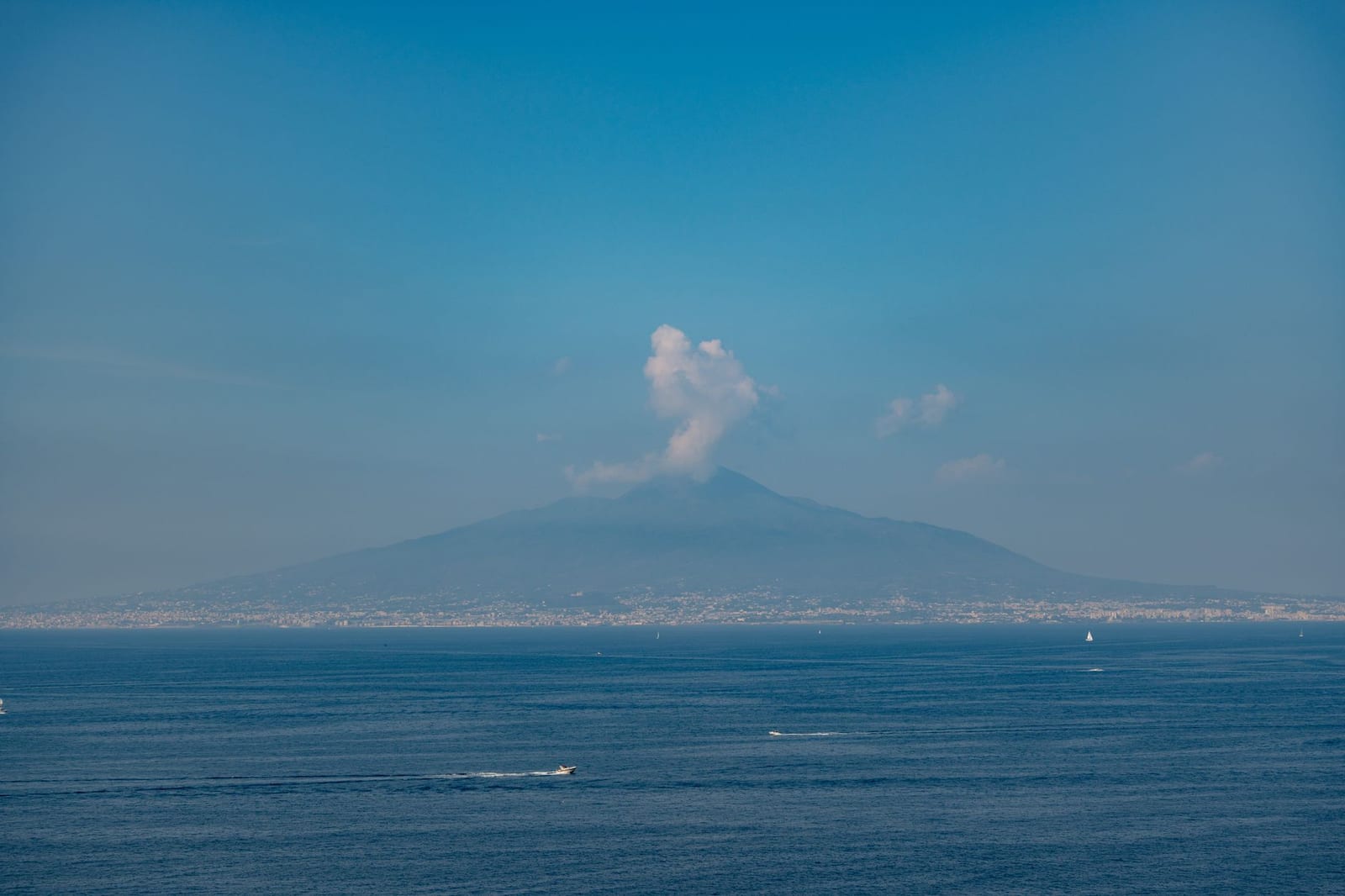 Torre del GrecoMount VesuviusIts 1944 last eruption, INGV monitoring, Gran Cono Trail 5 and the Vesuvius National Park.
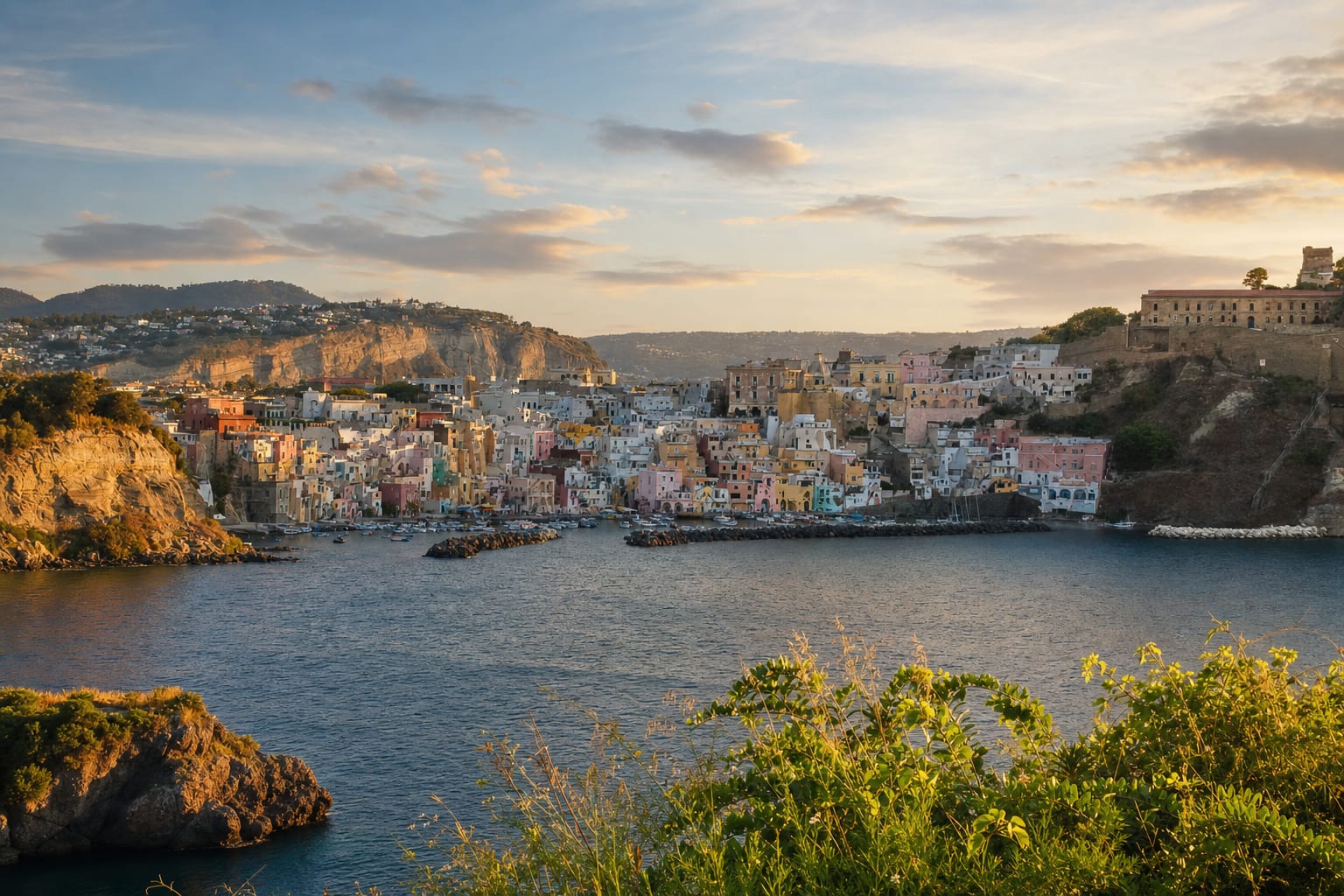 ProcidaProcidaTerra Murata; Corricella; Phlegraean island landscape; Il Postino; Italian Capital of Culture 2022
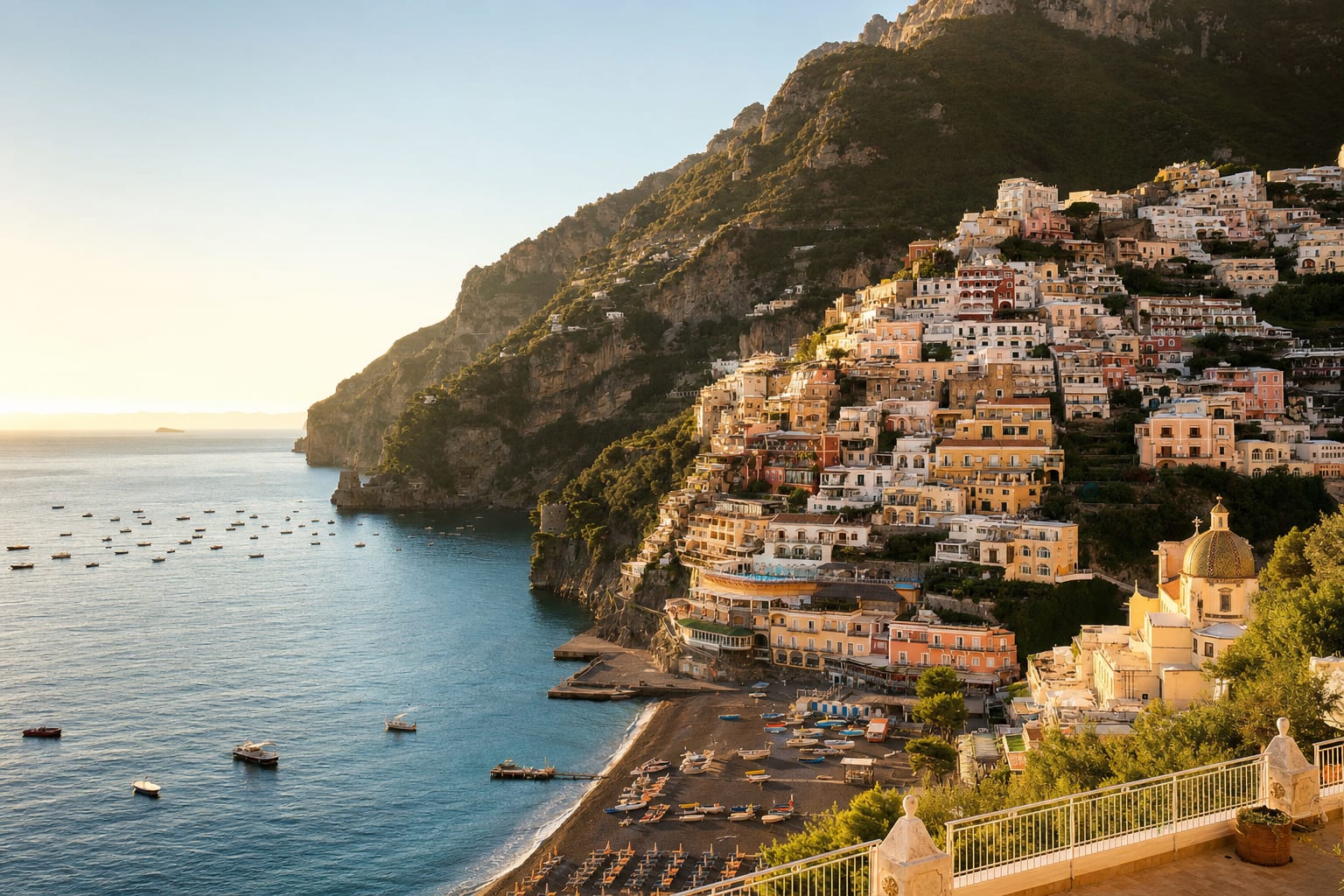 PositanoUNESCOPositanoCostiera Amalfitana cultural landscape; La Porta prehistoric evidence; Roman villa of otium; sixteenth-century watchtowers; 1668 città regia
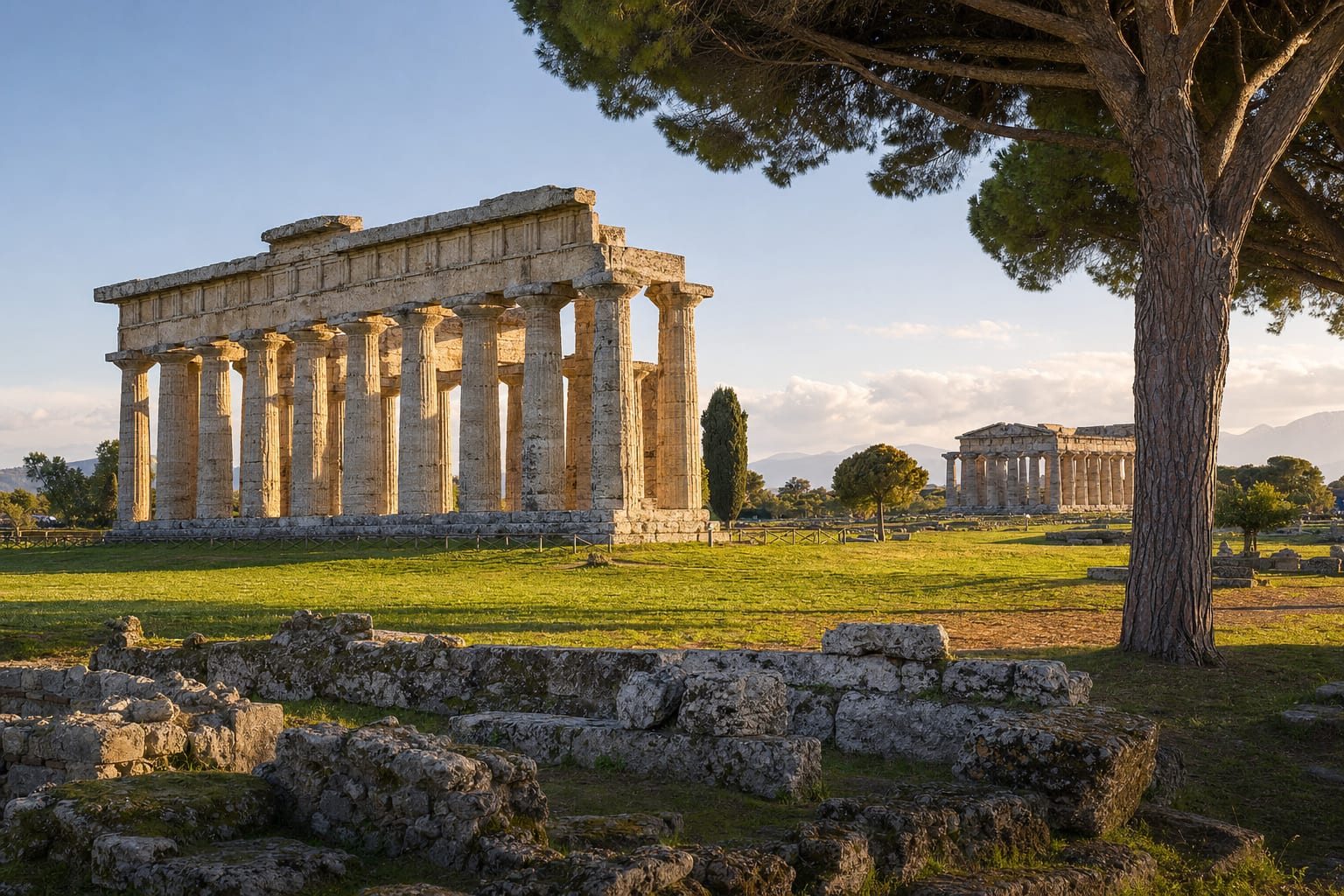 PaestumUNESCOTemples of PaestumIts three Doric temples, the archaeological city of Poseidonia–Paestum and the Tomb of the Diver.
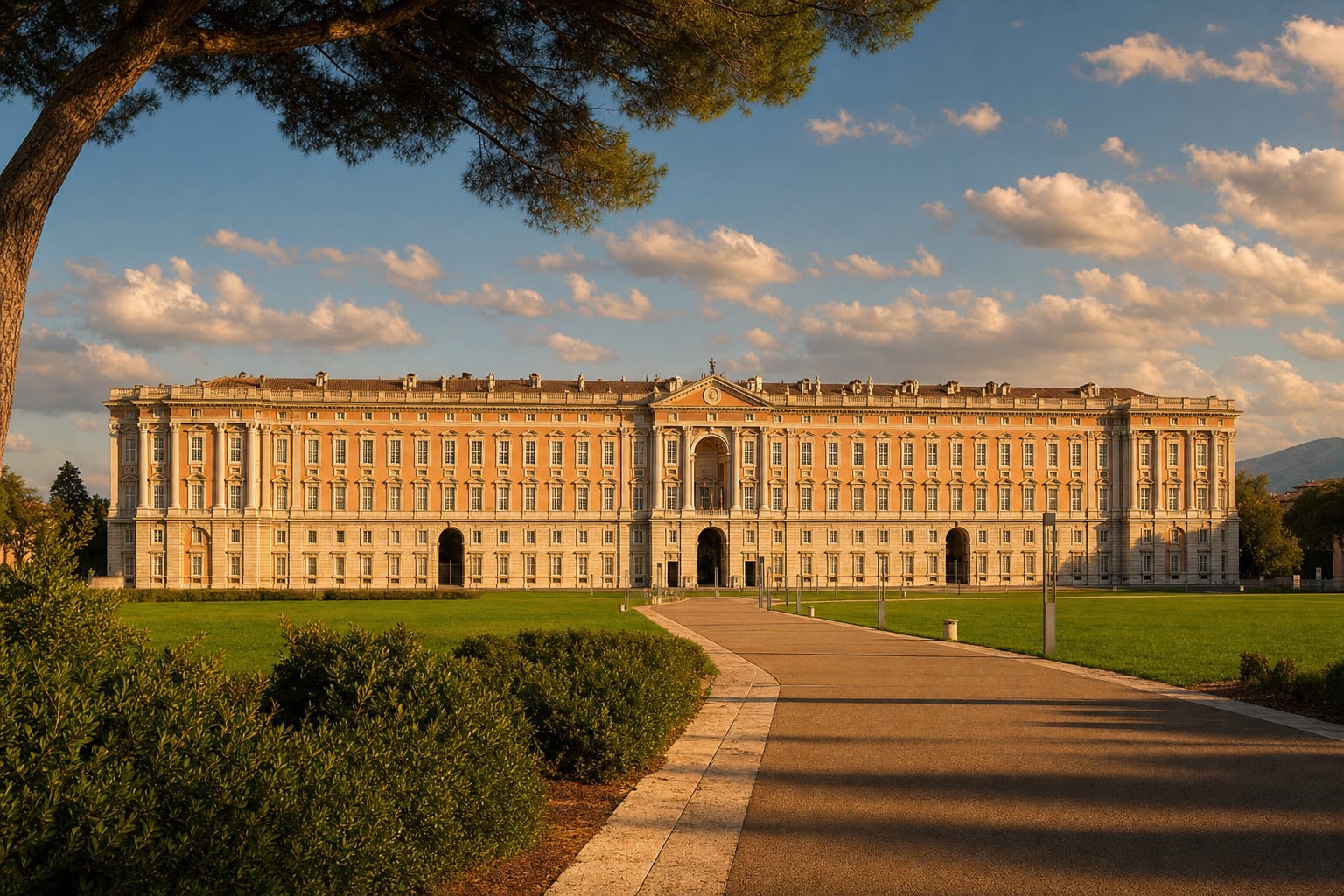 CasertaUNESCORoyal Palace of CasertaLuigi Vanvitelli; Bourbon royal residence; four-courtyard plan; Royal Staircase; Court Theatre; Royal Apartments; Royal Park
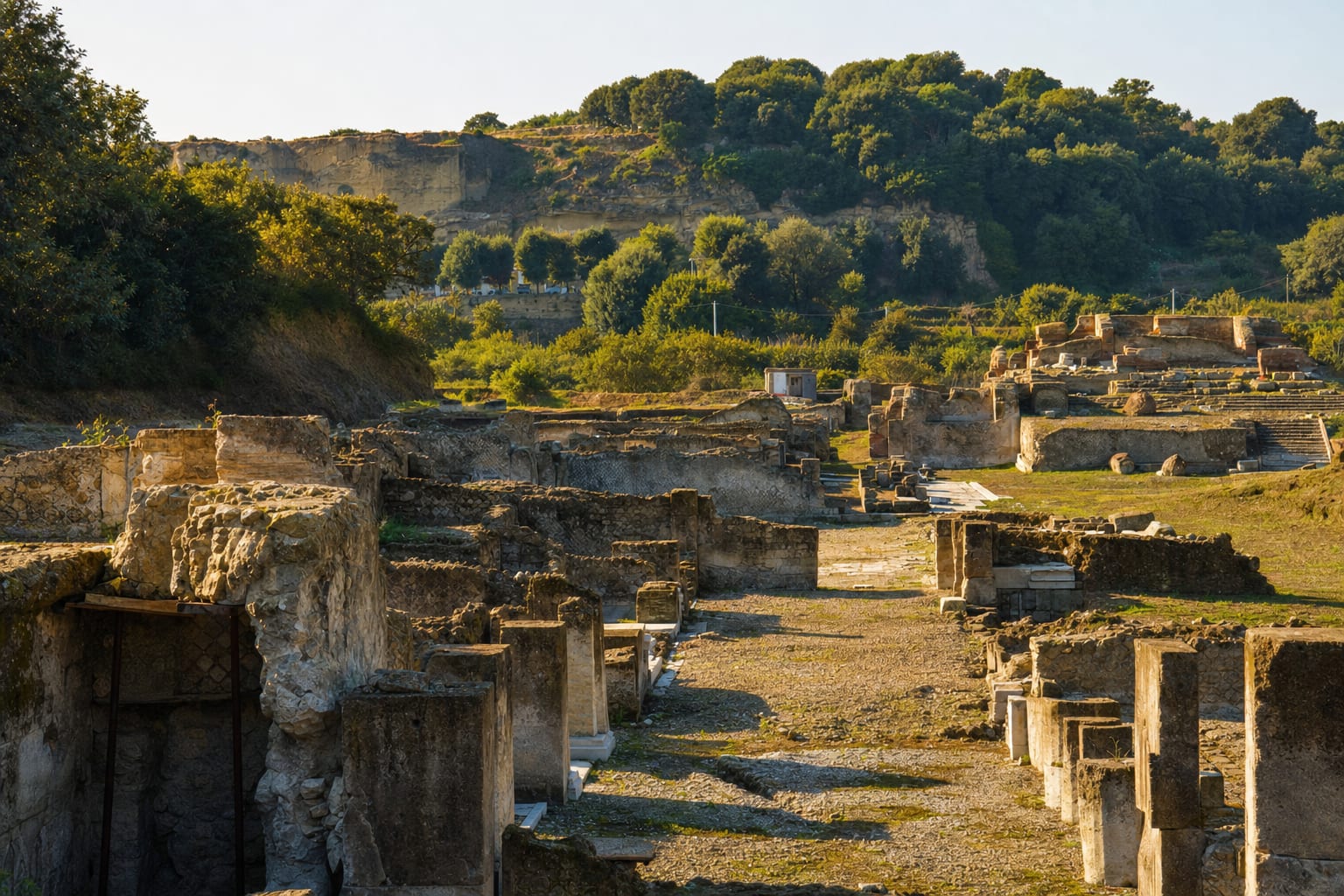 CumaCumae Archaeological ParkIts Greek-colonial Acropolis, sanctuaries and the gallery conventionally called the Cave of the Sibyl.
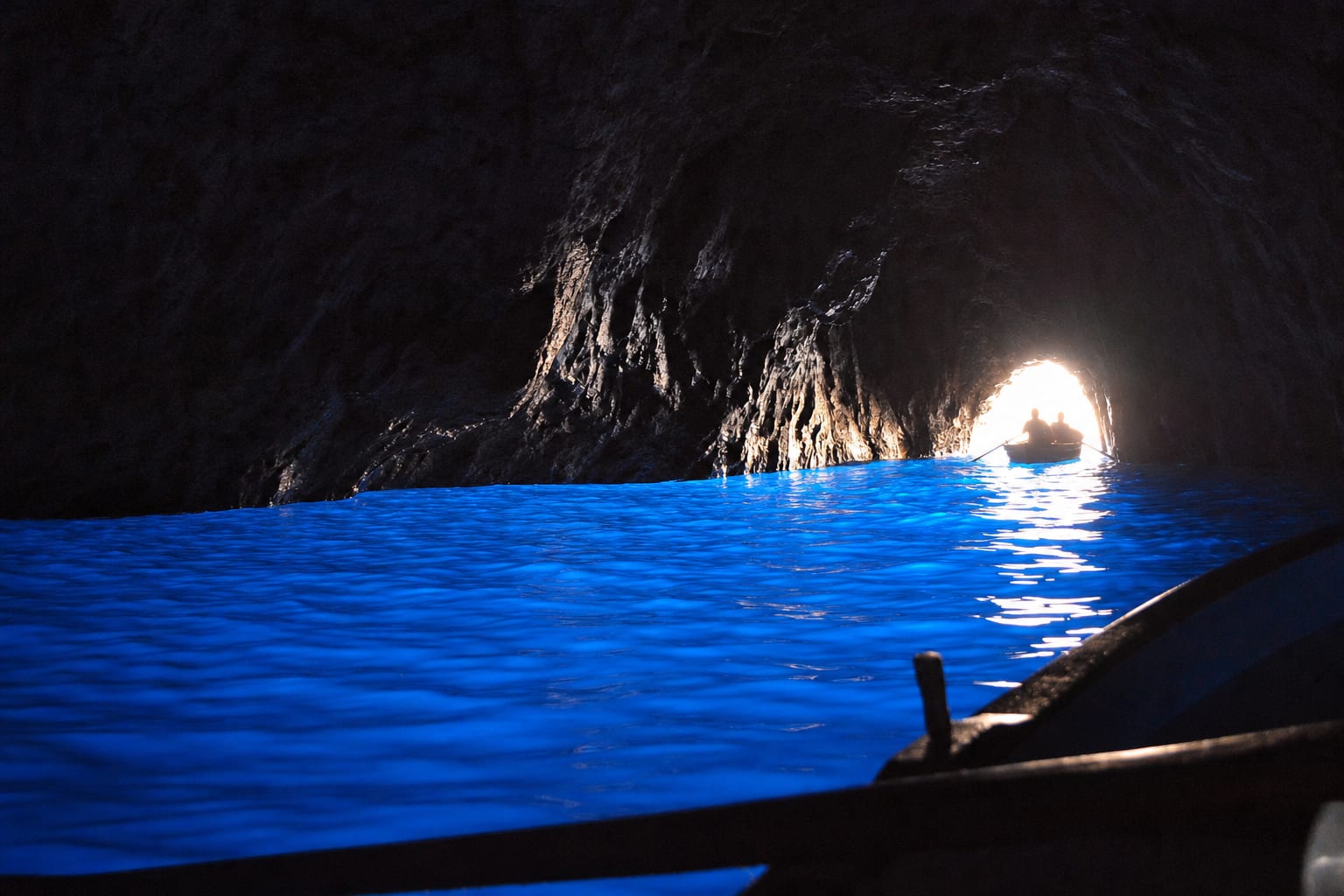 AnacapriBlue Grottounderwater-reflected blue light; Roman maritime nymphaeum; niches for statues of Neptune and Tritons; relationship with Villa di Gradola