Procida is a volcanic island in the Gulf of Naples, within the southwestern Campi Flegrei district. Tuff formations shape its geological story, while the inhabited territory is divided into nine grancìe, or local districts. Corricella, Terra Murata, Marina Grande and Chiaiolella each belong to this larger island community. For the wider coastal and inland setting, see our Campania guide.
Corricella’s fishing harbour and hilltop Terra Murata offer two distinct encounters with the island. A steep approach rises from Marina Corricella toward the fortified settlement at Procida’s highest point. Watchtowers and a second circuit of walls recall the period of raids during the struggles between Ottoman and Spanish powers. The d’Avalos family took possession of the fief in 1529; their sixteenth-century palace occupies the promontory’s eastern side.
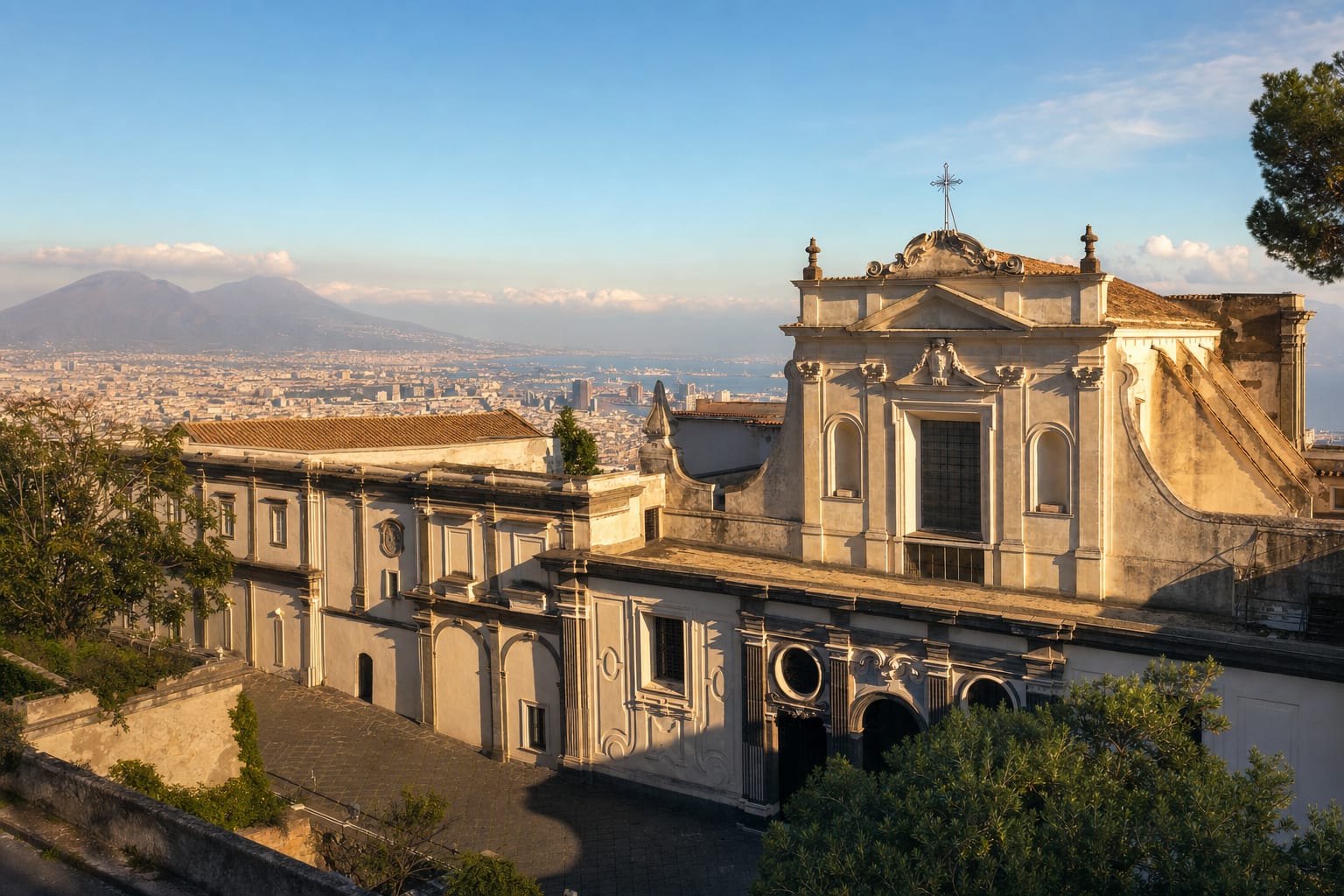
Palazzo d’Avalos later became a prison, serving that role from 1830 to 1988. Nearby, the Abbey of San Michele Arcangelo has an earliest nucleus dating to the eleventh century and preserves a sixteenth-century library. Santa Maria della Pietà adds another religious landmark to Procida’s historic fabric. The island’s heritage runs through its neighbourhoods and their individual buildings, from the port districts to Terra Murata.
Corricella represents the fishing village in Massimo Troisi’s final film, Il Postino, and Pozzo Vecchio provided a beach location. The production also used Pollara on Salina and filmed some early bicycle scenes on Pantelleria: Procida is one part of that cinematic landscape. In 2022 the island held the Italian Capital of Culture title. If you are arriving via Naples, pair your island plans with our Naples guide.