

Skip to content

Parco Archeologico di Cuma

Cumae Archaeological Park

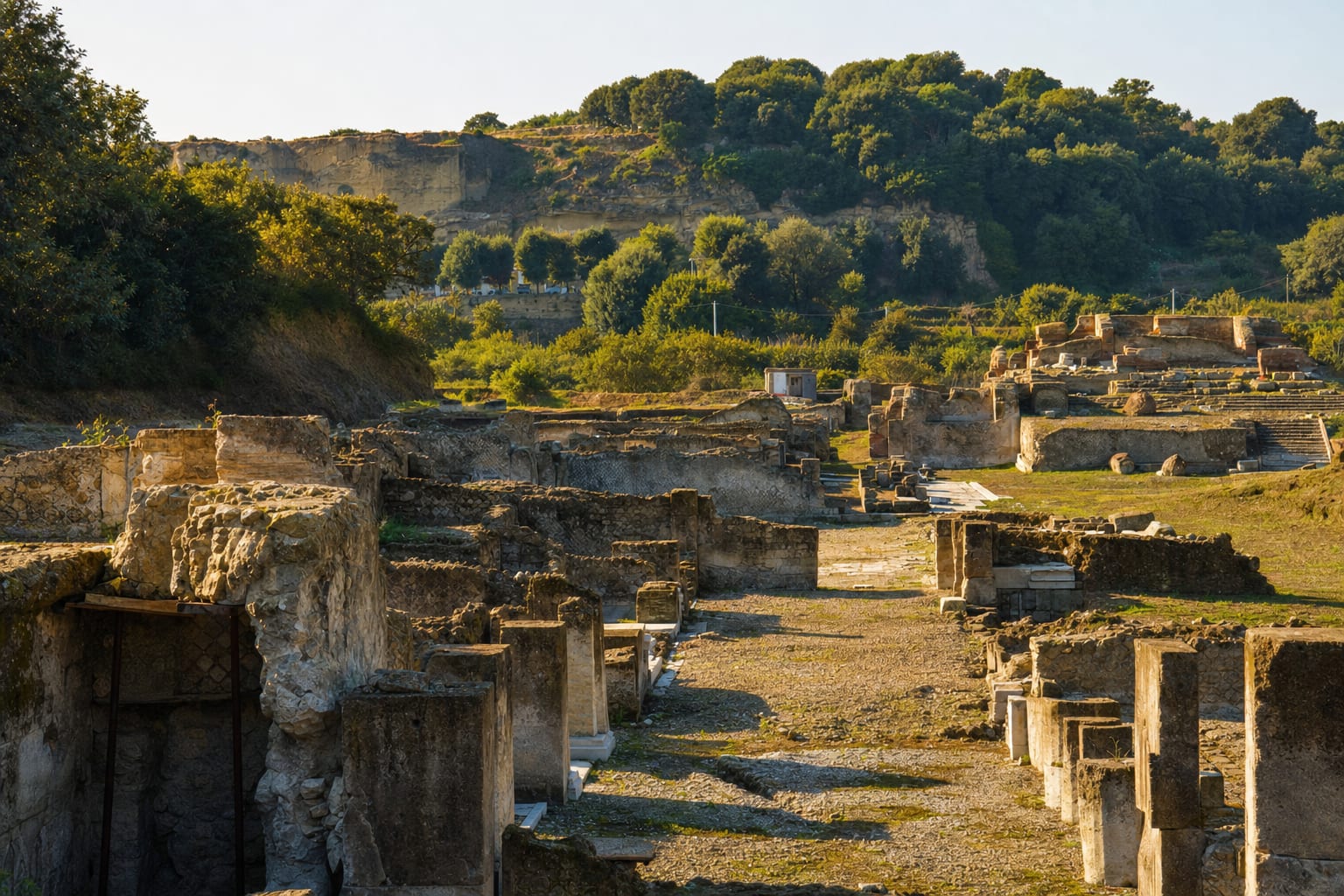
Its Greek-colonial Acropolis, sanctuaries and the gallery conventionally called the Cave of the Sibyl.

Photograph · Parco Archeologico di Cuma

At a glance

Cumae Archaeological Park facts that matter

Names, makers, dates, and context before the story opens up.

Italian nameParco Archeologico di Cuma
What it isArchaeological site
WhereCuma, Campania
Known forIts Greek-colonial Acropolis, sanctuaries and the gallery conventionally called the Cave of the Sibyl.
PeriodGreek, Samnite, Roman and late-antique archaeological strata

The story

What you're looking at

Cuma was founded by Euboean-Chalcidian settlers in the second half of the eighth century BCE and developed across the Acropolis of Monte di Cuma and the lower city. Its famous tuff gallery, conventionally called the Cave of the Sibyl, is interpreted by the Park as a Samnite military work, not securely the oracle of literary tradition.

An early Greek settlement in the West with archaeological layers spanning Greek, Samnite, Roman and later phases.

Verified details

Each statement below is linked to the record or institution that supports it.

Cuma was one of the earliest Greek settler colonies in the West, founded in the second half of the eighth century BCE by Euboean-Chalcidian settlers previously established at Pithekoussai on Ischia.1

The park preserves the Acropolis and lower city of ancient Cuma. The Acropolis occupied terraces and a southern spur of Monte di Cuma, with natural defences supplemented by fortifications.1

The monument conventionally called the Cave of the Sibyl is a tuff gallery that archaeological research interprets as a Samnite military work, built between the late fourth and early third centuries BCE to protect the Acropolis’s south-western slope.2

Amedeo Maiuri applied the “Cave of the Sibyl” name after the 1932 excavation, in relation to a long search for the place described by Virgil. The Park states that the gallery cannot be identified with the celebrated oracle cave.2

Sources and citations (2)
  1. Ministero della CulturaParco archeologico di CumaHistoryRead source
  2. Parco Archeologico dei Campi FlegreiParco archeologico di CumaGallery interpretationRead source

Plan your visit

Before you go

Booking
Walk-up friendly
Period
Greek, Samnite, Roman and late-antique archaeological strata

Find it

Where to find Cumae Archaeological Park

Get directionsGoogle MapsApple Maps

Reading

Stories from Campania

Long reads from our writers on the ground.

  1. The magazineAmalfi Coast Travel Guide