

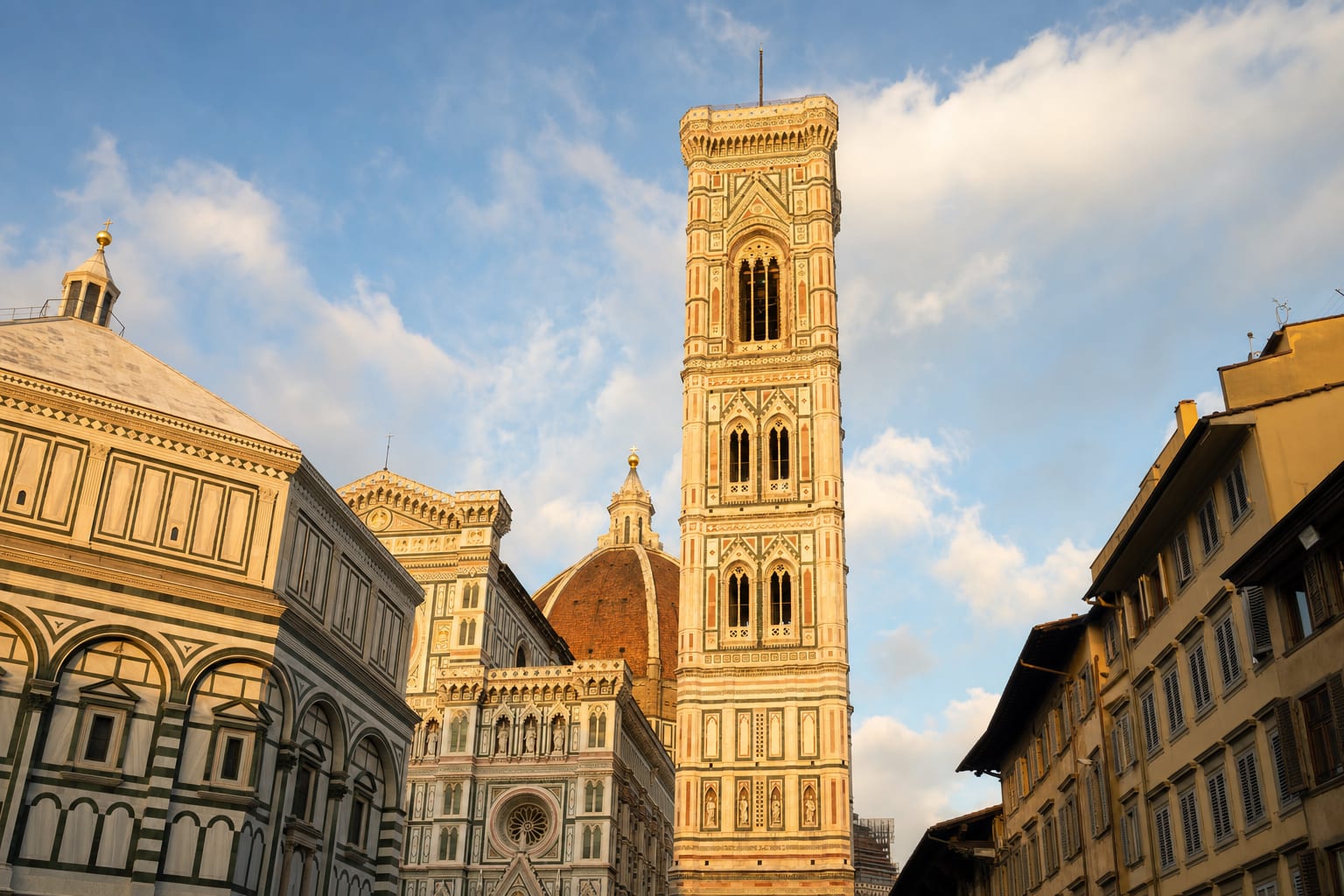
Origin
Giotto began the tower, but Florence finished it
The project started under Giotto in 1334 and continued through later masters. Its beauty comes from a sequence of hands, not a single uninterrupted campaign.1
Campanile di Giotto
Florence's freestanding bell tower, Giotto's design, colored marble, sculptural panels, and panoramic views from the Duomo complex.
Photograph · Campanile di Giotto
At a glance
Names, makers, dates, and context before the story opens up.
| Italian name | Campanile di Giotto |
|---|---|
| What it is | Tower |
| Where | Florence, Tuscany |
| Known for | Florence's freestanding bell tower, Giotto's design, colored marble, sculptural panels, and panoramic views from the Duomo complex. |
| Period | Italian Gothic, 1334 |
| Maker | Giotto; Andrea Pisano; Francesco Talenti |
The story
Giotto's Campanile is the bell tower of the Cathedral of Santa Maria del Fiore and a monument of the Santa Maria del Fiore complex in Piazza del Duomo. Giotto was entrusted with the work in 1334; Andrea Pisano continued it after Giotto's death, and Francesco Talenti completed the building in 1359. The Italian Gothic tower has an approximately 15-metre-square base and a projecting crown at 84.7 metres. Original sculptures from its lower levels are displayed in the Museo dell'Opera del Duomo. The Campanile lies within, rather than independently on, the Historic Centre of Florence World Heritage property.
The bell tower is part of Florence's cathedral complex and the UNESCO-listed historic center. Its construction began under Giotto, then continued under Andrea Pisano and Francesco Talenti, making it a collective monument of 14th-century Florentine Gothic. The sculptural program and marble surface connect architecture, craft, theology, and civic display in one freestanding tower.
Look closer
The details our editors pull from official records, archives, guides, and local sources.
Origin
The project started under Giotto in 1334 and continued through later masters. Its beauty comes from a sequence of hands, not a single uninterrupted campaign.1
Surface
White, green, and red marble turn the shaft into pattern, rhythm, and civic display, linking it visually to the cathedral and baptistery.1
Visit
The ascent transforms the monument from facade into body: steps, walls, bells, openings, and the city gradually revealed above the roofs.1
Context
Its power depends on its position beside the cathedral and baptistery, within the historic center that UNESCO recognizes as a landmark of urban and artistic achievement.2
Each statement below is linked to the record or institution that supports it.
The project started under Giotto in 1334 and continued through later masters. Its beauty comes from a sequence of hands, not a single uninterrupted campaign.1
Giotto's Campanile is the bell tower of the Cathedral of Santa Maria del Fiore and a monument of the Santa Maria del Fiore complex in Piazza del Duomo.3,4
White, green, and red marble turn the shaft into pattern, rhythm, and civic display, linking it visually to the cathedral and baptistery.1
Giotto was entrusted with the Campanile in 1334. After his death, Andrea Pisano continued the work, and Francesco Talenti completed the building in 1359.4,5
The ascent transforms the monument from facade into body: steps, walls, bells, openings, and the city gradually revealed above the roofs.1
The Opera describes the Campanile as an Italian Gothic bell tower with an approximately 15-metre-square base and a projecting crown at 84.7 metres. Its stair rises through three superimposed loggias with paired and triple-lancet windows.4
Plan your visit
Book a visit
Compared by our editors, across providers.
Booking through these links may earn Italia Magnifica a commission, at no cost to you.
Viator
A focused Duomo Complex option for understanding the cathedral, dome story and sacred architecture with a guide.
Nearby
Worth folding into the same day.
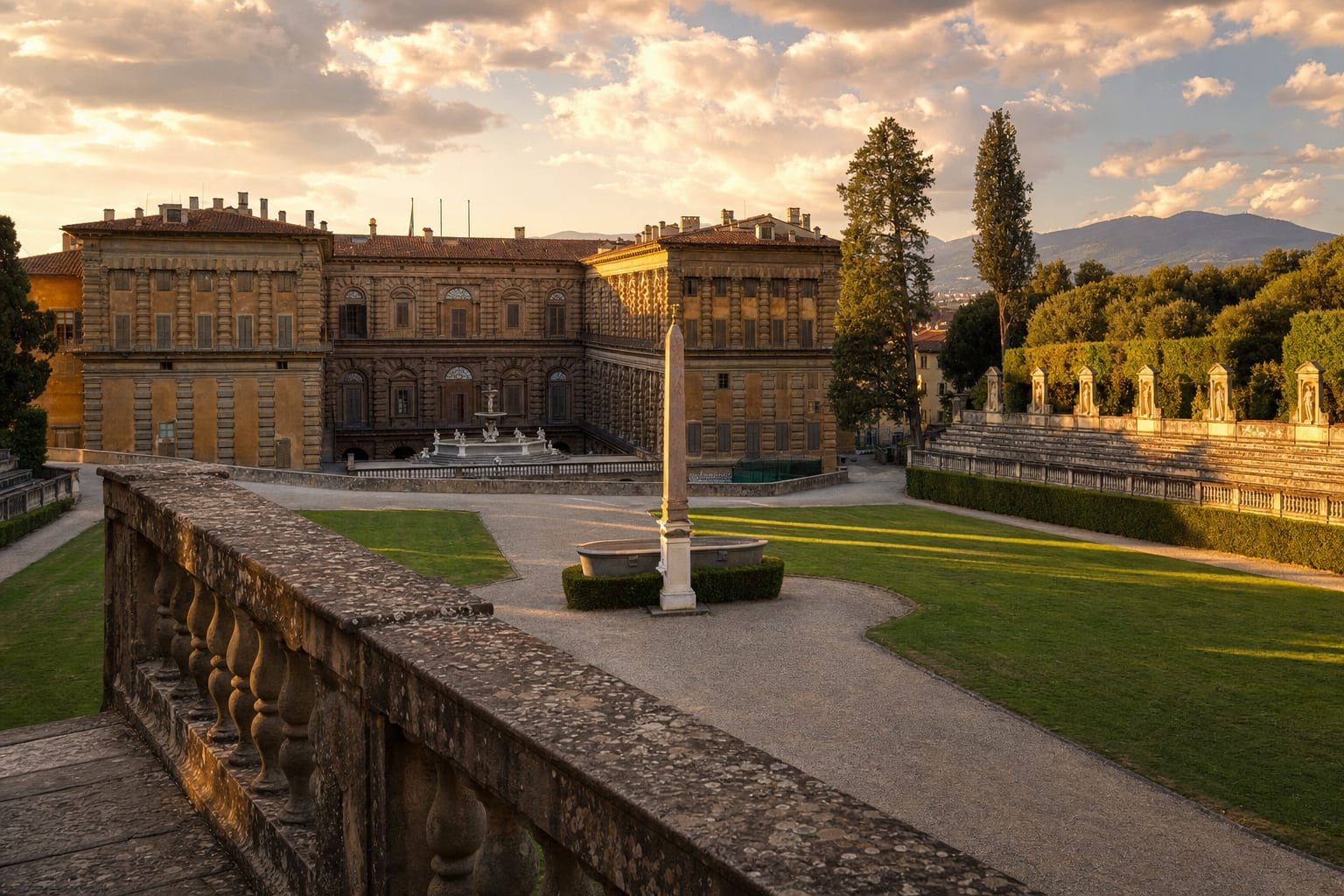 FlorenceBoboli GardensTerraces above Pitti Palace, the Amphitheatre, Buontalenti's grotto, long cypress avenues, fountains, sculpture, and city views.
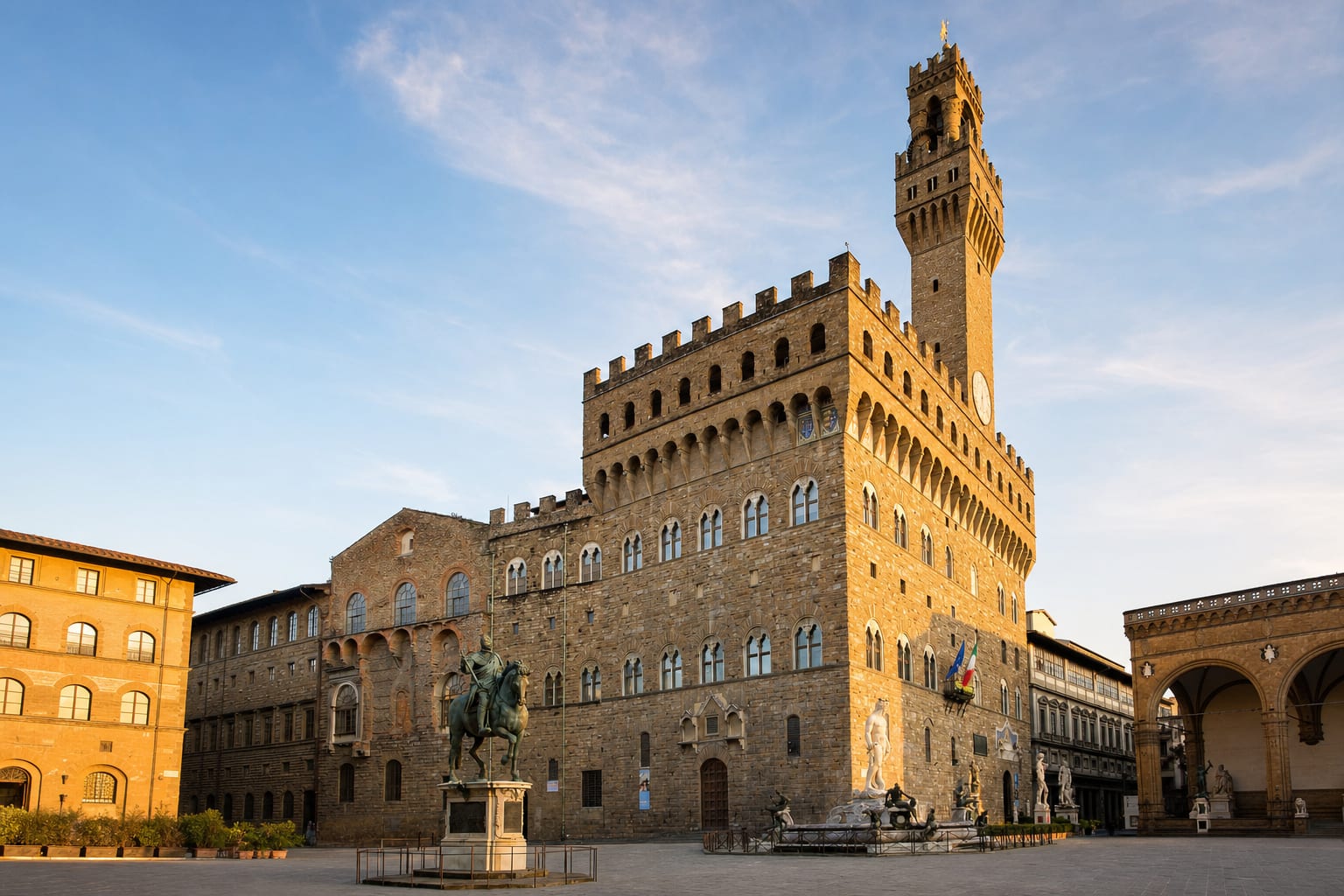 FlorencePalazzo VecchioFlorence's civic palace, Arnolfo's tower, the Salone dei Cinquecento, Medici rooms, and Piazza della Signoria.
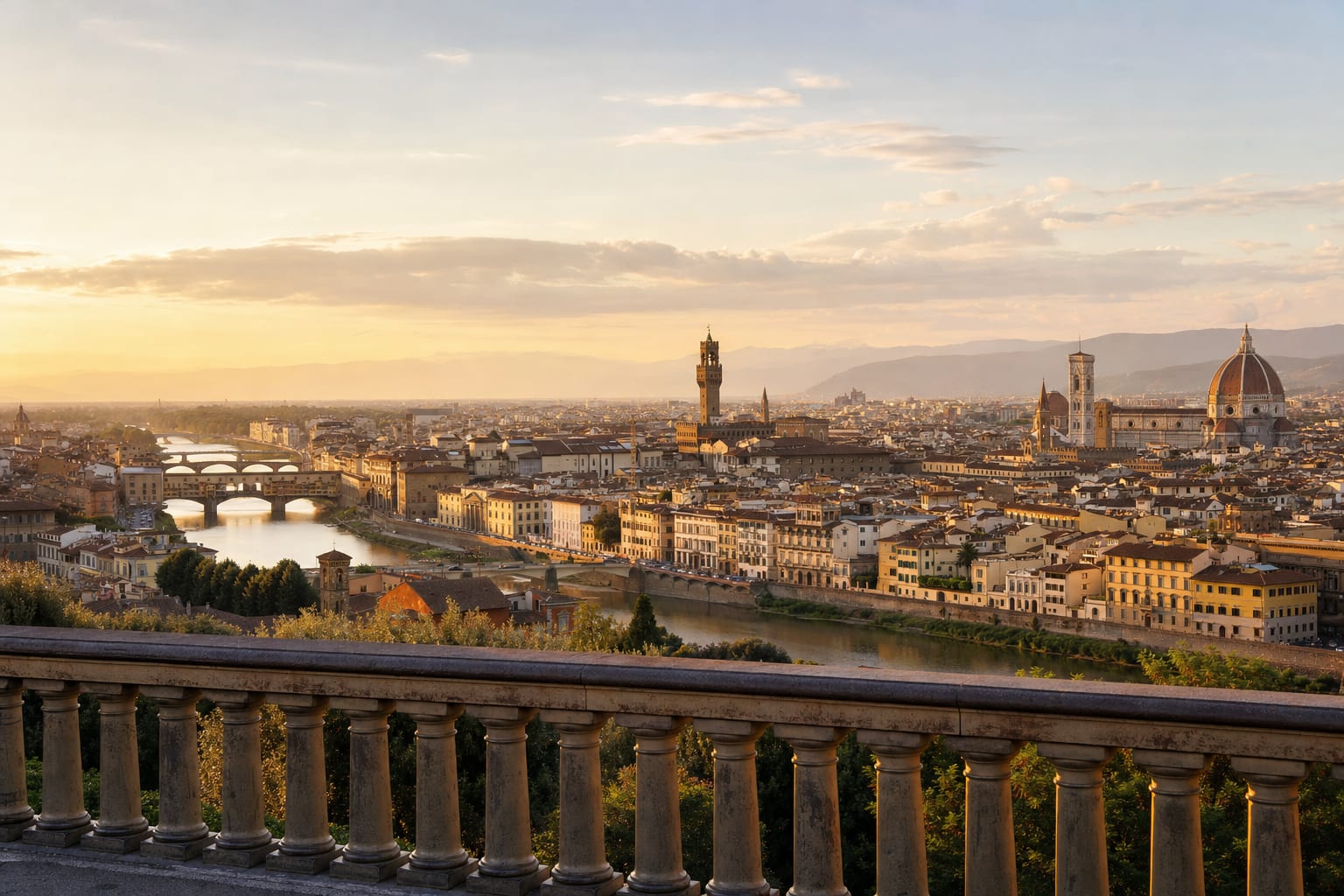 FlorencePiazzale MichelangeloGiuseppe Poggi's panoramic terrace and bronze copies of Michelangelo sculptures.
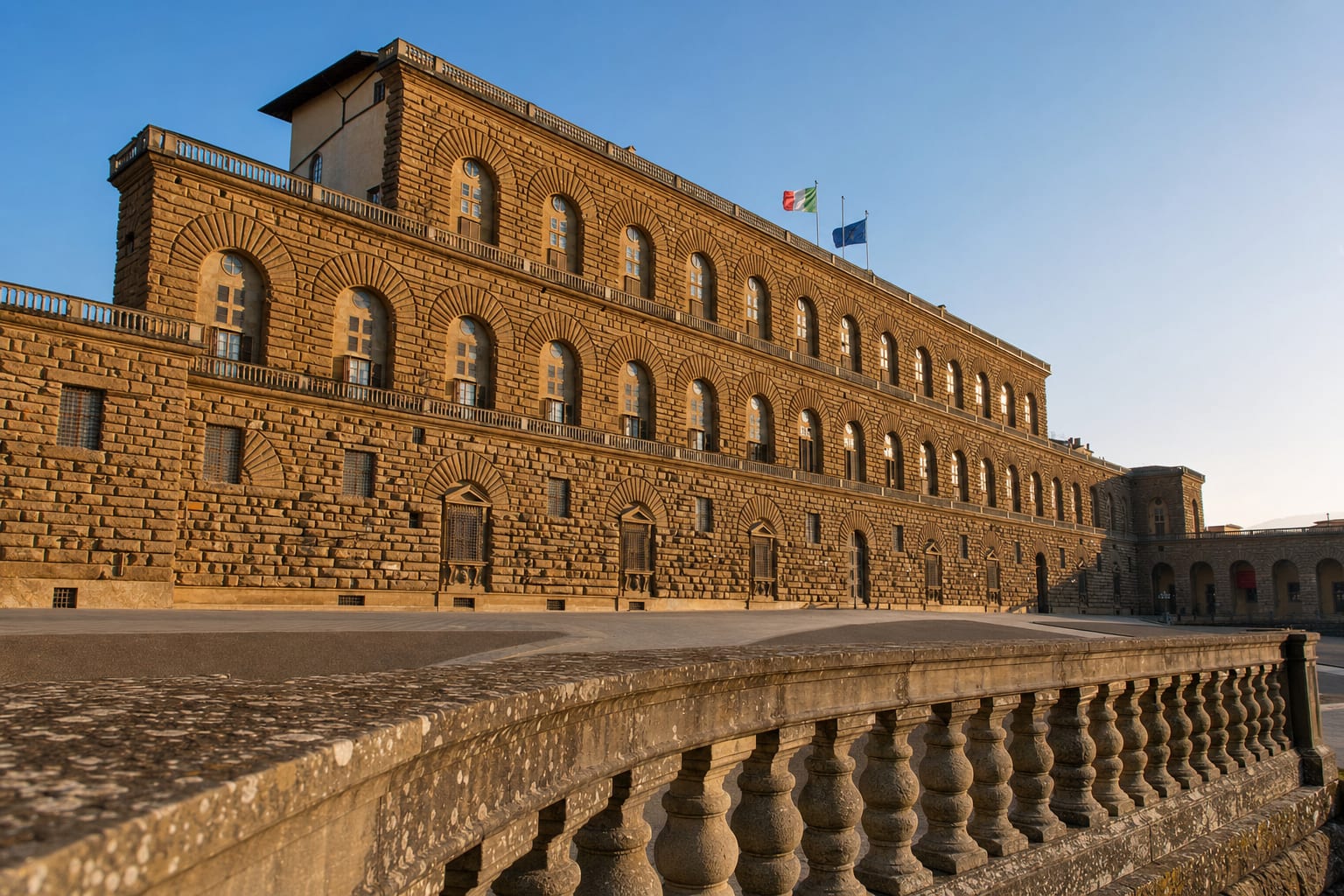 FlorencePitti PalaceThe Palatine Gallery, royal apartments, Medici power, court collections, and its direct connection to the Boboli Gardens.
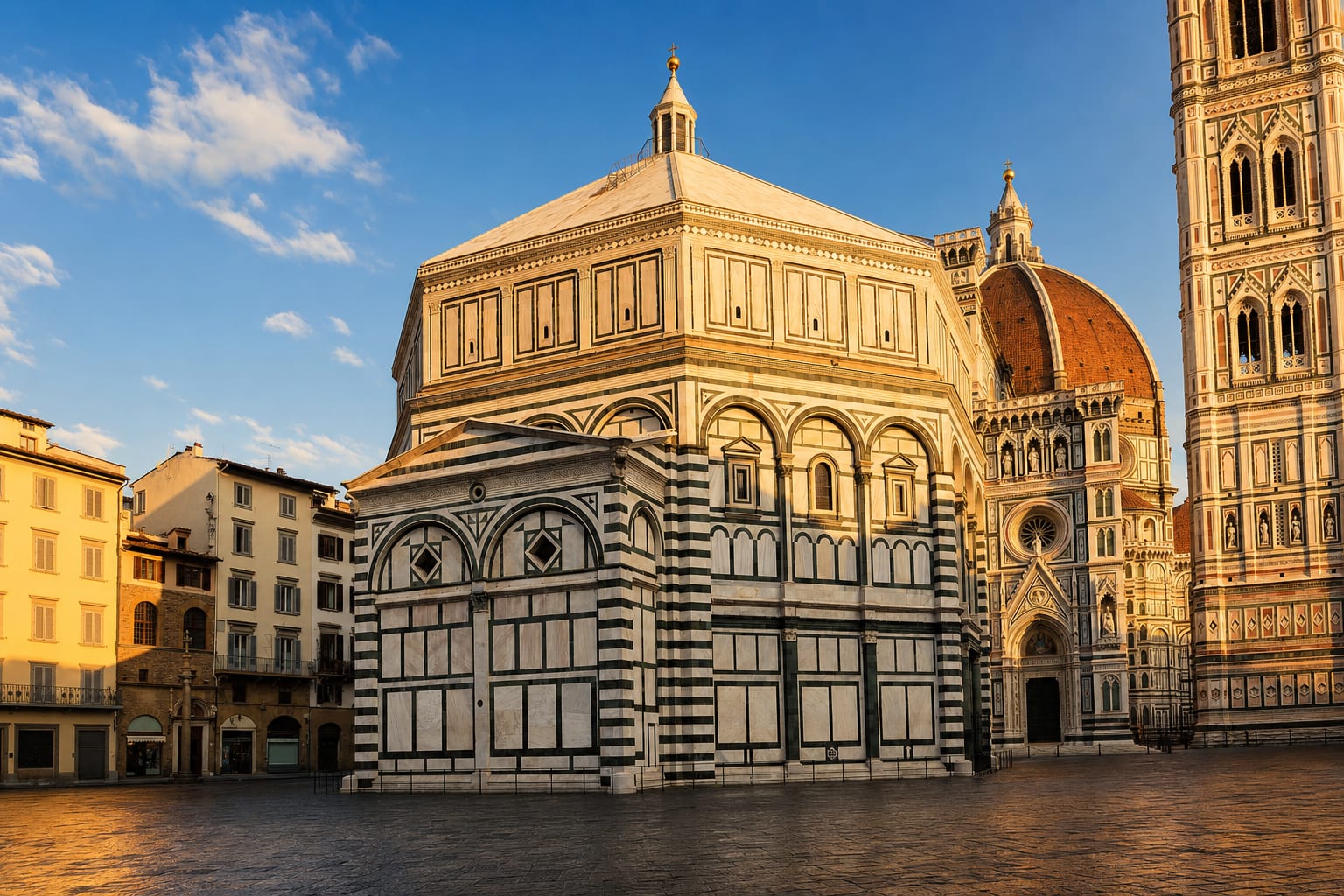 FlorenceFlorence BaptisteryThe octagonal Romanesque building, glittering vault mosaics, Andrea Pisano's doors, and Ghiberti's Gates of Paradise.
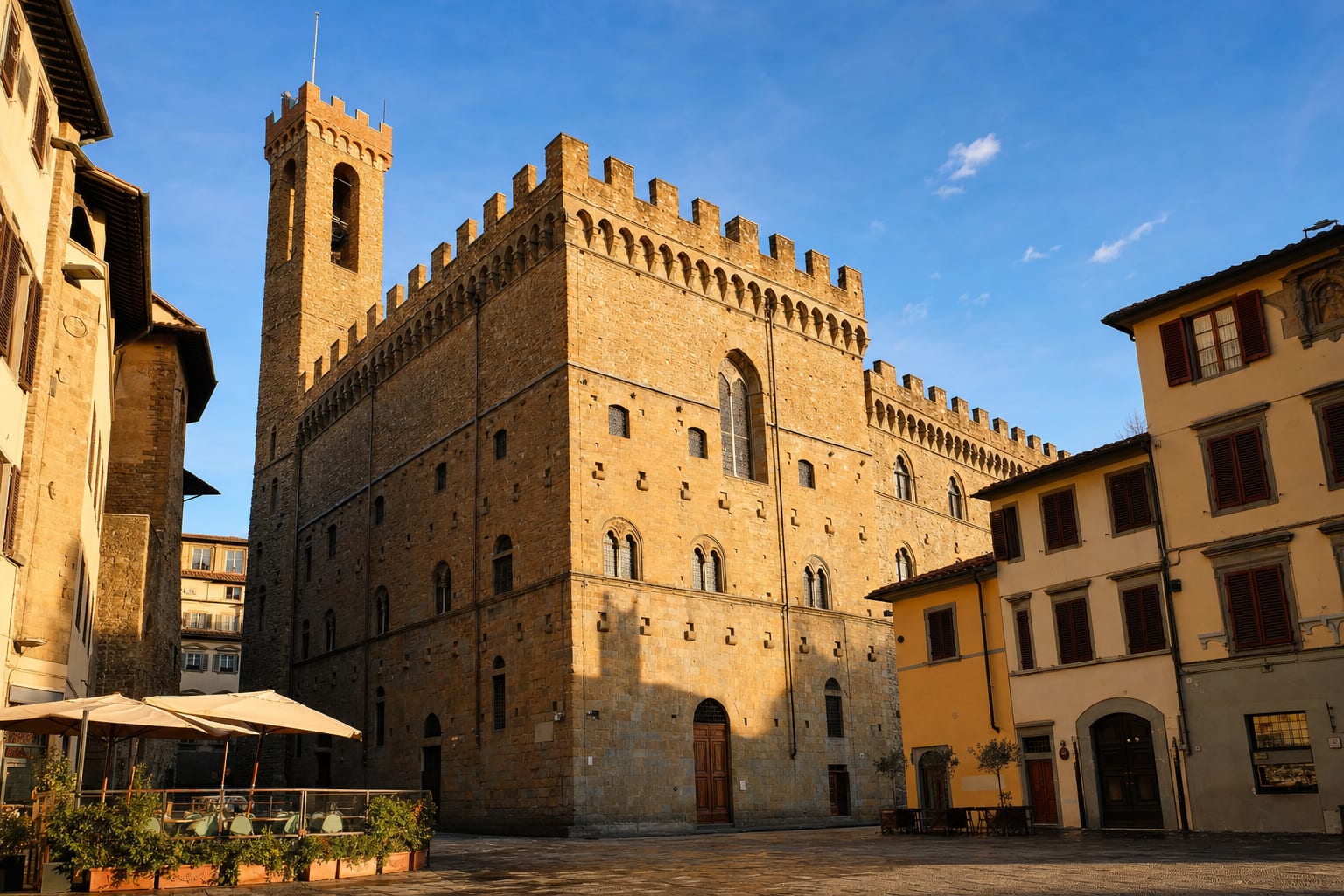 FlorenceBargello National MuseumDonatello's David and Saint George, Michelangelo's early works, Renaissance sculpture, medals, ivories, ceramics, and a severe medieval courtyard.
Reading
Long reads from our writers on the ground.
