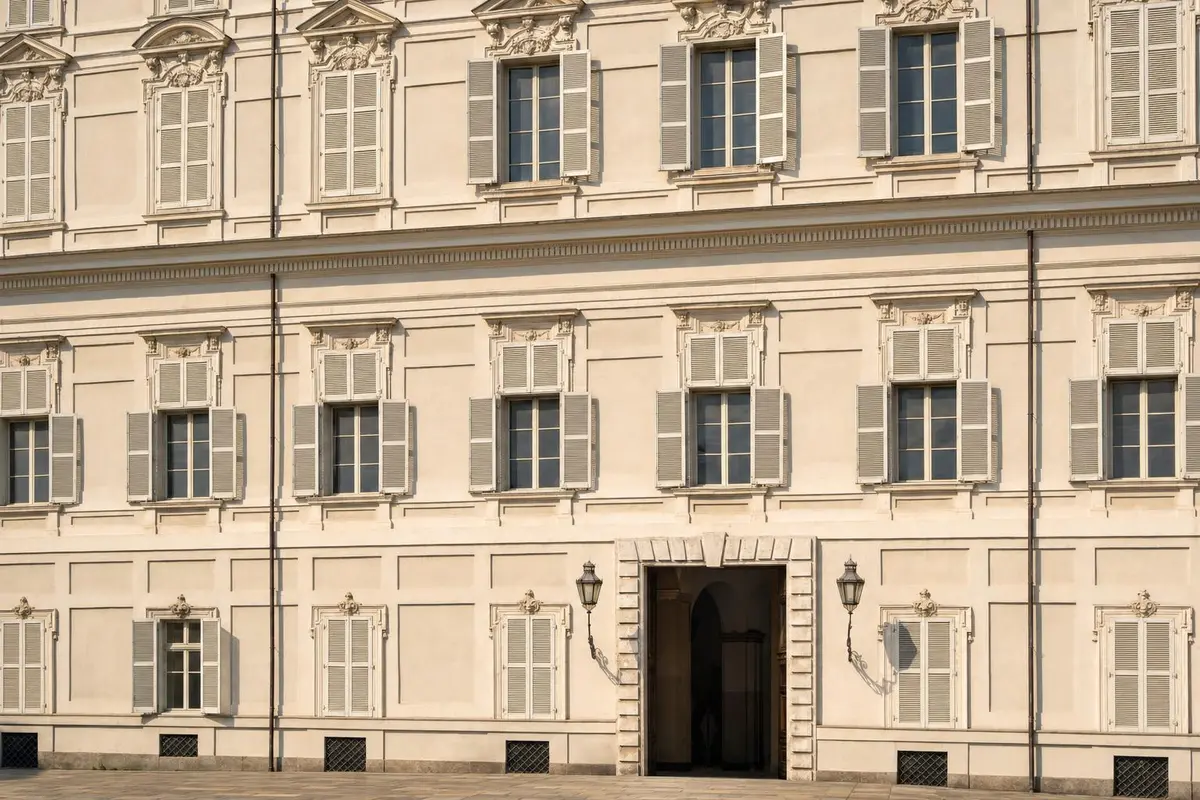
In 1563 Emanuele Filiberto made Turin the capital of the Savoy duchy and established his court in the former bishop’s palace. In 1584 Carlo Emanuele I commissioned Ascanio Vitozzi to design a new residence. After 1643, Amedeo di Castellamonte and Carlo Morello carried the work forward, turning the palace into a building shaped by generations of court life.
The state rooms preserve that layered history in their carved ceilings and large allegorical paintings. Jan Miel and Charles Dauphin worked on the first-floor rooms; Daniel Seyter frescoed the gallery overlooking the gardens, and Bartolomeo Guidobono decorated apartments on the ground floor. A later addition was the Staircase of Honour, built in 1862.
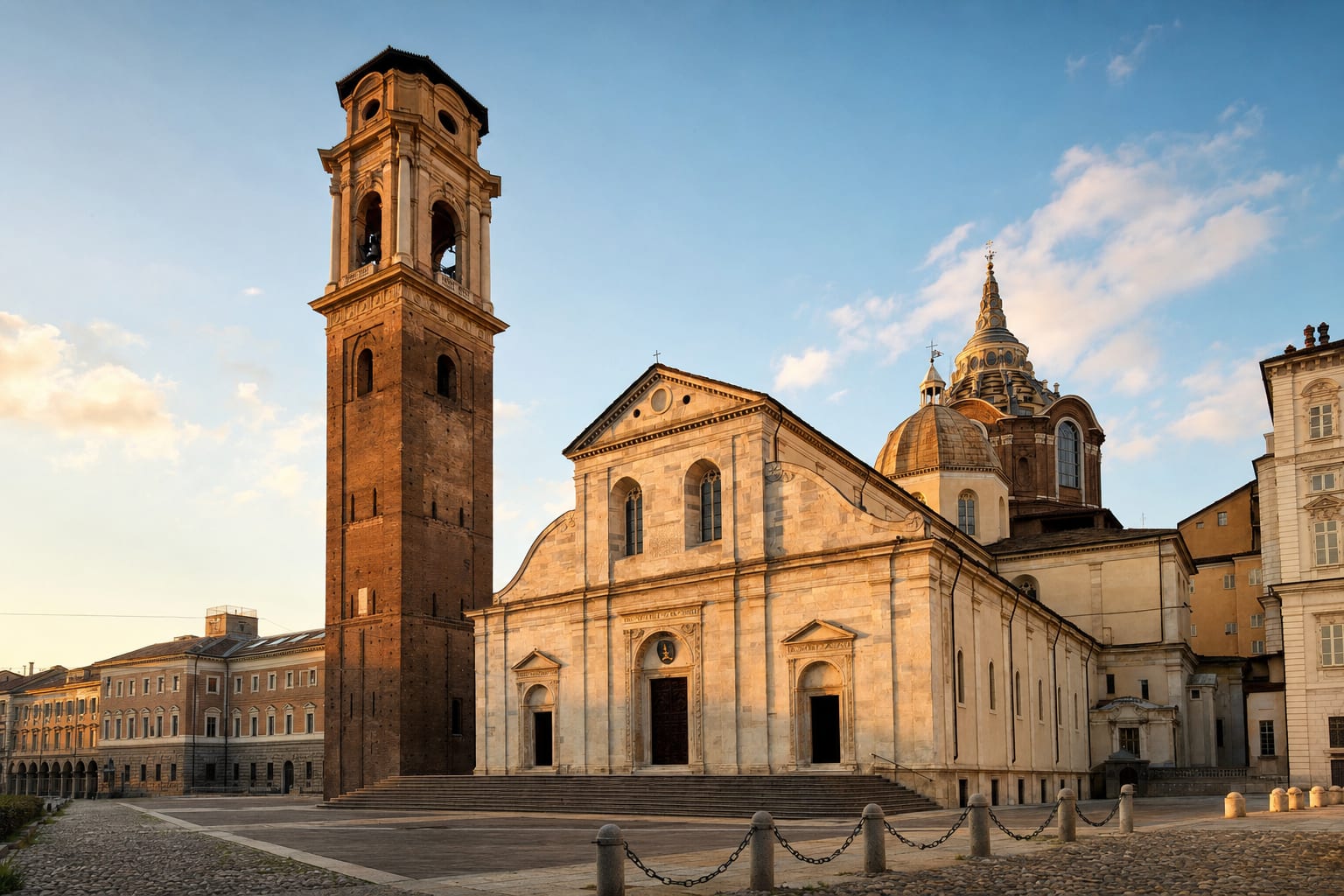
The Chapel of the Holy Shroud carries the itinerary into Guarino Guarini’s Baroque architecture. Guarini inserted three great inward-leaning arches into the older cylindrical body; above them, six staggered tiers of arches converge at the star and dove at the summit. The chapel was built to house the linen relic, now kept in a special case in the left aisle of Turin Cathedral.
A standard Musei Reali ticket gives the day to explore the palace rooms and connected collections, including the Chapel, Royal Armoury, Sabauda Gallery and Museum of Antiquities. Daily openings can vary, and the standard ticket does not include exhibitions in the Sale Chiablese; check each exhibition’s current ticket terms. Allow about three hours for a visit, or longer to explore more of the collections; the ticket allows a pause and re-entry during the day.