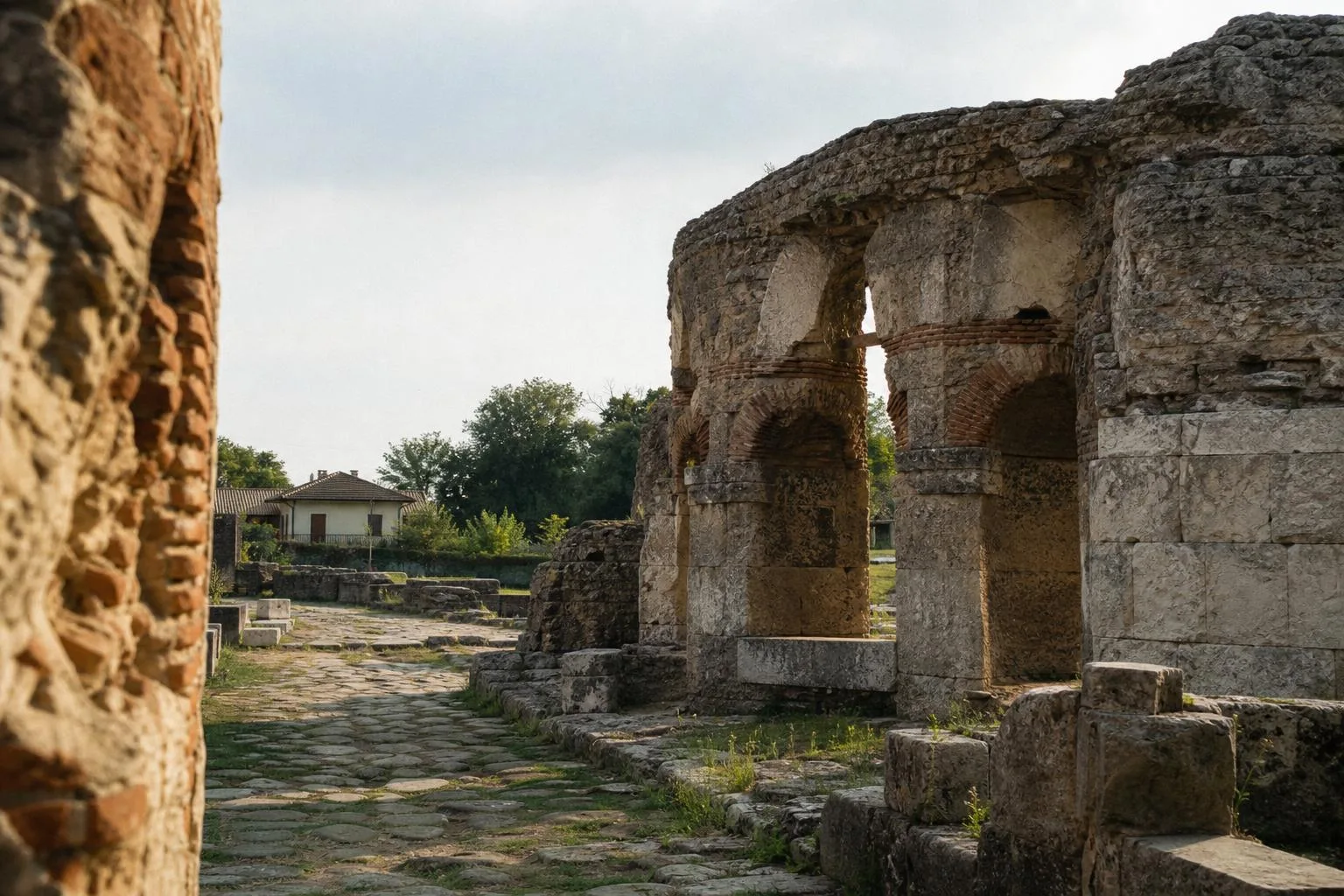
Ligurian Dectunini tribespeople founded Libarna in the second century BC, and its fortunes rose sharply after 148 BC, when the new Via Postumia routed trade directly through the settlement, turning it into a substantial commercial and administrative center.
The city gained Latin citizenship in the first century AD, prospering enough to build an amphitheater, forum, theater, public baths and residential quarters whose remains are unusually legible today. Barbarian invasions ended Libarna's independent life in 452, when its remaining inhabitants relocated to the nearby communities of Serravalle and Arquata Scrivia rather than rebuild, leaving the site to be reclaimed gradually by the countryside. The Turin Museum of Antiquities holds many of the best-preserved artifacts, while a modest on-site museum at Serravalle Scrivia doubles as a venue for local musical and artistic events.