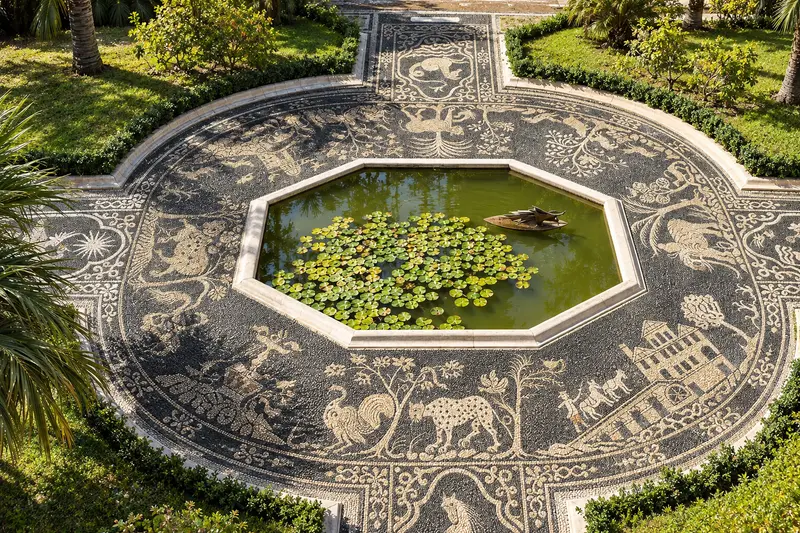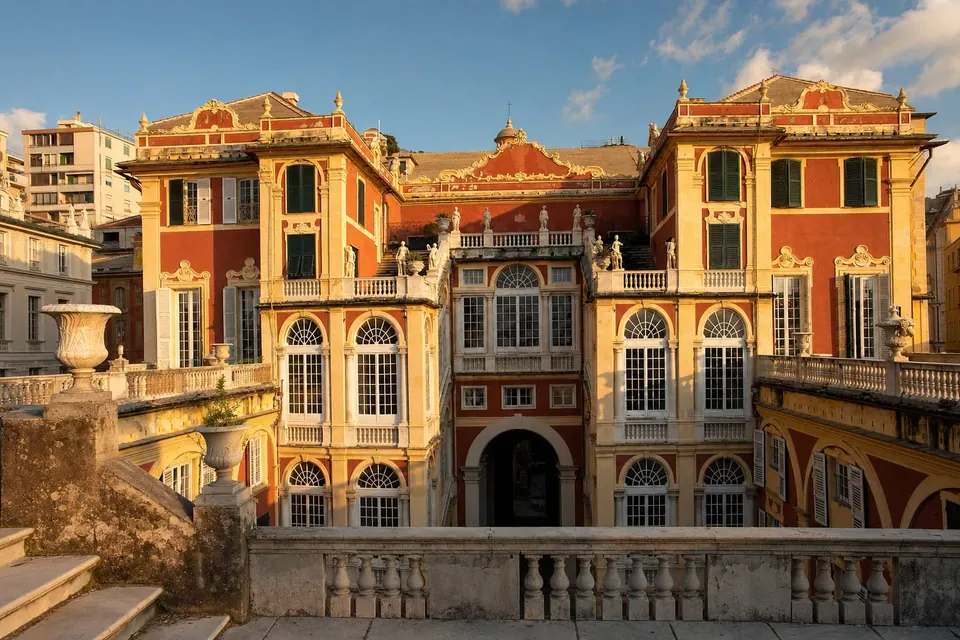
On Via Balbi in Genoa, Palazzo Reale brings together the ambitions of an aristocratic household and the ceremonies of a royal court. The Balbi built the residence between 1643 and 1650. Eugenio Durazzo bought it in 1679 and commissioned an enlargement that gave the palace its monumental staircases, courtyard and garden spaces, with work entrusted to Carlo Fontana.
The Galleria degli Specchi is the great Durazzo statement. Gerolamo Ignazio Durazzo commissioned its decoration from Domenico Parodi; the gallery’s scheme, developed in the 1720s and 1730s, interprets the traditions of Roman galleries and Versailles through Genoese painting and decoration. It was a setting for important gala dinners, including those honouring Joseph II in 1784 and Napoleon in 1805. Earlier on the second-floor route, Parodi’s ceiling in the Sala del Tempo shows Truth unveiled by Time.
The Savoys acquired the palace in 1824 and adapted its rooms for royal use. The Sala del Trono has two large canvases by Luca Giordano, while the Galleria della Cappella preserves Filippo Parodi’s Christ at the Column. Van Dyck’s portrait of Caterina Balbi Durazzo hangs in the Sala delle Udienze. In the Sala del Veronese, the painting has a different story: Carlo Alberto sent the original to Turin in 1837, and a seventeenth-century copy already in the palace took its place. The Sala degli Arazzi adds two large tapestries woven in Paris in the early seventeenth century.
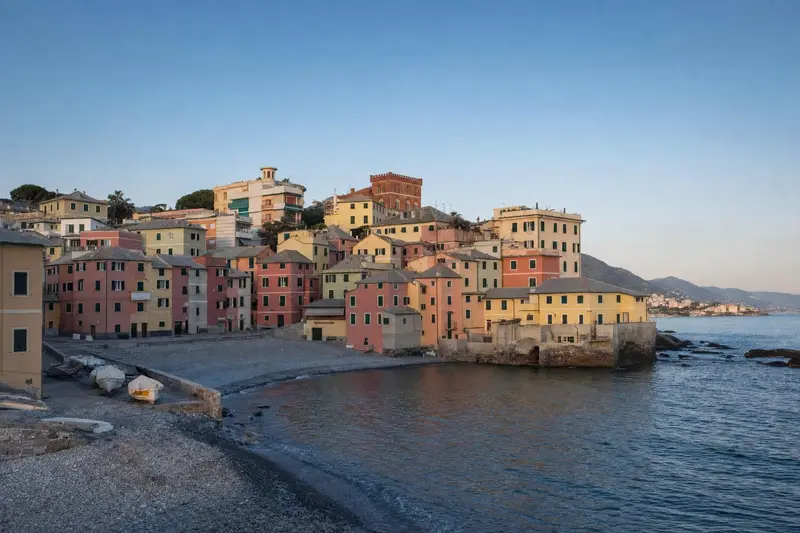
These rooms place the palace within the wider story of Genoa. Palazzo Reale is included in the UNESCO-listed Strade Nuove and Palazzi dei Rolli ensemble. Follow that connection to understand the city’s palace streets, and use the room sequence here to distinguish Durazzo display from the later Savoy state rooms. Check the museum’s current route before setting out, since individual rooms and garden access can be restricted.
Look from the ceiling to the mirrors
In the Sala del Tempo, first find the painted figure of Time. In the Galleria degli Specchi, stand clear of the doorway and move a few steps along the room to watch the reflections change. Continue to the Throne Room and compare that ambition for display with the later royal furnishings. Check the museum’s route and hours on your date. During some shortened visits the mirrors and Throne Room remain open while the royal apartments are closed. Access to the hanging garden is suspended during works.
Vittorio Emanuele III donated the palace to the Italian State in 1919. Its second piano nobile, the principal reception floor, opened to the public in 1922. The museum preserves the successive layers of Balbi, Durazzo and Savoy patronage.