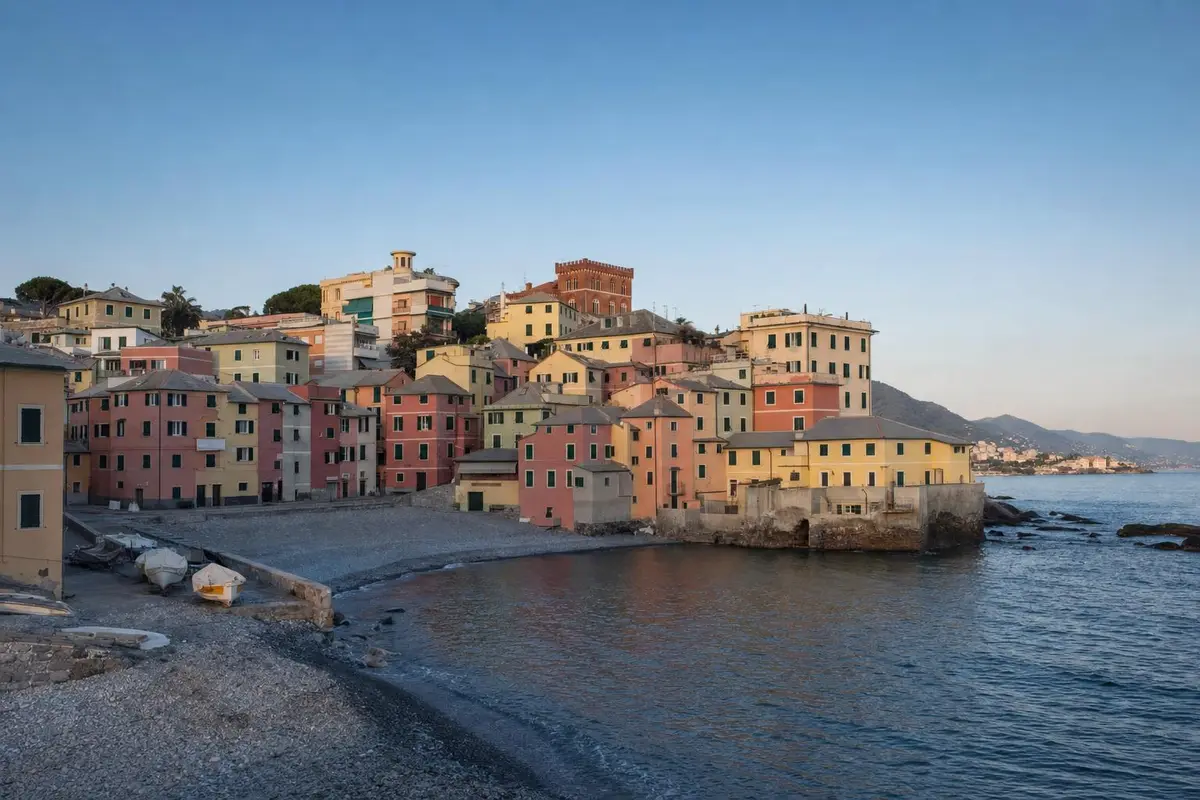
At the end of Corso Italia, Boccadasse brings Genoa down to the scale of a fishing cove. Houses stand close to the pebble beach, with small boats, fishing nets and stone steps between the buildings and the water. The village lies between the promenade and Capo Santa Chiara. Its interest is in that compact arrangement: a shore still framed by the houses of an old fishing settlement inside the city.
Approach along Corso Italia from Piazza Rossetti in Foce. Built in the early twentieth century, the promenade runs for about 2.5 kilometres to Boccadasse, passing San Giuliano’s abbey and fort along the way. It gives the cove a different context from a quick arrival at the beach: the broad city seafront ends in a much smaller space, where the houses face directly onto the landing.
Sant’Antonio marks another side of the village’s connection with the sea. The church is traditionally associated with seventeenth-century fishermen. From here, the creuze, narrow lanes between the houses, climb towards views of the sea and Castello Türke above Capo Santa Chiara. See the cove from the shore and again from the lanes. Allow about an hour as a suggested stop, longer if you add the Corso Italia walk. Our Genoa guide puts this stretch of coast into a wider city visit.
Read the cove from both levels
From Corso Italia, descend Via Aurora for a first look across the landing. At the water, see how the narrow stone steps make room between doorways, boats and the beach. Then go back toward Sant’Antonio and look down from higher up. Allow about an hour for the cove and lanes, plus time for the promenade. If you need accessible beach facilities, check before setting out. The 2026 summer arrangements for mats and assistance were seasonal.