Skip to content

Sacred Spring of Su Tempiesu

Sardinia's best-preserved Nuragic sacred spring, rediscovered by chance near Orune in 1953.

  • Orune
  • Archaeological site
Where
Orune
Best for
Best-preserved Nuragic sacred spring
Allow
45 minutes

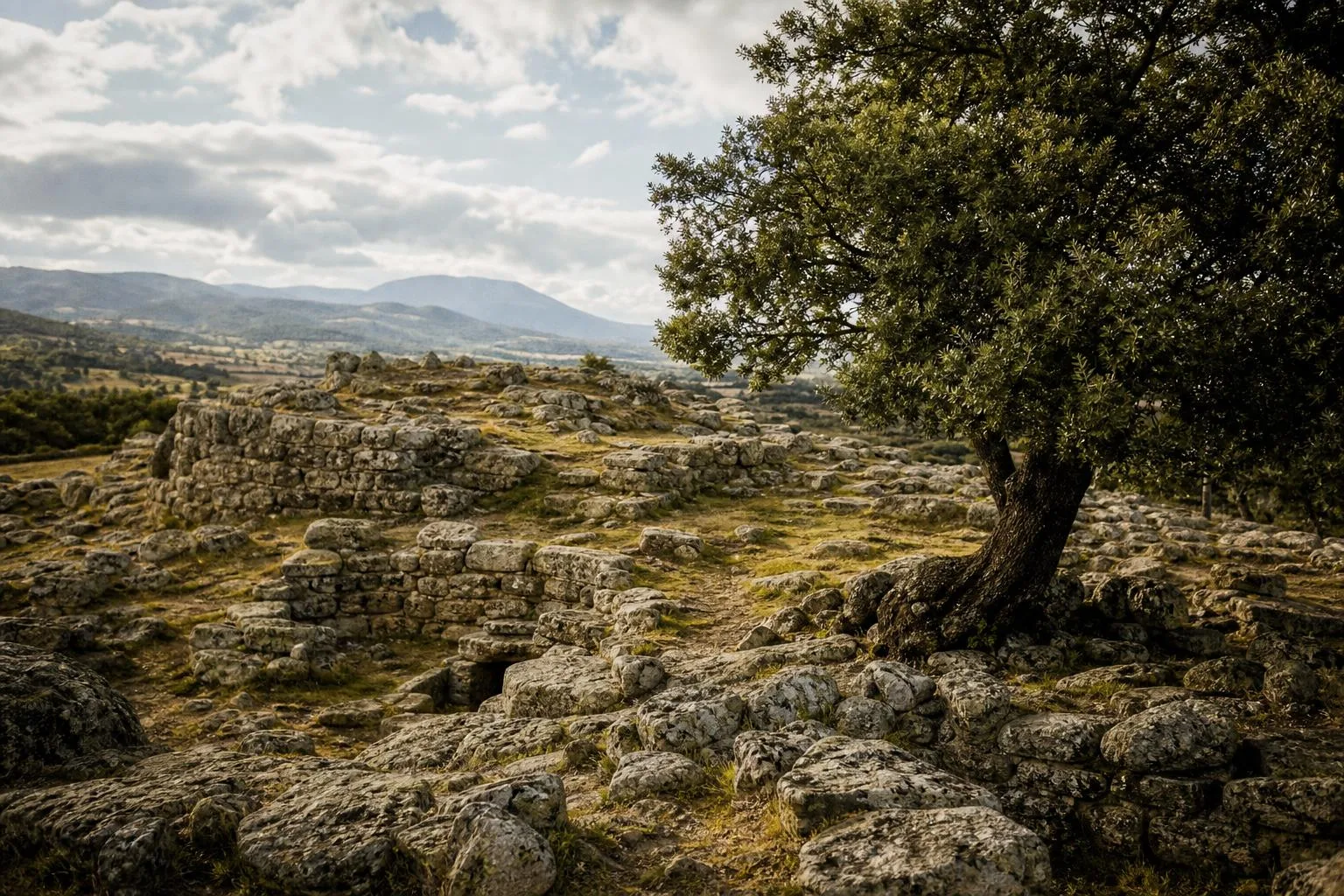
A landslide buried this Nuragic sacred spring sometime around the ninth century BC, and it lay forgotten until 1953, when workers doing water-vein maintenance broke into it by accident near Orune.

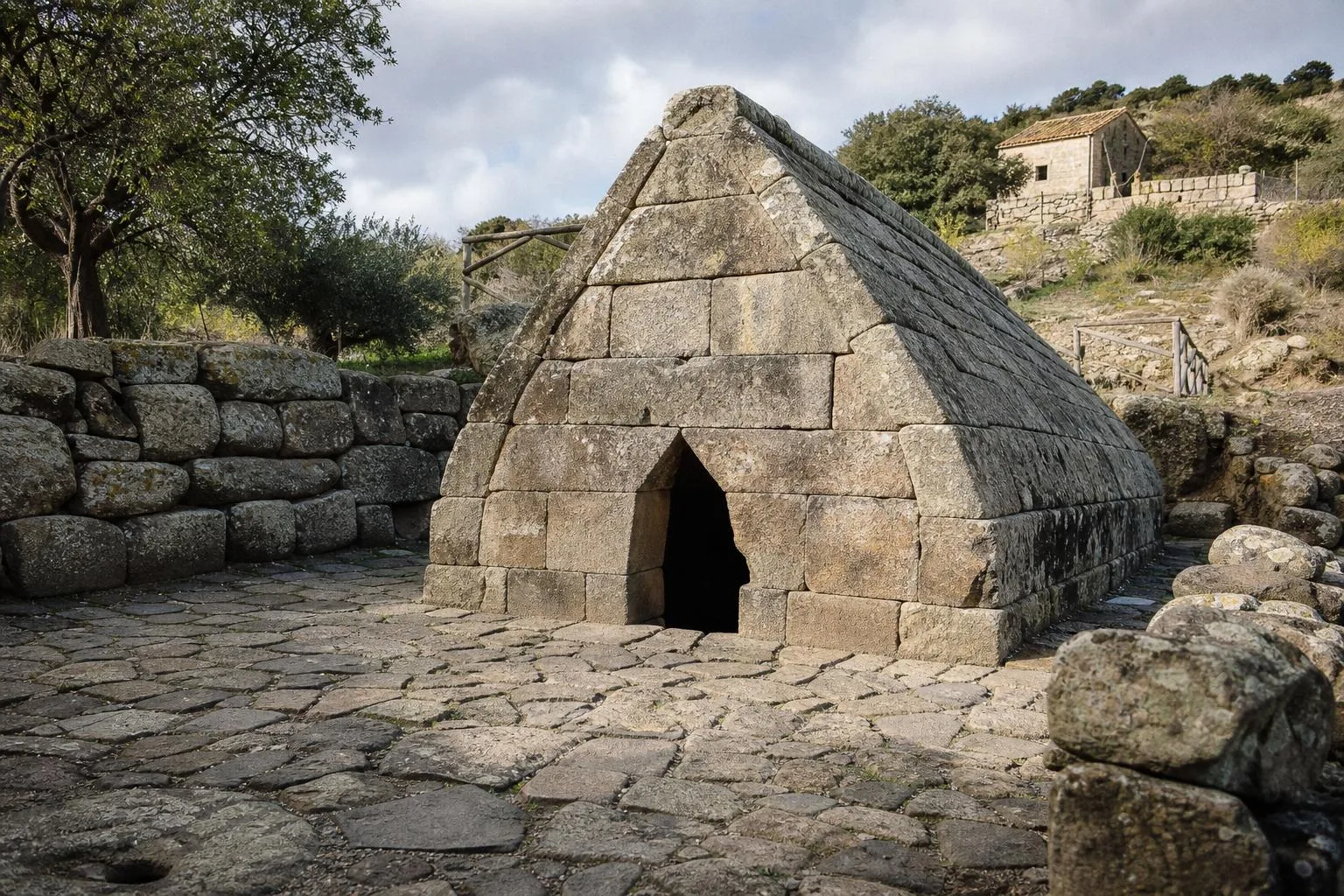
What they found was the best-preserved sacred well of its kind on the island: a spring chamber built from precisely cut basalt blocks in true isodoma masonry, its double-pitched roof rising to about 1.8 meters, preceded by a vestibule and a smaller mirror-image spring beside it. Excavations in the 1950s and restoration campaigns in 1981-86 and 1998, led by archaeologist Maria Ausilia Fadda, recovered bronze swords, daggers, fibulae and votive figurines of bearded warriors and a shepherd, now displayed at Sassari's national archaeological museum. Fewer than five thousand people visit each year, keeping the site's silence intact.
Four things worth finding

If you see nothing else, see these.

  1. The spring chamberNuragic, about 13th century BC

    A four-step stair leads down to a corbelled chamber about 1.8 meters high, built from eleven courses of precisely cut basalt blocks, a masterpiece of isodomic masonry.Main structure against the schist cliff

  2. The gabled basalt roofNuragic

    The blocks are wedge-shaped and fit without mortar. Thirty-two breast-shaped knobs were carved on the stones, and twenty bronze swords once crowned the gable.Over the vestibule and spring

  3. The little mirror springNuragic

    A second, miniature spring repeats the large one and collects its overflow, with a thin green steatite spout where the water drips.In the vestibule

  4. The bronze votive offeringsNuragic bronzeworkers

    Swords, daggers, pins and figurines of bearded warriors and a shepherd, found in the small spring. Seeing them in Sassari completes the visit.Displayed at the national archaeological museum in Sassari, not on site

Plan your visit

Everything you need before you go.

Booking
No booking needed
Time needed
45 minutes
Best time
A weekday morning in spring or autumn, when the walk in from Orune is coolest
Getting there
About 5 km from Orune on a paved road, then an 800-meter walk to the spring; there is no public transport, so a car is necessary.
Accessibility
The final approach is an unpaved footpath; not accessible to wheelchairs.

Go slowly on the final stretch and look for the smaller, mirror-image spring beside the main chamber: many visitors focus on the main structure and miss it.

Get directionsGoogle MapsApple Maps

Good to know

How long should you spend at Su Tempiesu?

About 45 minutes, including the short walk in from where the paved road ends. The spring itself is small, so the time is well spent looking closely at the masonry. Add a little if you want to sit and enjoy the silence.

Is Su Tempiesu worth visiting?

Yes, it is the best-preserved Nuragic sacred spring on the island, built of finely cut basalt blocks. Few people come here, which keeps its hush intact. It is a fine stop if you are already exploring Orune and the Nuoro area.

Can you reach Su Tempiesu without a car?

Not realistically. A paved road runs from Orune to a visitor facility, and from there an easy path leads to the spring. There is no public transport, so a car is necessary.

A letter from Italy, once a month.

The places, tables and makers we found worth your time. One email, no noise.

One letter a month. Unsubscribe at any time. We never share your address.

Help us get it right

What is it about?