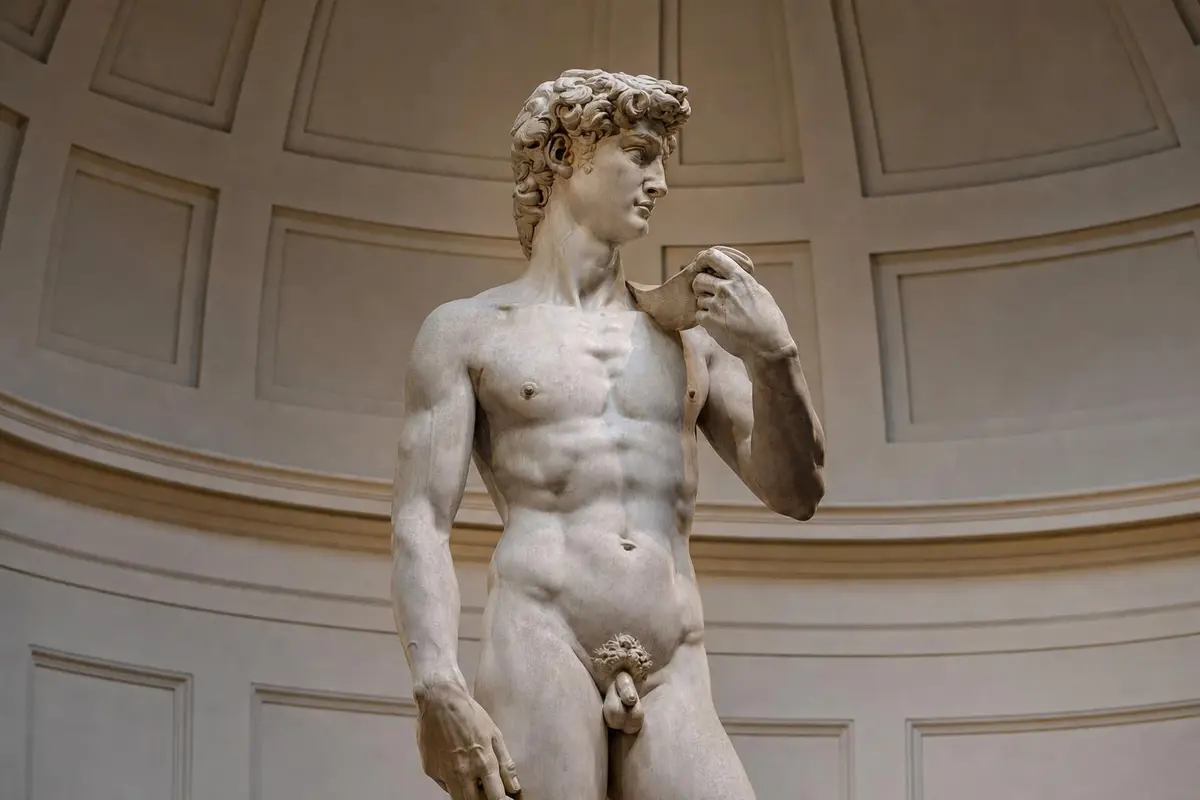
Come for David, then stay with the works around him. The Galleria dell’Accademia brings Michelangelo’s finished marble into conversation with figures still bound to their blocks, while paintings and musical instruments widen the story. This is Florence’s Accademia, a different museum from Venice’s Gallerie dell’Accademia.
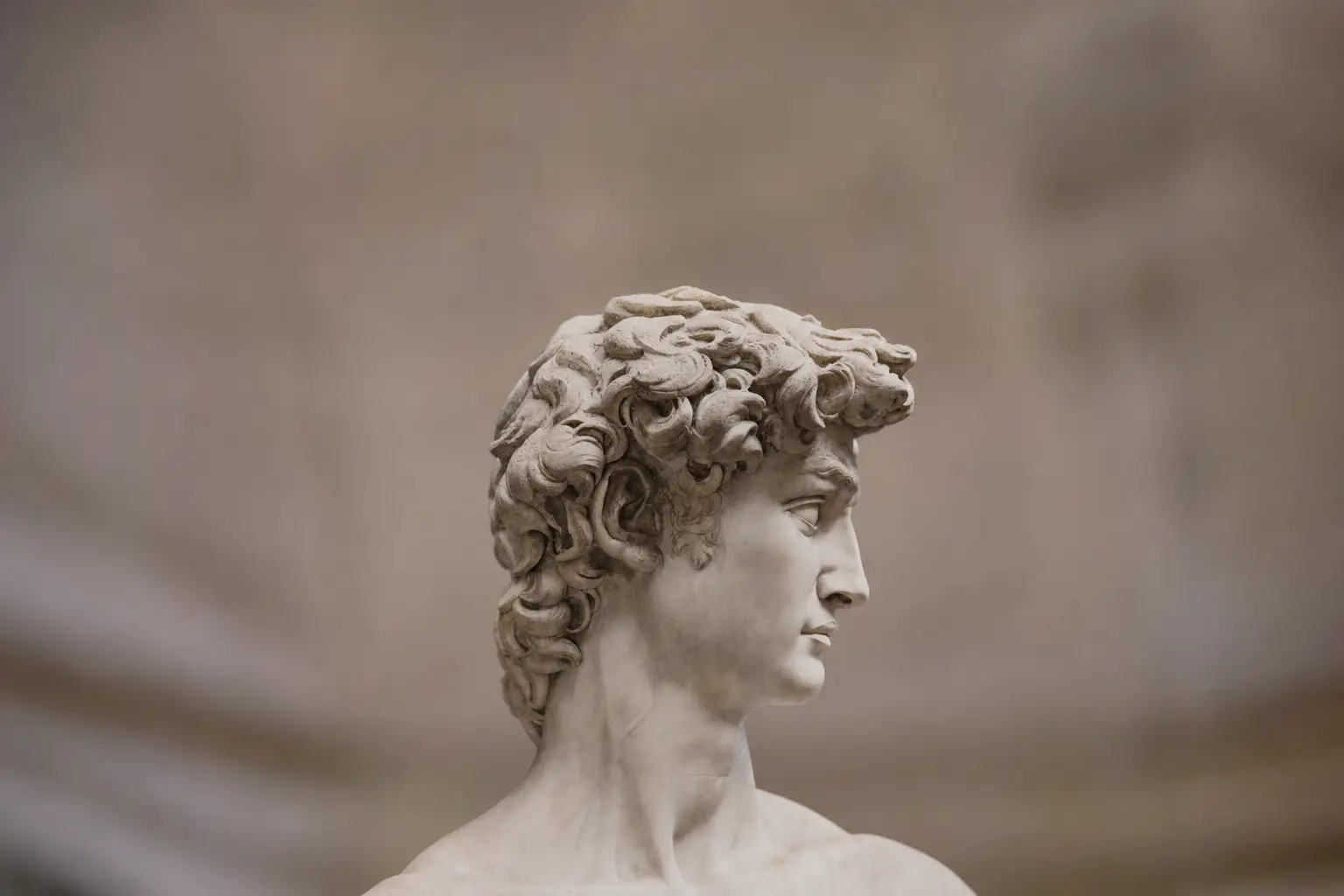
From a civic square to the Tribune
Marble at different stages
The Prisoners belonged to the changing project for Pope Julius II’s tomb. Their unfinished surfaces preserve tool marks and parts of the original blocks, offering a close view of carving in progress. Compare them with David without treating the difference as a simple contrast between failure and completion.3
Beyond Michelangelo
The gallery’s origins lie in the reorganisation of the Florentine art academy in 1784. Its painting collection includes gold-ground religious works, while the musical instruments connect the visit with Medici court culture. Stradivari’s tenor viola, made in 1690, is a particularly focused way into that other Florentine world.2,4,5