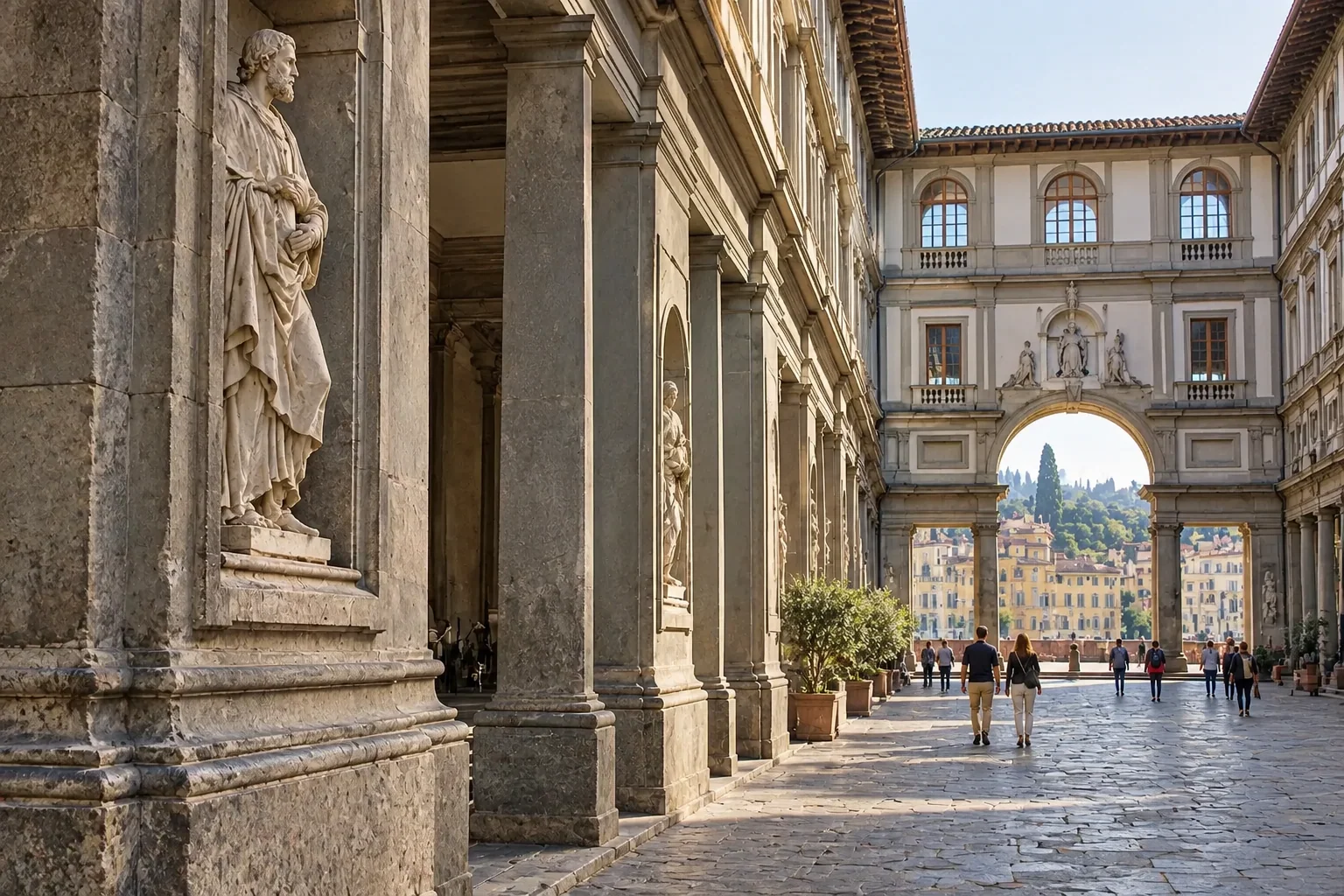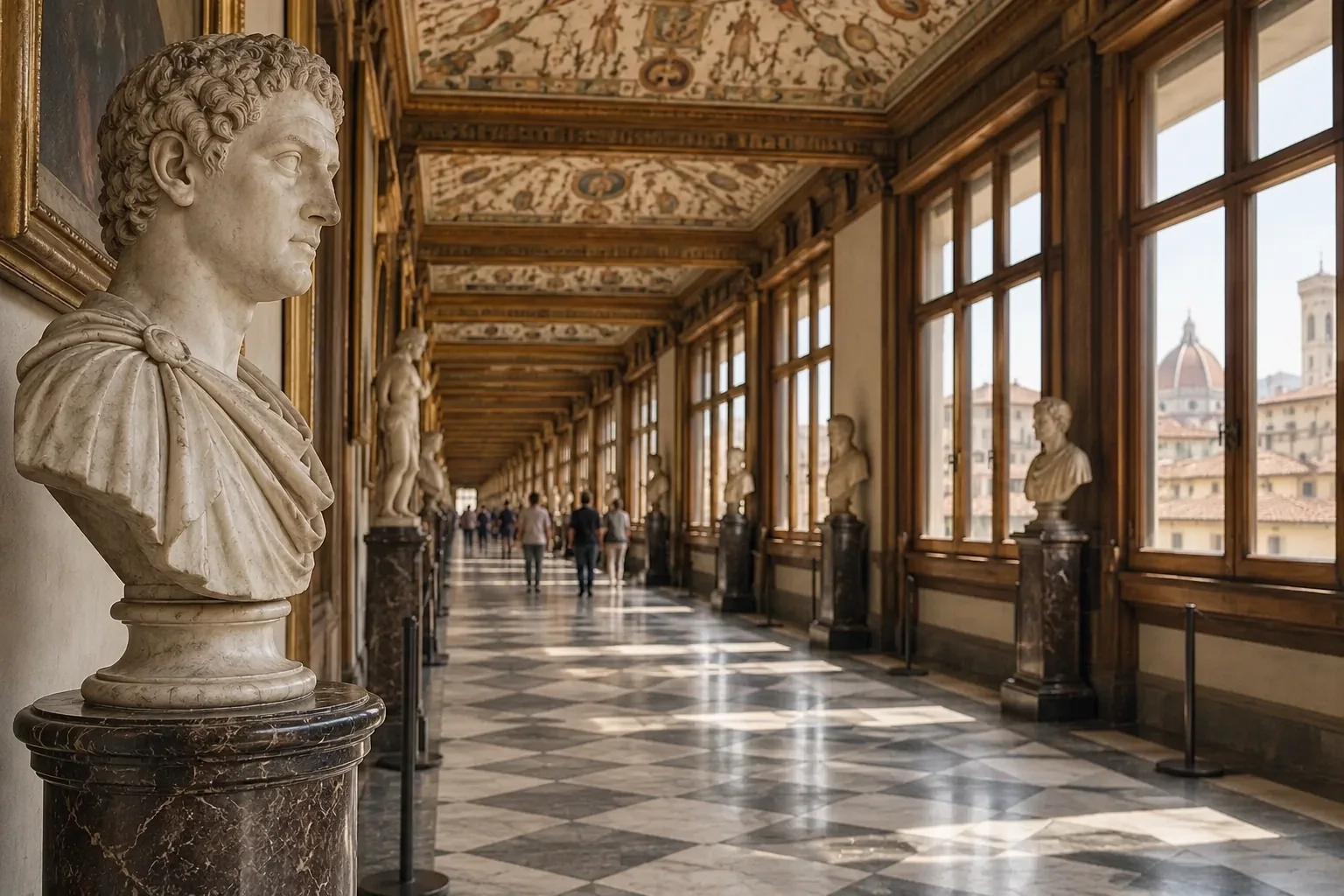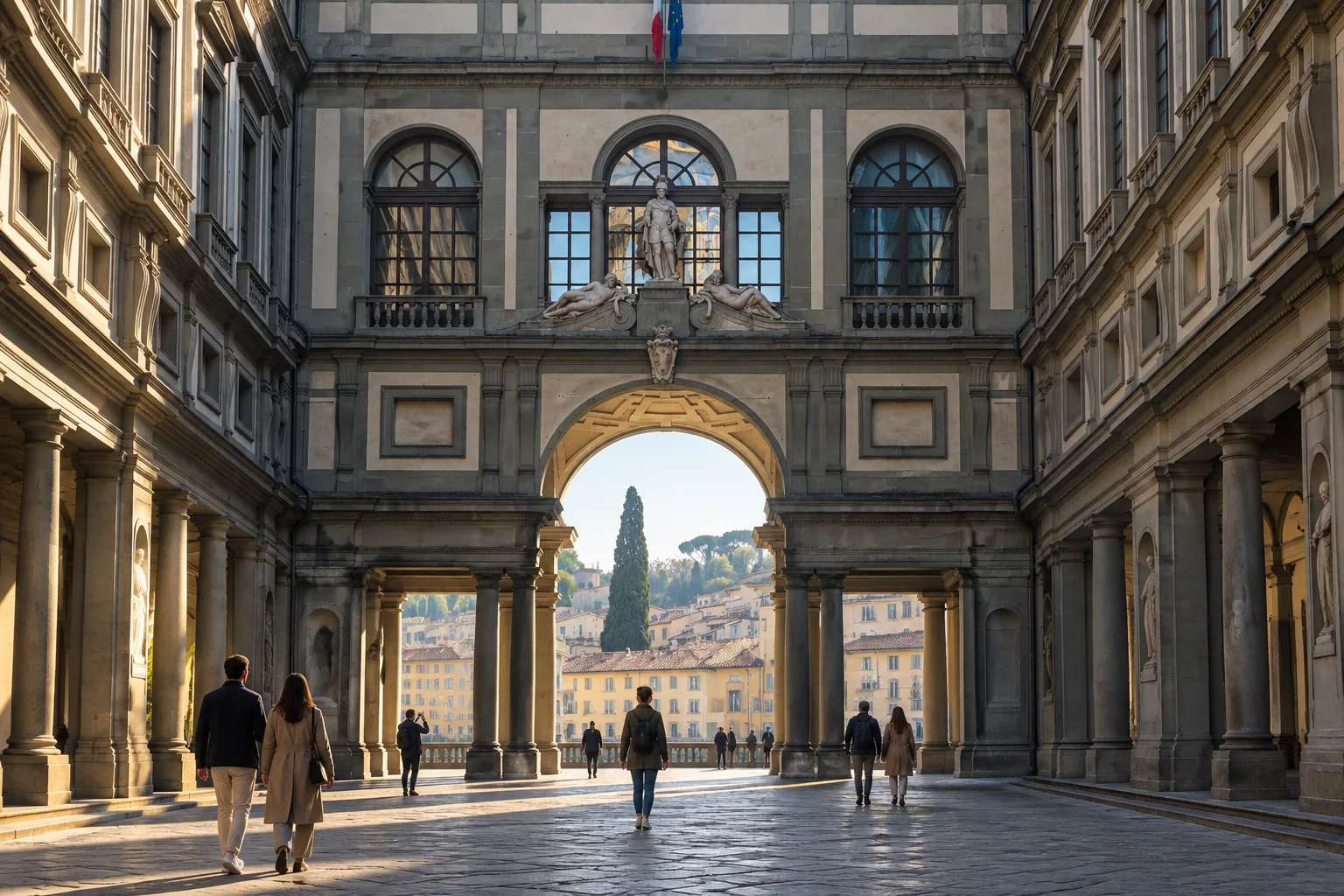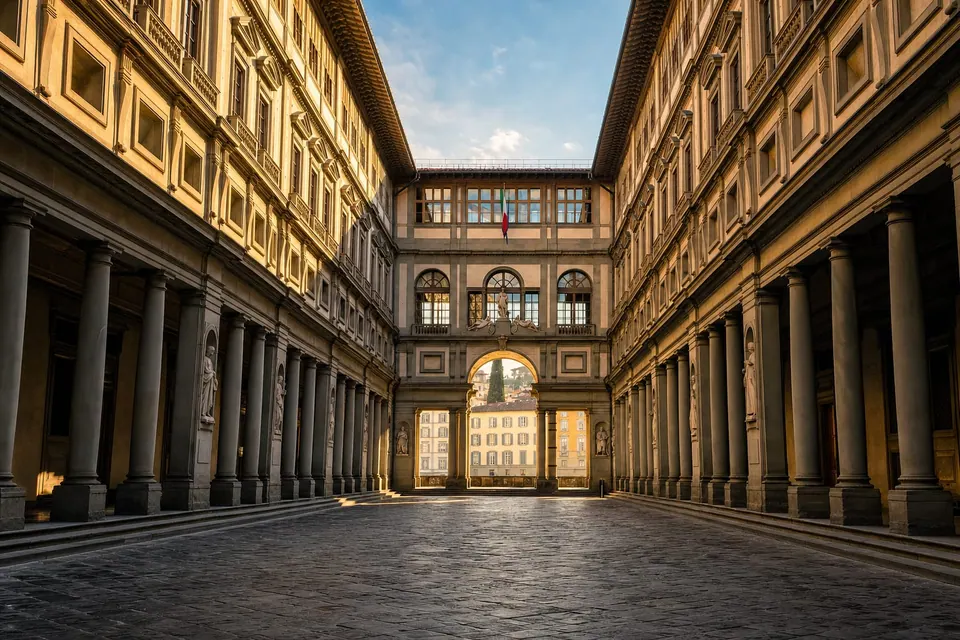
The Uffizi is not simply a museum with famous paintings. It is Florence's old machinery of power turned into a museum, a long Vasari building made for Medici administration and later filled with the art that helped define the city's idea of itself. Its corridors still feel ceremonial, lined with ancient sculpture from the Medici collection, while the rooms open into one of the world's densest sequences of medieval and Renaissance painting.
Most visitors come for Botticelli, and rightly so. But the Uffizi is more powerful when read as a progression: gold ground altarpieces giving way to bodies with weight, perspective opening space, portraits sharpening into psychology, sacred scenes becoming human drama. Giotto, Piero della Francesca, Filippo Lippi, Botticelli, Leonardo, Raphael, Michelangelo and Caravaggio are not isolated trophies here. They form an argument about how Western art learned to see.
The practical challenge is emotional as much as logistical. This is a museum that can exhaust you by abundance. Book ahead, choose your priorities, and let a few rooms matter deeply instead of trying to conquer the whole collection. If you are pairing it with the Accademia or the Duomo, put the Uffizi first thing in the day, while your eyes are still fresh.
The Uffizi is an institution before it is a greatest-hits gallery
The Uffizi is one of the places where Florence's civic machinery, court culture, and art history meet in the same building. It occupies the first and second floors of the long structure designed by Giorgio Vasari and built between 1560 and 1580. It holds ancient sculpture and paintings from the Middle Ages to the modern period. That range is the point of departure. The museum is not simply a route between famous paintings. It is a long historical argument, expressed through architecture, collecting and the changing uses of art.1
The word uffizi means offices. Cosimo I de' Medici commissioned the building as an administrative headquarters for Florence's tribunals, guilds, corporations, and courts. This original function changes how the architecture reads. The long sequence of rooms and corridors belongs to a building made for the administration of a powerful city, later shaped into a museum that holds a major collection of art. A good visit notices both stories: the art and the institution that makes its survival, custody, display, and interpretation possible.2
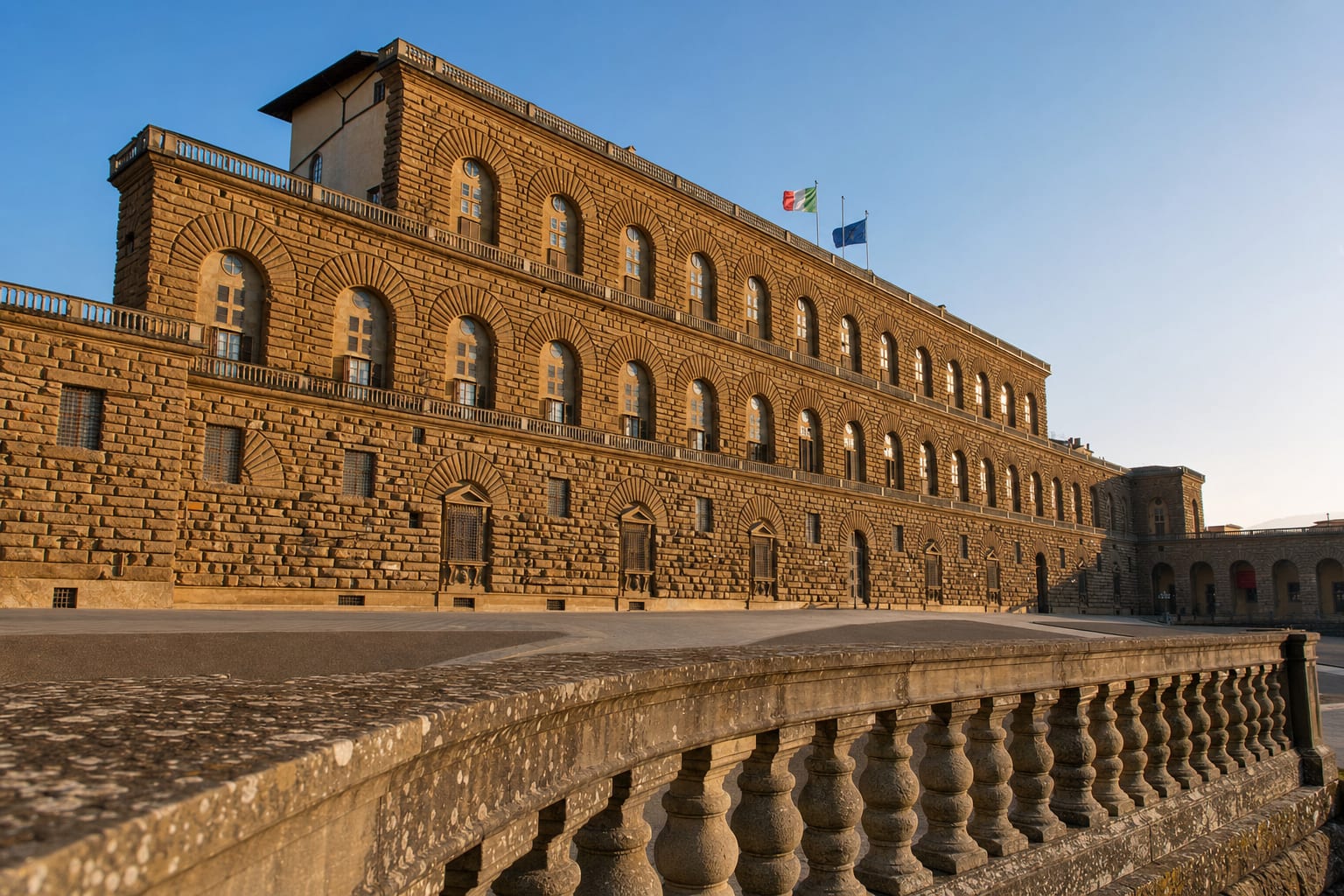
This is also why the Uffizi should not be confused with all the other places connected to it. Since 2014, the Uffizi Galleries have brought together three museum complexes: the Uffizi, Pitti Palace, and Boboli Gardens. They share an institutional umbrella and a deep historical relationship across the Arno, but they remain distinct sites with different collections, spaces, and practical conditions. A ticket or itinerary for one complex should never be assumed to apply automatically to all three.2
A way to see the collection
The most rewarding approach is to treat the Uffizi as a sequence of questions rather than a race toward a handful of rooms. How does a painting work as a devotional object, court image, portrait, narrative, or exercise in observation? How do ancient sculptures alter the meaning of later works? How do patronage, materials, workshops, and collecting shape what has survived? The museum's painting and sculpture collections give these questions a long time span, from the Middle Ages through later periods.1
The familiar names are useful signposts, but they should not flatten the visit. Slow down in front of a work only after locating it within its material and institutional facts. Botticelli's Birth of Venus is a painting in the Uffizi collection, dated about 1485 and executed in tempera on canvas. Spring, also by Botticelli, is a different object: it is dated about 1480 and executed in tempera grassa on wood. Their shared artist and fame do not make them interchangeable works, and their supports alone invite different questions about making, preservation, and display.3,4
The Botticelli rooms have been rehung around The Birth of Venus and Primavera, and rooms across the gallery are rearranged from time to time. Read up on a work in the museum's online catalog before you go, and let the gallery map guide you on the day.5
Part of a World Heritage city
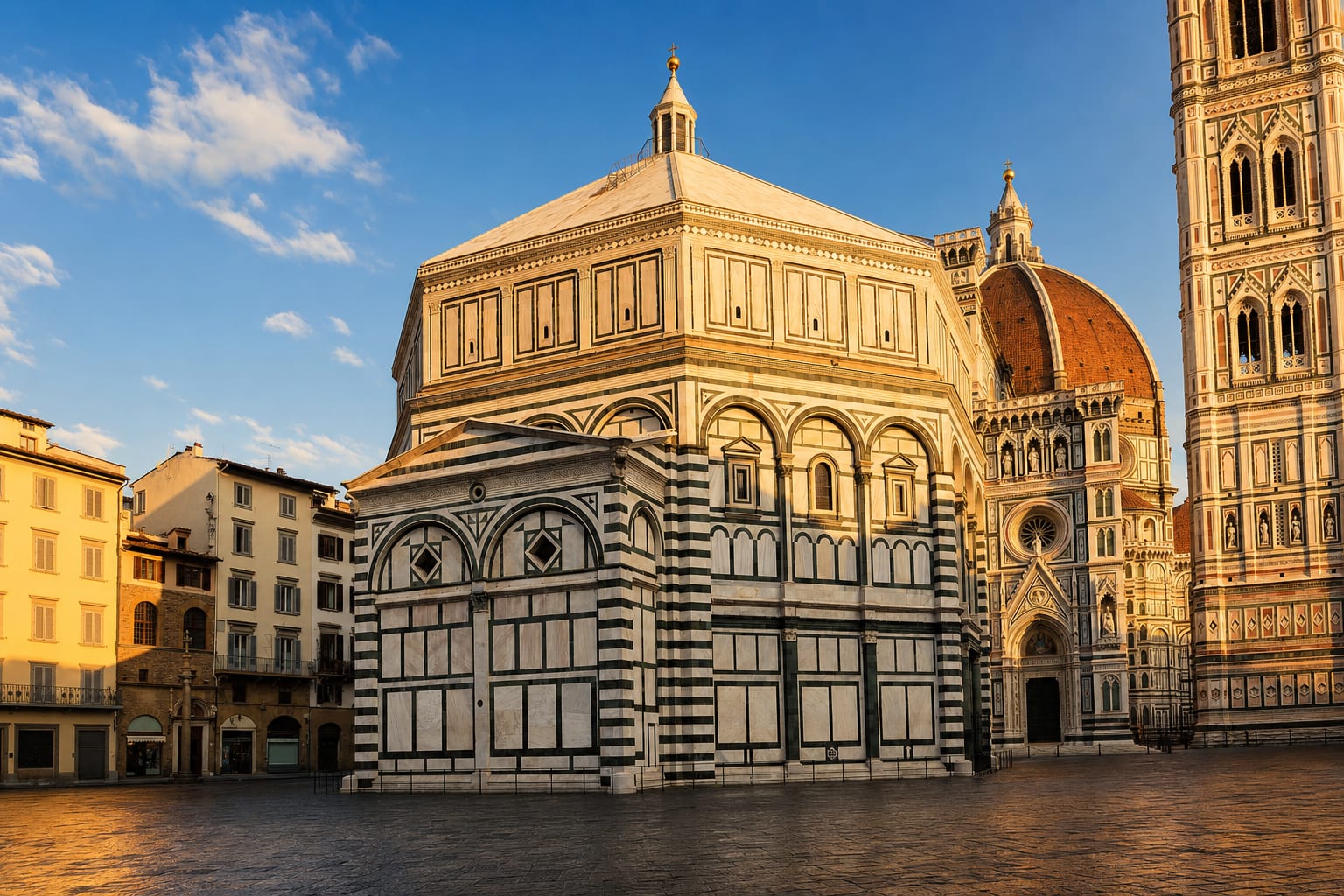
The Uffizi sits inside the Historic Centre of Florence, which UNESCO inscribed as a whole city. The gallery is one of the great buildings within that listing rather than a World Heritage site of its own.6
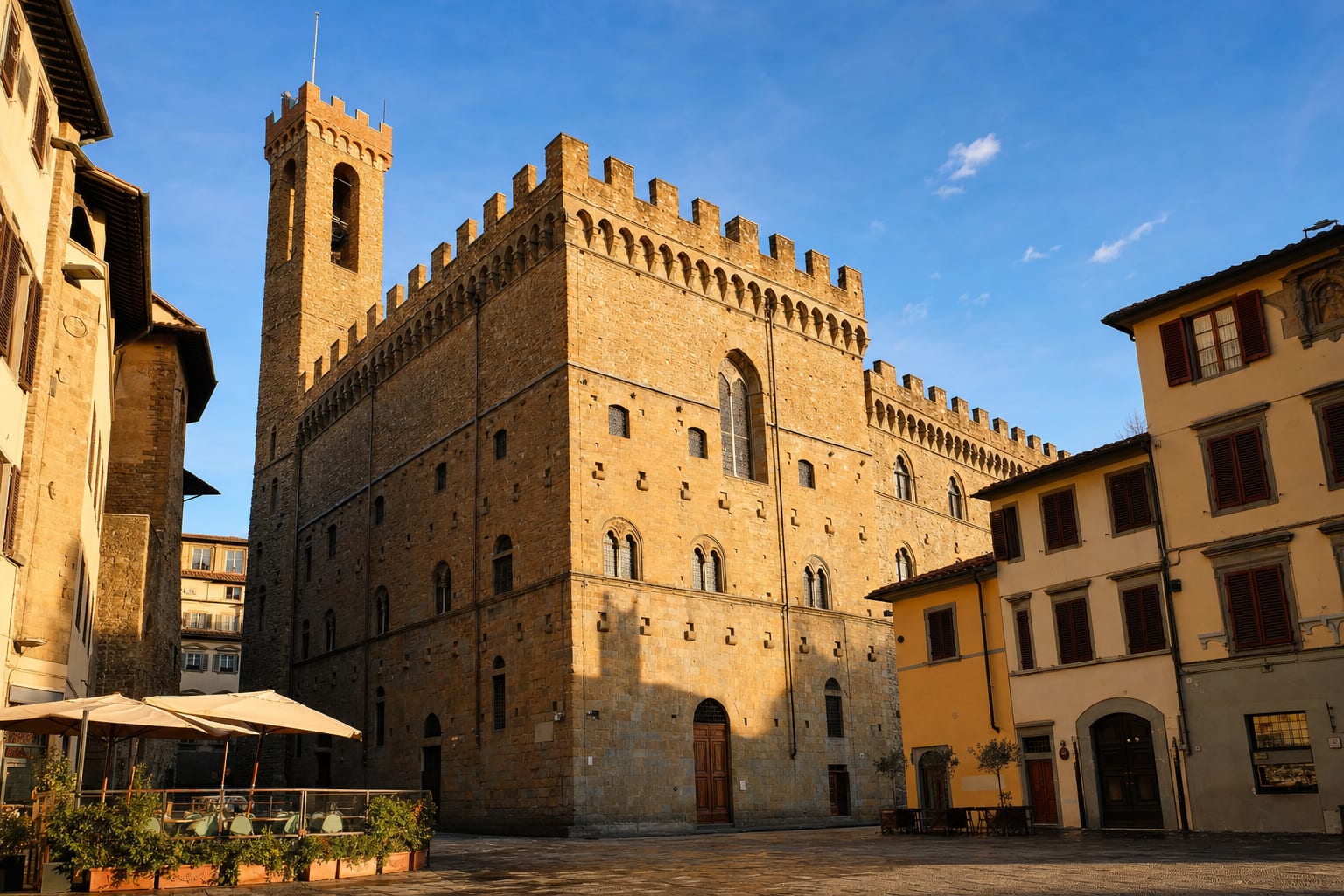
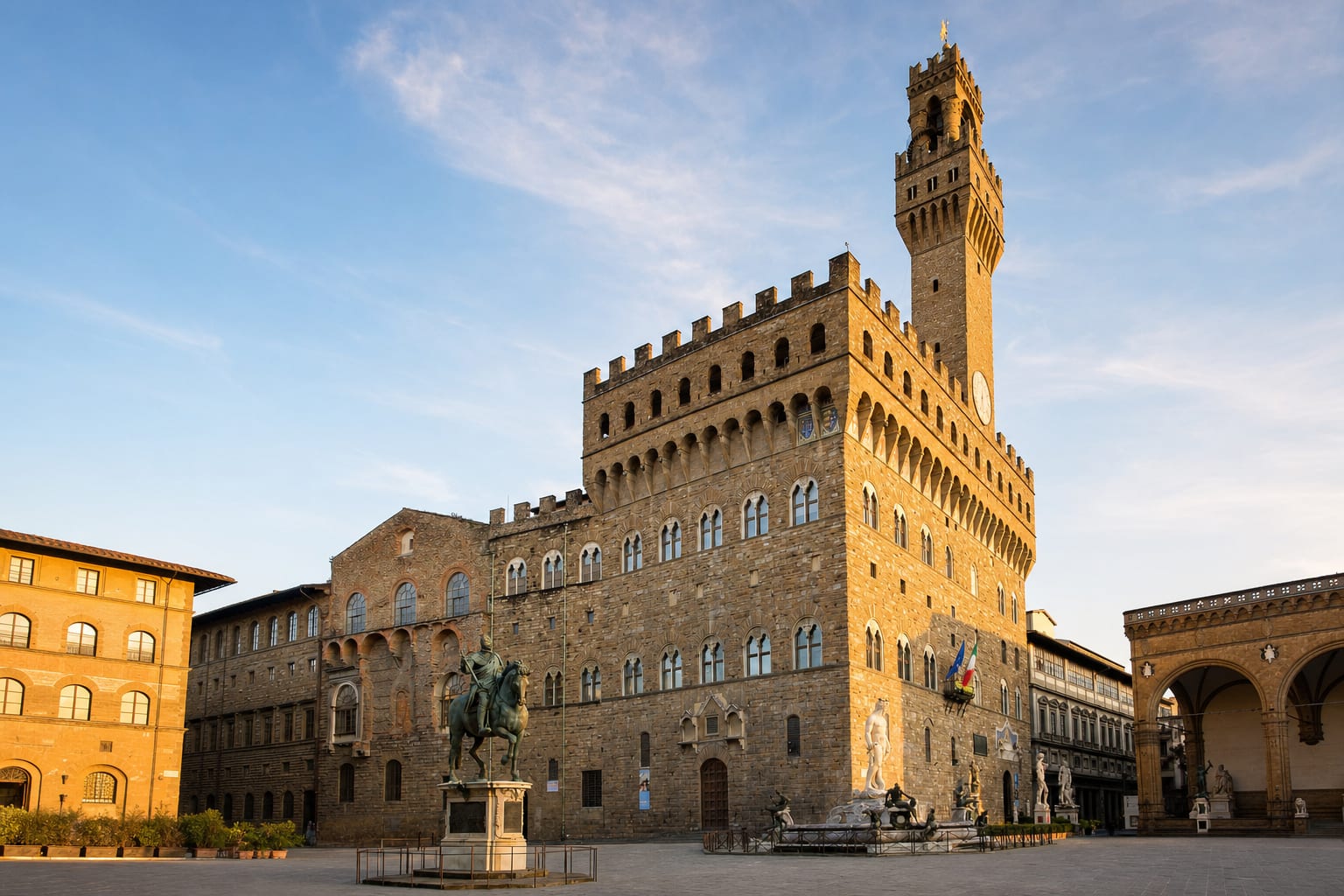
Seen that way, the gallery reads as one chapter of the city around it. Step out onto the rooftop terrace near the end of the visit and the Palazzo Vecchio tower is right there, a reminder that the paintings were made for this place.6,1
Across the Arno, a larger Medici geography
The Uffizi becomes clearer when placed within the institutional geography of Florence. Since 2014, the Uffizi Galleries have united the Uffizi, Palazzo Pitti and the Boboli Gardens, three distinct complexes linked by Medici collecting and the urban axis across the Arno. The relationship is historical and curatorial, but the experience changes completely from one to the next. Vasari's former offices frame painting and ancient sculpture; Pitti presents the scale of a palace; Boboli turns court culture into a designed landscape.2,1
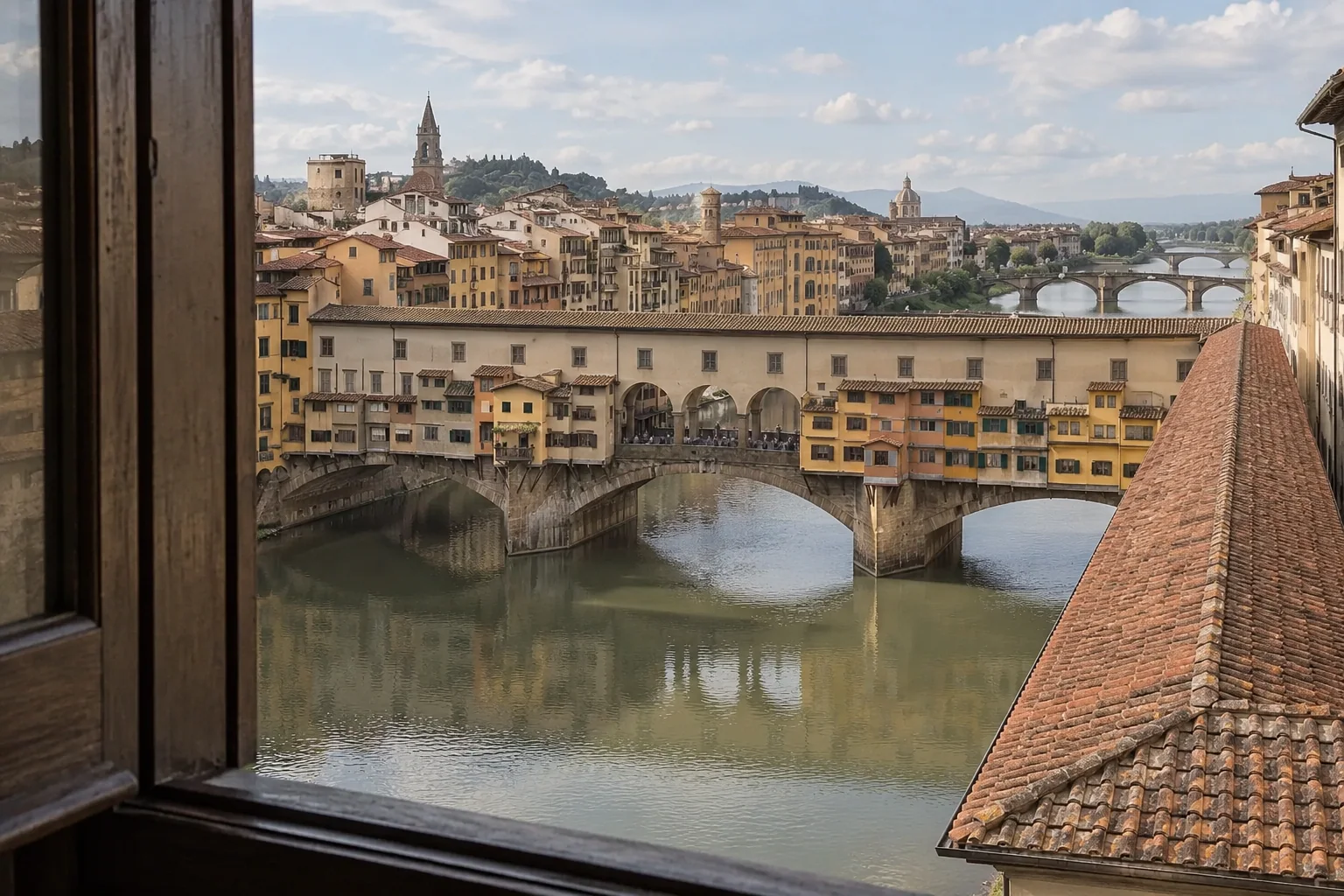
This larger view also restores meaning to the Uffizi's corridors. They belonged to a building conceived for government, set between Piazza della Signoria and the river, before generations of collecting transformed them into museum space. Looking through a window toward the Arno is therefore not a pause outside the collection. It is a reminder that art, administration, dynasty and city planning were bound together in the Florence that produced the museum.2
Sources and citations (7)
- Uffizi GalleriesThe UffiziMuseum introduction and collectionsRead source
- Uffizi GalleriesAbout usInstitutional history and original administrative functionRead source
- Uffizi GalleriesBirth of Venus, Sandro BotticelliOfficial artwork record, characteristicsRead source
- Uffizi GalleriesSpring, Sandro BotticelliOfficial artwork record, characteristicsRead source
- Uffizi GalleriesThe new permanent installation of the Botticelli Rooms16 June 2026 announcementRead source
- UNESCO World Heritage CentreHistoric Centre of FlorenceOfficial Historic Centre of Florence property recordRead source
- Associated PressNew Uffizi arrangement for Botticelli masterpiecesRead source