Skip to content

Aosta Megalithic Area

Aosta's MegaMuseo, built over a Neolithic ritual landscape of carved stelae used for six thousand years.

  • Aosta
  • Museum
Where
Aosta
Best for
Neolithic anthropomorphic stelae
Allow
1 hr 15 min

Construction workers found this ritual landscape six meters below street level in 1969, and archaeologists have since traced continuous use from the fifth millennium BC through the medieval period, one of the longest sequences of sacred use anywhere in the Alps.

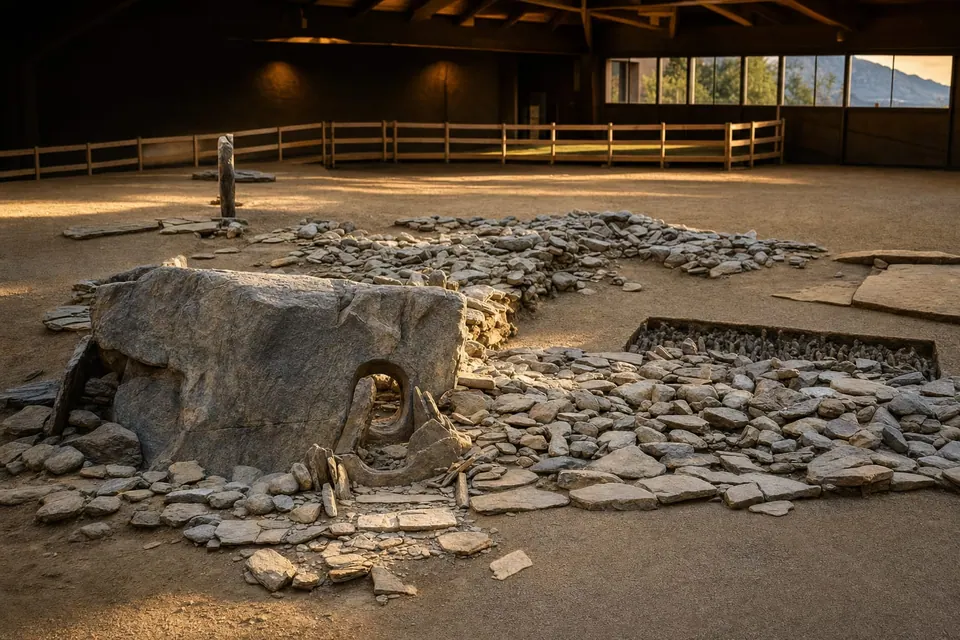
Carved anthropomorphic stelae, plowing furrows left by Neolithic rituals, dolmenic and cist burials, and rows of wooden ceremonial posts document six thousand years of changing beliefs on the same ten-thousand-square-meter plot. A museum designed by architect Vittorio Valletti, with a 46.5-meter central nave requiring no interior columns, opened over the site in 2016 and is now called the MegaMuseo. The building lets visitors walk directly above the excavation, looking down through glass floors at stelae still standing where they were planted.
Five works worth finding

If you see nothing else, see these.

  1. The anthropomorphic stelaeNeolithic to Copper Age, 3rd millennium BC

    Decorated standing stones shaped like stylized figures. The first was struck by construction machines in 1969.In the excavated area

  2. The ritual ploughing furrowsNeolithic

    Regular furrows left in the ground by ritual ploughing, tied to early agricultural cults.In the excavated area

  3. The post holes of the ceremonial alignmentsNeolithic to Copper Age

    Only the holes remain, in carefully oriented rows, showing that wooden posts and stelae marked the sacred space.In the excavated area

  4. The dolmen and cist tombsCopper Age, late 3rd millennium BC

    Monumental burials, some built by reusing the old stelae, when the sanctuary became a necropolis.In the excavated area

  5. The museum building over the siteVittorio Valletti

    A 46.5-meter central nave with no interior columns lets you take in the whole excavation, in use for six thousand years.Covering the excavation, six meters below street level

Plan your visit

Everything you need before you go.

Booking
No booking needed
Time needed
1 hr 15 min
Best time
A weekday morning, combined with Aosta's Roman-era sites in the same town
Getting there
In the Saint-Martin-de-Corleans district of Aosta, a short walk west of the historic center.
Accessibility
The purpose-built 2016 museum has modern, step-free access throughout.

Look for the wooden post alignments as well as the stelae: they are less photogenic but are what convinced archaeologists the site saw ritual use for six thousand unbroken years.

Get directionsGoogle MapsApple Maps

Good to know

How long should you spend at the Aosta Megalithic Area?

Allow about an hour and a quarter. The exhibition and the excavated area are compact, and most of the time goes into the stelae and the layout of the ritual ground. It is a good rainy-day stop.

Is the Aosta Megalithic Area worth visiting?

Yes. It documents about six thousand years of continuous use of one site, among the longest sacred sequences in the Alps. The stelae are not obvious tourist fare, which is part of the appeal.

Can you see the Megalithic Area and Roman Aosta in one day?

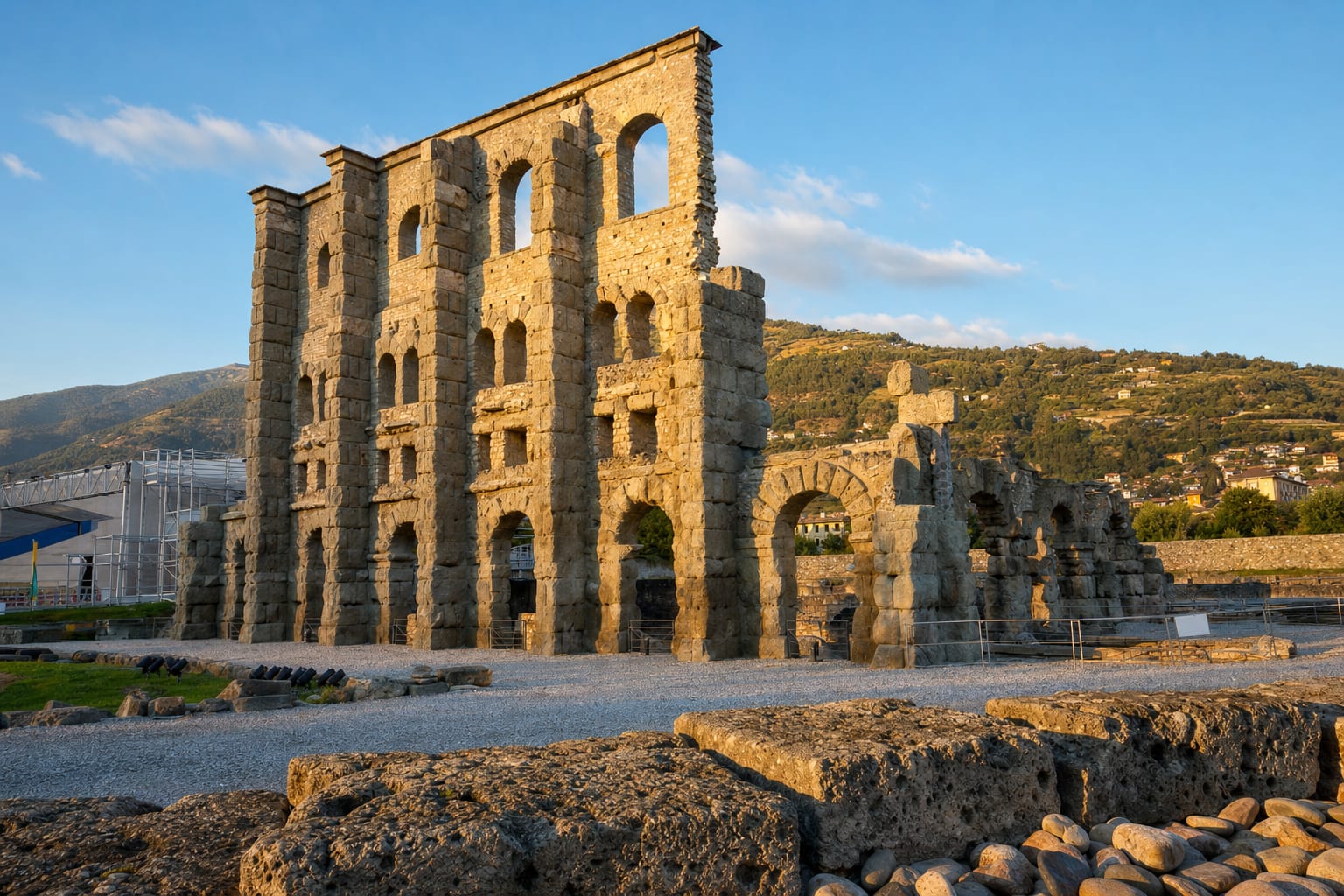
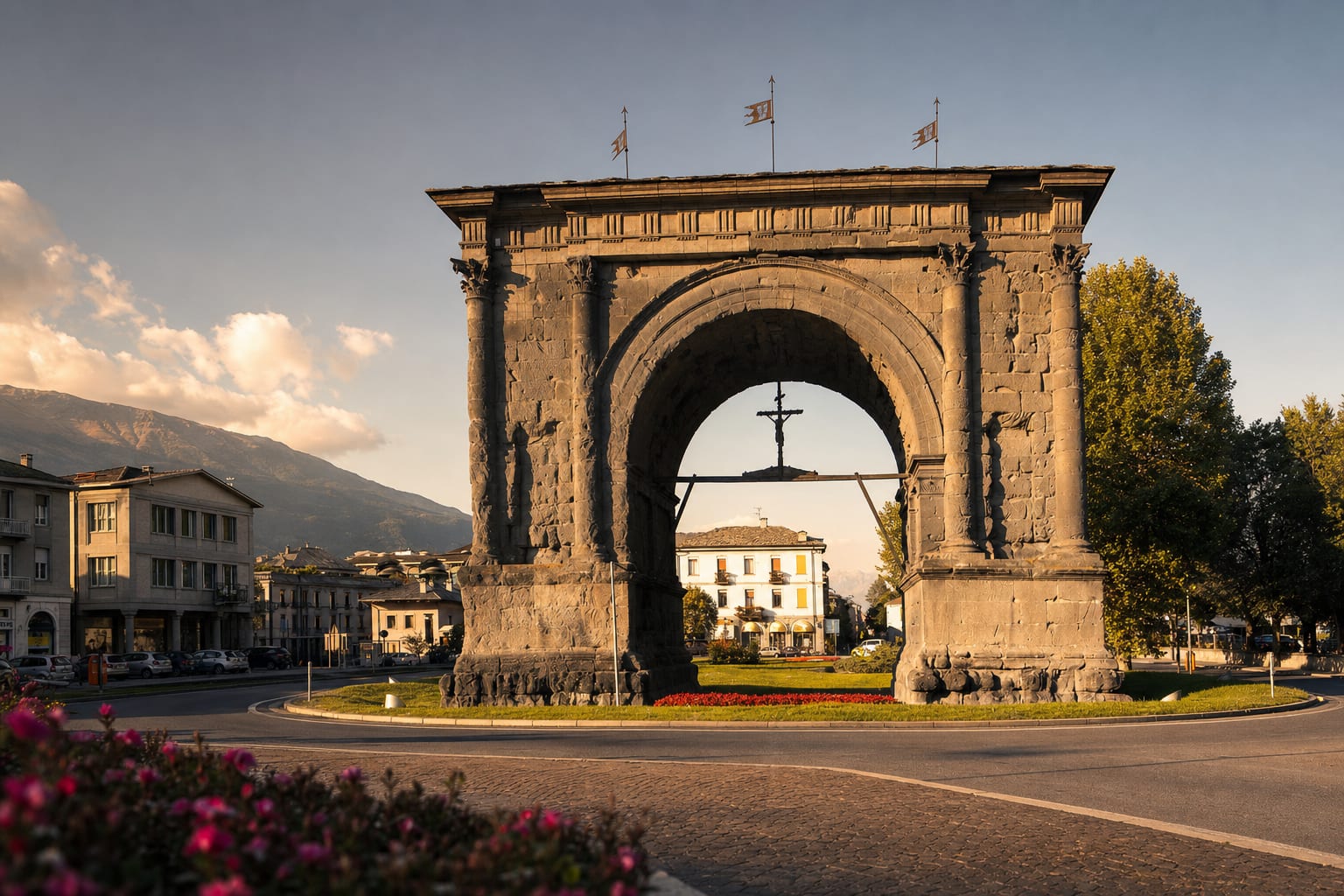
Yes, it is all in one compact town. The Megalithic Area lies in the Saint-Martin-de-Corléans district, a short walk west of the center. Combine it with the Roman theater, arch and gates.

A letter from Italy, once a month.

The places, tables and makers we found worth your time. One email, no noise.

One letter a month. Unsubscribe at any time. We never share your address.

Help us get it right

What is it about?