Skip to content

Duomo di Siena

Siena Cathedral

Cathedral of Santa Maria Assunta, marble-inlay floor, and Nicola Pisano pulpit.

Photograph · Duomo di Siena

At a glance

Siena Cathedral facts that matter

Names, makers, dates, and context before the story opens up.

Italian nameDuomo di Siena
What it isChurch
WhereSiena, Tuscany
Known forCathedral of Santa Maria Assunta, marble-inlay floor, and Nicola Pisano pulpit.

The story

What you're looking at

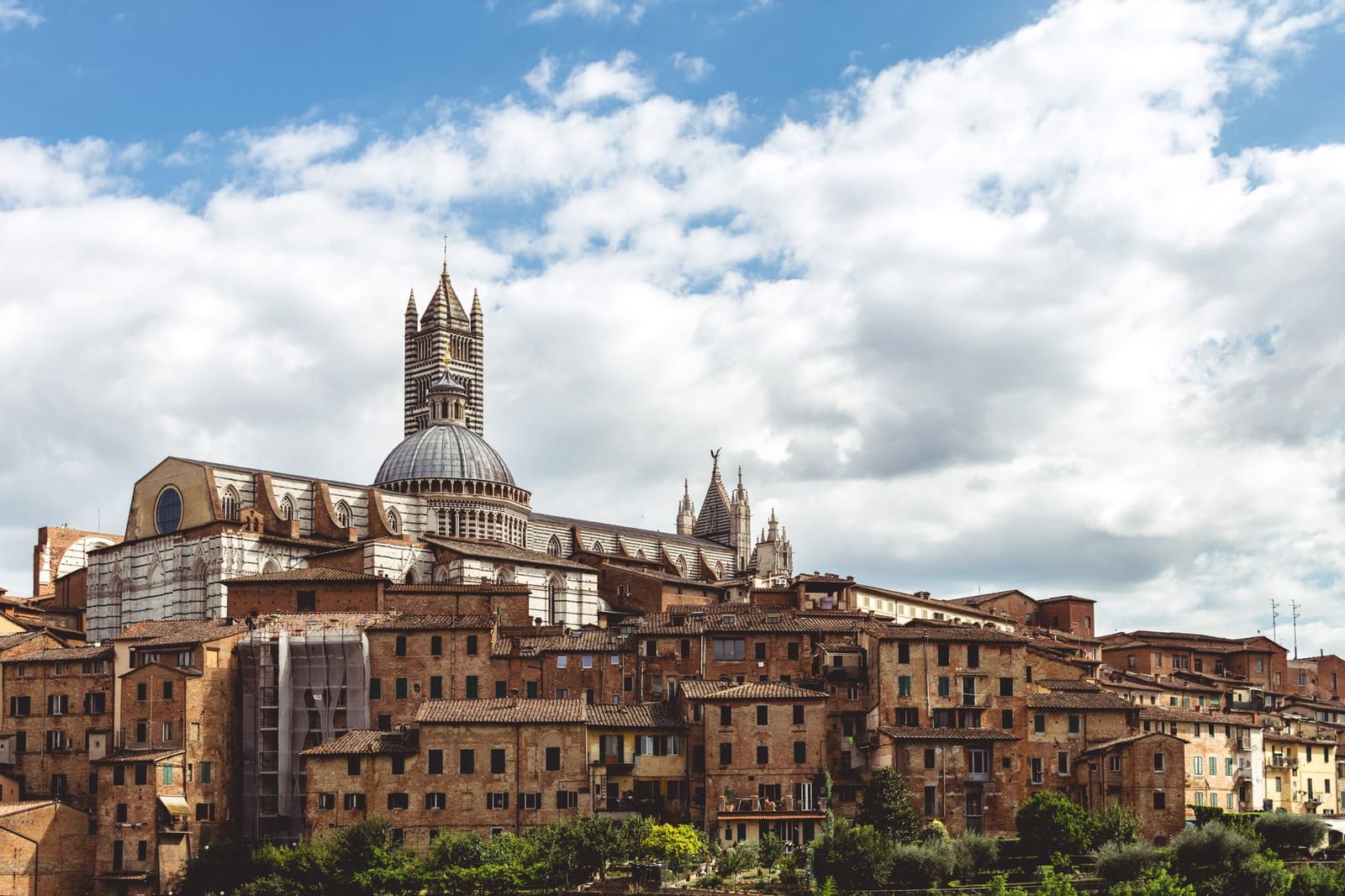
Siena Cathedral is the Cathedral of Santa Maria Assunta. Its marble-inlay and graffito floor, its Nicola Pisano pulpit, and its wider Cathedral-complex relationships require distinct reading. The Cathedral is within the UNESCO Historic Centre of Siena property, rather than a separately inscribed World Heritage site.

The Cathedral floor programme began in the 14th century and was completed in the 19th century. Nicola Pisano carved the pulpit between 1265 and 1268. Original façade sculptures by Giovanni Pisano are now displayed in the Museo dell'Opera, as is Duccio's Maestà.


Look closer

What makes Siena Cathedral unforgettable

The details our editors pull from official records, archives, guides, and local sources.

Artwork

The floor is a marble book, not a background

The inlaid pavement is one of the cathedral's great reasons to linger. Sibyls, prophets, allegories, and biblical scenes turn the nave into a vast stone text, with many panels protected and revealed only during selected periods.1

Artwork

Nicola Pisano's pulpit changed the room's temperature

The octagonal pulpit brings a sculptural force that feels almost cinematic. Its crowded narrative panels are central to understanding how 13th-century Tuscany reawakened classical weight, human emotion, and physical drama.1

Library

The Piccolomini Library is Siena at full color

The library was built to honor Pope Pius II and preserve the books of the Piccolomini family. Pinturicchio's fresco cycle gives the cathedral one of its most vivid Renaissance chambers.1

Context

The cathedral belongs to Siena's protected medieval city

UNESCO protects Siena's historic center as a complete medieval urban organism. The cathedral is best understood inside that fabric, not as an isolated monument.2

Verified details

Each statement below is linked to the record or institution that supports it.

The inlaid pavement is one of the cathedral's great reasons to linger. Sibyls, prophets, allegories, and biblical scenes turn the nave into a vast stone text, with many panels protected and revealed only during selected periods.1

Siena Cathedral is the Cathedral of Santa Maria Assunta and the principal Catholic place of worship of Siena.3

The octagonal pulpit brings a sculptural force that feels almost cinematic. Its crowded narrative panels are central to understanding how 13th-century Tuscany reawakened classical weight, human emotion, and physical drama.1

The Cathedral's marble-inlay and graffito floor is a Cathedral-specific work whose programme began in the 14th century and was completed in the 19th century.1

The library was built to honor Pope Pius II and preserve the books of the Piccolomini family. Pinturicchio's fresco cycle gives the cathedral one of its most vivid Renaissance chambers.1

Nicola Pisano carved the Cathedral pulpit between 1265 and 1268; it remains in the north transept of the Cathedral.1

Sources and citations (3)
  1. Opera della Metropolitana di SienaThe CathedralRead source
  2. UNESCO World Heritage CentreHistoric Centre of SienaRead source
  3. Comune di SienaLa CattedraleMunicipal landmark identityRead source

Plan your visit

Before you go

Booking
Book ahead — timed entry

Book a visit

Tours that include Siena Cathedral

Compared by our editors, across providers.

Booking through these links may earn Italia Magnifica a commission, at no cost to you.

    • 2h
    • 5.0★ · 49 reviews
    • 3h
    • 5.0★ · 20 reviews
    • 9h
    • 5.0★ · 11 reviews
    • 2h
    • 5.0★ · 8 reviews
    • 3h
    • 5.0★ · 5 reviews
    • 1h 30m
    • 5.0★ · 4 reviews

Reading

Stories from Tuscany

Long reads from our writers on the ground.

  1. The magazineItalian Art History: From Renaissance to Modern
  2. The magazineTuscany Travel Guide